You're sweeping up gray, sandy grit from your driveway again, only to look up and see a jagged gap where the mortar used to be along your roof’s edge. It's a frustrating but common sight for many homeowners in Norfolk, especially after a bout of heavy rain or high winds. You shouldn't have to worry every time a storm rolls in from the coast that a tile might slip or your gable ends are taking on water. When you need roof verge repair Norwich families can rely on, it's vital to choose a solution that stands up to our local climate.
We understand the anxiety that comes with seeing your property's primary defense crumble. This article will help you identify the early signs of verge failure and explain how to upgrade your roof to meet modern safety requirements. We'll explore the differences between traditional wet mortar and durable dry verge systems, while detailing why British Standards like BS 5534 now mandate mechanical fixing for all verge tiles. You will learn how to secure your home against the elements and find a long-term fix that provides lasting peace of mind.
Key Takeaways
- Understand why the edges of your roof are critical for preventing wind uplift and protecting your gable ends during Norfolk storms.
- Compare the benefits of traditional wet mortar bedding against modern dry verge systems to find the most durable solution for your home.
- Identify common warning signs, such as crumbling mortar or "dipped" tiles, that suggest you need professional roof verge repair Norwich property owners rely on.
- Explore our methodical repair process, which includes a thorough inspection of underlying timbers to ensure a completely weather-tight finish.
- Learn how partnering with a local, family-run business with over 30 years of experience provides the personal care and technical authority your roof deserves.
Understanding Your Roof Verge: Why the Edges of Your Norwich Home Matter
Most homeowners we speak with are familiar with the ridge tiles at the very top of their house, but they're often less clear on what the "verge" actually is. While the ridge acts as a cap for the horizontal peak, the verge protects the slanted edges of your roof. Because the verge is vertical and fully exposed to the elements, it's often the first place where mortar begins to fail. If you're looking for roof verge repair Norwich, you're likely dealing with the edges of your gable ends rather than the top peak of the building.
The verge serves as a vital structural shield against wind uplift. When high winds hit the side of a house, they're diverted upward along the gable wall. If the edge of your roof isn't properly sealed, that wind can get under the tiles and exert enough pressure to pull them loose. This isn't just about a small leak; it's about the physical stability of your roof during a Norfolk gale. Because it's the most exposed part of the roofline, it's also the most vulnerable spot for water ingress to begin.
To better understand this concept, watch this helpful video:
The Anatomy of a Gable End
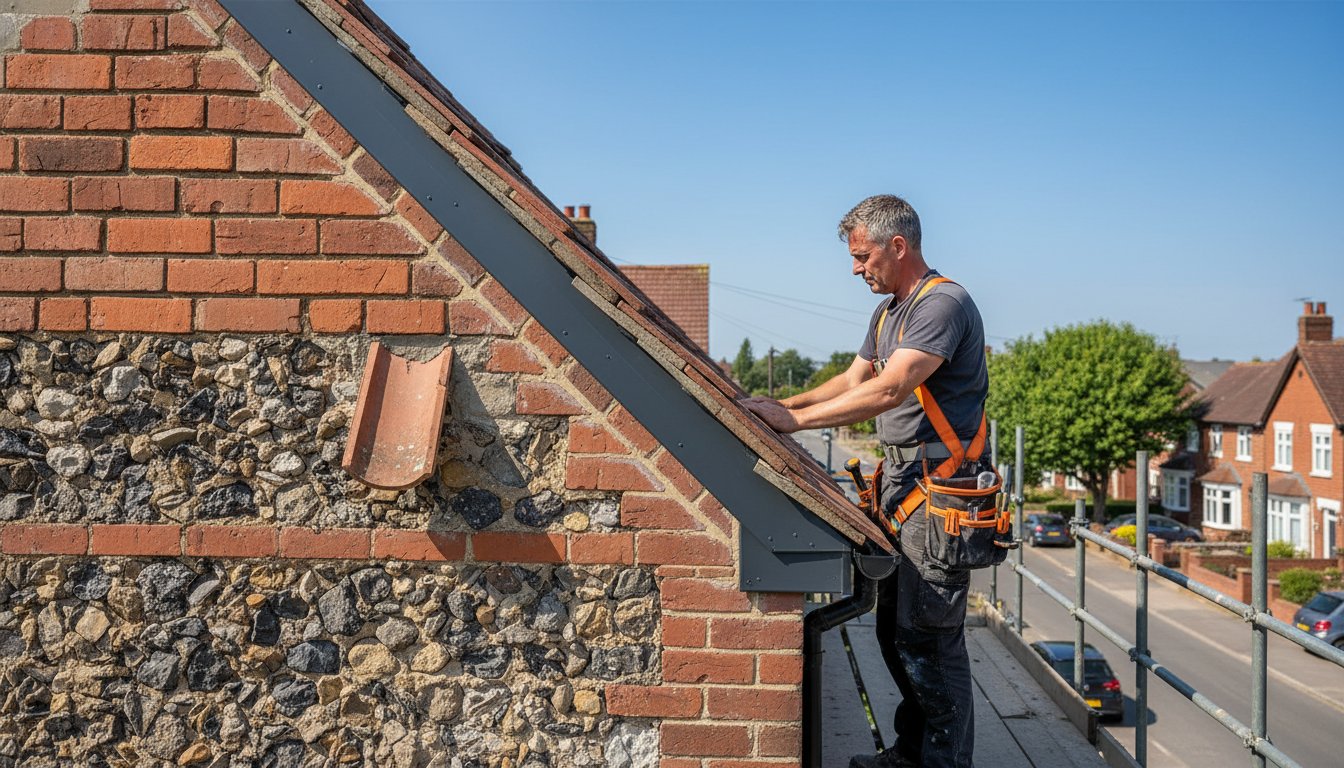
A roof verge is the intersection of the roof slope and the gable wall. In traditional Norfolk construction, tiles are bedded into a layer of sand and cement mortar that sits on an undercloak. This setup should include a slight overhang. This overhang is crucial because it directs rainwater to fall clear of the walls, preventing damp from soaking into your masonry. You'll often find a Bargeboard fastened to the gable to cover the ends of the roof timbers. If this board or the mortar above it begins to rot or crack, the underlying timber replacement can become a much more expensive job.
Local Weather Factors in Norfolk
Our local climate in East Anglia is particularly harsh on traditional wet-bedding. We experience frequent freeze-thaw cycles where water enters small cracks in the mortar, freezes, and then expands. This process eventually turns solid mortar into the dusty grit you find on your driveway. Norwich also sees significant driving rain from the coast, which can be forced through even tiny gaps in the roof edge. When we perform a roof verge repair Norwich project, we take into account the specific building styles of our area. Whether your home features traditional flint work or classic red brick, we ensure the repair is robust enough to handle the local weather while maintaining the aesthetic of the property.
Wet Verge vs. Dry Verge Systems: Which is Right for Your Property?
Deciding on the right method for your roof verge repair Norwich project usually comes down to a choice between tradition and modern efficiency. For decades, the "wet" verge was the only option available. This system uses a specific blend of sand and cement mortar to bed the edge tiles into place. While it creates a solid seal initially, it isn't a permanent solution. Modern "dry" verge systems have become the preferred choice for many because they replace mortar with interlocking uPVC caps and mechanical fixings that don't degrade over time.
The durability of these systems varies significantly in our local environment. A well-installed wet verge can last many years, but it will always require periodic inspections and maintenance. In contrast, a dry verge system is designed to last the lifetime of the roof tiles themselves. We often recommend dry systems for homes in exposed areas because they won't crack or fall out during a heavy storm. However, for period properties where character is everything, the traditional look of mortar is often irreplaceable.
The Pros and Cons of Traditional Mortar
Mortar bedding offers an authentic finish that is essential for maintaining the heritage of Norfolk's older homes. It's often the most cost-effective option for minor repairs where only a small section of the gable end has failed. If the rest of the mortar is in good condition, a simple re-pointing can restore the weather-tight seal without the need for a full system overhaul. The main drawback is its vulnerability. As we mentioned previously, the moisture and temperature shifts in East Anglia cause mortar to shrink and crack. Once those cracks appear, the bond is broken, and the tiles become loose. Regular maintenance is the only way to keep a wet verge safe.
Why Many Norwich Homeowners are Switching to Dry Verge
We've helped many families transition to dry verge systems to end the cycle of crumbling mortar falling onto their cars and driveways. These systems are entirely maintenance-free. Because they use mechanical screws and clamps, they provide a level of security that mortar simply cannot match during high winds. This mechanical fixing aligns with the latest safety guidelines from the National Federation of Roofing Contractors, which now requires more robust fixing methods for all UK roofs.
Another advantage is the natural ventilation these systems provide. By allowing air to circulate under the edge tiles, dry verges help prevent moisture buildup that can lead to rot in your roof's structural woodwork. This protection reduces the likelihood of needing costly timber replacement in the future. If you're curious about how these systems look on different house styles, you can browse our recent work to see examples across the city. Whether you prefer the classic look of mortar or the reliability of modern fixings, our team ensures the job is done right the first time.
Common Signs You Need Roof Verge Repair
Identifying the need for roof verge repair Norwich often starts on your driveway rather than the roof itself. If you're finding gray, sandy chunks of debris on the ground or tucked into your gutters, your mortar bedding is likely failing. These pieces are parts of the "wet" verge system we discussed earlier. Once the mortar begins to crumble, it leaves the edge of your tiles unsupported and vulnerable to the next big storm. Our team often finds that homeowners overlook these small piles of grit, but they're the first warning that your roof's edge is losing its structural integrity.
You should also look for structural shifts along the gable line. Tiles that appear 'dipped', tilted, or uneven are a clear warning. This happens when the underlying mortar has washed away or the undercloak has snapped. In some cases, you might notice that the tiles at the very edge seem to be "lifting" away from the wall. This is a sign that wind uplift is already affecting your property. If the line of your roof looks jagged instead of perfectly straight, it's time to have a professional take a closer look.
Don't ignore what's happening inside your home either. Damp patches on the ceiling or walls near the gable end often point to a failed verge. Water can track along the underside of the tiles and bypass your felt entirely. Additionally, keep an eye out for bird activity. Gaps in a crumbling verge provide perfect nesting spots for swifts or starlings. While we enjoy Norfolk's local wildlife, nesting birds can displace tiles and trap moisture against your roof timbers, leading to more complex issues over time.
Inspecting from the Ground
We always suggest a safe, ground-level inspection first. You don't need to climb a ladder to perform a basic check. Grab a pair of binoculars and scan the mortar bed for hairline cracks. These small fissures are the entry points for the freeze-thaw cycles that eventually destroy the bond. Another trick is to head into your loft on a bright day. Turn off the lights and look toward the gable ends. If you can see "daylight" through the roof edge, your verge is no longer weather-tight. Also, look for heavy moss growth concentrated specifically along the verge line. Moss holds onto moisture, which accelerates the deterioration of traditional sand and cement mixes.
The Danger of Ignoring Verge Damage
Leaving a damaged verge unattended is a gamble. Falling masonry isn't just a mess; it's a genuine safety hazard for anyone walking below or for cars parked on your drive. During the winter months, a small gap can quickly escalate into a major roof leak repair job as driving rain is forced into your attic space. There is also a "domino effect" to consider. Once wind gets under a single loose edge tile, the pressure can rip away several others in a matter of seconds. Addressing these signs early with a reliable roof verge repair Norwich service saves you from the stress of emergency call-outs when the weather turns for the worst.

The Professional Verge Repair Process: What to Expect
When you trust us with your roof verge repair Norwich project, we believe in complete transparency about what happens once our ladders are up. We don't just patch over existing problems; we follow a methodical process to ensure your gable ends are structurally sound. Our work begins with establishing safe access and conducting a thorough inspection of the underlying roof timbers. We look for any signs of rot or water damage that might have been hidden by failed mortar, ensuring the foundation of your roof is solid before we proceed with the visible repairs.
The next stage involves the meticulous removal of all old, failed mortar and the cleaning of the tile undersides. This step is often rushed by less experienced contractors, but it's essential for creating a strong bond for the new materials. We also assess the condition of the undercloak, which is the vital strip of material that supports the verge mortar. If this strip is snapped or missing, even the best mortar mix won't hold for long. Once the area is prepared, we either re-bed the tiles using a high-strength mix or install the modern dry verge rail system. We finish every job with a final sealing and a full site clearance, making sure no debris is left in your gutters or on your driveway.
Traditional Re-pointing Techniques
For heritage properties, we use time-tested traditional methods to maintain the building's character. We utilize a specific 3:1 sand to cement ratio, which provides the ideal balance of strength and durability for the Norfolk climate. To improve the mortar's performance, we add plasticisers that increase its flexibility against thermal expansion and contraction. This reduces the likelihood of future cracking. Professional re-pointing must be done in dry, frost-free conditions to ensure the mortar cures correctly and forms a permanent bond with your roof tiles.
Installing a Dry Verge Retrofit
If you choose a dry verge system, the installation focuses on mechanical security. We start by securing the batten ends to provide a solid foundation for the new units. These interlocking caps fit together to create a continuous weather seal that wind cannot penetrate. A critical part of the process is ensuring the 'starter piece' is correctly anchored to your fascias and soffits. This creates a unified, robust edge that protects the entire gable end. If you're ready to secure your home with a professional upgrade, you can request a detailed assessment of your roofline from our family-run team today.
Choosing I R. Wilson Roofing for Your Norwich Verge Repairs
Selecting a contractor for your roof verge repair Norwich project shouldn't be a stressful experience. As a family-run business, we believe in a personal approach that larger, faceless corporations simply can't match. Ian and Ben Wilson are directly involved in every project we undertake, ensuring that our high standards of craftsmanship are maintained from the first tile to the last. We've spent over 30 years serving the Norwich and Norfolk community, building a reputation based on reliability and technical authority.
Our commitment to you starts with honest, professional advice. We understand that every home is different, and we won't push for a full dry-verge switch if a traditional mortar repair is more appropriate for your property's style or budget. You can expect fixed-price quotations and a clean-site guarantee. We treat your home with the same respect we'd show our own, ensuring that all debris is cleared away and your property is left in pristine condition once the work is complete.
Local Reliability You Can Trust
We are Norwich born and bred. This local heritage means we have a deep understanding of the specific building requirements and architectural styles found across our city. Whether you live in a Victorian terrace or a modern semi-detached, we know which materials and techniques will provide the best protection against our East Anglian weather. Our pricing is completely transparent. We don't believe in hidden "extra" fees mid-job; the price we quote is the price you pay. To see the quality of our craftsmanship for yourself, you can check out our Facebook page for recent project photos from across Norfolk.
Ready to Secure Your Roofline?
If you've noticed crumbling mortar or uneven tiles, don't wait for the next storm to cause further damage. We offer a methodical inspection process to help you understand the exact condition of your gable ends. You can book a complimentary, no-obligation roof inspection where we'll assess your verge and provide a detailed, written quotation. This allows you to make an informed decision without any sales pressure. Contact I R. Wilson Roofing today for expert advice on your roof verge and let us help you protect your home for the long term.
Secure Your Home Against the Norfolk Elements
Your roof's edges are more than just a decorative finish; they're a vital structural barrier that keeps wind and water away from your home's foundation. We've explored how identifying crumbling mortar early and choosing the right system for your property can prevent costly timber damage and safety hazards. Whether you prefer the traditional aesthetic of a wet-bedding repair or the long-term, maintenance-free security of a dry verge upgrade, the goal is a weather-tight finish that lasts.
With over 30 years of local roofing expertise, our family-run team is here to provide the honest, technical guidance you need. Ian and Ben Wilson personally ensure that every roof verge repair Norwich project meets our high standards of craftsmanship. We've built a highly recommended local reputation by treating every property with the care it deserves. Don't leave your gable ends vulnerable to the next coastal storm. You can Request a Free, No-Obligation Verge Inspection from Ian & Ben to get a clear, professional assessment of your roofline's condition. We look forward to helping you protect your home for years to come.
Frequently Asked Questions
How long does a roof verge repair typically take?
Most repairs take between a few hours and a full day to complete. A straightforward re-pointing job on a single gable end is often finished in a morning. If you're opting for a full dry verge retrofit across the whole property, the process might take a bit longer depending on the size of the roof and the ease of access. We always work methodically to ensure the job is done right while minimizing any disruption to your home life.
Can I change from a wet verge to a dry verge without replacing the whole roof?
Yes, you can absolutely upgrade to a dry system without needing a full roof replacement. We remove the failed mortar, inspect the batten ends, and then mechanically fix the new uPVC units into place. It's an excellent way to improve your property's weather resistance and eliminate the need for future mortar maintenance. This retrofit is a common request for homeowners looking for a more permanent solution for their roof verge repair Norwich project.
Is it safe to DIY repair a crumbling roof verge?
We don't recommend attempting this as a DIY project because of the safety risks and technical precision required. Working at height on the very edge of a roof is dangerous without professional equipment and experience. Furthermore, if the mortar mix is incorrect or the tiles aren't mechanically secured according to modern building standards, they could blow off during a storm. This creates a significant hazard for anyone walking near your property.
Why is my roof verge mortar cracking only a few years after being done?
Mortar often fails early if it was mixed with the wrong sand-to-cement ratio or applied in poor weather. If the mix is too weak or if it dried too quickly in the sun, it becomes brittle and loses its bond. Our local freeze-thaw cycles in Norfolk also put a lot of stress on the verge. We use specific plasticisers in our mixes to help the mortar stay flexible enough to handle these temperature shifts without cracking.
Do dry verge systems come in different colours to match my tiles?
Dry verge units come in several standard colours including slate gray, terracotta, dark brown, and black. This variety allows us to find a close match for almost any type of concrete or clay tile found in the Norwich area. When we visit your property, we can show you samples to ensure the new system blends in seamlessly with your existing roofline and maintains your home's curb appeal.
What is an 'undercloak' and why is it important for my roof edge?
The undercloak is a thin strip of material, usually made from fiber cement or slate, that sits directly beneath the edge tiles. It serves as the foundation for the mortar bed and creates the overhang that directs rainwater away from your brickwork. If the undercloak is snapped or missing, the mortar has nothing to grip onto. This foundation must be solid for any roof verge repair Norwich project to be successful in the long term.
How much does a typical roof verge repair cost in Norwich?
The total cost depends on the length of your gable ends and whether you choose a traditional mortar repair or a modern dry fix system. Access requirements and the condition of the underlying timbers also influence the final price. While you can find general industry price guides online, we suggest checking those for a rough idea and then requesting a specific, written quotation after we've had a chance to inspect the roof in person.
Will insurance cover roof verge damage after a storm?
Insurance companies typically cover damage caused by sudden, unexpected events like high winds, but they don't usually pay for issues caused by wear and tear. If your mortar was already crumbling due to age, they might view the storm damage as a result of poor maintenance. It's always best to review your specific policy and have a professional assessment done to document the cause of the damage if you plan to make a claim.


