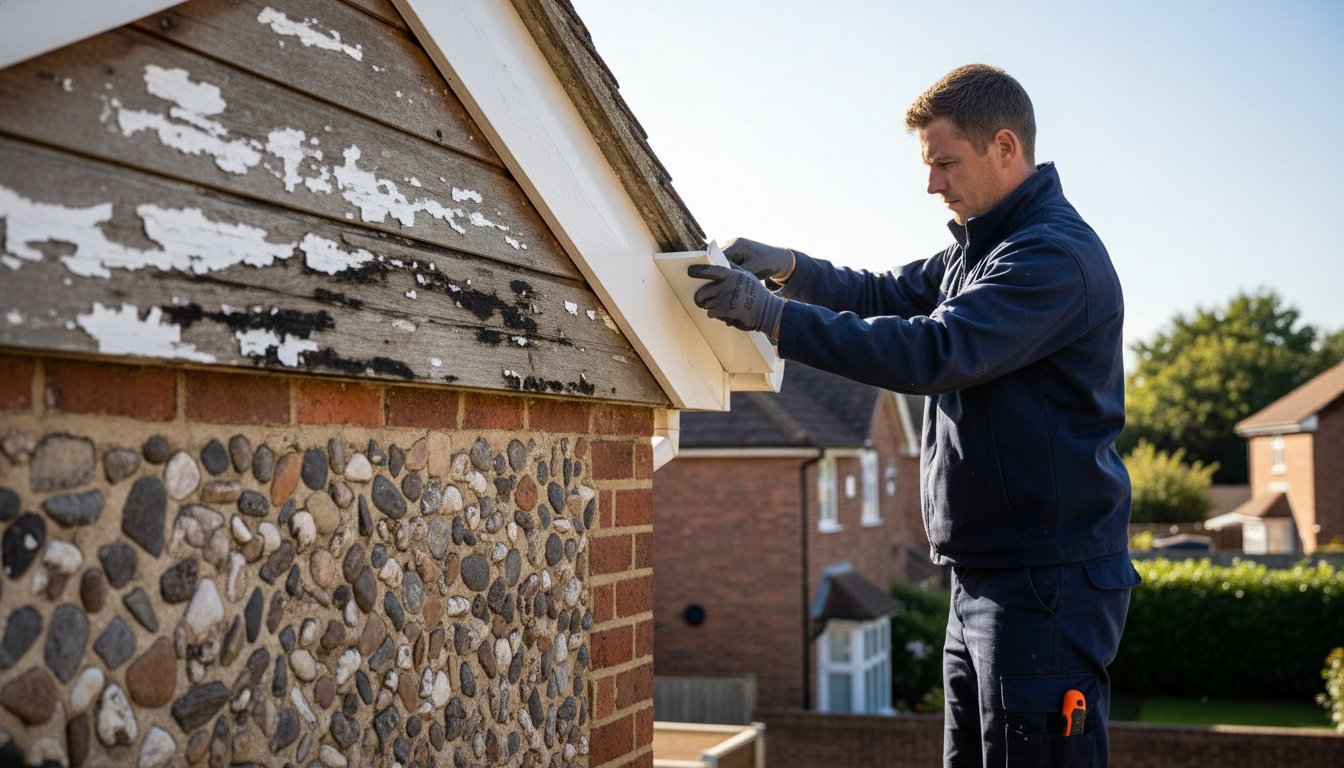
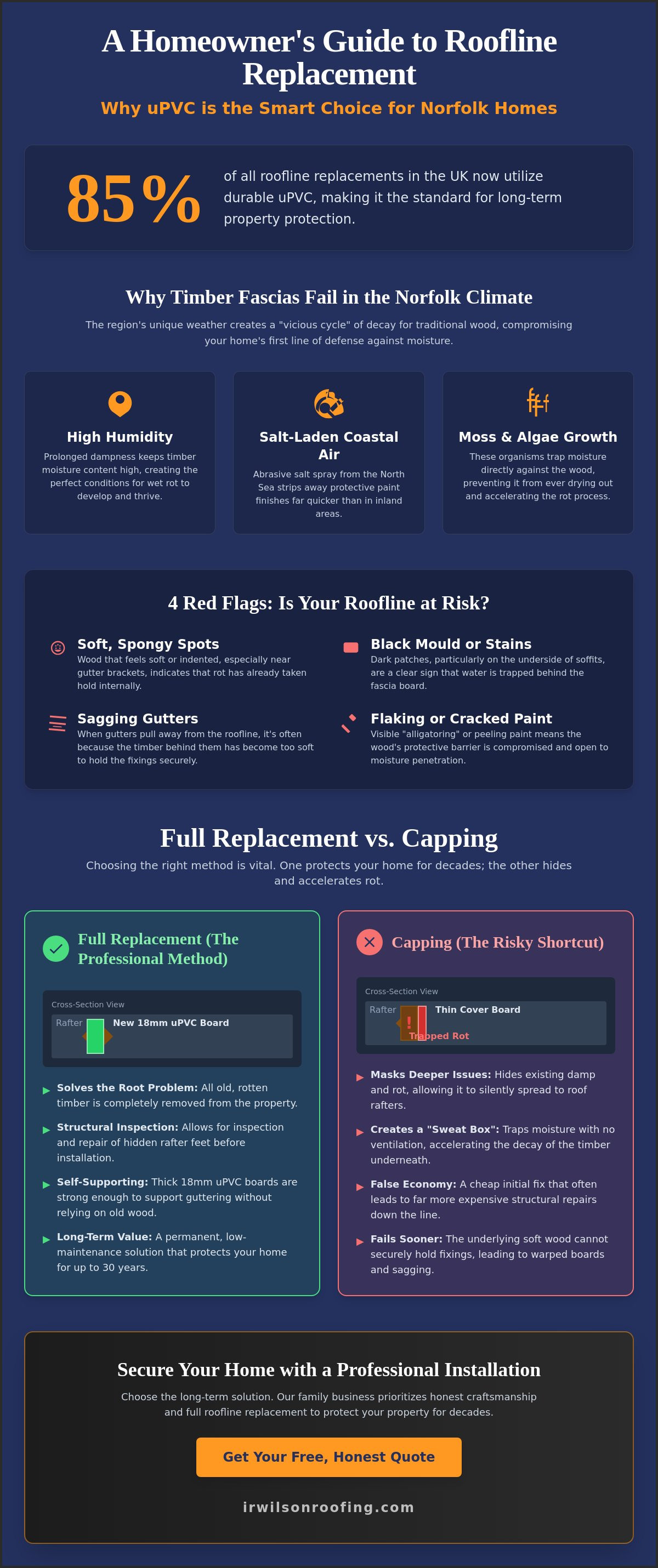
Did you know that over 85% of roofline replacements in the UK now utilize uPVC instead of traditional timber? In our part of the country, where salt-laden coastal air and damp winters take a heavy toll on external woodwork, replacing wooden fascia boards with uPVC Norfolk has become the standard for protecting a home's structural integrity. We know how frustrating it is to spot that first sign of soft, rotting wood or peeling paint on your eaves. It is more than just an eyesore. It is a signal that moisture may be creeping into your roof rafters, which can lead to significant issues if left unaddressed.
You deserve a roofline that stays bright and functional without requiring you to climb a ladder every few years for maintenance. This 2026 guide will show you why switching to uPVC is a smart investment for your property and how to ensure a professional installation that lasts up to 30 years. We will explain the technical benefits of modern materials, help you understand the installation process, and provide the clarity you need to choose a local family business that values honest work and long-term reliability.
Key Takeaways
- Understand how Norfolk's coastal humidity accelerates timber rot and why uPVC is the most reliable defense for your property.
- Learn why "capping" often hides structural damage and why we recommend a full replacement to keep your roof rafters safe.
- See how replacing wooden fascia boards with uPVC Norfolk eliminates the chore of painting and protects your home's value for decades.
- Follow our step-by-step guide to a professional installation, from securing safe access to correctly fitting your new guttering.
- Discover the benefits of working with a local family business that prioritizes honest craftsmanship over high-pressure sales tactics.
Understanding Why Wooden Fascias Fail in the Norfolk Climate
Your roofline is your home’s first line of defense against the elements. The Fascia (architecture) serves as a vital vertical finishing edge that supports the bottom row of tiles and carries the weight of your guttering system. More importantly, it acts as a protective seal for your roof rafters and the interior of your attic. When this barrier fails, moisture finds a direct path into your structural timbers, which can lead to expensive internal repairs. For many local homeowners, replacing wooden fascia boards with uPVC Norfolk is the most effective way to prevent this structural decline.
In our region, homes face a unique set of environmental challenges. The high humidity levels and salt-laden air from the North Sea create a breeding ground for "wet rot." This biological process occurs when timber moisture content remains high for prolonged periods. For many, the struggle with timber becomes a "vicious cycle." You might spend a weekend scraping, sanding, and painting, but within a few seasons, the wood expands and contracts with the changing temperatures. This constant movement causes the paint to crack, allowing water to seep back into the grain. Once moisture is trapped behind a layer of flaking paint, the rot accelerates from the inside out, often hidden from view until the damage is significant.
The Impact of Norfolk Weather on External Timber
Properties across Norfolk, especially those near the coast or nestled in damp, rural gardens, are particularly vulnerable. The constant barrage of salt spray acts as an abrasive, stripping away protective finishes much faster than in inland counties. We often see heavy moss and algae growth on north-facing rooflines in villages across the Broads. These organisms hold moisture against the wood, preventing it from ever truly drying out. In this damp climate, traditional oil-based paints often lose their integrity after just two or three years. This accelerated wear is why so many residents are choosing the long-term protection of uPVC.
Signs Your Wooden Fascias Have Reached Their Limit
Identifying the early signs of failure can save you from more costly roof repairs later. Walk around your property and look for these specific red flags:
- Soft Spots: If you see areas where the wood looks spongy or indented, particularly near the gutter brackets, rot has already taken hold.
- Black Mould: Staining or dark patches on the underside of your soffits usually indicate that water is sitting behind the fascia board.
- Sagging Gutters: When gutters pull away or sag, it's rarely just a loose screw. Often, the timber fascia has become too soft to hold the weight of the fixings.
- Flaking Paint: Visible cracks or "alligatoring" in the paintwork mean the timber is no longer protected from the Norfolk elements.
If you notice these issues, it's time to consider a more permanent solution. Moving away from timber doesn't just improve the look of your home; it secures the structural safety of your roof for years to come.
Full Replacement vs. Capping: Choosing the Right Method
When you decide it's time for replacing wooden fascia boards with uPVC Norfolk, you will likely encounter two very different installation methods: full replacement and capping. Understanding the technical difference between these two is vital for the long-term health of your home. A full replacement involves stripping away every inch of the old, weathered timber until the rafter feet are exposed. This allows us to inspect the very "bones" of your roofline before we install heavy-duty, 18mm thick uPVC boards. These boards are designed to be self-supporting, easily carrying the weight of your guttering even during a heavy Norfolk downpour.
Capping, often called over-cladding, is a different approach. It involves nailing a thinner uPVC "cover board" directly over your existing wooden fascias. While this is often presented as a budget-friendly alternative, we view it as a false economy. If the underlying wood has even a hint of dampness or rot, covering it with plastic creates a "sweat box" effect. This traps moisture against the timber with no way for it to breathe. Over time, this accelerated decay can spread deep into your roof rafters, turning a simple cosmetic upgrade into a major structural repair job.
The Hidden Dangers of Over-Cladding
The primary risk with capping is that it masks problems rather than solving them. Norfolk’s humid climate means that old timber fascias are rarely perfectly dry. When we over-clad, we prevent air from circulating around the wood. This leads to condensation and "sweating" behind the new plastic. Because you can no longer see the wood, you won't know the rafters are rotting until your gutters start to sag or water begins to penetrate your eaves. For this reason, our team generally recommends a full strip-back approach. It is the only way to guarantee that your home's skeleton remains dry and secure.
When Full Replacement is the Only Safe Option
We believe a total roofline overhaul is the best path for properties with original timber. This is especially true if you notice flaking paint or soft spots, as these indicate that the timber's integrity is already compromised. According to the British Board of Agrément assessment, high-quality uPVC systems are proven to be a durable, low-maintenance substitute for timber, provided they are installed correctly onto sound rafters. Full replacement also allows us to install modern eaves protection, such as felt support trays, which prevent water from pooling behind the fascia.
Taking the time to do the job right the first time provides peace of mind that lasts for decades. If you are unsure about the state of your current roofline, you can read more about our specific approach to fascia and soffit care to help you make an informed decision for your property.
Comparing uPVC to Traditional Timber: Performance and Aesthetics
Choosing the right material for your roofline involves balancing long-term durability with the visual character of your home. While timber has been the traditional choice for centuries, modern technology has shifted the landscape. Today, over 85% of roofline replacements in the UK utilize uPVC. This shift isn't just about following a trend. It's a practical response to the high maintenance costs and shorter lifespans associated with external woodwork. When replacing wooden fascia boards with uPVC Norfolk, you are choosing a material engineered to withstand our specific coastal conditions without the need for constant intervention.
High-grade uPVC is designed with thermal stability in mind. It doesn't warp or twist like timber when the sun hits it, and it provides an excellent thermal barrier for the edge of your roof. Unlike wood, which acts as a porous sponge, uPVC is entirely imperial to water. This means it won't support the growth of wood-boring insects or provide a foothold for nesting birds that often peck through softened timber. It’s a fit-and-forget solution that keeps your home’s exterior looking sharp year after year.
Maintenance and Longevity Comparison
The most significant difference lies in the upkeep. Timber fascias typically last between 15 and 25 years, but only if they receive regular care. You must repaint or restain them every three to five years to prevent the rot we discussed earlier. This isn't just a time-consuming chore; it's a recurring expense that adds up over the decades. In contrast, modern uPVC systems have a typical lifespan of 25 to 30 years, with premium boards often lasting over 40 years. Your only maintenance task is an occasional wipe down with soapy water to remove dust or salt spray. Because these boards are UV-stable, they won't yellow or fade under the summer sun, maintaining their "just installed" look for their entire working life.
Matching Your Norfolk Home’s Character
We understand that many Norfolk homeowners worry about the "plastic look," especially on our beautiful flint cottages or Victorian terraces. Fortunately, the days of being limited to shiny white plastic are over. Modern uPVC comes in a variety of wood-grain foils that replicate the texture and depth of real timber. Options like Rosewood and Golden Oak are perfect for traditional properties, while Anthracite Grey and Black offer a sophisticated, contemporary finish for newer builds.
Before you make a final decision on style, it's worth checking the official planning permission guidance. While replacing fascias is generally considered standard maintenance, special rules apply if you live in a listed building or a designated conservation area. In these cases, you may need to match the original aesthetic exactly. We can help you navigate these local requirements, ensuring your new roofline respects the heritage of your neighborhood while providing the modern protection your home needs.
The Step-by-Step Process of Upgrading Your Norfolk Roofline
A professional installation starts long before the first board is fixed. We begin every project by ensuring safe access to your roofline. While some might attempt this work from a ladder, we utilize stable scaffolding or specialized towers to provide a secure working platform. This isn't just for our safety. It allows us to work with the precision required to ensure your new roofline is perfectly level and built to last. When replacing wooden fascia boards with uPVC Norfolk, taking the time to set up correctly is the first hallmark of a quality job.
Once access is established, we don't just work around the edges. We remove the first row of roof tiles to get a clear view of the underlying structure. This step is critical because it allows us to inspect the condition of the roof felt and the ends of the rafters. We then strip away the old guttering and the existing timber boards entirely. If we find any signs of decay in the rafter feet, we perform the necessary timber repairs before proceeding. This ensures the structural foundation of your home is sound before any new materials are applied.
Preparation and Structural Inspection
Stripping back to the rafters is the only way to uncover hidden damage. We often find that old, heavy cast iron gutters or leaking plastic systems have allowed water to seep into the wood over many years. Our team carefully removes these old components and checks that the rafter ends are cut to a consistent line. We use a string line to ensure the entire run is perfectly straight. This preparation prevents the "wavy" look often seen in poor installations and ensures your new guttering will have the correct fall to drain water away effectively.
Installation and Finishing Touches
With the rafters prepared, we install heavy-duty, 18mm uPVC fascia boards. These are fixed directly to the rafter ends using marine-grade stainless steel pins that won't rust or leave unsightly streaks. We then fit "Eaves Trays" under the existing roof felt. These trays are vital because they prevent the old felt from sagging and rotting at the edge, a common cause of leaks in older Norfolk homes. We also install bird combs to keep local wildlife from nesting in your eaves.
The final stage is the installation of the soffits and the new guttering system. We calculate the specific "fall" required so that rainwater moves quickly toward the downpipes. After a final seal and a thorough test of the drainage, your home is left with a maintenance-free finish that looks as good as it performs. If you're ready to see the difference professional craftsmanship makes, you can explore our full range of fascia and guttering services to learn more about our approach.
Expert uPVC Fascia Installation in Norwich: The I R. Wilson Roofing Approach
We have served the Norfolk community for over 25 years, building a reputation on the foundation of dependable, honest craftsmanship. Our approach to replacing wooden fascia boards with uPVC Norfolk is defined by a refusal to take shortcuts. While some contractors might suggest capping over old timber to lower costs, we remain committed to a full replacement strategy. We believe that covering up a problem is never a solution. By stripping away every piece of old wood, we ensure your home is protected from the inside out, providing a finish that is as structurally sound as it is visually appealing.
Our team takes immense pride in leaving every property exactly as we found it, minus the rotting timber. We understand that home improvements can be intrusive, so we maintain a tidy, professional workspace throughout the project. From the initial inspection to the final sweep of the driveway, our goal is to provide a sense of calm competence. We want you to feel reassured that your property is in the hands of seasoned professionals who value their local reputation and the long-term safety of your home above all else.
Why a Family-Run Business Matters for Your Home
Ian and Ben Wilson are directly involved in every project we undertake. This personal involvement means you aren't dealing with a faceless corporation or a rotating cast of sub-contractors. You are working with a family that stands by its word. We use a straightforward, no-jargon approach to explain roofing issues, ensuring you understand the technical reasons behind our recommendations. This transparency is part of our "digital handshake" and our commitment to the community. Our accountability to our neighbors has been the cornerstone of our business for three decades, and we prioritize personal recommendations over high-pressure sales tactics.
Comprehensive Roofline Services Across Norfolk
Our expertise allows us to look at your property holistically. We often find that homeowners looking to upgrade their fascias also benefit from our wider roofing services in Norwich. Whether your property requires leadwork, chimney repairs, or flat roof repairs, we can integrate these tasks into a single, efficient project. This saves you the hassle of coordinating multiple contractors and ensures a cohesive finish for your entire roof system. We provide clear, fixed-price quotations so you know exactly what to expect before we even set up the first tower.
Protecting your home’s structural integrity is a significant investment, and it's one we take seriously. We invite you to reach out for a low-pressure, expert assessment of your current roofline. We will take the time to perform a methodical inspection and provide an honest solution that gives you total peace of mind for the years ahead.
Secure Your Home’s Future with a Maintenance-Free Roofline
Your roofline is far too important to leave to chance or temporary fixes. We have explored how the Norfolk climate demands more than just a fresh coat of paint and why a full strip-back approach is the only way to truly protect your rafters. By choosing high-grade materials and a specialist carpentry-grade installation, you can eliminate the stress of recurring maintenance for decades. replacing wooden fascia boards with uPVC Norfolk is a practical, long-term investment that safeguards your home’s value and structural health.
As a family-run business established in 1994, Ian and Ben Wilson bring over three decades of experience to every property we visit. We don't believe in high-pressure sales; we believe in honest work that stands the test of time. If you're ready to move away from the cycle of rotting timber and peeling paint, we're here to help. Request your free, expert roofline survey in Norfolk today to get a clear, professional assessment of your home. We look forward to helping you achieve a roofline you can be proud of for years to come.
Frequently Asked Questions
How much does it cost to replace wooden fascias with uPVC in Norfolk?
The total cost depends on the size of your property, the linear meterage of the roofline, and whether underlying rafters need repair. Factors like the number of gables and the height of the building also influence the final figure. Because every home is different, we recommend a specific assessment to determine the requirements for replacing wooden fascia boards with uPVC Norfolk on your property.
Do I need to replace my soffits and gutters at the same time?
It is almost always best to replace the entire system together. New gutters require correct drainage falls that are easiest to set up on fresh fascia boards. Replacing soffits at the same time ensures a matching finish and allows us to inspect the entire eaves area for dampness. Doing the work in one go also avoids the cost of setting up safe access twice.
Can I just paint over rotten wood instead of replacing it?
Painting over rot is a temporary cosmetic fix that often causes more harm than good. The paint layer traps moisture inside the timber, which accelerates the decay and can lead to rot spreading into your roof rafters. The only way to stop the damage is to remove the affected wood entirely and replace it with a durable, moisture-proof material.
How long does a full roofline replacement take for a standard house?
A standard semi-detached house typically takes between two and three working days to complete. This timeframe allows our team to set up safe access, carefully remove the old materials, inspect the rafter feet, and install the new boards and guttering. We work methodically to ensure every joint is sealed and every length is perfectly level before we leave the site.
Will uPVC fascias devalue my traditional or period Norfolk home?
Modern uPVC systems are designed to enhance, not detract from, a home's character. With wood-grain foils and heritage colors like cream or anthracite grey, these boards can replicate the look of traditional timber. Most buyers view a professionally installed, maintenance-free roofline as a significant benefit, as it removes the fear of hidden rot and the chore of future painting.
What is the difference between a fascia board and a bargeboard?
Fascia boards are the horizontal strips that run along the edge of the roof where your gutters are attached. Bargeboards are essentially the same type of board but are fixed to the diagonal "gable ends" of a house. While they look similar, bargeboards often require different fixings because they are more exposed to wind lift on the side of the property.
Do uPVC fascia boards come with a guarantee?
High-quality uPVC systems generally come with a manufacturer's guarantee that covers issues like warping, cracking, or color fading. These periods can vary depending on the specific product and finish you choose. When we assess your home, we can discuss the specific assurances provided by the manufacturers we trust for our installations.
Is scaffolding always necessary for fascia replacement?
Safe access is a requirement for any roofline work, but the specific method depends on your property. While full scaffolding is common for larger projects, we sometimes utilize specialized access towers or Easi-Dec systems for straightforward jobs. We evaluate the safest and most efficient access method during our initial survey to ensure the work is performed correctly and securely.


