
Imagine waking up after a night of heavy Norfolk gales to find a stray roof tile on your driveway or a fresh damp patch on the ceiling. It's a stressful moment that leaves many homeowners wondering if they should call their insurance provider or a roofer first. At I R. Wilson Roofing, we know that prompt storm damage repairs Norwich homeowners can trust are essential to prevent hidden structural rot from setting in.
We understand that the anxiety over repair costs and complex building regulations is real. You deserve a safe, watertight home and a clear path forward. This guide explains how to spot damage early and navigate the restoration process efficiently. We'll help you find an affordable solution that protects your property from future East Anglian weather. If you're concerned about your roof, we invite you to book a free consultation so we can assess the situation together.
Key Takeaways
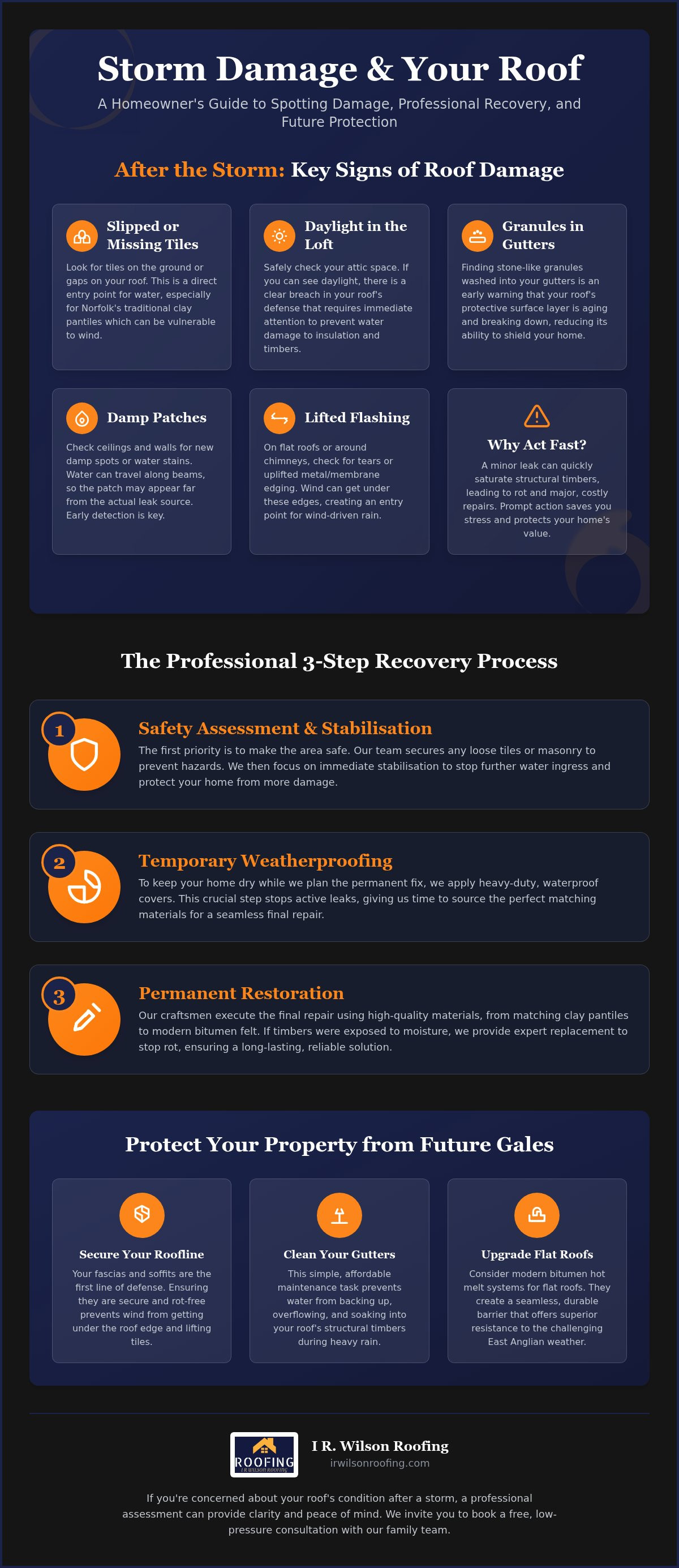
- Learn how to spot early signs of distress, such as slipped clay pantiles or daylight in the loft, to prevent water from reaching your structural timbers.
- Understand the professional recovery process for storm damage repairs Norwich, starting with immediate stabilisation to keep your home watertight.
- Discover how affordable maintenance like gutter cleaning and securing fascias can protect your property from being caught out by future Norfolk gales.
- Gain a clear understanding of the repair timeline and how to start your restoration journey with a free consultation from a local family team.
Assessing Storm Damage on Your Norwich Home
After a significant storm, your first priority is a visual check. Waiting even a few days can allow water to saturate loft insulation or penetrate structural timbers. In Norwich, our traditional clay pantiles are particularly vulnerable to coastal wind-driven rain. Understanding the effects of wind on buildings helps explain why tiles often shift or lift during East Anglian gales. Look for slipped tiles, daylight appearing in the loft, or stone-like granules in your gutters. These granules are often the first sign that your roof's protective layer is failing.
To better understand how storms impact your roof, watch this helpful video:
Homes in the Golden Triangle or Victorian terraces across NR2 face unique challenges. These older properties often have intricate rooflines and aging leadwork where wind can create suction, pulling tiles loose. If you suspect your property has been hit, seeking professional storm damage repairs Norwich experts early ensures a small leak doesn't become a major timber replacement project. We've seen how quickly a minor gap can lead to saturated rafters and costly internal damage.
Identifying Subtle Signs of Water Ingress
Water doesn't always drip directly below a hole. It often travels along rafters, showing up as a damp patch several metres from the source. On flat roofs, look for subtle membrane tears or uplifted edge flashing that might not be visible from the ground. We recommend checking your ceilings and loft spaces immediately after heavy rain. It's about finding those "invisible" issues before they escalate. If you're worried about your home’s safety, we invite you to book a free consultation for a low-pressure assessment of your roof's condition.
The Professional Recovery Process for Storm-Damaged Roofs
When a storm hits, the first step is always stabilisation. Our team focuses on preventing further internal damage by securing the site immediately. Following RICS guidance on storm damage, a professional assessment ensures that we don't just patch the surface but look for structural shifts. This is vital for storm damage repairs Norwich homeowners need to ensure their property remains safe and watertight. We believe in doing the job correctly the first time to give you lasting peace of mind.
Local expertise makes a significant difference when moving to permanent restoration. We've spent decades matching traditional Norfolk materials, from specific clay pantiles to intricate leadwork. Using the right materials isn't just about looks; it's about how the roof breathes and moves in our local climate. If timbers were exposed to moisture, we provide expert timber replacement to stop rot before it starts. This methodical approach is why our family-run business has been trusted since 1994.
From Emergency Tarping to Permanent Restoration
Restoring your roof involves a clear, three-step approach to ensure long-term reliability:
- Step 1: Safety Assessment. We secure loose tiles or masonry that could fall, protecting your family and neighbors from potential hazards.
- Step 2: Temporary Weatherproofing. We apply heavy-duty covers to stop active leaks while we draft a permanent restoration plan and source matching materials.
- Step 3: Permanent Restoration. Our craftsmen execute the final fix using high-quality bitumen felt or matching clay tiles, ensuring the repair blends seamlessly with your original roofline.
We take pride in our honest, straightforward approach to every project. If you’re unsure how to proceed after a storm, we invite you for a free, low-pressure consultation to discuss your restoration options with Ian or Ben.
Protecting Your Property from Future East Anglian Gales
Preventing the storm damage repairs Norwich homeowners often face starts with the roofline. Your fascias and soffits act as a vital first line of defence against high winds. If these components are loose or rotting, wind can easily get under the roof edge, creating suction that lifts tiles or felt. We've found that simple, affordable maintenance like regular gutter cleaning prevents water from backing up and soaking into your structural timber. It's a straightforward task that saves a lot of stress during a heavy downpour.
For flat roofs, moving to modern bitumen hot melt systems offers superior resistance compared to older, traditional methods. These systems create a durable, seamless barrier that stands up well to the relentless East Anglian weather. Our team has specialised in bitumen felting since 1994, ensuring your property stays watertight even when the gales are at their worst. Investing in quality materials now protects your home and avoids the need for emergency call-outs later.
The Role of Gutters and Roofline Maintenance
Blocked gutters do more than just spill over the side. They trap moisture against your home, leading to decayed fascias and even foundation issues over time. During storm recovery, we often recommend timber replacement and the installation of eaves protectors. These strengthen the roof's edge against wind uplift, providing a solid foundation for your tiles or felt. This methodical approach ensures your home is truly ready for the next season.
We believe in honest advice and long-term solutions rather than quick patches. If you're worried about how your roof will handle the next storm, we invite you to book a free roofing quotation. We'll provide a clear assessment and help you find the most affordable way to protect your home for years to come.
Securing Your Home Against the Elements
Taking prompt action after a storm is the best way to prevent hidden rot and keep restoration costs affordable. We've discussed how to identify subtle signs of ingress and the importance of moving from stabilisation to permanent, high-quality repairs. Maintaining your roofline and gutters creates a strong first line of defence against future gales.
Since 1994, Ian and Ben Wilson have provided the dependable storm damage repairs Norwich homeowners trust. Our family-run team brings deep expertise in both flat and pitched roof restoration to every property. We value our local reputation and the safety of your home above all else.
You don't have to handle this stress alone. We're here to provide the calm competence you need to keep your roof watertight for the long term.
Frequently Asked Questions
How do I know if my roof has wind damage after a storm?
You can often identify wind damage by looking for uneven lines in your tiling or loose lead flashing around chimneys. Use binoculars to safely check for lifted edges or missing ridge tiles from the ground. If you notice debris like mortar or slate on your lawn, your roof likely needs attention. We offer a free consultation to provide a professional assessment and identify issues before they cause internal rot.
Will my home insurance cover storm damage repairs in Norwich?
Most standard policies cover storm damage repairs Norwich homeowners encounter, provided the roof was well-maintained. Insurance typically pays for sudden damage from gales or fallen trees but may reject claims based on long-term wear and tear. It's helpful to document the damage with photos immediately. Our team covers Norfolk and Suffolk, providing detailed quotations for your insurer to help move your claim forward professionally.
What should I do if my roof starts leaking during a storm?
Safety is your first priority. Never attempt to climb onto a wet or windy roof yourself. Inside the house, place buckets under leaks and move furniture to prevent water damage. Once the weather settles slightly, we can provide emergency temporary repairs to make your home watertight. Contacting our team for a free consultation allows us to stabilise the situation and plan a permanent, affordable restoration.
Can a storm-damaged flat roof be repaired or does it need a full replacement?
Many storm-damaged flat roofs only require targeted repairs if the underlying timber remains dry. We specialise in bitumen felting and can often patch specific tears or fix uplifted edge flashing without a full replacement. However, if the storm has caused structural sagging or widespread saturation, a new installation is often the most affordable long-term choice. We'll always provide an honest assessment of which path is best for your home.