
What if the safest roof check is the one you do from the ground? After the work is finished, it’s natural to look for signs that everything is complete and wonder what you might not be able to see. Knowing what to check after a roofer has finished can help you review visible details without climbing onto the roof or trying to assess work that needs a professional eye.
This practical checklist covers the handover, roofline, gutters and surrounding area. It also explains what to photograph and how to describe a concern clearly. A visual check can flag something worth following up, but it can’t confirm the condition of hidden parts of the roof. If you’re unsure what you’ve noticed, I R. Wilson Roofing offers a free consultation to help you consider a sensible next step.
Key Takeaways
- Use what to check after a roofer has finished as a guide to visible signs, not a way to diagnose hidden roofing work.
- Review the cleared work area, roofline, visible materials and drainage from a safe position.
- Look indoors for changes such as fresh damp patches, and note where and when you see them.
- If something appears unfinished, record the details and use them to have a clear follow-up conversation.
What to Check After a Roofer Has Finished: Start with the Handover
A handover check isn’t a test of your roofing knowledge. It’s a chance to compare what you can safely see with the work that was agreed, notice anything that appears unfinished and discuss questions clearly. Knowing what to check after a roofer has finished can help you feel more confident about the next steps without trying to diagnose the roof yourself.
Take a calm look around the property from ground level, then check inside for changes such as a new damp mark or signs of a leak. You might also notice leftover packaging or an area that looks different from what you expected. These are observations to record and discuss, not proof on their own that the work is faulty. Never climb onto the roof to investigate.
This video offers another homeowner’s perspective on a roofing project handover:
What should a roofing handover cover?
Use the handover to talk through the agreed scope: what was completed, which areas were worked on and whether anything remains outstanding. For example, if guttering was included, confirm whether that work is complete or still to be arranged. Note any agreed follow-up so there’s a clear record of what was discussed.
Keep the quote or work description, messages, paperwork and photographs together. They can help you explain what you expected and when you noticed a concern. You’re there to observe from safe places and communicate clearly. Technical questions that can’t be answered from the ground need a roofing professional’s assessment. A clear handover record also makes it easier to refer back to the agreed work if a detail needs explaining.
A Safe Checklist for Checking Finished Roofing Work
A steady ground-level check can help you spot anything worth discussing without putting yourself at risk. Work through the outside first, then look indoors. What to check after a roofer has finished depends on the agreed work, so use your quote or job description as a reference. Don’t judge whether work is faulty by appearance alone.
Which checks can you make safely from the ground?
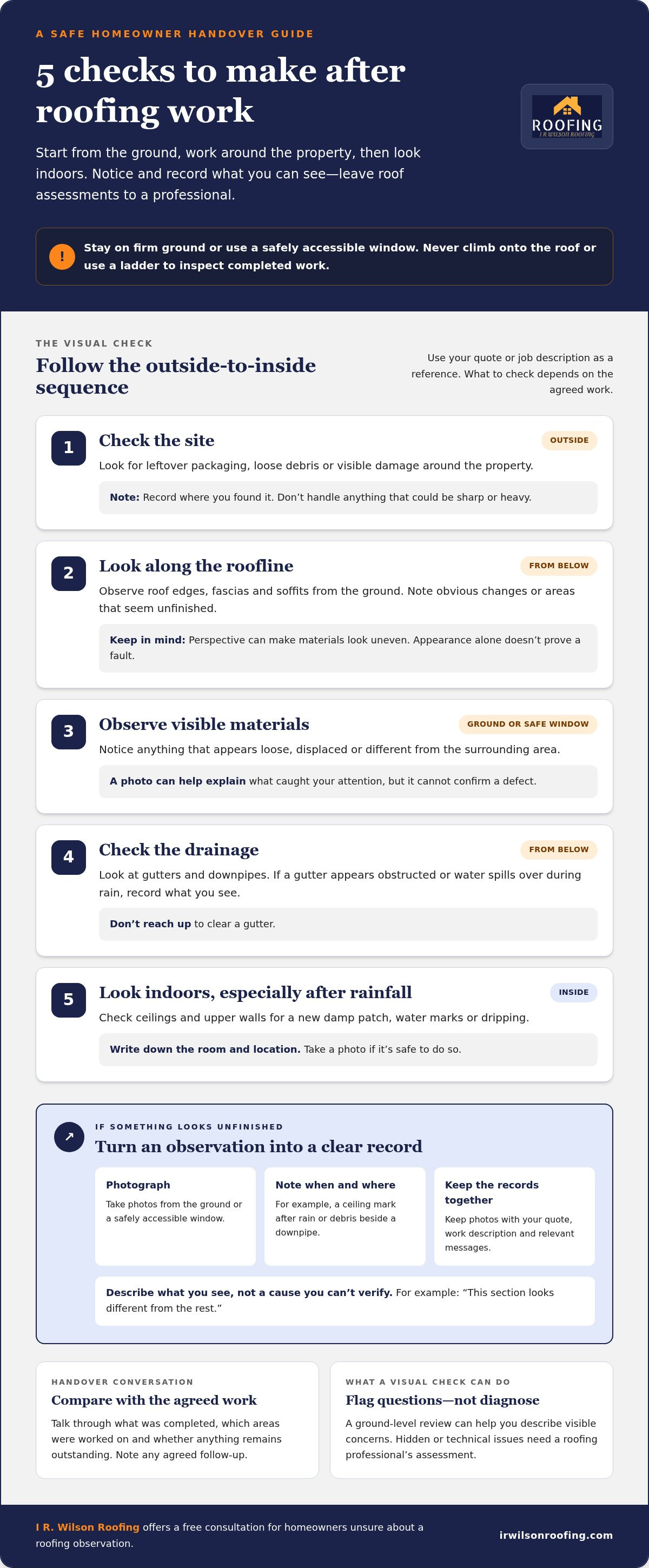
Stay on firm ground or look through a safely accessible window. Don’t climb onto the roof or use a ladder to inspect completed work. Make a note of what you can see, and leave technical assessments to a roofing professional.
- Check the site. Look for leftover packaging, loose debris or visible damage around the property. Note where you found it rather than handling anything that could be sharp or heavy.
- Look along the roofline. From the ground, observe the roof edges, fascias and soffits. Note obvious changes or areas that seem unfinished, but remember that perspective can make materials look uneven.
- Observe visible roofing materials. From the ground or a safe window, note anything that appears loose, displaced or different from the surrounding area. A photo can help explain what caught your attention, but it can’t confirm a defect.
- Check the drainage. Look at gutters and downpipes from below. If a gutter appears obstructed or water spills over during rain, record what you see. Don’t reach up to clear it.
- Look indoors, especially after rainfall. Check ceilings and upper walls for a new damp patch, water marks or dripping. Note the room and location, and take a photo if it’s safe to do so.
These checks help you describe visible concerns clearly, not diagnose the roof. If something worries you, speak with our roofing team about the next step.
What to Do If Something Looks Unfinished After Roofing Work
Seeing something unexpected doesn’t automatically mean there’s a fault. Focus on describing what you observed so it can be discussed clearly. Keep your account factual and don’t try to inspect the roof more closely yourself.
How to raise a concern and arrange a follow-up
Take photographs from a safe position, such as the ground or a safely accessible window. Note where and when you noticed the concern. For example, record a mark on an upstairs ceiling after rain or debris beside a downpipe after the work. Keep the photos with your quote and relevant messages.
Write down what you saw and when, then explain it calmly and specifically in a follow-up conversation. Avoid stating a technical cause you can’t verify. Instead of saying, “the flashing is installed incorrectly,” you could say, “this section looks different from the rest.” That gives the conversation a clear, factual starting point.
I.R. Wilson Roofing provides roofing guidance and repairs in Norwich and Norfolk. You can also find further repair information in our Norwich roof repairs guide.
If water is actively entering your home, say so clearly and explain where it’s appearing. I.R. Wilson Roofing provides emergency roofing, with 24/7 availability for emergency work. Don’t climb onto the roof or attempt a repair yourself.
Move Forward with Confidence
The aim isn’t to judge the roof from the ground, but to make sure questions don’t get lost after the work is done. A clear note, photograph and calm follow-up can turn an uneasy observation into a practical conversation. Keep your records together and refer back to the agreed work if a detail still needs explaining.
If you’re still unsure what to check after a roofer has finished, local guidance can help you decide whether an observation needs a closer professional look. I.R. Wilson Roofing serves Norwich and the wider Norfolk area, including Yarmouth, Beccles, Wymondham, Mulbarton and Wroxham, as well as Suffolk. The company offers a free consultation and competitive, honest quotations. The website displays a 5-star rating across 10 reviews.
Take the next step at your own pace. For a friendly conversation about your roof, arrange a free consultation with I.R. Wilson Roofing.
Frequently Asked Questions
What should I do if I notice a leak after a roofer has finished?
Note the room, where you see water or dampness, and when it appeared. A leak is a priority when considering what to check after a roofer has finished. Take clear photographs from a safe position and contact I.R. Wilson Roofing for prompt roofing help. Don’t climb onto the roof or try a repair yourself. If water is entering now, move belongings away and explain where the water is appearing.
Can I inspect my roof myself after the work is finished?
You can make visual observations from a safe place, but leave close inspection to a roofing professional. If details are hard to see from the ground, binoculars may help you observe without getting closer. Don’t lean out of a window or use a ladder. Your role is to report what you notice, not to decide whether the roof meets technical standards.
Is it normal to find roofing materials or debris after the job?
You might spot a small offcut or piece of packaging, but don’t assume it proves the work is incomplete. Keep children and pets away from sharp or unstable debris, and don’t handle anything unsafe. Photograph the item and note its location, such as beside a side gate, so you can describe it clearly during follow-up.
What records should I keep after roofing work?
Keep project documents and messages together, and save original photographs with a brief note about what each one shows. For example, label a file with the room or part of the property and the date you noticed the concern. This makes it easier to find the right information later and explain the situation without relying on memory.