Discover the most durable materials, repair strategies, and local costs for flat roofing in the Norwich area.
The Evolution of Flat Roofing in Norwich: Why Quality Matters
Modern flat roofing is a world away from the old "tar and gravel" systems that gave flat roofs a bad name. Today, we define a quality flat roof as a high-performance system, engineered for longevity using advanced, waterproof membranes. For homeowners in Norwich, from the Victorian terraces in the Golden Triangle to modern extensions across the city, understanding these systems is key to a leak-free home.
The days of a 10-year life expectancy are over. Modern materials, when professionally installed, offer 30-50 year lifespans. However, achieving this requires a roofer who is not just skilled, but also intimately familiar with the NR postcode, local building regulations, and the unique challenges of the East Anglian climate.
Common Flat Roof Styles in Norfolk Properties
Our team has worked on countless properties across the region, and we see several common applications for high-performance flat roofing:
- Traditional garage blocks in suburbs like Hellesdon and Thorpe St Andrew, which often require robust and cost-effective solutions.
- Victorian kitchen extensions, a common feature in the Golden Triangle, where proper detailing around old brickwork is essential.
- Modern balconied apartments, such as those near the Riverside development, which demand durable surfaces capable of handling foot traffic.
The Impact of the East Anglian Climate
Norfolk’s specific climate poses unique challenges that a generic national company might overlook:
- North Sea Winds: Powerful gales can cause membrane lifting on poorly bonded roofs, making the quality of installation absolutely critical.
- Coastal Humidity & Salt Air: The high humidity and salt content in the air can accelerate the degradation of inferior materials. We select systems proven to resist these corrosive effects.
- Temperature Fluctuations: The rapid shifts in temperature common in our region cause materials to expand and contract. Professional installation accounts for this movement to prevent cracks and failures.
Comparing Flat Roof Materials: High-Performance Felt vs. GRP Fibreglass
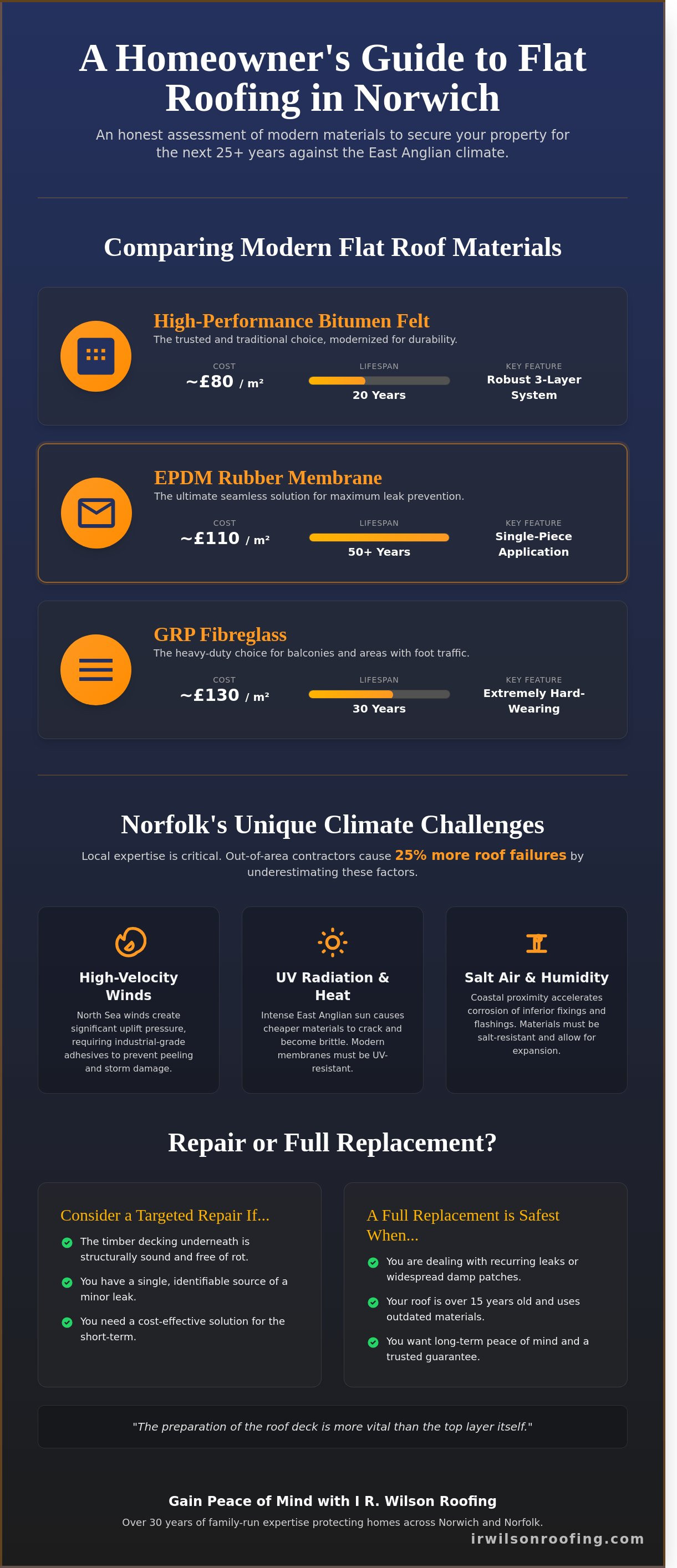
Choosing the right material is the most important decision you'll make for your flat roof. The "best" option depends on your budget, how you use the space (e.g., a simple garage roof vs. a balcony), and your long-term goals. Here in Norwich, the two leading choices are modern bitumen felt and GRP fibreglass.
| Feature | High-Performance Felt | GRP (Fibreglass) |
|---|---|---|
| Durability | Excellent (20-30 year lifespan) | Exceptional (30-50+ year lifespan) |
| Best For | Garage roofs, extensions, general waterproofing | Balconies, walkways, areas with foot traffic |
| Flexibility | Highly flexible, good for complex shapes | Rigid and seamless, extremely tough |
| Cost | More cost-effective upfront | Higher initial investment |
| Appearance | Traditional mineral finish | Smooth, modern, available in various colours |
High-Performance Bitumen Felt (The Traditional Choice, Modernised)
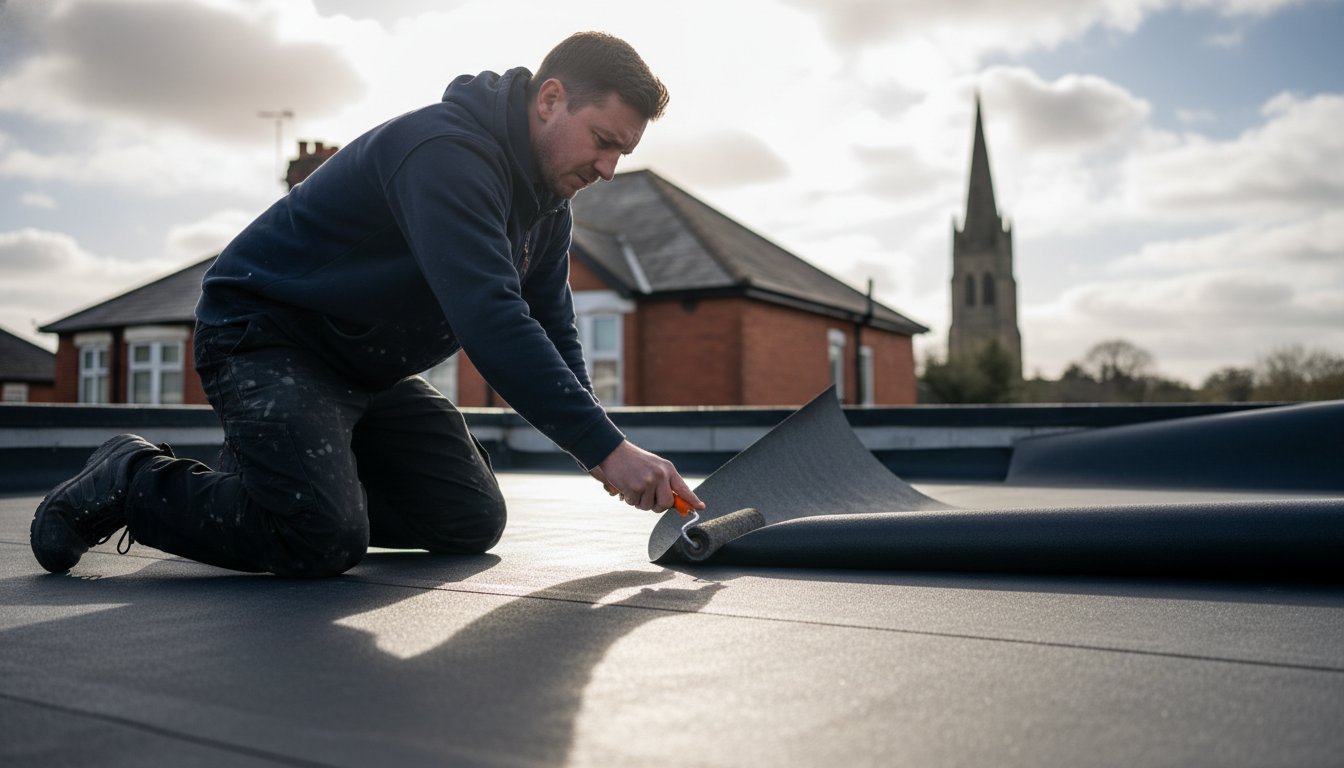
Forget the old, brittle felt of the past. Modern torch-on felt systems are a completely different product compared to outdated "pour and roll" methods. We exclusively use multi-layered systems, with the gold standard being a three-layer application. This creates a thick, resilient, and completely waterproof barrier.
In short, modern bitumen felt is a multi-layered, reinforced membrane suited for heavy-duty residential use, offering a fantastic balance of performance and value.
GRP Fibreglass (The Modern, Durable Alternative)
For ultimate durability, GRP (Glass Reinforced Plastic) is the top choice. This is the same material used to make boat hulls, so its strength and waterproofing capabilities are second to none. It's applied as a liquid resin that cures to form a single, seamless membrane with no joints or weak points.
This makes GRP the ultra-tough option for any roof, but it truly excels on surfaces that need to withstand foot traffic, such as balconies, roof terraces, or walkways. While the initial investment is higher, its incredible life expectancy and minimal maintenance needs make it a superb long-term solution.
Flat Roof Repair vs. Full Replacement: A Homeowner’s Decision Matrix
The big question for many homeowners is whether to patch a leak or invest in a full replacement. A small, one-off repair can be cost-effective, but repeatedly patching an old, failing roof is often a false economy. The decision should be based on the age of the roof, the extent of the damage, and the condition of the structure underneath.
A key consideration is modern insulation. Current building regulations often mean that a full replacement requires upgrading your roof to a "Warm Roof" system. While this adds to the cost, it dramatically improves your home's energy efficiency, saving you money on heating bills in the long run.
Identifying Early Warning Signs of Flat Roof Failure
Be proactive and look for these tell-tale signs:
- "Ponding" Water: Puddles that remain 48 hours after rain indicate poor drainage and can lead to structural sagging over time.
- "Alligatoring" or Cracks: A pattern of cracking on the surface of old bitumen felt, resembling alligator skin, shows the material has become brittle and is failing.
- Internal Damp Patches: A damp spot on your ceiling often signals a roof failure that may be located some distance from where the water is showing inside.
When a Patch Repair Is No longer Cost-Effective
A professional assessment is always best, but here are some guidelines:
- The "25% Rule": If the estimated cost of repairs exceeds a quarter of the cost of a full replacement, it’s usually more financially sensible to replace the entire roof.
- Age vs. Guarantee: If your roof is over 15-20 years old and failing, it has already exceeded its expected lifespan. A new roof comes with a modern, long-term guarantee, offering peace of mind that patching cannot.
- Energy Efficiency: A full replacement is an opportunity to significantly improve your home's insulation and EPC rating, a benefit no patch can provide.
For significant works, such as a full replacement, we also handle the necessary building control notifications, ensuring your project is fully compliant with local Norwich regulations.
The Importance of Proper Decking and Insulation
The layers you don't see are often the most important.
- Decking: We always inspect the timber joists and OSB boards, replacing any rotten or compromised sections to create a perfectly level and stable surface.
- Insulation: We champion the "warm roof" configuration, which involves installing high-performance PIR insulation boards above the structural deck. This method is far superior to placing insulation between the joists (a "cold roof").
- Benefits: A warm roof system places insulation above the structural deck to eliminate cold spots, drastically reducing heat loss and preventing condensation and mould growth in the rooms below.
Routine Maintenance to Extend Roof Lifespan
Once your new roof is installed, you can double its effective lifespan with some simple, routine care:
- Clear Gutters: Ensure gutters and outlets are cleared of leaves and debris at least twice a year to prevent blockages and water backup.
- Remove Debris: Gently sweep away any moss or debris that can trap moisture against the membrane.
- Annual Inspections: Once a year, visually inspect the roof for any minor punctures or issues with flashing, catching small problems before they become major leaks.
Trusting I R. Wilson Roofing for Your Norwich Flat Roof Project
In a trade with a mixed reputation, we believe our family-run approach offers a level of care and accountability that larger, faceless firms simply cannot match. With over 30 years of experience specialising in the unique architecture of Norwich and the surrounding Norfolk area, we’ve built our business on a foundation of honest advice, transparent communication, and expert craftsmanship.
Our commitment to you includes fixed-price quotations—no hidden surprises—and the peace of mind that comes from our long-term guarantees and full insurance coverage.
A Family-Run Business with Three Decades of Local Expertise
I.R. Wilson Roofing is a true father-son team. The story of Ian and Ben Wilson brings multi-generational skill and pride to every single job. Being local to Trowse means we are part of the community we serve, and we are always nearby for advice or emergency repairs. We are known for our tidiness, our respect for your property, and our dedication to getting the job done right the first time.
Getting Your Free, No-Obligation Roofing Quote
When you call us, we conduct a thorough survey to identify the root cause of the problem and propose the most cost-effective, long-term solution for you. Your detailed written quotation will clearly outline the work to be done and the total cost.
Contact us today to secure your property before the next Norfolk storm.
- Family-run since 1994
- Fully insured for all residential and industrial projects
- Competitive fixed-price quotations
Frequently Asked Questions
How long should a flat roof last in the Norwich climate? A modern, professionally installed high-performance felt roof can be expected to last 20-30 years. A GRP fibreglass system can last upwards of 30-50 years, even with the challenges of the East Anglian climate.
Can I walk on my GRP flat roof? Yes, GRP is extremely tough and is the ideal choice for flat roofs that will be used as balconies, terraces, or require regular foot traffic for maintenance access. While you can walk on a felt roof, it's not recommended for regular use unless a dedicated walkway is installed.
Does a new flat roof require planning permission in Norwich? Generally, repairing or replacing a flat roof is considered "permitted development" and does not require planning permission. However, if you are altering the building's height or structure, you should check with the local council. A full replacement will require a building regulations application to ensure it meets current insulation standards.
What is the average cost of flat roof repairs in Norwich? The cost of a repair can vary widely, from a couple of hundred pounds for a simple patch to significantly more for larger areas of damage. The final price depends on the material, the extent of the damage, and the accessibility of the roof. We provide free, detailed quotes for all repair work.
How do I know if my flat roof needs replacing or just a repair? The key factors are the roof's age, the number of existing leaks, and the condition of the underlying deck. If the roof is over 15 years old and has multiple leaks, or if there is evidence of "ponding" water, a full replacement is often the most cost-effective long-term solution.
Is felt roofing still a good option compared to modern systems like GRP? Absolutely. Modern high-performance felt is a highly advanced, multi-layer system that offers excellent durability and value. While GRP offers superior toughness for areas with foot traffic, a professionally installed felt system is an outstanding and reliable choice for most residential flat roofs like garages and extensions.
What is the difference between a warm roof and a cold roof? A "warm roof" has the insulation layer placed on top of the roof deck, which keeps the entire roof structure warm and prevents condensation. A "cold roof" has the insulation between the joists below the deck, requiring ventilation to prevent moisture buildup. Warm roofs are the modern standard for thermal efficiency and long-term structural health.