Last February, a homeowner in Sprowston sat through a weekend of relentless Norfolk rain, watching a damp patch on their kitchen ceiling slowly expand. It’s a common worry here in the East of England, where the salt air and biting winds can punish a poorly installed flat roof. You likely agree that your home should be a place of safety, not a source of constant stress every time the clouds turn grey. You want to know exactly how long does a felt roof last UK so you can budget for the future without any nasty surprises.
At I R. Wilson Roofing, we’ve spent over 30 years helping our neighbours protect their properties. In this 2026 guide, we’ll show you how modern high-performance torch-on felts can now reliably reach a 25-year lifespan, and we’ll share the specific maintenance steps that can extend your roof’s life by a further decade. We’ll walk you through the tell-tale signs of failure, from blistering to cracking, so you can make an informed decision for your Norwich home before the next storm arrives.
Key Takeaways
- Understand the difference between standard materials and modern torch-on systems to accurately gauge how long does a felt roof last UK wide and locally in Norfolk.
- Learn how Norwich’s unique climate, from frosty winters to humid summers, directly impacts the durability and adhesion of your flat roof.
- Identify the critical "early warning" signs that indicate your roof needs a professional repair before a minor leak becomes a costly structural replacement.
- Discover why proper ventilation and expert installation are the most reliable ways to extend your roof's lifespan by up to ten years.
- Compare the costs and benefits of traditional felt against modern alternatives like EPDM and GRP to find the most cost-effective solution for your home.
Understanding the Lifespan of Felt Roofing in the UK
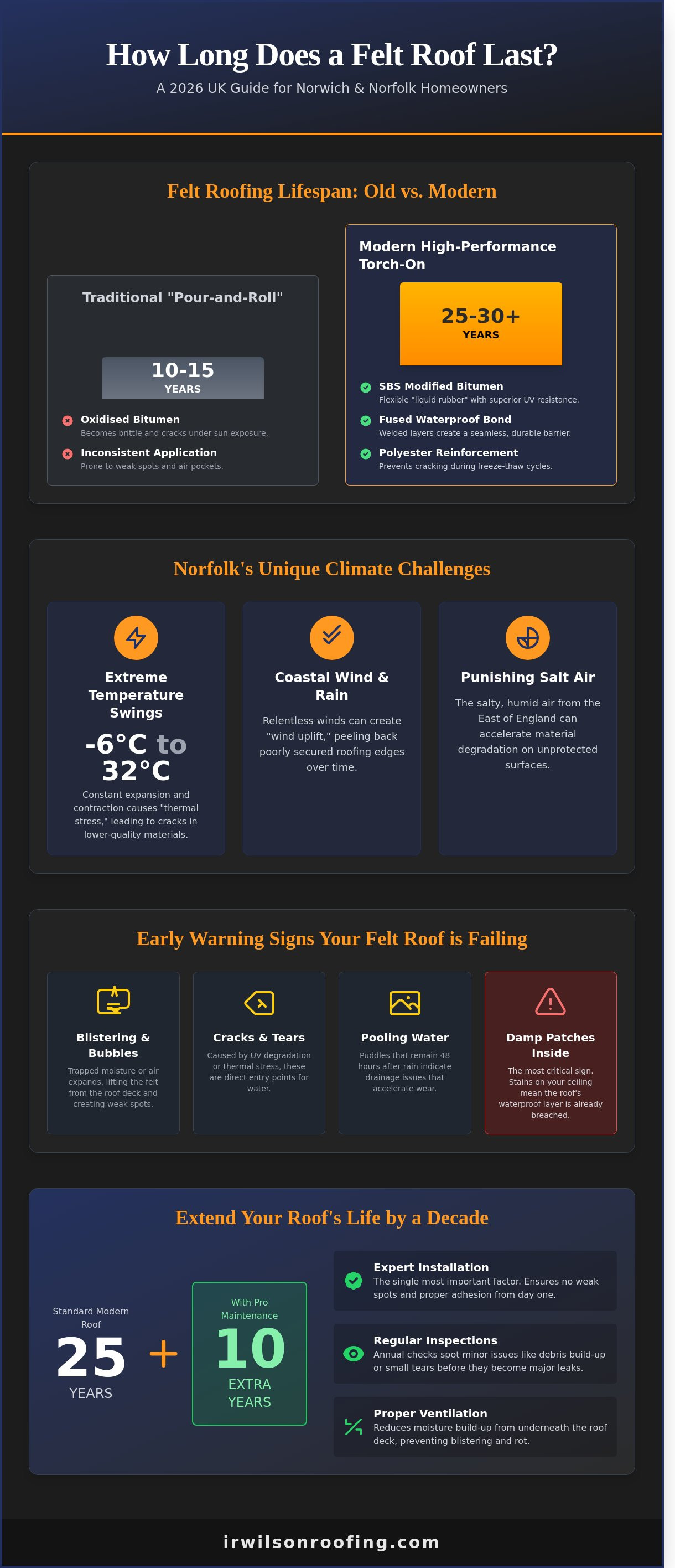
Felt roofing acts as a multi-layered waterproof barrier using bitumen-saturated materials to protect your property from the elements. When homeowners ask how long does a felt roof last UK weather conditions considered, the answer depends heavily on the specific technology used during installation. Standard felt roofs installed using older techniques typically last between 10 and 15 years. However, modern high-performance torch-on bitumen systems now frequently exceed 25 to 30 years of reliable service. This lifespan is determined by three critical factors: the quality of the bitumen, the expertise of the installer, and the level of environmental exposure your property faces.
To better understand this concept, watch this helpful video:
Traditional Pour-and-Roll vs. Modern Torch-on Felt
The common myth that felt only lasts 10 years stems from the old "pour-and-roll" method popular in the 1970s and 1980s. This process involved mopping hot bitumen onto a deck and rolling felt into it, which often created weak spots and air pockets. We now use modern torch-on felt which creates a superior, fused waterproof bond. These systems are part of sophisticated flat roof construction methods that ensure the layers are welded together. Modern felts also feature polyester reinforcement. This tough core prevents the material from cracking during the UK's harsh freeze-thaw cycles, allowing the roof to stretch and move without failing.
The Evolution of Bitumen Quality
The quality of the bitumen itself has seen a massive shift. Older roofs used oxidised bitumen, which becomes brittle and cracks after a decade of sun exposure. We prefer SBS (Styrene-Butadiene-Styrene) modified bitumen for our Norwich customers. This material acts like a liquid rubber, providing the UV resistance that serves as the "secret sauce" for a 25-year roof. UV rays cause 90% of material degradation, so this added protection is vital. Manufacturer guarantees for these high-performance systems usually cover the material for 20 to 25 years. These warranties provide genuine peace of mind for Norwich homeowners, ensuring that your investment is protected by a family-run business that stands by its craftsmanship.
If you are concerned about your current roof, we can provide a free, no-obligation estimate to assess its condition. Our team focuses on how long does a felt roof last UK wide by applying the best local expertise to every project. We take the time to do things correctly the first time, ensuring your home remains dry and secure for decades to come.
Local Factors Impacting Roof Longevity in Norwich and Norfolk
Norwich presents a unique set of challenges for any flat roofing system. While the average answer to how long does a felt roof last UK wide is typically between 20 and 30 years, local Norfolk conditions often dictate a more specific timeline. Our region experiences a distinct microclimate, ranging from biting North Sea winds to humid, stagnant summer days. These fluctuations put immense pressure on the bitumen layers used in traditional felt roofing.
Temperature swings in East Anglia are particularly demanding. In a single year, your roof might endure lows of -6°C during a frosty January and highs of 32°C in July. This constant cycle of freezing and thawing causes thermal expansion stress. If the felt isn't high-quality or lacks the flexibility found in modern SBS-modified torch-on membranes, it will eventually become brittle and crack. We always ensure our materials meet the British Standard for flat roofs to account for these environmental pressures. Using products tested for the UK’s damp, unpredictable climate is the only way to ensure your investment reaches its full life expectancy.
The East Anglian Wind and Rain Factor
Norfolk is famously flat, which allows coastal winds to sweep inland with very little to break their momentum. In exposed areas around the Norfolk Broads or the city outskirts, "wind uplift" is a genuine threat to felt roofs. If the edge detailing isn't secured with professional-grade termination bars or drips, high winds can get underneath the felt and peel it away from the deck. Proper drainage is equally vital. Norwich receives roughly 650mm of rainfall annually. If your roof has even a slight dip, standing water will pool. Over time, this weight and moisture penetration will degrade the felt bonds much faster than on a well-drained surface.
Moss and Biological Growth in Norfolk
The lush, green gardens that make Norwich so attractive also contribute to the downfall of many flat roofs. Moss is incredibly prevalent here, especially on properties shaded by overhanging oak or lime trees. Moss isn't just an aesthetic issue; it acts like a sponge, holding moisture against the felt surface for weeks at a time. This constant dampness prevents the roof from drying out, leading to rot in the underlying timber deck. As moss grows, its tiny roots can find their way into micro-cracks in older felt layers, expanding them and eventually causing a leak. We recommend regular clearing of debris to prevent this biological buildup from shortening your roof's lifespan.
If you've noticed moss patches or standing water on your garage or extension, we can provide a free, no-obligation estimate to assess the health of your felt. Our family-run team has spent decades repairing the specific damage caused by Norfolk's weather, so we know exactly what to look for before a small crack becomes a major headache.
Comparing Modern Felt to Other Flat Roof Materials
When you are looking at a new roof for your Norfolk home, you will likely weigh up felt against EPDM rubber and GRP fibreglass. In our experience as a family-run business, felt remains the most cost-effective solution for the majority of Norwich properties. It balances a lower upfront price with a proven track record of protection. While a high-performance felt roof provides a reliable 25-year lifespan, EPDM rubber offers a potential 50-year duration for those with a larger initial budget.
For many garage and extension roofs in the local area, felt is the preferred choice because it handles the British weather without breaking the bank. We often find that for a standard 20-square-metre garage, felt can save a homeowner between 20% and 30% in upfront costs compared to more modern alternatives while still offering a fully insured guarantee. Understanding how long does a felt roof last UK wide helps you decide if the lower initial cost of felt outweighs the longer life of more expensive materials.
Felt vs. EPDM Rubber Roofing
The primary difference between these materials is their longevity and how they handle physical use. Most homeowners ask how long does a felt roof last UK wide, and for high-performance bitumen, the answer is usually 25 years. In contrast, EPDM can last between 30 and 50 years because it resists UV rays exceptionally well. However, EPDM is a thin membrane. If you use your flat roof as a balcony or need to walk on it to clean windows, the three-layer thickness of a mineral felt system provides much better resistance to punctures and foot traffic wear.
Felt vs. GRP Fibreglass
GRP fibreglass is a popular choice due to its seamless finish, but it has specific drawbacks in the Norfolk climate. GRP is a rigid material that does not flex. Many older properties in Norwich have timber frames that naturally shift and settle over time. This movement can cause GRP to crack or "chatter," whereas felt remains flexible enough to move with your building. Additionally, GRP requires perfectly dry conditions for a successful installation. Because our local weather can be unpredictable, felt is often a more reliable choice that we can install safely without the risk of the chemical bond failing in damp air. For heritage properties, the charcoal or green mineral finish of felt also tends to blend in more naturally with traditional brickwork than the industrial look of grey plastic.
We believe in providing honest advice based on your specific property and budget. If you are unsure which material suits your home, we invite you to contact us for a free, no-obligation estimate where we can assess your roof in person.
How to Identify if Your Norwich Felt Roof Needs Replacing
Spotting the early warning signs of a failing felt roof is the best way to avoid a sudden, expensive emergency. While many homeowners ask how long does a felt roof last UK, the practical lifespan often depends on how quickly you address minor wear and tear. If your roof was installed more than 10 years ago, it's entered a phase where periodic inspections become vital for protecting your home's structure. We've found that the answer to how long does a felt roof last UK depends heavily on the quality of the original installation and the local weather conditions in Norfolk.
Visual Warning Signs of Failure
You can often spot potential issues from a ladder without ever stepping onto the roof surface. Look for cracking or "crazing" on the top bitumen layer; this looks like a network of fine lines similar to a dried-up riverbed. It happens when the sun's UV rays bake the oils out of the felt, making it brittle and prone to snapping during a winter frost.
- The Bubbling Effect: These small blisters indicate that moisture is trapped between the felt layers. When the sun hits the roof, the water expands and stretches the material, eventually leading to a split.
- Mineral Loss: Modern felt uses a layer of mineral chippings to protect the bitumen from sunlight. If you find "sand" or grey grit clogging your gutters, your roof is losing its primary shield against the elements.
Structural Red Flags
Sometimes the damage isn't visible on the surface but lives in the timber deck beneath. If you feel "soft spots" or a bouncing sensation when walking on the roof, the wood has likely absorbed water and started to decay. This moves the project from a simple felt overlay to a full structural replacement, which is why we prioritise early detection during our surveys. A roof that was solid in 2018 might have developed significant rot by 2024 if a small puncture went unnoticed.
Water pooling, often called "ponding," is another serious concern. If puddles remain on your flat roof for more than 48 hours after a Norfolk rain shower, the roof's fall is no longer sufficient. The weight of standing water puts immense pressure on the joints and can lead to a sudden failure. Inside the house, keep an eye out for brown rings on the ceiling or a persistent musty smell, even if you can't see a physical drip yet. These are signs that water is already bypassing the felt and soaking into your insulation.
At I R. Wilson Roofing, we take a methodical approach to every survey. In a recent project in Cringleford, we used a moisture probe to identify a 22% saturation level in a 12-year-old extension roof that appeared perfect from the ground. By catching the moisture ingress early, we saved the homeowner the cost of replacing the entire ceiling and internal joists. We believe in honest assessments that distinguish between a reliable repair and a necessary replacement, ensuring your home stays dry for years to come.
Don't wait for a leak to damage your belongings. Contact our family-run team today for a free, no-obligation felt roof estimate to ensure your home is fully protected.
Maximising Your Roof’s Life with Professional Norwich Roofing
The lifespan of your flat roof depends heavily on the quality of the initial fit. While a DIY kit from a local hardware store might seem like a bargain, these installations frequently fail within 5 years due to inadequate bonding and poor edge detailing. When homeowners ask how long does a felt roof last UK wide, the answer for a professional installation is typically 20 to 30 years. At I.R. Wilson Roofing, we ensure your investment reaches its full potential by focusing on the technical details that amateur builds often miss.
One critical factor we address is "inside-out" rot. This occurs when a roof lacks proper ventilation, causing warm air to trap moisture against the cold underside of the felt. Without a 50mm air gap or adequate venting, the timber deck can rot long before the felt wears out. We've seen 10-year-old roofs that look perfect from the street but are structurally compromised from beneath. Choosing timely flat roof repairs in Norwich can often extend an ageing roof's life by a decade, saving you the cost of a full replacement.
The Importance of Expert Installation
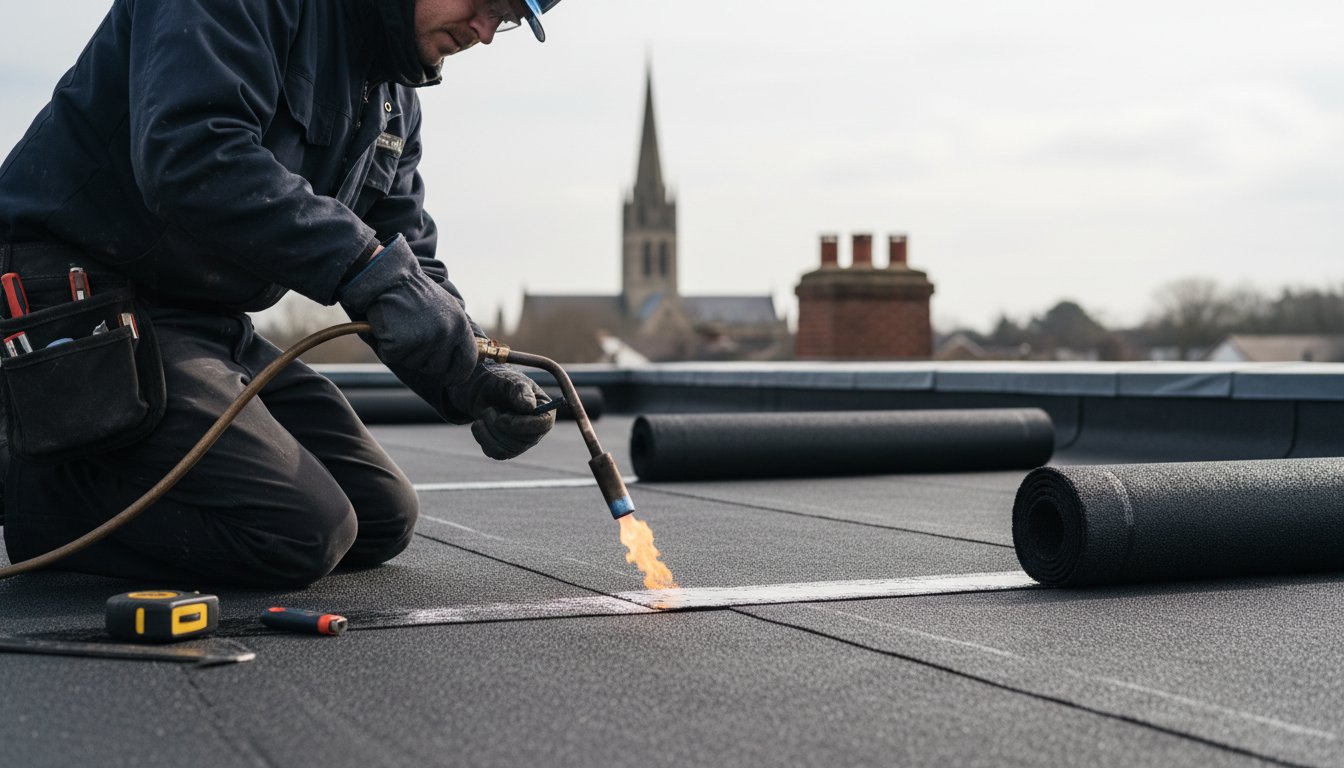
Success starts with substrate preparation. We don't just roll out felt; we prime the surface to ensure a chemical bond that withstands Norfolk’s coastal winds. Our team uses precision torching techniques to create seams that are 100% watertight. As a family-run business, we provide "boots on the ground" expertise. This means the person quoting your job is often the one on the ladder, ensuring the high standards of our family name are met on every square inch of your property.
Routine Maintenance and Gutter Cleaning
Preventative care is the most cost-effective way to protect your home. Regular gutter cleaning in Norwich prevents the standing water that leads to biological growth and seam failure. If water sits on your felt for more than 48 hours after rainfall, it creates "ponding" which adds significant weight and stress to the structure. Our annual inspections help catch minor issues, such as small punctures or solar degradation, before they become expensive emergencies.
The Wilson family promise is built on quality materials and local accountability. We use high-performance, polyester-reinforced felts that are designed for the British climate. When considering how long does a felt roof last UK weather conditions, you need a system that can expand and contract without cracking. We provide:
- High-grade bitumen: Superior flexibility compared to budget alternatives.
- Local knowledge: We understand the specific wind loads and rainfall patterns in the East of England.
- Direct communication: No call centres, just honest advice from local tradesmen.
By combining traditional craftsmanship with modern materials, we ensure your Norwich home stays dry for decades to come.
Protecting Your Norwich Home for the Decades Ahead
Understanding how long does a felt roof last UK homeowners can expect is the first step in securing your property against the Norfolk elements. While older materials often failed after a decade, our modern high-performance torch-on systems are engineered to provide a reliable, watertight seal for 25 to 30 years. Regular maintenance remains the most effective way to reach this lifespan, particularly when dealing with the salt-laden winds and seasonal temperature shifts common across East Anglia.
At I.R. Wilson Roofing, we've been a family-run business serving the Norwich community since 1994. We've spent 30 years refining our techniques to ensure every flat roof we install or repair stands the test of time. As fully insured and highly recommended Norfolk specialists, we provide expert advice on the most cost-effective flat roof repairs to help you avoid the expense of a premature replacement. You don't have to worry about the state of your felt; we offer the honest, professional guidance you deserve.
Get a free, no-obligation felt roofing estimate in Norwich today and let's keep your home dry and secure. We look forward to helping you protect your investment with craftsmanship that lasts.
Frequently Asked Questions
Is a 20-year guarantee on a felt roof reliable in Norwich?
A 20-year guarantee is reliable if the installer uses high-performance, polyester-reinforced membranes and provides an insurance-backed guarantee. We offer these long-term promises on our 3-layer torch-on systems because the materials are engineered for durability. You should ensure the guarantee covers both materials and labour. In Norfolk's coastal-influenced climate, a professional installation is the key to making that 20-year period a reality for your home.
Can I lay new felt over my old flat roof to save money?
You can lay new felt over an existing layer, but we generally advise against it to avoid trapping moisture in the old structure. Adding a second layer increases the weight by roughly 5kg per square metre, which can strain your roof joists. If the underlying timber is rotten, a new top layer won't fix the problem. We recommend a full strip-back to ensure your property stays dry for the next 25 years.
Why is my felt roof bubbling, and does it mean it’s failing?
Bubbles, or blisters, occur when moisture or air is trapped between the felt layers and expands in the sun. While a few small bubbles don't always mean your roof is failing, they can eventually crack and lead to leaks. If you notice blisters larger than 10cm in diameter, it's time for a professional inspection. We can often repair minor bubbling before it compromises the entire 15 to 20-year lifespan of the system.
How much does it cost to replace a standard garage felt roof in Norfolk?
A standard single garage roof in Norfolk usually costs between £1,200 and £1,800 for a full replacement using a 3-layer torch-on system. This price typically includes stripping the old material and disposing of the waste. For a larger double garage of roughly 30 square metres, you can expect the cost to range from £2,200 to £3,000. We always provide a fixed-price estimate so you know exactly what you're paying.
Does moss on my flat roof actually reduce its lifespan?
Moss significantly reduces the lifespan of your roof because it retains moisture and its roots can penetrate the felt surface. A patch of moss can hold 10 times its own weight in water, which adds unnecessary weight and keeps the felt damp during winter freezes. This freeze-thaw cycle causes the bitumen to crack prematurely. We suggest clearing moss every 2 years to help you reach the full potential of how long does a felt roof last UK standards.
What is the best time of year to replace a felt roof in Norwich?
The best time to replace your roof is between April and September when the weather is drier and temperatures stay above 5°C. Torch-on felt requires a dry surface for the bitumen to bond correctly to the deck. While we work year-round in Norwich, autumn and winter projects often face delays due to frost or rain. Planning your installation for the summer months ensures the most efficient and reliable finish for your property.
Can a felt roof be repaired, or does it always need a full replacement?
You can certainly repair small punctures or localised damage with a patch or liquid sealant. However, if more than 25% of the roof surface is showing signs of age, such as widespread cracking or "alligatoring," a full replacement is more cost-effective. We assess the condition of the timber decking first. If the wood is solid, a repair might buy you another 5 years, but rotten timber always requires a complete strip-back.
Is modern torch-on felt fire-safe for residential homes?
Modern torch-on felt is very safe and meets strict UK building regulations, specifically the BROOF(t4) fire performance standard. Manufacturers now include fire-retardant additives in the bitumen to prevent the spread of flame. As a professional family-run business, we follow rigorous safety protocols during installation, including having fire extinguishers on-site and conducting a fire watch for 60 minutes after the last torch is extinguished. Your home's safety is our priority.