
Replacement isn’t always the right answer when parapet flashing lifts. For parapet wall flashing repair in Norwich, sound lead that has pulled away from a joint may be re-dressed and secured. Cracked or split flashing, or lead patched with sealant or tape, will usually need replacing.
It’s understandable to worry that a gap or damp patch means a larger roof job. The key is to establish whether the flashing can be restored or has failed beyond repair. A compromised seal where a flat roof meets a parapet wall can allow water in.
This guide explains the signs that point towards repair or replacement, what can happen when flashing is poorly dressed or starts lifting, and what a roofer considers when assessing the work. You’ll have a clearer idea of the next step to protect your home.
Key Takeaways
- Flashing that is sound but has lifted may be suitable for re-dressing and re-securing, while cracked or split lead often needs replacement.
- Lead thickness and detailing matter: the right choice depends on the roof position, exposure and movement at the joint.
- A roofer assesses the condition of the flashing and the roof junction to plan replacement where poor dressing or failure has left a route for water.
- Interior damp patches or visible gaps can help indicate a problem, but the source may be at the parapet junction rather than directly above the stain.
Repair or Replace?
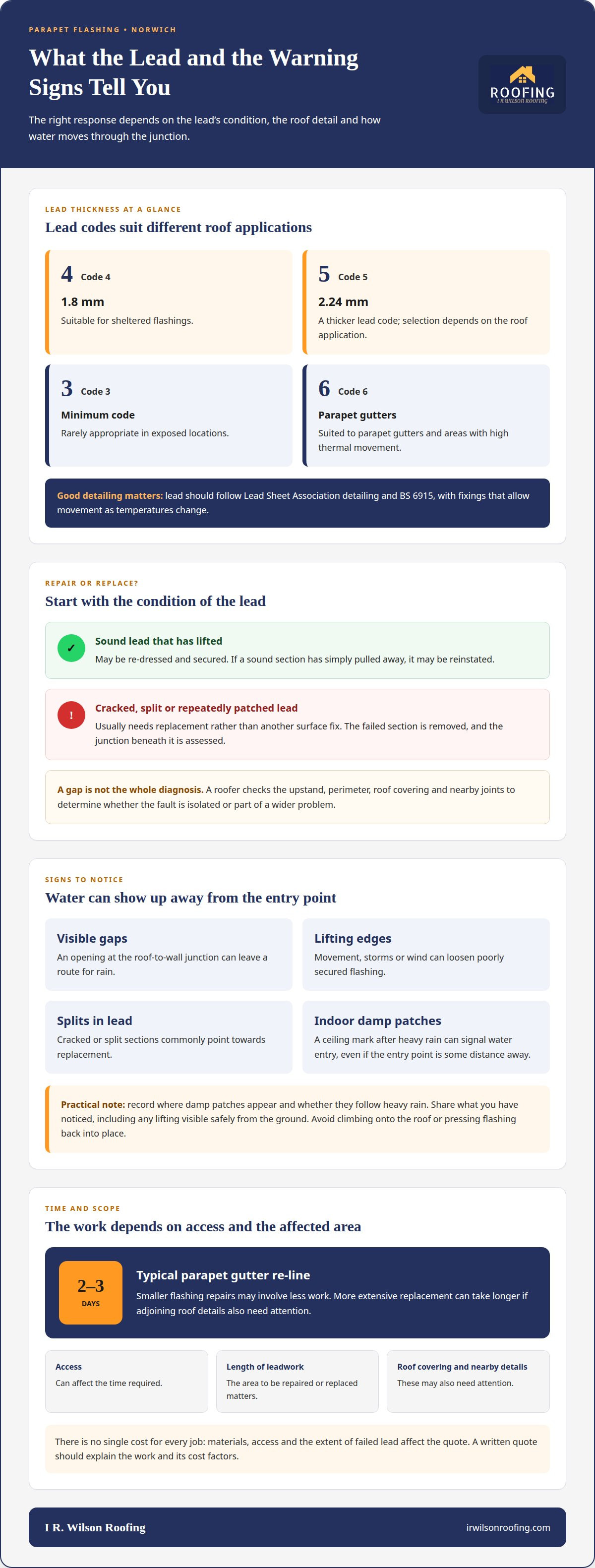
For parapet wall flashing repair in Norwich, the decision depends on the lead’s condition and how it was installed. Sound lead that has lifted may be re-dressed and secured. Cracked or split sections, or flashing patched with tape or sealant, will usually need replacing rather than another surface fix.
Lead codes describe thickness and suit different roof applications. Code 4 lead is 1.8 mm thick and suitable for sheltered flashings; Code 5 is 2.24 mm thick. Code 3 is the minimum and is rarely appropriate in exposed locations. Code 6 suits parapet gutters and areas with high thermal movement. Correct detailing matters too: lead should follow Lead Sheet Association detailing and BS 6915, with fixings that allow movement as temperatures change.
Where a flat roof meets a wall, the roofer assesses the upstand and perimeter, not just the visible edge. A poorly dressed lead valley or flashing can leave a route for rain, while correctly installed lead should sit neatly and drain water away. Damp patches on a ceiling after heavy rain can signal rain penetration, according to the Scottish Government.
Approval depends on the property and proposed work. A like-for-like repair differs from changing the roof’s structure or appearance, so the scope and property status matter. A reliable roofer explains the condition, recommends repair or replacement, and provides a written quote with the work and cost factors. In Norfolk, insurance cover depends on policy terms; grant eligibility depends on the scheme’s criteria. No single cost fits every job: materials, access and the extent of failed lead affect the quote.
Professional replacement of failed or poorly dressed flashing
Replacement should address the route water takes, not simply cover a visible gap. At a parapet, the roofer assesses the leadwork, roof covering and joints before deciding whether to repair or replace the flashing.
Repair or Replacement Decisions
If the lead is split, cracked or repeatedly patched, the failed section is removed and the junction beneath it assessed. The surface is prepared, then new lead is fitted to suit the roof detail and dressed and secured at the wall and roof covering. If a sound section has simply pulled away, it may be reinstated instead. On flat roofs and extensions, nearby joints can show whether the fault is isolated or part of a wider problem.
Repair and Replacement Timescales
The time required depends on access, the length of leadwork and whether the roof covering also needs attention. A parapet gutter re-line typically takes 2-3 days. Smaller flashing repairs may involve less work, while more extensive replacement takes longer if the roofer must address adjoining roof details. The assessment should identify the affected area and explain the proposed sequence, so you know what the job includes before work begins.
Back gutters need particular care because water can collect where a roof meets a wall or chimney. If the gutter lining has failed, the defective material is removed and the base and junctions checked before a new lining is installed and dressed to direct water towards the outlet. Properly formed joints help prevent water tracking beneath the leadwork.
If a failed roof junction needs attention, you can arrange professional roof repairs for an assessment of the affected area.
Loose or lifting flashing
Parapet flashing covers the junction where a roof meets a wall, helping keep rain out. Signs of failure include visible gaps, lifting edges, splits in lead flashing, or damp patches indoors after heavy rain. Similar warning signs can appear around a dormer or chimney, where flashing protects another roof-to-wall junction.
Movement can loosen flashing over time. Lead expands and contracts as temperatures change, while storms or wind can pull poorly secured sections away from the wall. A gap may look small from the ground, but water can travel beneath the roof covering before appearing indoors. As a result, a ceiling mark may be some distance from the entry point.
A roofer assesses the junction and nearby roofing to trace the water path rather than treating the visible stain as the source. They examine the lead’s condition, how it meets the wall, and whether adjoining roof details are damaged. This helps distinguish a locally loose edge from broader failure involving the roof covering or nearby joints. The assessment also considers whether the flashing can move as intended without creating gaps.
If you notice damp patches, note where they appear and whether they follow heavy rain. Tell the roofer what you’ve observed, including any lifting you can see safely from the ground. Avoid climbing onto the roof or pressing the flashing back into place, as this could worsen the damage. If you live in a flat, clarify who is responsible for arranging roof repairs before commissioning work. A prompt professional assessment can identify the cause and a suitable next step.
I R. Wilson Roofing
I R. Wilson Roofing can help assess loose or failed parapet flashing and any concerns about the wider roof. An inspection can clarify whether the issue is at the wall junction, affects a flat roof, or appears alongside other roof damage. This gives you a clearer understanding of the work needed before deciding what to do next.
For roof repairs, the team explains the options and provides a competitive quotation based on the condition and scope of the work. A free consultation is a straightforward way to discuss your concerns and what you’ve noticed.
Contact I R. Wilson Roofing to arrange a free consultation.
Take the next step with confidence
If you’ve noticed dampness or a change in the roofline, arrange a professional assessment before the issue worsens. A clear account of what you’ve observed can help establish whether the parapet junction is the main concern or connected roof elements also need attention. For parapet wall flashing repair in Norwich, describing the signs you’ve seen is a practical starting point.
I R. Wilson Roofing can discuss your roofing concerns and help identify a suitable next step. Its services include flat roof repairs, felt roofing, and fascias and soffits, which may be relevant if an inspection finds issues beyond the parapet itself. The right scope depends on the roof’s condition and the details of the junction.
A calm, informed decision starts with understanding what your roof needs.
Frequently Asked Questions
Roof letting water in?
If your roof is letting water in, arrange a professional inspection and move belongings away from the leak. Note when water appears, such as during heavy rain, and where it shows indoors; these details can help trace the source. Don’t climb onto the roof or try to secure flashing yourself. A ceiling stain may not be directly below the entry point.
How is parapet wall flashing repaired or replaced?
A roofer first traces the leak and inspects the affected section, including nearby roof coverings and drainage points. If the lead remains sound, it may be re-dressed and secured. If it has split or failed, the damaged section is removed and the surface beneath assessed before replacement lead is fitted and dressed into the junction. The final check focuses on water flow and secure edges.
What materials are used for parapet wall coping and flashing in the UK?
Lead is used for roof flashing at parapet junctions, while the coping is the protective top along the wall. Lead is supplied in different codes: Code 4 is 1.8 mm thick, and Code 5 is 2.24 mm thick. The suitable choice depends on exposure and the roof detail. A roofer considers the coping and flashing as separate parts of the junction.
How much does parapet wall flashing repair cost in Norwich?
There is no fixed cost for every parapet repair in Norwich. The price depends on the condition and extent of the leadwork, roof access, and whether adjoining details also need work. A competitive quotation follows an assessment of the specific job, so you can understand the proposed scope before deciding how to proceed.
What factors affect the cost of parapet flashing repair?
Key factors include how much flashing has failed, whether the underlying junction needs attention, roof access, and the detailing where the roof meets the wall. The work may also differ if a parapet gutter or nearby roof covering is affected. These details determine the labour and materials needed, so the roofer assesses the full repair area before preparing a quotation.