

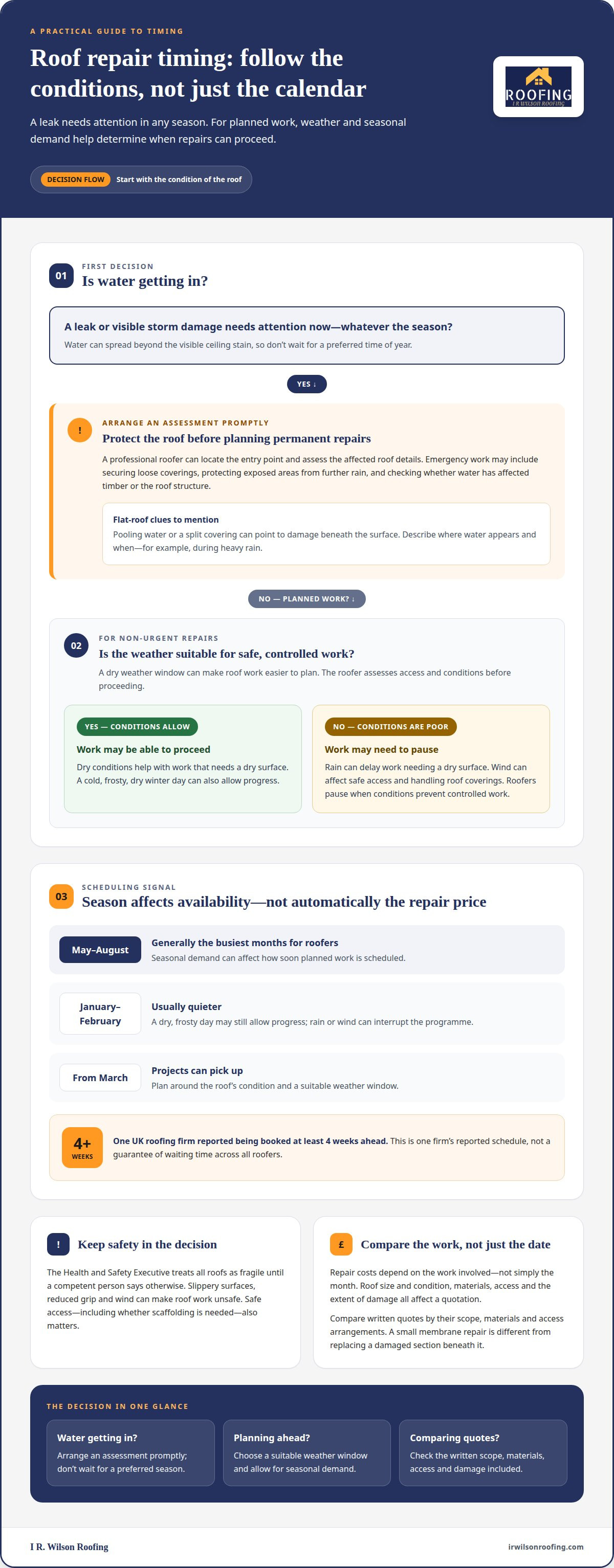
A roof leak doesn’t wait for summer, and putting off repairs until the weather improves can allow water to cause more damage. For planned work, the best time of year to repair a roof in the UK is generally summer, when conditions are often more suitable. But if your flat roof is leaking before winter, arrange an assessment promptly rather than waiting for a particular season.
Dry weather and easier scheduling can make roof work simpler to plan. This guide explains how seasonal conditions affect repairs, when leaks or storm damage need attention, and what to consider when arranging flat-roof work before winter. Timing depends on the roof’s condition as well as the calendar, whether your property is in Norwich, Yarmouth, Beccles, Wymondham, Mulbarton, Wroxham, Norfolk or Suffolk.
Key Takeaways
- Don’t wait for a preferred season if water is getting in; prompt attention can help limit further damage.
- Summer is often suitable for planned roof work, while dry, frosty winter days can also allow progress.
- Roofers are generally busiest from May to August, so seasonal demand can affect how soon planned work is scheduled.
- Roof repair costs vary with the work involved, including access, roof size and materials, not simply the time of year.
Leaking roof repairs
A leak needs attention in any season because water can spread beyond the visible ceiling stain. A professional roofer can trace the entry point, then assess tiles, flashing, the chimney and any affected timber. On a flat roof, pooling water or a split covering can point to damage beneath the surface. The current UK flat-roof technical code cited by the British Standards Institution is BS 6229:2025. The British Standards Institution also cites BS 5250:2021 for moisture management in UK roofing.
Do UK building regulations or planning rules affect roof repairs? Yes. In England and Wales, replacing a roof with materials of a similar appearance usually does not need a planning application, although exceptions apply. Building control must inspect roof work when more than 25% of an existing roof has been worked on. Under regulation 23, replacing more than 50% of a thermal element’s surface area requires the whole element to meet the applicable energy-efficiency requirement, where technically, functionally and economically feasible, according to UK Government, legislation.gov.uk. A roof replacement may therefore involve insulation as well as the outer covering.
What emergency roof repairs should a professional roofer carry out immediately, whatever the season? They should secure loose coverings, protect exposed areas from further rain and locate the leak around details such as flashing or a chimney. If water has reached timber, the roofer should assess whether the damage affects the roof’s structure before planning permanent repairs. Scaffolding and safe access also need consideration.
When choosing a roofer in the UK, ask for a written description of the repair, materials and planned work, and request current insurance documents showing relevant roofing cover. A clear explanation should distinguish temporary weatherproofing from a lasting repair or roof replacement. Keep the written quotation and agreed scope with your insurance records.
Weather and scheduling considerations
Weather and seasonal demand both affect when roof work can proceed. The best time of year to repair a roof in the UK depends on the job and conditions at your property.
Seasonal Repair Costs
Repair costs reflect the work required, access and materials, not simply the month. A small repair to a flat-roof membrane differs from replacing a damaged section beneath it. The best time of year to repair a roof in the UK may provide a suitable weather window, but seasonal demand can affect scheduling. Compare quotations by their scope and inclusions, not just the proposed start date.
Bad-Weather Safety Risks
Bad-weather risks include slippery surfaces, reduced grip and wind affecting safe movement or handling materials. The Health and Safety Executive treats all roofs as fragile until a competent person says otherwise. That matters during inspections as well as repairs: a surface that looks sound may not support a person safely. Roofers assess access and conditions, then pause if weather prevents controlled work.
Roofers are generally busiest from May to August. January and February are usually quieter, while projects can pick up from March. One UK roofing firm reported being booked at least 4 weeks ahead. A cold, frosty, dry winter day can still allow progress, but rain or wind may interrupt the programme. For flat roofs, suitable conditions help roofers work carefully around the membrane and edge details. Clear gutters before an inspection so water can drain freely. If you’re planning work, roofing advice can help you understand what affects timing and your roof’s lifespan.
Do roof repair costs in the UK vary by season?
The season can affect working conditions and scheduling, but it isn’t the only factor in a quotation. The key is understanding whether the weather changes the access, materials or scope required for your particular repair.
Rain can delay work that needs a dry surface, while wind can affect safe access and the handling of roof coverings. If a leak worsens while repairs are postponed, water may reach insulation or timber and increase the work required. A small flashing repair and a damaged section of flat-roof membrane are different jobs, even if they’re arranged in the same month.
Costs depend on the case and are given after a quote request; factors include the roof’s size and condition, materials, access and the extent of damage. Scaffolding, for example, may be needed for safe access, while a repair near a chimney can involve different work from replacing a loose tile. A written quote should describe the work included, any materials and how the roofer will address damage found beneath the covering.
Seasonal demand can affect when planned work is scheduled, rather than automatically changing the repair price. Compare quotations by their scope and access arrangements, not just the date or headline figure. If water is entering, describe where it appears and when, such as during heavy rain. These details help the roofer assess the likely work and whether the issue is localised or part of a wider roof problem.
I R. Wilson Roofing: Felt Roofs
I R. Wilson Roofing can help when a felt roof needs attention, whether you’ve noticed a leak or damage to the covering. Felt roofs and flat roof repairs are relevant when the problem lies with a flat roof’s waterproof layer. Fascias and soffits or gutter cleaning may also matter if water is not draining properly around the roof edge.
Describe what you’ve noticed, such as damp patches indoors or visible damage after bad weather. This gives the team useful context for discussing the roof and the work it may need. If you’re unsure whether the issue is urgent, contact I R. Wilson Roofing to talk through the next step.
Plan your next roof repair with confidence
The best time of year to repair a roof in the UK depends on the roof’s condition as well as the calendar. Plan non-urgent work around a suitable weather window, but don’t let seasonal planning delay attention to a leak. A clear description of the problem helps start a useful conversation about what to do next.
I R. Wilson Roofing provides felt roofing, flat roof repairs, and fascias and soffits services in Norwich and the wider Norfolk region. If you’re considering repair timing or have noticed a roof problem, a free consultation gives you the chance to discuss what your property needs.
A considered next step can help protect your home and make it easier to plan roof work with confidence.
Frequently Asked Questions
What about a flat roof before winter?
Arrange a professional assessment before winter if your flat roof shows signs of wear or water ingress. A damp patch after rain, for example, can point to a defect that may worsen with repeated wet weather. A roofer can assess the covering, edges and drainage, then explain whether repair or replacement is appropriate. If water is already entering, don’t wait for spring.
How late in the year can a roof be replaced?
A roof can be replaced late in the year if conditions allow safe access and suitable progress. The calendar alone doesn’t determine the last workable date: the roof’s design, the job’s scope and changing weather all matter. A dry spell may provide a workable window, while persistent rain can interrupt exposed stages. Discuss a practical programme before work begins.
What is the best season to repair a roof in the UK?
Summer is generally the most suitable season for planned roof repairs in the UK, though repairs can be carried out in other seasons when conditions permit. The right timing depends on urgency: a loose tile before forecast rain needs prompt attention, while preventative work can be planned around a suitable weather window. Don’t postpone an active leak just to wait for summer.
Which months have the driest weather for roof repairs in different parts of the UK?
There isn’t one reliably driest month across the UK. Conditions can differ between coastal and inland locations, so local forecasts matter more than a national rule. In Norwich, Yarmouth, Beccles, Wymondham, Mulbarton, Wroxham, Norfolk and Suffolk, plan around the conditions expected at your property rather than assuming one month will stay dry.
How do temperature, rain, wind and daylight affect roof repair work?
Rain can leave roof surfaces wet and interrupt work that needs dry conditions; strong wind makes handling coverings and working at height more difficult. Cold can affect how materials are handled, while shorter winter daylight limits the working window. A roofer considers the combined conditions and repair method when planning the work, rather than relying on temperature or season alone.