
A flat roof can look sound from the ground while water finds a weak seam or blocked outlet. Knowing how to inspect a flat roof means looking beyond the main covering: check seams, flashings, roof edges, drainage points and visible ponding, while making sure the roof is safe to access.
It’s understandable to want a clear answer before arranging work, especially if you’ve spotted a leak or damage after bad weather. This guide explains how to inspect a flat roof through a professional assessment, including how roof access is judged and when to arrange a closer look. You’ll also learn which signs can point to trouble, from cracks or blistering to water that isn’t draining away.
Key Takeaways
- A professional inspection looks beyond the roof covering to drainage outlets, gutters, flashings and seals around roof openings.
- Whether a roof is safe to walk on depends on the condition of its deck; access should be assessed before anyone steps onto it.
- Leaks, storm damage, visible wear and water that remains on the roof can all signal that an inspection is needed.
- If an inspection identifies damage, I R. Wilson Roofing offers flat roof repairs to address the problem.
Inspection of gutters, drainage, flashings and roof penetrations
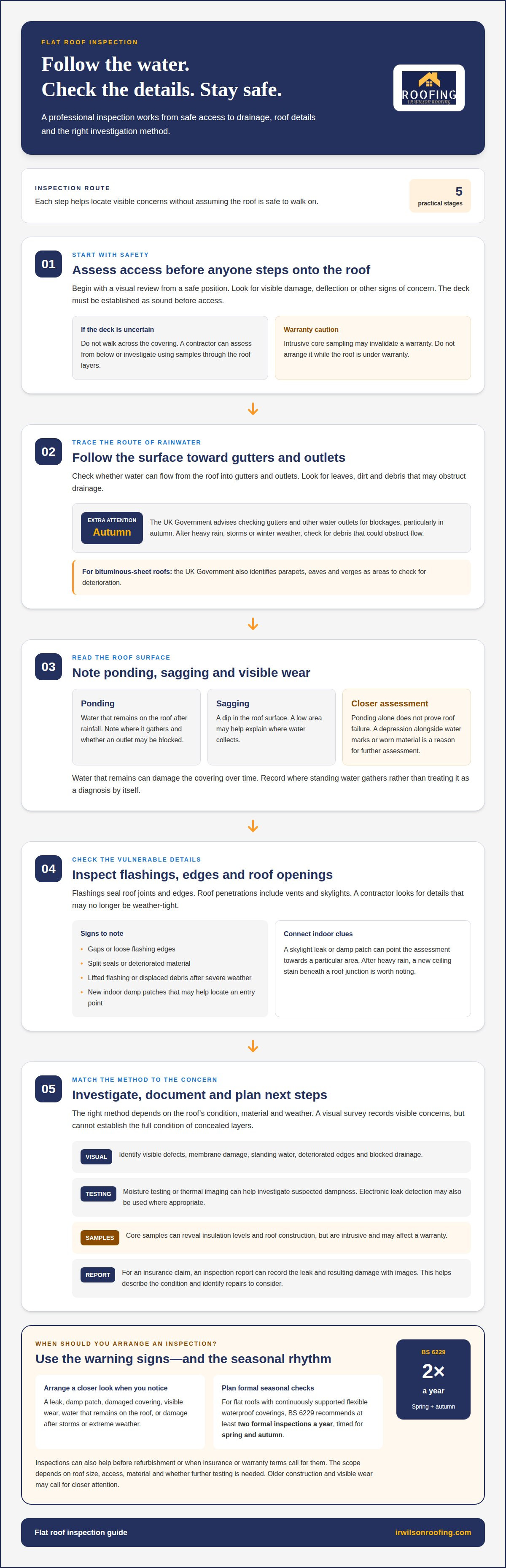
Trace how rainwater would flow across the roof towards gutters and outlets, then look for details that may no longer be weather-tight. The right inspection method depends on the suspected issue and the roof covering.
Gutters, Outlets, and Drainage Paths
A drainage inspection follows the route water should take from the roof surface into gutters and outlets. A professional uses visual inspection and, where appropriate, moisture testing, thermal imaging or electronic leak detection to investigate concerns. The UK Government advises checking gutters and other water outlets for blockages, particularly in autumn. After heavy rain, storms or winter weather, a contractor looks for leaves, dirt and debris that could obstruct flow. For bituminous-sheet roofs, the UK Government also identifies parapets, eaves and verges as areas to check for deterioration.
Ponding, Sagging, and Standing Water
Ponding is water that remains on the roof after rainfall; sagging appears as a dip in its surface. Note where standing water gathers and whether an outlet may be blocked or the roof has a low area. Ponding alone doesn’t prove roof failure, but water that remains can damage the covering over time. A depression alongside water marks or worn material is a reason for further assessment.
Flashings and Roof Penetrations
Flashings seal roof joints and edges; penetrations include vents and skylights. A contractor examines these areas for gaps, loose edges, split seals or deteriorated material that could let water through. After severe weather, how to inspect a flat roof includes noting lifted flashing, displaced debris or new indoor damp patches that may help locate an entry point. These signs can guide a closer professional assessment.
How a professional assesses whether a flat roof deck is safe to walk on
Before stepping onto a flat roof, establish whether the deck can safely support access. Start with a visual review from a safe position and note visible damage, deflection or other signs of concern. If the deck’s condition is uncertain, arrange an assessment from below rather than walking across the covering.
For UK inspections, the essential safety point is to establish that the deck is sound before anyone walks on it. Homeowners should take great care with ladders and roof coverings. If roof access is unsafe, a contractor can assess the roof from below or use samples through its layers.
A roof survey can also investigate insulation and moisture, which affect the roof’s build-up and thermal performance. Depending on the concern, a professional may use moisture testing or thermal imaging. Core samples can reveal insulation levels and roof construction, but intrusive sampling may invalidate a warranty. Do not arrange it while the roof is under warranty.
A skylight leak or indoor damp patch can point the assessment towards a particular area. A visual inspection may identify visible defects, while thermal imaging or electronic leak detection can help investigate further. The method depends on the roof’s condition, material and weather.
For an insurance claim, an inspection report can record the leak and resulting damage with images. This evidence helps describe the condition and identify repairs to consider. Commercial roofs may also need an assessment for insurance or refurbishment planning. A visual survey records visible concerns, but does not establish the full condition of concealed roof layers.
When to arrange a professional roof inspection
Arrange an inspection after storms or extreme weather, or when you notice a leak, damp patch or damaged roof covering. A small defect in a membrane can let moisture reach the roof build-up, so prompt assessment can establish whether waterproofing or other repairs are needed. Surveys are also useful before refurbishment and when insurance or warranty terms call for them.
The scope depends on the roof’s size, access, material and whether a visual assessment is enough or further testing is needed.
For flat roofs with continuously supported flexible waterproof coverings, BS 6229 recommends at least two formal inspections a year, timed for spring and autumn. These seasonal checks can identify defects linked to weather and help plan maintenance before problems worsen. Older construction and visible wear may call for closer attention.
After heavy rain, look indoors for new signs, such as a ceiling stain beneath a roof junction. A roof assessment can check for visible membrane damage, standing water, deteriorated edges and blocked drainage. A visual survey records the roof’s current condition, but cannot establish the full state of concealed layers or moisture beneath the covering.
For a detailed assessment, the inspection method should suit the concern. Moisture testing or thermal imaging can help investigate suspected dampness; intrusive sampling can reveal roof build-up and insulation, but may affect a warranty. Arrange a professional survey if a leak keeps returning, damage is visible or a refurbishment decision depends on the roof’s condition.
I R. Wilson Roofing: Flat Roof Repairs
I R. Wilson Roofing is a natural next step when an inspection identifies damage that needs attention. If you’ve found a split covering, a leak or worn roof details, the company carries out flat roof repairs to address the problem.
The right work depends on the roof’s condition and covering. I R. Wilson Roofing also works with felt roofs and offers gutter cleaning for blocked drainage. If inspection findings point to a roofing issue, sharing what you’ve noticed helps explain where the concern lies and what needs attention.
For a clear route from inspection findings to practical repairs, contact I R. Wilson Roofing.
Take the next step with confidence
Knowing how to inspect a flat roof can help you decide what to do next, but you don’t need to diagnose every defect yourself. If a professional identifies damage, discuss what you’ve noticed and the practical next steps for your property.
I R. Wilson Roofing carries out flat roof repairs and works with felt roofs, fascias and soffits. A free consultation gives you the opportunity to discuss your roof concerns and possible next steps.
Acting on a concern can make roof maintenance feel more manageable.
Frequently Asked Questions
What Do Flat Roof Inspections Involve?
A flat roof inspection combines a visual assessment with a review of the symptoms you’ve noticed. Tell the inspector which room develops a ceiling stain and whether it appears after particular weather. That context can help relate an indoor problem to a roof area. The inspection’s scope then depends on the roof’s material, access and visible condition.
Can the covering be repaired rather than replaced?
A repair may be suitable when damage is localised and the surrounding covering remains in serviceable condition. A split or failed joint in one area is different from widespread deterioration across the roof. An inspection helps establish the extent of the defect and whether a repair is practical. I R. Wilson Roofing carries out flat roof repairs for identified roofing problems.
Do I need an intrusive survey or core samples?
Core samples are usually considered when a decision depends on information hidden beneath the roof covering, such as the build-up or insulation condition. Before agreeing to intrusive work, ask what the sample is intended to establish and how the result could affect the proposed work. A visual assessment may be enough when the concern is limited to visible surface defects.
What Happens When Flat Roofs Are Inspected?
An inspection assesses the roof’s visible condition, considers reported symptoms and records relevant findings. You can help by sharing previous repair details, recurring leak locations and changes you’ve noticed indoors. This background gives the inspection a clearer purpose and can help distinguish a new issue from an older, unresolved problem. The findings can then inform your next maintenance decision.
How do professionals inspect a flat roof safely from the ground or roof?
The inspection position depends on the roof’s condition and whether access is safe. Some details can be assessed from the ground or inside the building; avoid roof access if the deck may not support it. For a property in Norwich or the wider Norfolk area, including Trowse, describe the concern and any access limitations when arranging an inspection.