
Adding insulation doesn't always mean stripping a flat roof back to the deck. Flat roof overlay systems in Norwich may suit a property when the existing covering and roof structure are in sound condition, but a survey must identify any trapped moisture or localised damage first. The lifespan depends on the system and the quality of the roof beneath it: EPDM membranes typically have a system life of 50 years, while GRP systems typically last 25-30 years.
It’s understandable to want better insulation without unnecessary work. An overlay can add a waterproof layer, and insulation may be incorporated if the roof design allows, but not every roof is suitable. This guide explains what affects an overlay’s lifespan, when it may be appropriate, and how insulation and the existing deck influence the decision. A professional assessment can establish what the roof needs before work begins.
Key Takeaways
- A sound roof may be suitable for an overlay, while localised defects can need repair before new covering goes on.
- Moisture, ventilation and roof-deck condition can affect how well a flat roof performs over time.
- GRP and EPDM have different strengths, so consider the roof’s layout, edge details and expected use when weighing them up.
- Insulation and added roof layers affect the design; a professional assessment helps establish whether your roof can accommodate them.
How long does a flat roof last?
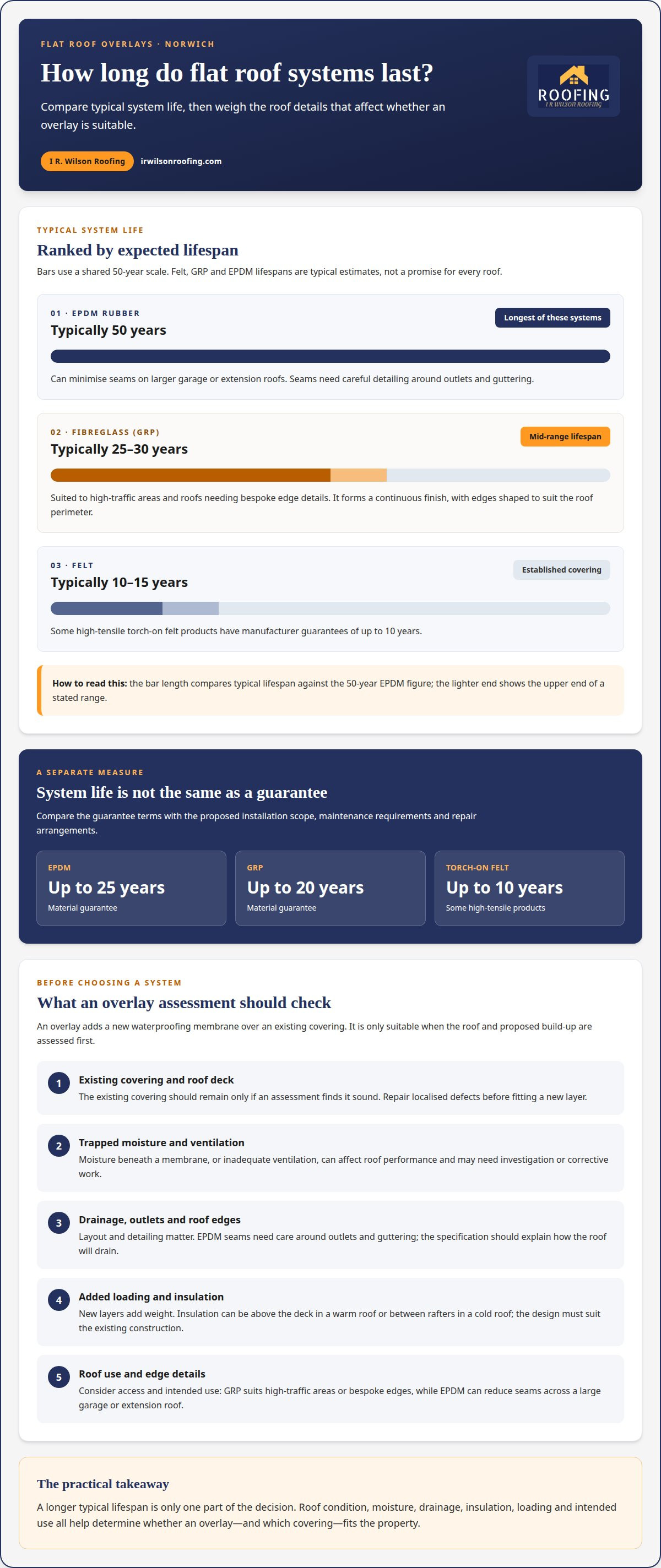
A flat roof’s lifespan depends on its covering, installation and condition beneath the surface. Felt typically lasts 10-15 years, while older felt roofs may fail after five or ten years. Poor detailing, trapped moisture and inadequate ventilation can shorten performance. In Norwich and Norfolk, a survey helps establish whether the existing covering can stay or needs replacing.
Repairs suit isolated damage; replacement is more appropriate when defects affect wider areas or the roof deck. A localised leak on an EPDM roof, for example, may need only a targeted repair, while widespread deterioration or moisture beneath the membrane can point to replacement. Before an overlay, localised problems in the roof system or structure need attention. The existing covering should remain only if an assessment finds it sound.
Building control approval might be needed when replacing more than 25% of a roof or adding insulation to meet warm flat roof construction standards. Planning permission depends on the property and proposed work, including changes to the roof’s profile or appearance. Norwich City Council is the local planning authority for Norwich properties.
To compare Norwich contractors, review their survey findings, proposed repair or replacement scope, covering specification and any manufacturer guarantee. Some manufacturers guarantee high-tensile torch-on felt products for up to 10 years. Ask how the proposal addresses insulation, drainage, fascia details and weather exposure. A clear written scope makes it easier to compare like-for-like and understand whether repairs or a new covering are proposed.
Fibreglass (GRP) and EPDM rubber systems
EPDM and GRP both provide waterproofing, but differ in lifespan, seams and finish. Compare their warranties with your roof’s layout and intended use.
GRP and EPDM Lifespans and Warranties
EPDM membranes typically have a system life of 50 years; GRP systems typically last 25-30 years. Material guarantees can extend up to 25 years for EPDM and up to 20 years for GRP. A system-life estimate and a guarantee describe different things. Read the guarantee conditions alongside the proposed installation scope, maintenance requirements and repair arrangements.
Comparing Overlay System Types
EPDM rubber can minimise seams on large garage or extension roofs. GRP suits high-traffic areas and roofs that need bespoke edge details. Felt is another established covering, while liquid-applied systems form a coating over the roof surface. Compare the layout, expected use, edge details and waterproofing finish, not lifespan alone. These factors help determine which system suits the existing deck.
For flat roof overlays in Norwich, a survey can assess the existing covering and deck before a system is chosen. EPDM seams need careful detailing around outlets and guttering, where leaking may otherwise occur. GRP forms a continuous finish, with edges shaped to suit the roof perimeter and soffit. If you’re weighing up options, a free consultation offers a chance to discuss your roof’s condition and suitable work.
Flat roof suitability and applications
An overlay adds a new waterproofing membrane over an existing covering, provided an assessment finds the roof suitable. The assessment considers the deck, trapped moisture, drainage and added loading. New layers add weight, so structural advice may be prudent for some systems. This matters for garages as well as larger roofs, where the existing structure and proposed build-up can differ.
Insulation also affects the design. A warm flat roof places insulation above the roof deck, while a cold roof places it between the rafters. An assessment can identify the existing construction and whether the planned overlay can accommodate insulation. Poor ventilation or moisture in the roof may need investigation and corrective work before fitting a new membrane.
Use and detailing help narrow the options. EPDM rubber can reduce seams across a large garage or extension roof. GRP suits high-traffic areas or roofs that need bespoke edge details. Frequent access matters for a roof used that way; a simpler garage roof may call for a different balance of finish and layout. New flat roof installations also need suitable drainage falls.
Liquid-applied membranes offer another option: the material is applied across the roof surface to form waterproofing. Suitability depends on the deck, edges, outlets and roof use, not just the membrane. A professional assessment can document these details and consider added loading before selecting a system. The specification should explain the proposed layers and how the roof will drain.
I R. Wilson Roofing: Flat Roof Repairs
I R. Wilson Roofing can help with a leak, damaged felt or another flat-roof problem. Flat Roof Repairs address faults in the covering, while an assessment helps establish whether repair or replacement better suits the roof’s condition. If felt is appropriate, Felt Roofs are another option. Fascias and Soffits or Gutter Cleaning may also help when roof edges or drainage need attention.
If you’re unsure whether your flat roof needs a local repair or more extensive work, get in touch to discuss your property and arrange a free consultation.
Take the next step with confidence
Choosing flat roof overlay systems in Norwich means finding an approach that suits your property, not simply selecting a membrane. A clear assessment can turn questions about the roof into a practical plan, whether you’re dealing with a leak, considering felt, or reviewing the roof edges and drainage. The work should address the condition of the whole roof, including the details that protect its perimeter.
I R. Wilson Roofing offers Flat Roof Repairs, Felt Roofs, and Fascias and Soffits to help with these needs. If you’re ready to discuss your roof and possible next steps, you can get in touch without pressure.
A well-informed decision is a steady first step towards caring for your home.
Frequently Asked Questions
What flat roof overlay systems are available in Norwich?
Options for Norwich properties include felt or bitumen, EPDM rubber, GRP fibreglass and liquid-applied membranes. Each uses different materials and installation details, especially around roof edges, outlets and penetrations. A garage roof with straightforward edges, for example, has different detailing needs from one with bespoke perimeter features. The roof’s condition and intended use help determine which systems are suitable.
Which roofing materials are suitable for overlaying an existing flat roof in the UK?
Felt, bitumen, EPDM, GRP and liquid-applied membranes are all options for flat roofing, but suitability depends on the existing roof. The new material must work with the deck, covering and edge details. Proposed layers also add weight, so the roof structure matters. A material suited to one extension may not suit another with a different construction.
What checks should a roofer make before installing a flat roof overlay?
A roofer should assess the covering, deck, drainage, insulation and ventilation, then look for trapped moisture or localised defects. Deck material matters too: chipboard or Stramit may need further investigation. The assessment should also consider added loading from the proposed layers and the roof’s internal conditions. These checks help establish whether preparation or corrective work is needed before installation.
What are the risks of overlaying a damaged or damp flat roof?
Covering damage or trapped moisture can hide underlying problems rather than resolve them. Moisture, poor ventilation or defective detailing may need investigation and corrective work; in some cases, replacement may be needed instead of an overlay. A surface that looks sound does not, by itself, show that the roof system beneath it is healthy. A proper assessment helps identify concerns before another membrane is added.
How long do flat roof overlay systems last and what warranties are typical?
Typical system life and material guarantees are different measures. EPDM membranes have a typical system life of 50 years, while GRP systems typically last 25-30 years. Material guarantees can extend up to 25 years for EPDM and up to 20 years for GRP. High-tensile torch-on felt products may have manufacturer guarantees of up to 10 years. Read the guarantee terms for its scope and conditions.