

A surface coating isn’t always right for natural stone. Effective coping stone sealing and repair starts with choosing a suitable treatment: use a breathable, penetrating sealer rather than a film-forming coating, and let the stone dry thoroughly first.
Coping stones cap walls and help protect the masonry below from rain. Cracked stone, worn mortar and water absorption can all affect their condition, but the right repair depends on the material and damage. This guide explains what coping stones do, how to repair cracks and joints, and how to choose and apply a suitable sealer. You’ll also learn how to prepare the surface and recognise when repair alone may not be enough.
Key Takeaways
- Match the sealer to the coping material: reconstituted stone, natural stone and slate call for different approaches.
- Repair cracks and prepare the surface before applying a masonry water sealant for more reliable protection.
- Give natural stone time to dry fully before sealing, and choose a breathable product that lets moisture escape.
- Watch how rainwater behaves on the surface to help judge when a sealer may need attention.
What Is a Coping Stone?
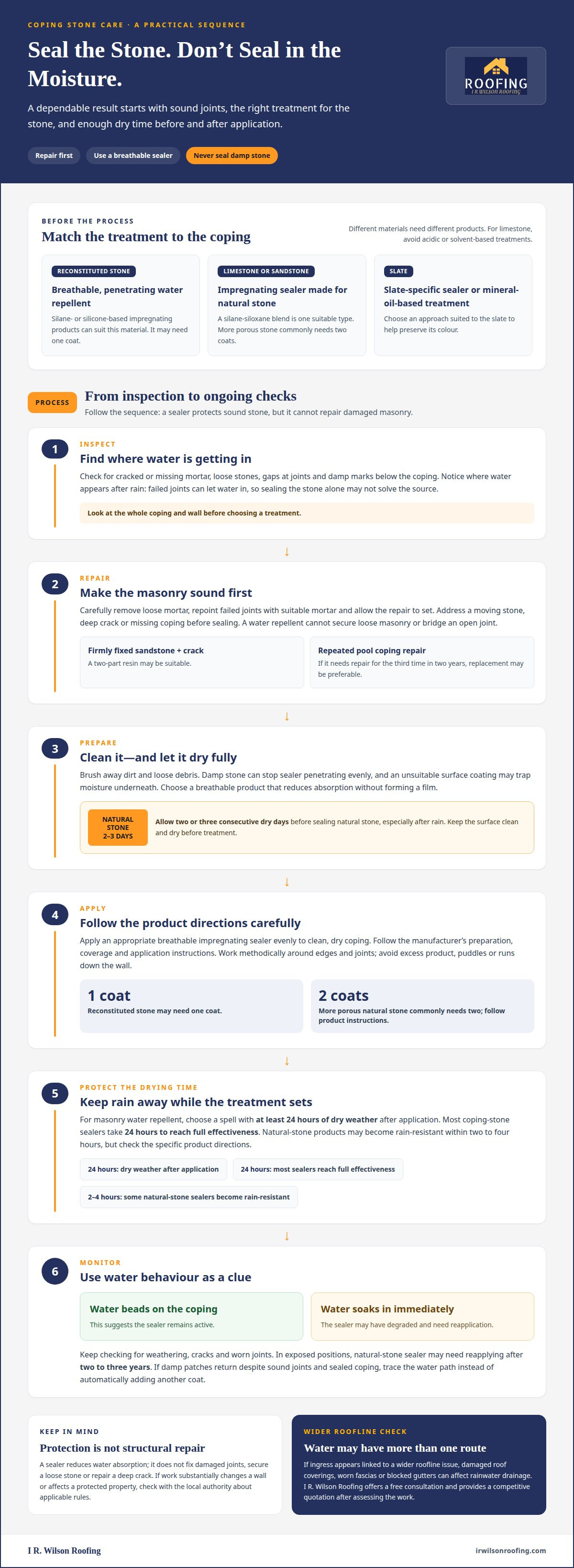
- Identify the coping material before choosing a treatment. Reconstituted stone can often take a breathable, penetrating water repellent; natural limestone or sandstone needs an impregnating sealer made for that stone. Slate may need a slate-specific sealer or mineral-oil-based treatment to preserve its colour. On limestone, avoid acidic or solvent-based products.
- Match the repair to the damage and the wall’s appearance. Failed mortar joints, loose stonework and displaced or missing coping are signs of deterioration, according to Transport Scotland. A firmly fixed sandstone coping stone with a crack may be repaired with two-part resin. If a pool coping stone needs repair for the third time in two years, replacement may be preferable. For a weathered design, match the existing profile and surface character; drip channels on both sides can help direct rain away from the wall face.
- Don’t seal damp stone. Moisture can interfere with sealer penetration, while an unsuitable surface coating may trap water beneath it. Let the coping dry, then choose a breathable product that reduces absorption without forming a film. Reconstituted stone may need one coat, while more porous natural stone often needs two; follow the product instructions.
- Building regulations and planning rules depend on the work and property. A repair that changes the wall or affects a protected property may need separate consideration, so check with the local authority before making substantial changes.
- Choose a local contractor who can explain the repair method, sealer choice and work involved for your coping. Repair and sealing costs depend on the stone, damage, access and preparation required. I R. Wilson Roofing offers a free consultation and provides a competitive quotation after assessing the work.
Applying a masonry water sealant
- Inspect the coping and wall before applying sealer. Look for cracked or missing mortar, loose stones, gaps at joints and damp marks below the coping. Water can enter through failed joints, so sealing the stone alone won’t fix the source. Note where water appears after rain. This check helps distinguish surface protection from repairs needed for effective coping stone sealing and repair.
- Repair failed joints before treating the surface. Carefully remove loose mortar, repoint the gap with suitable mortar and allow the repair to set. If a coping stone moves, has a deep crack or is missing, address that defect first. A water repellent cannot secure loose masonry or bridge an open joint.
- Choose a breathable masonry water repellent suited to the material. Silane- or silicone-based impregnating products can suit reconstituted stone coping. They penetrate the surface and help reduce water absorption without creating a film. Read the product instructions for preparation and application before starting.
- Apply the sealant only to clean, dry coping. Work evenly across the surface, following the manufacturer’s coverage and application directions. Avoid puddles or product running down the wall. Choose a spell with at least 24 hours of dry weather after application, so rain doesn’t disrupt the treatment. Patience at this stage supports lasting coping stone sealing and repair.
- Allow the treatment to develop before judging the result. Most coping-stone sealers take 24 hours to reach full effectiveness. If damp patches return despite sound joints and sealed coping, trace the water path rather than adding another coat. Where ingress appears to come from an adjoining roofline, explore roof repair options.
Sealing natural stone coping
- Start by identifying the stone and assessing its condition. Limestone and sandstone are porous, so choose an impregnating sealer made for natural stone. A silane-siloxane blend is one suitable type. Avoid acidic or solvent-based products on limestone, as they can damage or discolour the surface.
- Let the coping dry fully before applying sealer. Allow two or three consecutive dry days, especially after rain. Damp stone can prevent the sealer from penetrating evenly. Brush away dirt and loose debris, and make sure the surface is clean before treatment.
- Apply the product according to its instructions. More porous natural stone commonly needs two coats, while less porous surfaces may need fewer. Work methodically across each stone and avoid leaving excess sealer on the surface. Aim for an even finish, especially around edges and joints.
- Plan around the weather and protect the treated coping from rain. Many coping-stone sealers become rain-resistant within two to four hours, but check the product directions for its specific drying time. In exposed positions, natural-stone sealers may need reapplying after two to three years.
- Check how water behaves after treatment. Beading on the coping suggests the sealer remains active; water soaking in immediately may indicate that it has degraded and needs reapplication. Regularly look for weathering, cracks and worn joints. Sealer protects stone, but it doesn’t repair damaged masonry.
I R. Wilson Roofing
I R. Wilson Roofing can help when water around coping stones may be linked to a wider roofline problem. Damaged roof coverings, worn fascias or blocked gutters, for example, can affect how rainwater drains around your property. Considering those issues can help establish whether the coping is the only concern or part of a broader maintenance need.
If you’ve noticed damp patches, loose masonry or recurring water ingress, explain where it appears and what you’ve observed. I R. Wilson Roofing handles relevant roofing work, including roof repairs, fascias and soffits, and gutter cleaning. Contact I R. Wilson Roofing to discuss the roofing concerns affecting your property.
Take the Next Step for Your Property
A considered approach to coping stone sealing and repair starts with finding the source of the problem. If dampness or staining appears near the top of a wall, the coping may not be the only part of your property needing attention. Inspecting the wider roofline can help identify related maintenance concerns.
I R. Wilson Roofing handles relevant roofing work, including flat roof repairs, felt roofs, and fascias and soffits. A free consultation gives you the chance to describe what you’ve noticed, such as where water marks appear or which area looks damaged, and discuss the next step for your property.
A clear next step can make ongoing property maintenance easier to manage.
Frequently Asked Questions
What is a coping stone and when does it need sealing or repair?
A coping stone is the protective cap fitted along the top of a wall. It helps shed rain away from the masonry beneath. Inspect it if you notice open joints, a shifted stone or a crack that catches water. For example, a damp line directly below one coping joint may point to a local defect rather than general surface weathering.
Which sealants are suitable for different types of coping stone in the UK?
Choose a product labelled for the coping’s material, not just a general-purpose masonry coating. Reconstituted stone usually suits a breathable water repellent; limestone and sandstone need a natural-stone impregnator, while slate calls for a slate-specific treatment. Before treating the whole area, test the product in a discreet spot and check that it doesn’t alter the colour or finish.
How do you seal coping stones step by step?
First, identify the material and deal with loose mortar or other defects. Clean the coping, let it dry, then apply a compatible sealer evenly according to its instructions. Don’t coat over dirt or standing moisture, as these can affect the finish. If a wall has several stone types, use a suitable product for each rather than assuming one sealer fits all.
How do you repair cracked, loose or chipped coping stones?
Choose the repair to suit the defect. A narrow crack in a firmly fixed sandstone stone may be filled with two-part resin. Two-part stonemasonry glue can also be used on sandstone or Bath Stone and dries in around half an hour. A loose stone needs its fixing addressed, while a chipped edge should be assessed for stability and water exposure.
Should coping stones be sealed, repointed or replaced?
Seal sound stone to reduce water absorption, repoint joints when the mortar has failed, and replace stones that are missing or too damaged to remain secure. These treatments solve different problems, so one cannot replace another. For example, applying sealer over a gap in the pointing won’t close it or secure a moving coping stone.