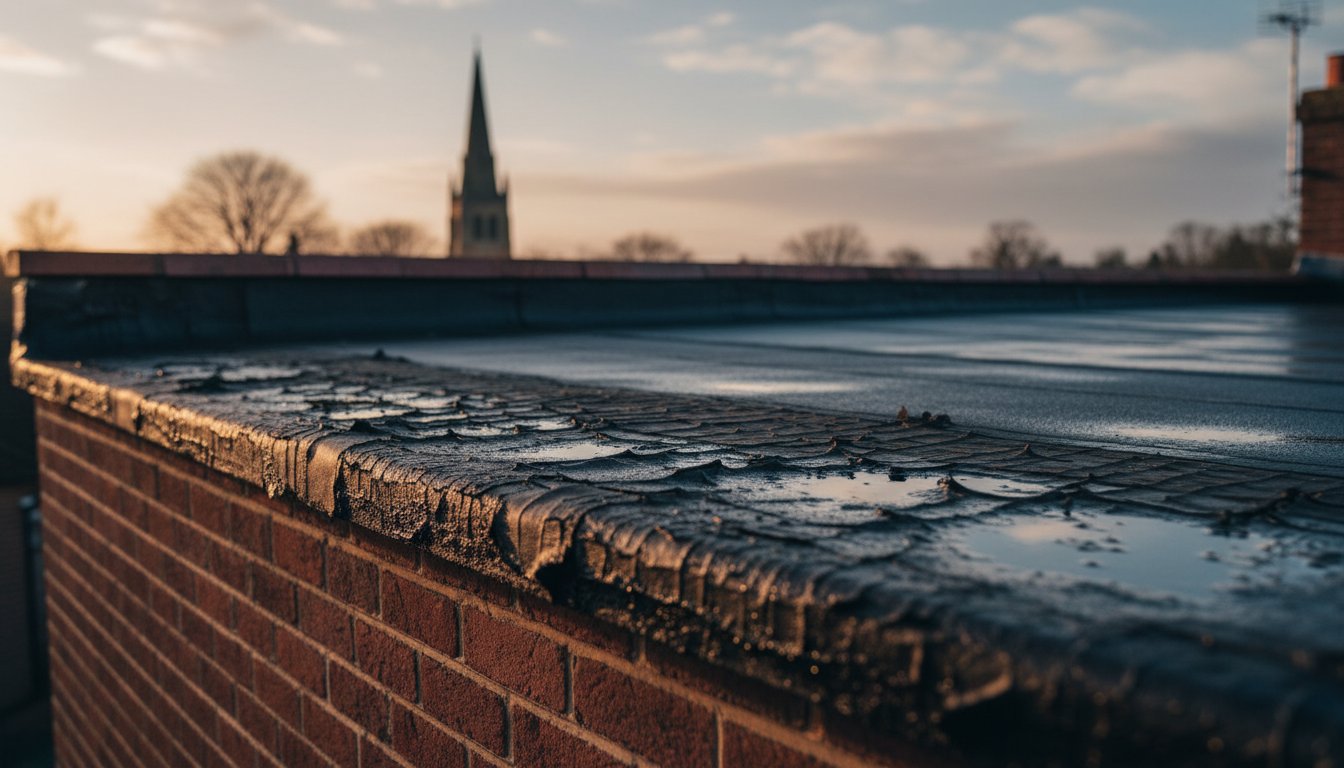
A flat roof on your Norwich home, whether on a garage or an extension, is a practical and common feature. But when it starts to age, the worry of a sudden leak can be a significant source of stress. How can you tell if a small issue is a simple fix or a warning sign of complete failure? Ignoring the subtle signals can lead to costly water damage to your ceilings, walls, and possessions.
This 2026 checklist is designed for Norwich homeowners like you. We’ll focus specifically on traditional felt roofing, helping you understand what to look for, how our local Norfolk climate affects your roof, and when it’s time to call in the professionals.
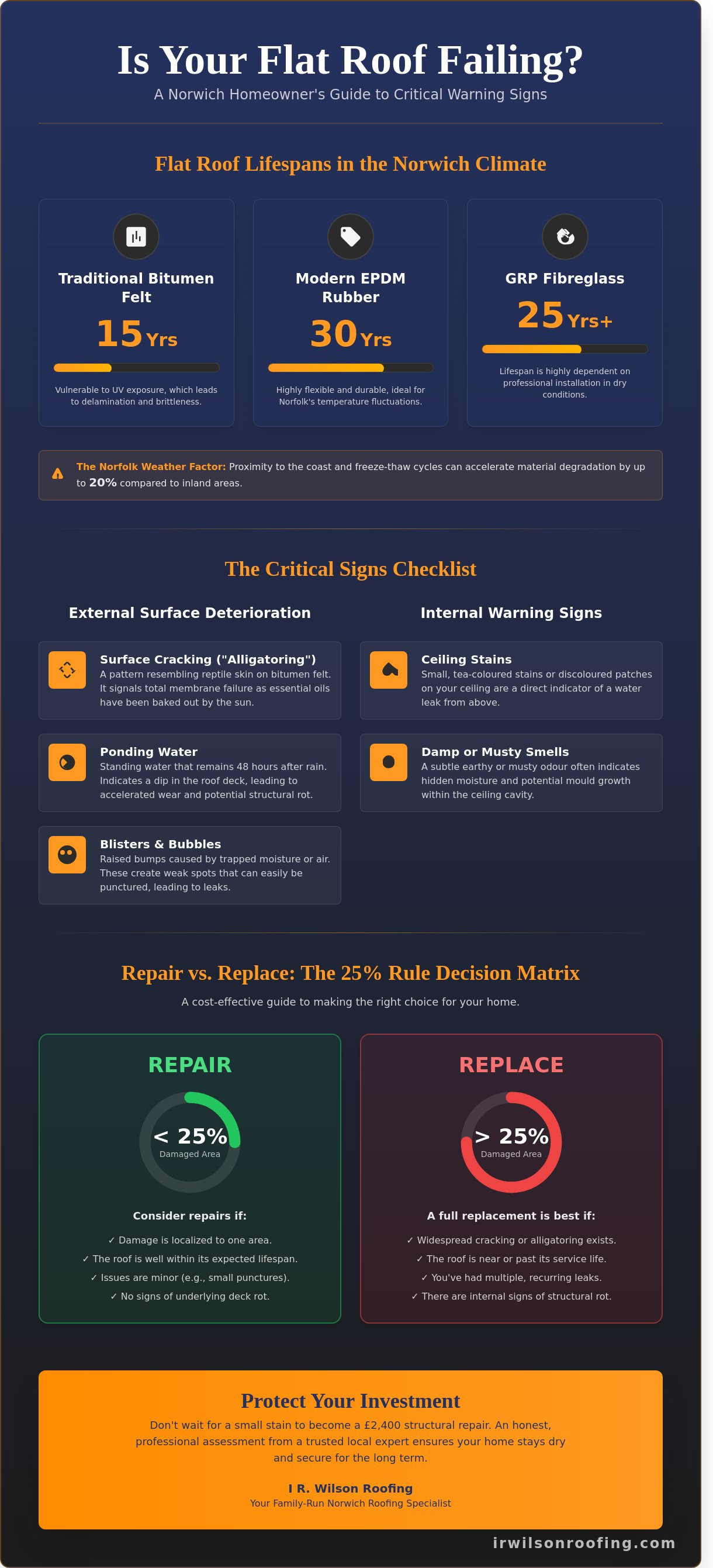
Understanding Felt Roof Lifespans in the Norwich Climate
Felt has been the go-to material for flat roofs on Norwich extensions and garages for decades. It's cost-effective and, when installed correctly, provides reliable protection. However, it does have a finite lifespan, which can be significantly influenced by the unique East Anglian weather.
The age of your property often gives a clue to the type of felt system used. Older installations may be nearing the end of their life, while modern high-performance felt systems offer much greater durability.
Traditional Bitumen Felt: The 15-Year Critical Threshold
A traditional felt flat roof typically has a lifespan of around 10 to 15 years. After this point, the bitumen begins to lose its flexibility, becoming brittle and more susceptible to damage from the elements. If your roof is approaching this age, it’s crucial to start conducting regular inspections for signs of wear and tear.
The Norfolk Weather Factor
Our local climate plays a huge role in the longevity of a felt roof.
- Freeze-Thaw Cycles: East Anglia’s cold winters cause any small amount of trapped water in cracks to freeze and expand. This process forces cracks to widen over time, creating a direct path for water ingress.
- Coastal Air: For homes closer to the Norfolk coast, the higher salt content in the air can accelerate the degradation of roofing materials.
- Moss Growth: The damp conditions found in many shaded Norwich gardens are perfect for moss. On a flat roof, moss holds moisture against the felt surface like a sponge, preventing it from drying out and leading to premature decay.
The Visual Checklist: Signs of Surface Deterioration
You can often spot the most critical signs you need a new flat roof with a simple visual inspection, either from the ground with binoculars or safely from a well-secured ladder. Never walk on a roof you suspect may be damaged.
Internal Warning Signs: What Your Ceilings Are Telling You
Sometimes, the first sign of a problem isn’t on the roof itself, but inside your home.
Repair vs. Replace: The Norwich Decision Matrix
Knowing whether to patch a problem or invest in a full replacement is the key question. A good rule of thumb is the 25% rule: if a repair is going to cost more than 25% of the price of a full replacement, it’s rarely a sound long-term investment. You should also consider how often you're having to arrange for professional roof repairs in Norwich.
When a Repair Makes Sense
- The roof is less than 10 years old and has an isolated issue, like a lifted seam.
- There is specific damage from a fallen branch or storm debris in one small area.
- You need an emergency temporary fix to stop a leak while you arrange for a full replacement.
When Replacement is the Only Sensible Option
- The roof is over 15 years old and showing widespread alligatoring or brittleness.
- You have multiple leaks appearing in different areas of the roof.
- There is evidence of structural sagging or soft, spongy spots in the roof deck.
- You want to improve your home’s thermal efficiency, as a replacement requires an insulation upgrade to meet current Norwich building regulations. If the roof replacement is part of a wider renovation or extension project, it can be helpful to see how full-service construction firms handle such builds. For those planning major works, you can check out Powerpillar Ltd for examples of high-end residential projects.
Choosing a Trusted Local Partner for Your New Flat Roof
When it's time for a new flat roof, choosing the right contractor is essential for your peace of mind. A local, family-run business understands the specific challenges of Norwich properties and has a reputation to uphold in the community.
Look for a company that provides detailed, written quotations, offers long-term guarantees on their work, and is fully insured. At I.R. Wilson Roofing, we pride ourselves on our honest, no-pressure approach. As specialist roofers in Norwich, we understand that a new roof is a significant investment, and we provide the expert advice you need to make the right decision for your home.
If you’ve noticed any of the warning signs in this checklist, don’t wait for a small issue to become a major disaster.
Contact I.R. Wilson Roofing for a free, no-obligation flat roof estimate in Norwich
- Family-run business serving Norwich since 1994
- Fully insured and highly recommended local specialists
- Competitive quotations with expert, honest advice
Frequently Asked Questions
How long should a felt flat roof last in the UK climate? A traditional torch-on felt roof typically lasts between 10 and 15 years in the UK. Its lifespan can be affected by the quality of installation, maintenance, and specific local weather conditions like those in Norfolk.
Is ponding water always a sign that I need a new roof? Not always, but it is always a problem that needs addressing. It could be caused by a blocked outlet or slight settlement. However, if it's due to the roof structure sagging, it is a very serious sign that a replacement is likely needed.
Can I put a new felt roof over an old one to save money? This is generally not recommended. Known as "over-felting," it adds extra weight to the structure and, more importantly, it can trap moisture and hide underlying problems with the timber decking. A full strip and replacement is the correct, long-term solution.
Do I need planning permission for a flat roof replacement in Norwich? In most cases, replacing an existing flat roof is considered permitted development and does not require planning permission. However, if you are altering the building's height or appearance significantly, it's always wise to check with Norwich City Council.
What makes high-performance felt a great choice for a flat roof extension in Norfolk? Modern, high-performance felt systems are far more advanced than older versions. They offer greater flexibility, superior durability, and much longer lifespans, often coming with 20-year guarantees, making them an excellent and reliable choice for protecting your home.
How much does it cost to replace a garage flat roof in Norwich? The cost varies depending on the size of the garage, the condition of the underlying deck, and the specific type of high-performance felt system chosen. The best way to get an accurate figure is to request a free, no-obligation quotation.