
Could the quickest way to brighten your roofline also be an easy way to damage it? Dirt, algae and streaks can make uPVC look neglected, but cleaning uPVC fascias and soffits calls for a gentle touch, not force. If reaching them means stretching from a ladder, safety matters just as much as the finish.
It’s understandable to want a straightforward way to remove visible marks without harming the uPVC or risking a fall. This guide covers what to check first, how to wash reachable areas gently, which tools and methods to avoid, and what to look for around the fascias, soffits and gutters afterwards. If access feels unsafe or you spot damage that cleaning won’t resolve, I R. Wilson Roofing can discuss your roofline during a free consultation.
Key Takeaways
- Learn what common roofline marks can look like and what to check before you begin.
- Keep cleaning uPVC fascias and soffits gentle with suitable basic tools, rather than scrubbing or using harsh products.
- Make access your first safety check, and don’t stretch from a ladder to reach a difficult area.
- After rinsing, look for loose sections, cracks or persistent staining, and seek advice if cleaning isn’t enough.
Cleaning uPVC Fascias and Soffits: What to Check Before You Start
Fascias run along the edge of the roof, while soffits cover the underside of the eaves. Together, they form a visible part of your roofline and sit close to the gutters. uPVC, short for uPVC (unplasticized polyvinyl chloride), is a rigid form of PVC. Dust, grime and green surface growth can build up over time, making the roofline look tired. Gentle cleaning can improve its appearance, but it won’t fix damaged or deteriorating parts.
Before cleaning uPVC fascias and soffits, inspect them from the ground. Look for loose joints, cracked or damaged edges, and marks that could be related to water. Check whether the staining is limited to the surface or appears beneath joints and along the wall. Don’t climb or reach into an unsafe position just to inspect a spot.
Here’s a video showing an exterior soft-wash setup for context:
Is the mark dirt, or a sign the roofline needs attention?
Surface staining may lift with gentle washing. Cracks, movement or loose sections are different: they point to a physical condition that cleaning won’t resolve. Grime sits on the surface; damage affects the component itself.
Staining beneath joints or along the wall may mean water has been running where it shouldn’t. Also look at nearby gutters for visible debris or signs that water is not draining as expected. If you spot damage or aren’t comfortable assessing the roofline, I R. Wilson Roofing can discuss your fascias and soffits during a free consultation. The company serves local homes in Norwich, Yarmouth, Beccles, Wymondham, Mulbarton and Wroxham, across Norfolk and Suffolk.
How to Clean uPVC Fascias and Soffits Gently and Safely
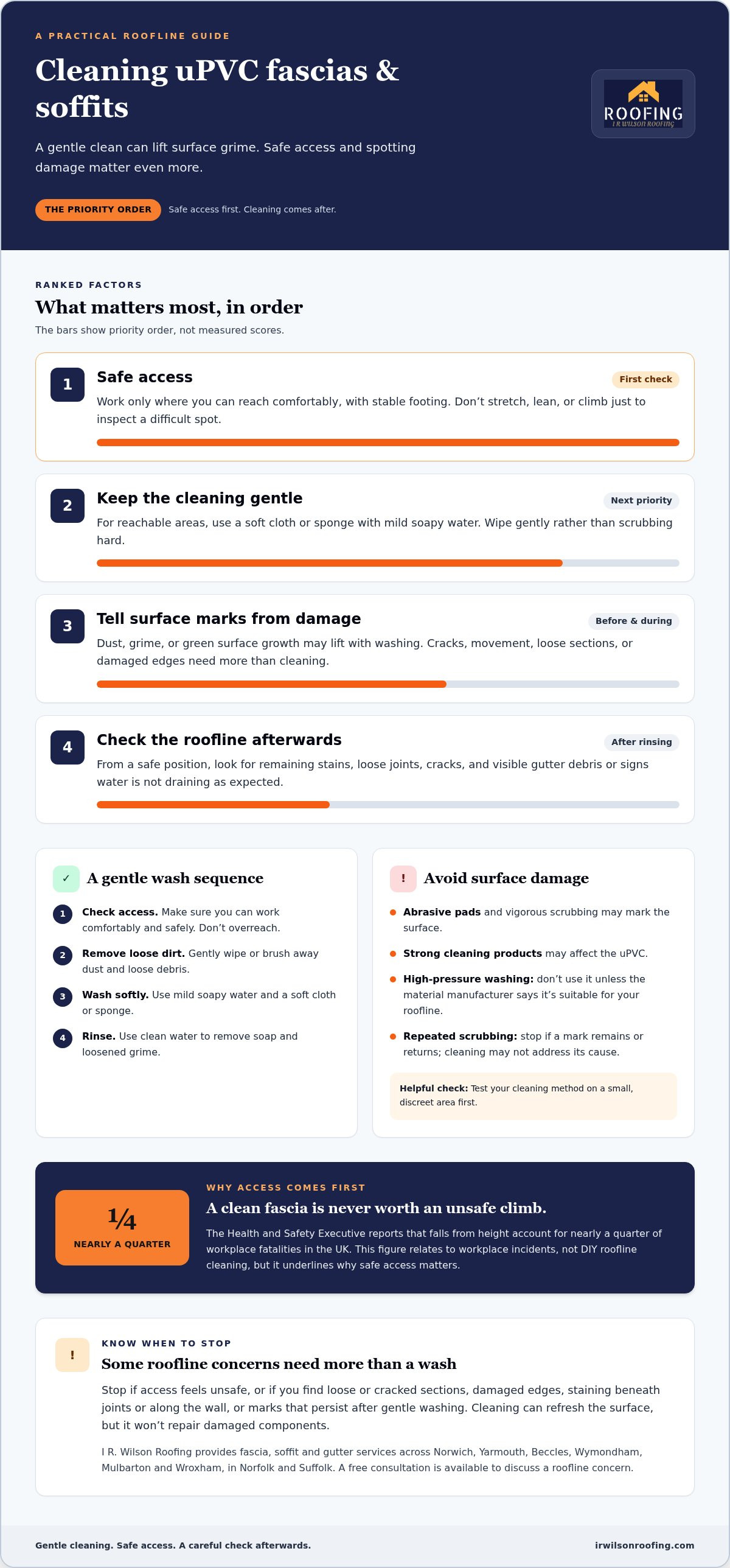
Plan the job before you start. Work only from a position where you can reach the area without stretching or leaning, and where your footing and access are stable. The Health and Safety Executive reports that falls from height account for nearly a quarter of workplace fatalities in the UK. That figure relates to workplace incidents, not DIY roofline cleaning, but it underlines why a clean fascia isn’t worth an unsafe climb.
For an area you can reach safely, follow this simple sequence:
- Check access: Make sure you can work comfortably and safely. Don’t overreach.
- Remove loose dirt: Gently wipe or brush away dust and loose debris.
- Wash: Use a soft cloth or sponge with mild soapy water. Work gently, without scrubbing hard.
- Rinse: Use clean water to remove soap and loosened grime.
What should you use, and what should you avoid?
A soft sponge, cloth, clean water and mild soap are a straightforward choice for ordinary marks. Test your method on a small, discreet area first. Avoid abrasive pads, vigorous scrubbing and strong cleaning products, as they may mark or affect the surface. Don’t use a high-pressure washer unless the material manufacturer says it’s suitable for your roofline.
If reaching the area or assessing the condition of your fascias and soffits feels unsafe, stop rather than risk a fall or damage the surface. I R. Wilson Roofing provides fascia, soffit and gutter services. Get advice on fascia and soffit work through a free consultation before attempting a difficult clean.
After Cleaning: Check the Roofline and Know When to Get Help
Once you’ve rinsed the area, look over the roofline from a safe position. Check whether the surface looks cleaner, but don’t focus on appearance alone. Look for loose sections or joints, cracks, damaged edges and staining that remains after washing. It’s also useful to check nearby gutters for visible debris or signs that water isn’t draining as expected.
A mark that remains, or returns soon after cleaning, may have a cause that gentle washing can’t address. Avoid repeatedly scrubbing the same patch. Persistent staining may need a closer look, while a visible crack or section that appears to have moved is a physical issue, not a cleaning problem. Cleaning uPVC fascias and soffits can refresh the surface, but it won’t repair damaged components.
When is professional roofline advice the safer option?
Stop if you’d need to overreach, use unstable access or climb to inspect an area you can’t assess safely from the ground. Loose, cracked or persistently marked sections are also good reasons to seek advice rather than carry on cleaning. A closer inspection can help establish whether the concern relates to the fascia, soffit or nearby guttering.
I R. Wilson Roofing provides fascia, soffit and gutter services in Norwich, Yarmouth, Beccles, Wymondham, Mulbarton and Wroxham, across Norfolk and Suffolk. If you’re unsure what you’ve found, a free consultation is a straightforward next step. Visit the roofing team’s website to get in touch about your roofline.
Keep Your Roofline Clean and in Good Condition
Gentle cleaning can lift everyday grime and freshen your roofline, but it’s just as useful to notice what remains afterwards. Check for cracks, loose sections or recurring marks, and don’t keep scrubbing if the surface may be damaged. Safe access comes first. If you can’t reach or assess an area comfortably, leave it to a professional.
For cleaning uPVC fascias and soffits, a soft cloth or sponge and mild soapy water are a sensible starting point. Rinse gently, then take a moment to look over nearby gutters too. A clean finish is welcome, but sound roofline components matter more.
I R. Wilson Roofing is a family-run business operated by Ian Wilson and his son Ben. The team provides roofline and gutter services across Norwich, Yarmouth, Beccles, Wymondham, Mulbarton and Wroxham, in Norfolk and Suffolk. A free consultation is a simple way to discuss a roofline concern.
With a gentle approach and a careful check, you can keep your roofline looking cared for and recognise when it needs more than a wash.
Frequently Asked Questions
Can you clean uPVC fascias and soffits with washing-up liquid?
Yes, mild washing-up liquid mixed with water can be used for cleaning uPVC fascias and soffits. Apply it gently with a soft cloth or sponge, then rinse with clean water. Avoid abrasive pads and harsh chemicals, which may mark or affect the surface. Follow any care instructions supplied with the uPVC, and test your mixture on a small, inconspicuous area first.
Can a pressure washer damage uPVC fascias and soffits?
Yes, high-pressure water may be too forceful for roofline components, joints or nearby seals. A soft cloth or sponge and gentle rinsing are a safer starting point. Avoid pressure washing unless the material manufacturer recommends it and you can use the washer without directing force into joints or vulnerable areas. If you can’t clean the surface safely, stop rather than overreaching.
How often should uPVC fascias and soffits be cleaned?
There’s no single cleaning interval that suits every property. Check your roofline periodically and clean it when visible grime needs attention, rather than scrubbing to a fixed schedule. Nearby trees may contribute fallen debris, while exposure and the surface’s condition can affect how quickly marks appear. Check the gutters too, particularly if you notice debris or signs of poor drainage.
What should I do if my uPVC fascia is cracked or loose?
Don’t try to fix a crack or loose fascia by cleaning it. Avoid pulling or scrubbing the area, and don’t climb if you can’t inspect it safely. Arrange a closer assessment, especially if the section has shifted or staining persists. I R. Wilson Roofing offers fascia, soffit and gutter services in Norwich, Yarmouth, Beccles, Wymondham, Mulbarton and Wroxham, across Norfolk and Suffolk. A free consultation can be a calm first step.