What if that small damp patch on your ceiling is actually a signal that your roof's internal timber is already starting to give way? It is a question many of our neighbors ask when they find themselves patching the same leak for the third time in a single season. We understand the frustration of seeing water damage return after you thought the problem was solved. You deserve honest flat roof repair or replace advice that protects your home's structural integrity without wasting your budget on temporary fixes.
We know you are likely worried about hidden rot or feeling overwhelmed by the technical differences between traditional felt, EPDM rubber, and GRP fibreglass. It is stressful to manage property maintenance when you aren't sure if you are making a sound long-term investment or just delaying the inevitable. This guide will show you how to accurately diagnose your roof's condition so you can choose the most sensible path forward. We will walk through the signs of a failing system, explain how the 2026 Future Homes Standard affects your insulation requirements, and help you determine exactly how much life your current roof has left.
Key Takeaways
- Learn to distinguish between minor surface wear and critical structural failures like ponding water that threaten your home's internal timber frame.
- Apply the 25% Rule and system age assessment to get clear flat roof repair or replace advice tailored to your property's specific needs.
- Compare the performance of modern multi-layer felt systems and GRP fibreglass to find the most durable solution for the local climate.
- Understand how the 2026 Future Homes Standard affects your roof's insulation requirements and your long-term energy efficiency.
- See why addressing leaks early prevents the need for extensive timber replacement and keeps your home's structure safe and dry.
Identifying Flat Roof Failure: Signs Your Property Needs Attention
Many homeowners assume a few cracks mean the whole structure is gone. Others ignore a small leak until the ceiling begins to sag. We want to provide the right flat roof repair or replace advice so you can spot the difference between a simple patch job and a failing system. To understand the basics of these low-slope structures, you can read more about what is a flat roof? and how it differs from traditional pitched designs. Understanding the anatomy of your roof helps you identify where problems typically begin.
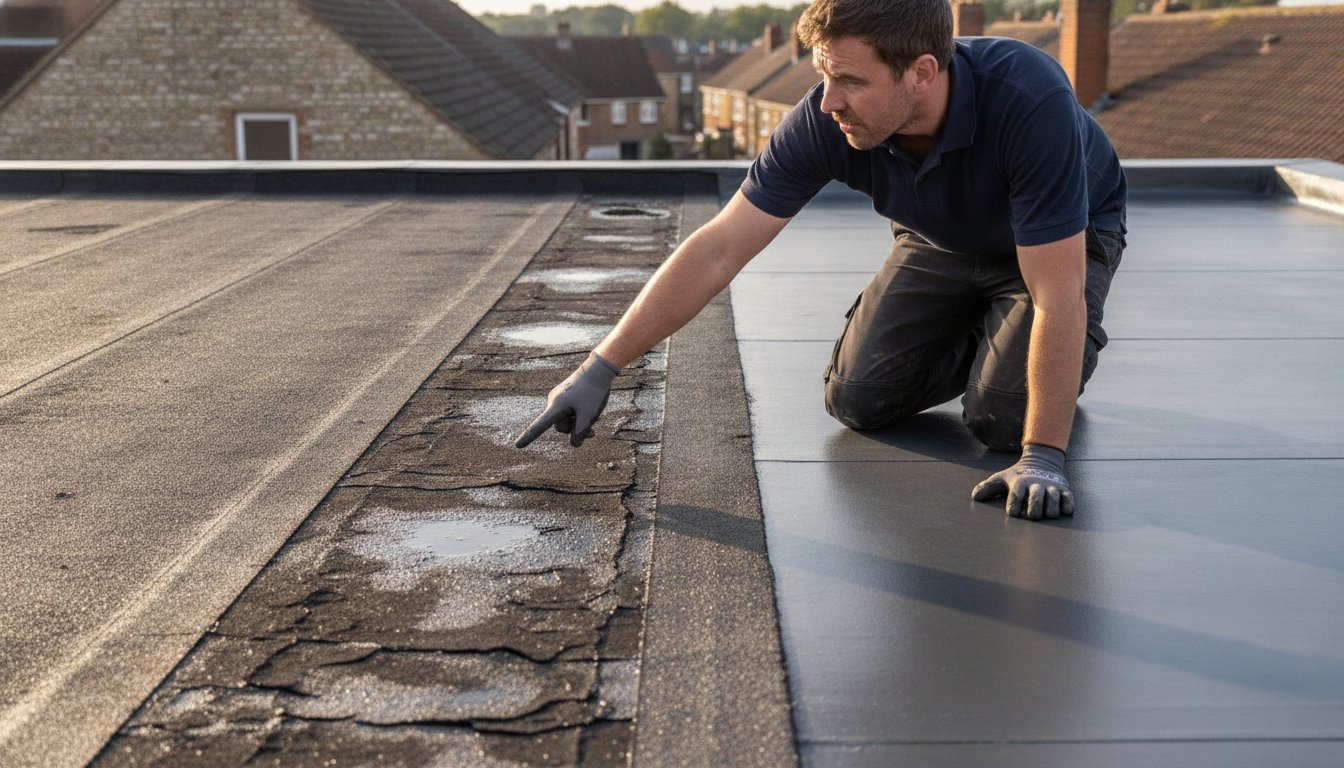
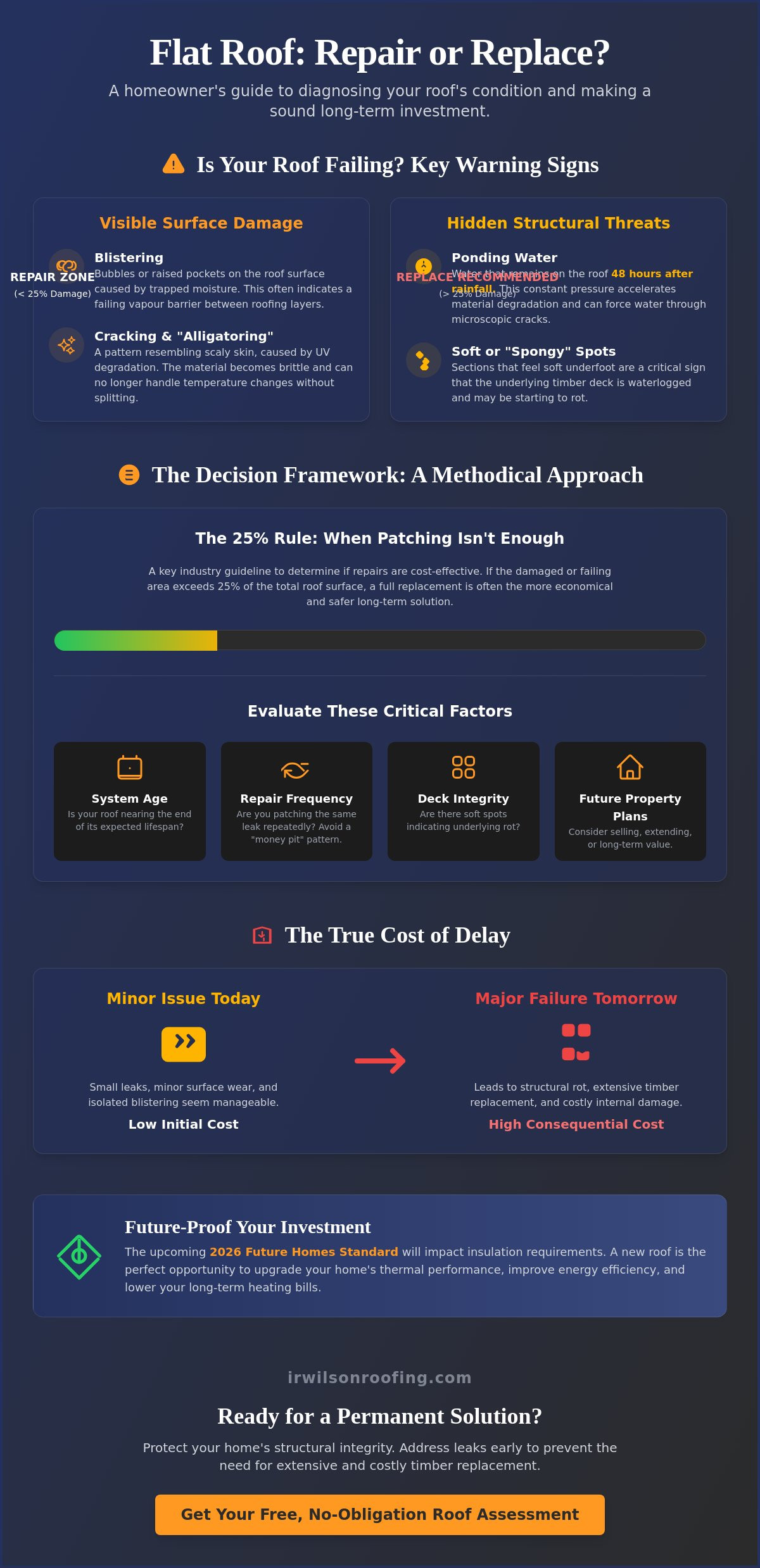
The biggest threat to your roof isn't actually a major storm; it is standing water. We define ponding as water that remains 48 hours after rainfall. When water sits for days, it puts constant pressure on the waterproof membrane and can eventually seep through microscopic cracks. This standing water also acts as a magnifying glass for UV rays, which accelerates the degradation of the materials underneath.
To better understand how these issues are addressed, watch this helpful video:
Visible Surface Damage: Blistering, Cracking, and Alligatoring
Blisters often look like small bubbles or raised pockets on the surface of your roof. These are caused by trapped moisture between the roofing layers, which usually indicates a failing vapour barrier. As the sun warms the roof, that moisture expands and pulls the layers apart. If you notice a pattern that looks like cracked, scaly skin, this is known as "alligatoring." It happens when UV degradation causes older bitumen felt to lose its essential oils and flexibility. Once the material becomes this brittle, it can no longer handle thermal movement, leading to splits every time the temperature changes.
The Hidden Warning Signs: Internal Damp and Soft Spots
Sometimes the most serious damage stays hidden from view. If you are safely able to inspect the roof and feel "spongy" or soft sections underfoot, the underlying timber deck may already be waterlogged. We often find that leaks occurring at the very edge of a roof are directly linked to failing fascias and soffits. If these external boards are rotten, water can easily track back into the roof structure. You might also notice a faint, musty smell in your extension or garage before you ever see a dark water stain on the ceiling. This slow seepage is dangerous because it gives structural rot time to set in. Seeking professional flat roof repair or replace advice at this stage is vital to protect your home's integrity.
Flat Roof Repair or Replace Advice: The Decision Framework
Deciding whether to keep patching a leak or invest in a full replacement is one of the most difficult choices you'll face as a property owner. We use a methodical framework to help our clients find the most cost-effective path. This isn't just about the immediate leak; it's about the long-term safety and value of your home. By following a few logical steps, we can provide the flat roof repair or replace advice you need to make a confident decision.
- Step 1: Assess the total age of your current roofing system.
- Step 2: Calculate the "25% Rule" for the required repair surface area.
- Step 3: Evaluate the frequency of previous repair attempts to identify a "money pit" pattern.
- Step 4: Check the integrity of the underlying timber deck for soft spots or rot.
- Step 5: Consider your long-term plans for the property, such as selling or extending.
We believe in being straightforward about these assessments. If the underlying structure is sound and the damage is isolated to a single point, a repair is often the right choice. However, if the system itself has reached its limit, a replacement provides the only permanent solution. If you're still weighing up your options, you can find more detailed guides on our roofing advice blog.
The 25% Rule: When Patching Becomes Unprofitable
If you find that repairs would cover more than 25% of your total roof surface, a full replacement is almost always the smarter financial move. Patching a large area often costs nearly as much as a new installation but without the benefit of a fresh manufacturer's warranty. Recurring small repairs are a common trap for homeowners. These individual bills often end up exceeding the cost of a single professional replacement over just a few years. Throwing good money after bad is the most common roofing mistake we see, and it usually results in more stress than savings.
Age vs. Condition: When is a Roof "Past Its Prime"?
A 20-year-old roof with even a minor leak is usually a better candidate for replacement than repair. Traditional bitumen felt typically has a lifespan of 10 to 15 years, and as it ages, the entire surface becomes brittle. In our local Norfolk area, the coastal climate plays a huge role in this timeline. High humidity and salt-heavy winds can accelerate the degradation of standard materials compared to properties further inland. Once the material loses its ability to expand and contract with the weather, a patch might stop one leak today, but the weakened material around it will likely fail during the next heavy frost or summer heatwave.
Comparing Flat Roofing Materials: Life Expectancy and Performance
Once you've used our framework to decide that a new system is necessary, the next step is choosing the right material. This choice is the cornerstone of any sound flat roof repair or replace advice because it dictates your home's protection for the next several decades. We've seen materials evolve significantly over the years. What was standard twenty years ago has been replaced by much more resilient technology that handles our varied British weather with ease. Choosing the right fit for your specific property is a task we take personally, as we want your investment to last.
Each material has its own maintenance profile. While modern systems are designed to be "fit and forget," we still recommend a quick annual check to clear gutters and remove debris. This simple habit ensures that your chosen material reaches its full potential lifespan without being undermined by standing water or organic growth. By taking a few minutes to inspect the surface once a year, you can spot minor issues before they become major headaches.
High-Performance Bitumen Felt: The Reliable Standard
Modern felt roofs are a far cry from the thin, brittle versions of the past. Today, we use a sophisticated multi-layer approach for flat roof repairs Norwich homeowners can rely on. These systems typically consist of high-performance SBS-modified bitumen. This material remains flexible even in freezing temperatures, which prevents the cracking and splitting common in older, traditional felt roofs.
Bitumen remains the most cost-effective solution for many UK homeowners because it balances affordability with a proven track record. It is a hardworking material that suits everything from small porches to large extensions. We always recommend a solar reflective finish, such as mineral granules. This layer acts as a shield, preventing UV rays from drying out the bitumen and causing it to degrade prematurely. When installed correctly by a professional team, these systems provide a dependable, water-tight seal for many years.
Modern Alternatives: GRP and EPDM Performance
GRP, or fibreglass, is an excellent choice for residential Norwich settings where the roof might see foot traffic. If you have a balcony or a terrace, GRP provides a tough, monolithic surface with no seams for water to penetrate. It's incredibly durable and looks very tidy, though it requires precise temperature conditions during installation to cure correctly. This is why professional installation is so vital; the resin must be applied under the right atmospheric conditions to bond properly.
EPDM rubber is another popular option, often prized for a lifespan that can reach up to 50 years. However, we frequently see "DIY" rubber kits fail because the substrate wasn't prepared perfectly. Professional EPDM installation ensures the adhesive bonds correctly to the timber deck. This prevents the membrane from lifting or bubbling when the wind picks up. Whether you prefer the traditional look of mineral felt or the sleek finish of grey rubber, each material offers a different impact on your home's kerb appeal. We can help you weigh these options as part of our flat roof repair or replace advice.
The True Cost of Delay: Why "Wait and See" is Risky
It is tempting to put off a roofing project, especially when the leak seems small or only appears during heavy downpours. However, we've seen how quickly a minor drip turns into a major structural headache. Delaying your decision often leads to much higher costs than the initial fix. Getting professional flat roof repair or replace advice early is the best way to protect your home's value and your own peace of mind. We want to help you avoid the stress of a sudden, emergency failure that could have been prevented with a planned intervention.
When water penetrates the membrane, it doesn't just sit there. It soaks into your insulation. Research indicates that an uninsulated roof can account for approximately 25% of a home's heat loss. If that insulation becomes saturated, it loses its thermal performance entirely. You will likely notice your heating bills rising as your boiler works harder to compensate for the damp, cold bridge above your head. You'll feel the difference in your pocket as much as in the temperature of the room.
Safety is another critical factor we always consider. A compromised roof deck becomes a liability during extreme weather. If the timber underneath has been weakened by months of moisture, it may not support the weight of heavy snow or even a person walking on it for essential maintenance. We prioritize the safety of your family and the structural integrity of your property above all else.
Timber Decay and Structural Restoration
We often have to explain the difference between wet and dry rot to our clients. Wet rot stays confined to the damp area, but it still eats away at the strength of your joists. Dry rot is far more sinister; it is a fungus that can spread through your masonry to find new timber to consume. If the damage is extensive, we must perform a full timber replacement, stripping the roof back to the joists to ensure a solid foundation. A relatively small repair today can prevent a massive structural bill tomorrow.
Impact on Home Insurance and Property Value
If you plan to sell your home, a failing flat roof is a major red flag for surveyors. Investing in a certified roof replacement Norwich buyers can trust adds significant resale value. It shows you have maintained the property with care. Insurance companies also look for proof of professional maintenance. They often reject claims for "gradual deterioration," meaning if you wait too long, you might be forced to pay for the entire project out of pocket. For more tips on maintaining your property’s integrity, you can read our latest roofing case studies.
Professional Flat Roof Services in Norwich: Finding a Permanent Solution
Finding a permanent solution for your roof shouldn't be a gamble. While some national platforms aggregate quotes from unknown sources, we believe you deserve the accountability that only a local, family-run team can provide. When you seek flat roof repair or replace advice, you're looking for a recommendation you can trust for the next twenty years. We take that responsibility seriously. Our process starts with a methodical inspection of your property to identify the root cause of any failure, from blocked drainage to failing seams.
We look beyond the surface membrane. During a professional inspection in Norfolk, we examine the perimeter detailing, the condition of the deck, and the effectiveness of the current insulation. This thoroughness allows us to provide transparent, fixed-price quotations. You won't find hidden extras or "estimates" that change halfway through the job. We tell you exactly what's needed to make your home watertight, whether that's a targeted repair or a high-performance replacement. Our goal is to provide a solution that lasts, backed by the pride we take in our craftsmanship.
The Value of Local Expertise and Craftsmanship
Ian and Ben Wilson bring over 30 years of hands-on experience to every project. This longevity isn't just a number; it represents a deep understanding of the specific building styles found across Norwich. From Victorian terraces with added extensions to modern suburban homes, we know the common failure points of local architecture. Choosing a roofing company Norwich residents have relied on for decades provides a level of personal care you won't get from a corporate contractor. We are directly involved in every stage of the work, ensuring our standards of quality are never compromised.
Getting Your Competitive Roofing Quotation
We offer a no-obligation assessment to help you navigate your options without pressure. It's important to understand the difference between a simple "patch estimate" and a comprehensive structural quote. A patch estimate might only cover the cost of a temporary fix, while our comprehensive quotes consider the long-term health of the entire roof system, including the underlying timber and drainage efficiency. We provide the clarity you need to make an informed investment based on honest flat roof repair or replace advice. Contact I R. Wilson Roofing for expert flat roof advice in Norwich today.
Securing Your Home’s Future with a Reliable Flat Roof
Making the right decision for your property doesn't have to be a source of constant stress. We've explored how to identify critical failures and when the 25% rule suggests that a replacement is the most sensible financial path. Modern systems, particularly high-performance bitumen felt, offer a level of durability that was simply unavailable in decades past. By addressing these issues now, you protect your home's structural timber and ensure your insulation continues to keep your energy bills low.
Our family-run business has been established since 1994, and we've built our reputation on providing honest, dependable flat roof repair or replace advice to our neighbors. We are specialists in high-performance bitumen felt systems and come highly recommended by local Norwich residents for our quiet confidence and earned craftsmanship. We don't believe in high-pressure sales; we believe in doing the job correctly the first time.
Don't let a minor leak become a major structural bill. You can Get a Free, Fixed-Price Flat Roof Quotation in Norwich today. We're ready to help you protect your home with a solution that lasts.
Frequently Asked Questions
How long does a typical flat roof last before needing replacement?
A typical flat roof lasts between 10 and 50 years depending on the material used and the quality of the installation. Traditional bitumen felt usually reaches the end of its life around 15 years, while modern high-performance membranes and GRP systems can remain watertight for several decades. Regular maintenance, such as clearing gutters and removing debris, is the most effective way to reach these upper limits.
Can I install a new flat roof over my old one to save money?
We generally advise against installing a new roof over an old one because it traps existing moisture and adds excessive weight to the structure. This "overlay" method often conceals underlying rot in the timber deck, which will continue to spread unseen. A full strip-back ensures we can inspect the joists and provide a solid foundation for your new roofing system, ensuring a much longer lifespan.
Is it possible to repair a flat roof in the winter or during rain?
You can certainly have your roof repaired during the winter, provided the surface is dry and the temperature is suitable for the materials to bond. However, we cannot perform permanent repairs during active rainfall as moisture prevents adhesives and resins from setting correctly. In emergency situations during a storm, we focus on temporary measures to keep your home dry until a permanent fix is possible on a dry day.
What is the most durable material for a flat roof in Norfolk?
GRP fibreglass and EPDM rubber are among the most durable materials for the Norfolk climate due to their resistance to coastal winds and salt air. These monolithic systems have no seams, which eliminates the most common point of failure. When seeking flat roof repair or replace advice, many homeowners in our area find that these modern alternatives offer the best long-term protection against our varied coastal weather patterns.
How do I know if my flat roof joists are rotting?
You can identify rotting joists by checking for a spongy or soft feeling when walking on the roof surface or by looking for internal ceiling sagging. If you notice dark water stains or a persistent musty smell in the room below, moisture has likely reached the timber structure. We use professional moisture probes during our inspections to accurately measure the saturation levels within your roof's timber deck without causing unnecessary damage.
Will my home insurance cover the cost of a flat roof repair?
Home insurance typically covers repairs caused by sudden, accidental events like storm damage or falling trees, but they rarely pay for gradual deterioration. Most policies require the homeowner to maintain the property in good condition, so a 20-year-old roof that fails due to age is unlikely to be covered. It is always best to check your specific policy wording regarding flat roof maintenance requirements and any exclusions for older structures.
How much does a professional flat roof inspection cost in Norwich?
Many local roofing companies provide initial assessments at no cost, though a detailed structural survey for a property purchase may involve a specific fee. We recommend looking for a specialist who offers a transparent, fixed-price quotation following their visit. This ensures you receive clear flat roof repair or replace advice without any hidden financial surprises or pressure to commit to work before you are ready.
Can I DIY a flat roof repair with bitumen paint or tape?
DIY solutions like bitumen paint or emergency repair tape are only suitable as very short-term, temporary measures to stop an active leak. These products do not address the underlying cause of the failure and often fail within a few months of application. For a permanent solution that protects your home's value and structural integrity, we always recommend a professional repair using industry-standard materials that are designed to last.