What if the secret to a thirty-year roof isn't the quality of the tiles you choose, but how you handle the next Norfolk storm? We understand the sinking feeling that comes with a heavy downpour and the fear of a new damp patch appearing on an upstairs ceiling. It’s a common worry for homeowners in East Anglia, especially with our unpredictable coastal weather. You want to protect your investment without facing the high cost of a full replacement. We agree that the best way to handle your property is through proactive care rather than waiting for an emergency. By focusing on extending the life of your roof today, you can avoid those stressful middle-of-the-night leaks and keep your home dry for decades.
This guide shares the professional maintenance secrets and local climate strategies we've gathered over years of working on Norwich homes. You'll learn how to navigate the 2026 building regulations regarding insulation and why managing your roofline is more important than simple tile repair. We'll provide a clear maintenance schedule to help you lower long-term repair costs and increase your property value. From tackling stubborn moss to understanding the impact of the Future Homes Standard on your insulation, this is your roadmap to total peace of mind during the winter months.
Key Takeaways
- Discover how Norfolk's damp coastal climate accelerates moss growth and learn the best methods for protecting traditional slate and clay tiles.
- Understand how routine gutter cleaning prevents water from backing up under your tiles and preserves the health of your fascias and soffits.
- Identify and fix common "ponding" issues on bitumen felt extensions before they lead to structural damp.
- Master the professional techniques for extending the life of your roof by spotting early warning signs in lead flashing and chimney mortar.
- Use our local maintenance schedule to avoid the high costs of emergency repairs and maintain your home's market value.
Understanding Roof Longevity in the Norfolk Climate
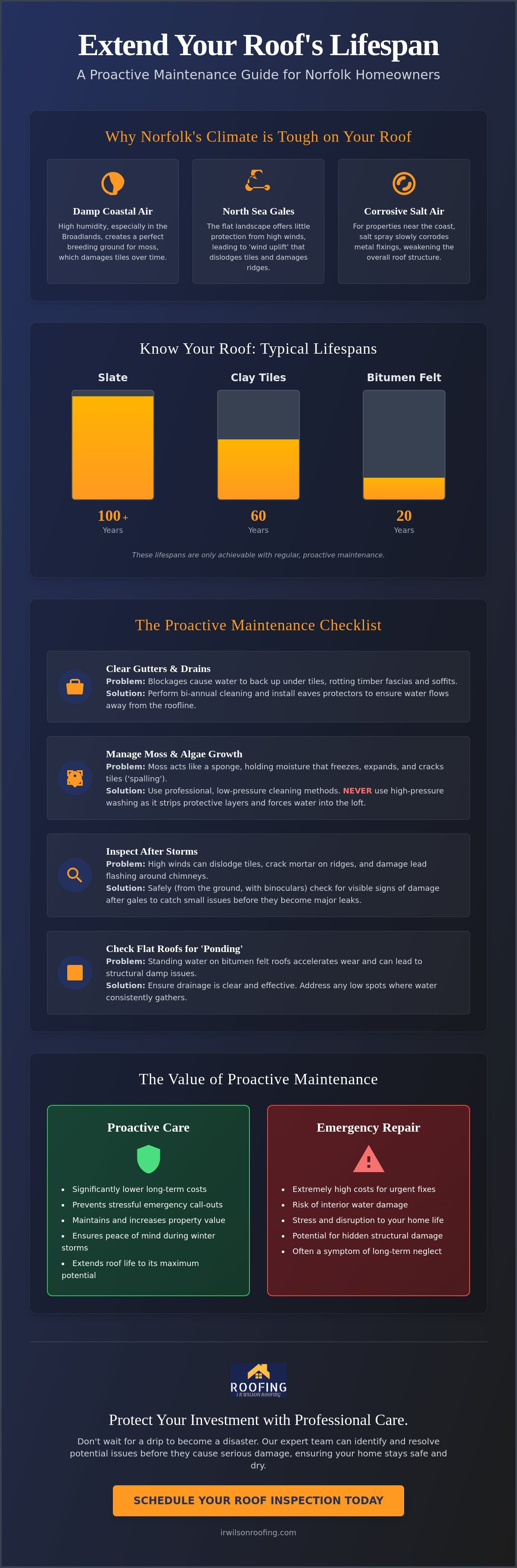
Every roofing material has its own natural expiry date, but the local environment determines if you'll actually reach it. A traditional slate roof can often last over a century, while clay tiles usually protect your home for sixty years. For many Norwich extensions, bitumen felt is a common choice, typically providing twenty years of service before requiring professional attention. However, these figures aren't set in stone. Your property's exposure to the elements plays a massive role in whether it reaches these milestones or falls short.
Norfolk's unique combination of high humidity and coastal proximity creates a challenging environment for building materials. While you might only notice a problem when a drip appears, "invisible" damage from moisture often starts years earlier. Salt air can slowly corrode fixings near the coast, and high humidity levels in the Broadlands can trap dampness within the roof structure itself. Taking a proactive approach to maintenance is the only reliable way of extending the life of your roof and protecting your investment.
To better understand how these factors interact with your home's structure, watch this helpful video:
The Threat of Moss and Algae in Norwich
Our local climate is a breeding ground for organic growth. In areas like the Broadlands, the air is particularly damp, encouraging thick carpets of moss and lichen to take hold on north-facing pitches. This isn't just an aesthetic issue. Moss acts like a sponge, holding water directly against the tiles. When the temperature drops, this water freezes and expands, causing the surface of your tiles to crack or "spall" over time. Professional roof cleaning is a vital part of maintenance, but we always advise against high-pressure washing. It can strip the protective granular layer from your tiles and force water into your loft space, doing more harm than good.
Wind Uplift and Storm Damage Resilience
Norfolk’s famously flat landscape offers little protection against the gales that sweep in from the North Sea. These high wind speeds create pressure differences that can physically pull tiles away from the rafters. Wind uplift is the primary cause of sudden tile displacement. After seasonal gales, it's wise to check your ridge tiles and mortar bedding. If the mortar is crumbling, the wind can get a foothold, leading to a chain reaction of damage. We've seen many cases at I R. Wilson Roofing where a simple repair to the leadwork or a few ridge tiles has saved a homeowner from an expensive emergency call-out during a winter storm.
The Role of Proper Drainage and Gutter Maintenance
Many homeowners view their gutters as a separate system, but they're actually the frontline defense for your roof's structural integrity. When gutters fill with moss, silt, or seasonal debris, rainwater has nowhere to go. During a typical Norfolk downpour, this water pools and eventually backs up, seeping under the bottom row of tiles or slates. This hidden moisture is a major obstacle when you're extending the life of your roof, as it attacks the very edge of your property's protection.
In older East Anglian properties, this standing water is the leading cause of timber rot in the rafters. The dampness doesn't just stay in the guttering; it travels. Without functional drainage, the roof edge stays permanently wet, causing the traditional roofing felt to perish and sag. We often recommend installing eaves protectors during repairs. These simple trays provide a sturdy bridge that ensures water flows safely into the guttering rather than rotting your roof's timber foundations. Regular inspection and maintenance of these drainage components can prevent these issues from ever taking root.
Fascias, Soffits, and the Roof’s Breathing Room
Soffits do more than just finish the look of your home. They provide essential ventilation that prevents attic condensation, which is a common cause of damp issues in Norwich. If your timber fascias feel soft to the touch or show signs of peeling paint, they're likely failing. Replacing these components before they impact the main rafters is a vital step for your property's long-term health. For more detailed advice on maintaining these areas, our Norwich Roofline Guide covers exactly what to look for.
Professional Gutter Cleaning vs. DIY
While it's tempting to grab a ladder on a weekend, DIY cleaning carries risks beyond just personal safety. Leaning heavy metal ladders against fragile plastic or older cast iron guttering often causes cracks or unseats the brackets. A professional service does more than just clear leaves. We check for correct "falls" to ensure water flows toward the downpipes and look for leaks at the joints that might otherwise go unnoticed. It's a straightforward way to get an expert eye on your roofline without the need for a full structural survey. If you're worried about your drainage, our team can provide expert guttering services to keep your home protected through the winter months.
Extending the Life of Flat Roofs vs. Pitched Roofs
While traditional pitched roofs are the architectural standard across Norwich, many local homes rely on flat roof systems for kitchen extensions, garages, and dormers. These two structures face very different challenges. Pitched roofs excel at shedding water quickly, but flat bitumen felt surfaces are more vulnerable to standing water and direct sun exposure. Understanding these differences is the first step toward extending the life of your roof without needing a total overhaul every decade.
Ponding is a frequent issue we see in East Anglian extensions. This occurs when water sits in a pool on the flat surface for more than 48 hours after rainfall. Over time, the weight and moisture weaken the bitumen, leading to leaks. Flat roofs also suffer from UV degradation more severely than pitched ones. The sun's rays can dry out the felt, making it brittle and prone to splitting. We often use solar reflective paint or limestone chippings to shield the surface from this heat, which significantly slows down the aging process. Following expert inspection and maintenance recommendations helps you identify these subtle changes before they become structural problems.
Proactive Flat Roof Repairs
You should look out for "alligatoring," which is a pattern of small cracks that look like reptile skin. This is a clear sign that the bitumen is losing its flexibility. Catching these early allows for targeted Flat Roof Repairs Norwich homeowners can use to avoid a full deck replacement. A small patch or a liquid-applied coating today is far more cost-effective than replacing the entire timber structure if water gets into the boards.
Tile and Slate Care for Pitched Roofs
Pitched roofs in Norfolk often feature beautiful clay tiles that are prone to "spalling." This happens when the face of the tile flakes off due to age and frost. It might seem minor, but a single slipped or broken tile can allow water to saturate a rafter, leading to localized rot. We also pay close attention to the leadwork around chimneys and in valleys. Lead is incredibly durable, but the mortar joints holding it in place can fail over time. By staying ahead of these material-specific issues, you are effectively extending the life of your roof and preserving your home's value.
Professional Inspections: Spotting Problems Early
Many homeowners try to save time by performing a quick "binocular inspection" from the garden. While it's a good start to spot a missing tile, it's rarely enough for older Norwich properties. A ground-level view can't reveal the subtle hairline cracks in chimney mortar or the early signs of lead fatigue in the valleys. We've found that a professional roofer’s eye is often the difference between a minor repair and a major structural failure. By identifying these issues before the autumn gales arrive, you're actively extending the life of your roof and preventing the high cost of emergency work.
Investing in an annual check-up can effectively double the lifespan of a roof that’s already twenty years old. It’s about more than just finding leaks; it’s about maintaining the protective layers that keep the timber structure dry. There's a significant psychological benefit to receiving a "clean bill of health" for your home. It provides peace of mind that your family will stay warm and dry through the harshest East Anglian winter. If you haven't had an expert look at your tiles recently, we can provide a thorough professional roof inspection to ensure your property remains secure.
The 12-Month Roof Maintenance Checklist
- Step 1: Internal attic check. Look for pinpricks of light through the rafters or any damp, musty smells that suggest trapped humidity.
- Step 2: External debris and moss. Assess any organic growth that might be blocking the natural flow of water or causing frost damage.
- Step 3: Flashing and leadwork. Check that the lead hasn't pulled away from the brickwork or developed small splits.
- Step 4: Gutter and downpipe flow. Test that water clears the roofline quickly without pooling or overflowing at the joints.
Leadwork and Chimney Stack Integrity
The areas surrounding chimney stacks are the most common fail points we encounter. Because chimneys are exposed to the wind from all sides, the mortar joints tend to perish faster than the rest of your walls. Once that mortar crumbles, water finds a direct path behind the lead flashing and into your ceilings. You should look for lead that has "bagged" or pulled out of its original chase. Repointing a chimney stack is a straightforward task that prevents years of water ingress and is a vital part of extending the life of your roof. It's these small, methodical steps that protect the long-term value of your Norwich home.
Investing in Quality: The I R. Wilson Approach
At I R. Wilson Roofing, we've spent over thirty years building a reputation for reliability across Norwich and the wider Norfolk area. Our philosophy is simple. We believe in providing expert advice that prioritizes the most cost-effective, long-term options for your property. This "repair first, replace last" mentality is central to our approach of extending the life of your roof. When you choose our family-run team, you're dealing directly with Ian and Ben Wilson. This personal accountability ensures that the people running the business are directly involved in the safety and craftsmanship of your home.
We understand that property maintenance can be a source of significant stress for homeowners. That's why we focus on projecting a sense of calm competence and long-standing reliability in every job we undertake. By catching small issues early, we help you avoid the high costs of emergency work while effectively extending the life of your roof. We provide competitive quotations that reflect the honest, transparent nature of our physical work, ensuring you receive the best value for your investment.
Craftsmanship and Professionalism
We take immense pride in our work, from minor tile replacements to comprehensive chimney repairs. Our team is highly recommended by local residents across Norfolk because we don't just fix a symptom; we look for the root cause of the issue. Whether it's replacing a few perished timbers or repointing a chimney stack, we bring the same level of disciplined attention to every task. We possess deep expertise in both emergency storm repairs and planned maintenance, ensuring your property remains a dependable shield against the East Anglian elements. This earned pride in our craftsmanship is your digital handshake, promising enduring quality that lasts for decades.
Secure Your Home’s Future Today
Transparency is a cornerstone of how we operate. We use fixed-price project fees for larger works, so you never have to worry about hidden costs or unexpected surprises once the work begins. If you're concerned about the state of your bitumen felt or the integrity of your leadwork after the latest seasonal gales, we're here to provide clarity. We invite you to request a complimentary, low-pressure roof assessment where we can explain any potential issues in plain English. Our goal is to build long-term relationships through honesty and personal recommendations rather than high-pressure sales tactics. Contact I R. Wilson Roofing for a professional roof inspection to secure your home’s future and gain true peace of mind.
Protecting Your Norwich Home for the Decades Ahead
Building a resilient home in Norfolk starts with understanding that your roof is a dynamic system, not just a static layer of tiles. We've explored how proactive gutter maintenance and timely flat roof repairs can prevent the structural damp issues so common in East Anglian properties. By staying ahead of moss growth and checking your leadwork after seasonal gales, you are successfully extending the life of your roof while avoiding the stress of emergency call-outs. It's about making small, methodical investments today to protect your property’s value for tomorrow.
Since 1994, our family-run team has provided the dependable expertise needed to navigate these local challenges. As specialists in Norfolk flat roof repairs with a reputation for highly recommended local craftsmanship, we take pride in offering honest, technical authority you can trust. We're here to help you move from worry to certainty with a clear plan for your roof's health. Request a Free Expert Roof Consultation in Norwich today to ensure your home remains a safe, dry haven for years to come. We look forward to helping you protect what matters most.
Frequently Asked Questions
How often should I have my roof inspected in Norwich?
You should have your roof inspected at least once every twelve months. In Norwich, we recommend scheduling this during late autumn before the winter storms arrive. This allows a professional to check for slipped tiles or perished mortar that could lead to leaks during heavy rain. Regular checks are the most reliable method for extending the life of your roof and avoiding expensive emergency repairs.
Can moss really damage my roof tiles, or is it just an aesthetic issue?
Moss is far more than just an aesthetic problem; it acts like a sponge that retains moisture against your tiles. During a typical Norfolk frost, this trapped water expands and causes the surface of clay or concrete tiles to flake and crack. Over several seasons, this "spalling" weakens the tiles until they eventually fail. Keeping your roof clear of organic growth is essential for long-term structural health.
What is the most cost-effective way to extend a flat roof’s life?
The most cost-effective strategy for a flat roof is ensuring that water drains away quickly without "ponding." You should clear debris from outlets and check bitumen felt for small cracks or "alligatoring" every six months. Applying a solar reflective coating or maintaining limestone chippings can also protect the surface from UV damage. These simple steps prevent the bitumen from becoming brittle and failing prematurely.
Is it worth repairing a roof that is over 20 years old?
It is absolutely worth repairing a 20-year-old roof if the underlying timber structure is still in good condition. Many clay tile or slate roofs are only halfway through their natural lifespan at this age. Targeted repairs to leadwork, ridge tiles, or specific damp patches can add another decade of service. This approach is often much more sensible than the high cost of a full replacement.
How much does a typical roof maintenance service cost in Norfolk?
The cost of roof maintenance in Norfolk depends on your property's size and the materials involved. Factors like the height of the building and access for ladders will influence the final price. While some homeowners use drone surveys for a quick overview, a physical inspection is the best way to spot subtle issues. We provide transparent, fixed-price project fees for any necessary work.
Can I clean the moss off my roof myself using a ladder?
We strongly advise against attempting to clean moss yourself using a standard ladder. Walking on tiles can easily cause them to crack; high-pressure washing often strips the protective granular surface from the material. Professional roofers use specialized equipment and safety harnesses to clear growth without risking structural damage. It's a task where the potential for accidental damage far outweighs the savings of a DIY approach.
Does attic ventilation actually help the roof last longer?
Proper attic ventilation is critical because it prevents the buildup of condensation within your roof space. Without adequate airflow through your soffits, moisture from the home can become trapped against the underside of the rafters. This leads to damp insulation and timber rot. A well-ventilated roof stays drier and remains structurally sound for much longer than one with poor circulation.
What are the signs that my roof timbers are starting to rot?
Early signs of rotting timbers often include a persistent musty or damp smell in your loft. You might also notice dark stains on the rafters or areas where the roofline appears to be sagging slightly. If you see damp patches appearing on upstairs ceilings, it's a sign that water has already bypassed the tiles. Catching these signs early is vital for extending the life of your roof.