Most homeowners view a felt flat roof as a ticking time bomb that's destined to leak the moment a Norfolk storm rolls in. We understand that anxiety. It's stressful to hear rain lashing against the windows and wonder if your ceiling is about to start dripping. You shouldn't have to worry every time the clouds turn grey or feel confused about whether that patch of moss is a cosmetic quirk or a structural threat. We believe your roof should be a dependable asset, not a source of constant "what-ifs."
In this guide, we'll show you exactly how to maintain a felt flat roof to double its lifespan and keep your home bone-dry. By following a few essential steps, you can transform a basic surface into a reliable 20-year shield. We'll walk you through a clear maintenance schedule, explain how to spot "red flag" damage early, and help you decide when a DIY check is safe versus when it's time to call in a professional. Our goal is to give you total confidence that your property is protected through 2026 and for many years to follow.
Key Takeaways
- Learn how small, proactive checks can prevent the need for expensive structural repairs and significantly extend your roof's lifespan.
- Discover the exact bi-annual schedule you need to follow to understand how to maintain a felt flat roof through every season.
- Master the "Big Three" red flags—blistering, cracking, and ponding—so you can spot potential leaks before they enter your home.
- Understand how to protect your roof against Norfolk’s unique challenges, from North Sea winds to the humid winters that encourage moss growth.
- Gain the confidence to know when a simple fix is safe and when it’s time to call in an expert for a professional inspection.
Why Maintaining Your Felt Flat Roof is Essential in 2026
Felt roofing, technically known as Asphalt roll roofing, has been a reliable choice for UK homes for decades. It consists of bitumen layers reinforced with durable fibres, creating a thick, waterproof barrier for extensions, garages, and porches. In 2026, we're seeing more unpredictable weather patterns, including sharper temperature swings and heavier rainfall. These conditions test the limits of any material. However, the good news is that a high-quality felt roof isn't a temporary solution. When homeowners understand how to maintain a felt flat roof, they can expect a lifespan of 20 to 25 years.
We often talk about the "maintenance dividend." This is the financial reward you get for being proactive. Small, routine checks might take an hour of your weekend, but they prevent the £1,000+ structural repairs that follow a major leak. By catching a small split early, you ensure the underlying timber remains dry and strong. It's the difference between a simple patch and a full, stressful roof replacement.
To better understand the construction of these systems and why care is so important, watch this helpful video:
The Anatomy of a Bitumen Felt Roof
Most modern felt roofs use a three-layer "torch-on" system. We melt these layers together during installation to form a solid, bonded unit. The top layer, called the cap sheet, is finished with mineral chippings. These granules act as a shield against UV radiation; without them, the bitumen would bake, dry out, and crack. While the main surface is tough, you must pay attention to the vulnerable areas. The seams where the felt sheets overlap, the edge trims, and the leadwork around chimneys are where most issues begin.
How Neglect Leads to Premature Failure
When maintenance is ignored, a destructive cycle begins. UV degradation slowly strips the protective oils from the bitumen, making it brittle. Small cracks appear, allowing water to seep through and sit on the timber decking. In our humid Norfolk climate, this trapped moisture quickly turns into rot. You won't see this damage from the ground, but it quietly weakens the structure of your home. Learning how to maintain a felt flat roof through regular cleaning and inspection stops this cycle before it starts. A "stitch-in-time" repair is always more affordable and less disruptive than a total overhaul.
A Step-by-Step Routine for Felt Roof Upkeep
Consistency is the secret to a long-lasting roof. We recommend a bi-annual routine to ensure your property remains in top condition. Late autumn is the ideal time to prepare for winter storms, while an early spring check allows you to assess any frost damage from the colder months. To get started, you only need a few basic tools: a sturdy ladder, a soft-bristled brush, and your safety gear. We also suggest keeping a simple maintenance log. Recording the dates and findings of your inspections can be invaluable for insurance claims if you ever face storm damage. Knowing how to maintain a felt flat roof through these simple steps will save you from unexpected stress later on.
Clearing Debris and Preventing Moss Growth
Moss and debris are more than just an eyesore. When leaves and twigs sit on the surface, they begin to decompose and release acids that can slowly eat away at the bitumen layers. While it's tempting to use a pressure washer to clear moss, please avoid this. The high-pressure stream can strip away the protective mineral granules, leaving the felt exposed to UV damage. Instead, use a soft brush to gently sweep away loose material. Pay close attention to "ponding" areas. These are low spots where silt and dirt naturally collect, which often indicates that the roof's fall needs adjusting to help water escape.
Guttering and Drainage Maintenance
Drainage is the lifeblood of a flat roof. If outlets and downpipes become blocked, the resulting weight of standing water puts unnecessary stress on the roof structure. We always check the "drip edge," which is the point where the felt overlaps into the guttering. If this edge becomes loose or damaged, water can track back under the felt and rot the fascia boards. For those who aren't comfortable working at height, our team offers professional guttering services Norwich residents can rely on to keep everything flowing correctly.
Safety First: Can You Walk on a Felt Roof?
Many homeowners ask if they can safely walk on their roof. Generally, we advise against it unless it's absolutely necessary. Old or sun-damaged felt becomes brittle, and your weight could cause hidden punctures or tears. If you must gain access, use crawl boards or weight-distributing pads to protect the surface. Understanding the common causes of roof failure, such as punctures from foot traffic or falling branches, helps you avoid accidental damage. If the pitch is steep or the height makes you feel uneasy, it's always safer to let a professional handle the inspection. It's about protecting your home and your own safety. You can find more tips on keeping your property in peak condition over at our roofing advice blog.
Identifying Common Felt Roof Problems: The Red Flags
Identifying a problem early is the most important part of knowing how to maintain a felt flat roof. While some issues are purely cosmetic, others indicate that your home's structure is at risk. We recommend looking for both internal and external warning signs during your bi-annual checks. Inside your home, keep an eye out for damp patches on the ceiling or a faint musty smell in the rooms below. These are often the first indicators that water has bypassed the felt and is soaking into the insulation or timber. Outside, look for "bald spots" where the mineral chippings have washed away. These granules are your roof’s primary defence against the sun, so losing them leaves the bitumen vulnerable to drying out and cracking. You should also carefully inspect the seams and joints. These are the most common points for water entry, as the bond between sheets can occasionally weaken due to the natural expansion and contraction of the building.
If you notice any of these red flags, it's best to act quickly. Many issues can be resolved with a targeted repair if they're caught before the underlying timber is affected. We take pride in helping our neighbours distinguish between a simple surface blemish and a genuine structural threat. Having this knowledge allows you to manage your home maintenance with confidence rather than worry.
Blistering and Splitting: Causes and Cures
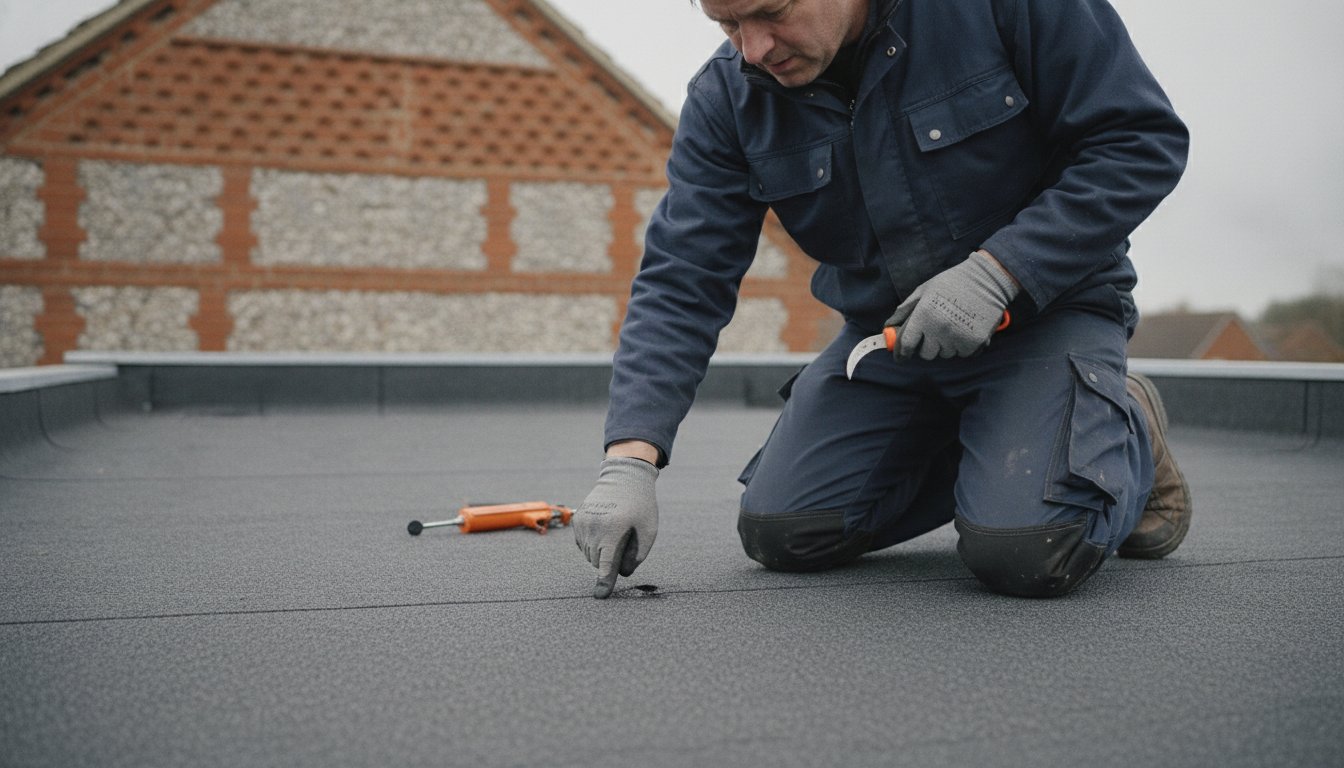
Sun blisters are a common sight on older felt roofs. They happen when tiny amounts of moisture trapped between the layers expand under the heat of the summer sun. A small, sealed bubble is often just a cosmetic quirk and doesn't always require an immediate fix. However, if that blister has split or feels brittle to the touch, it has become a critical entry point for rain. We also look for "alligatoring," which refers to fine, interconnected cracks that resemble reptile skin. This is a clear sign that the bitumen is losing its flexibility and is nearing the end of its useful life.
Ponding Water: The Silent Killer
Ponding is perhaps the most serious threat to a flat roof. We define this as any standing water that remains on the surface 48 hours after the rain has stopped. It’s a silent killer because of the sheer weight involved. A large pool of water puts immense pressure on your roof joists, which can cause the structure to bow over time. This sagging creates a deeper pool, making the problem progressively worse. If your roof suffers from chronic ponding, we can often fix the drainage by installing tapered insulation or timber firrings to restore a healthy slope and ensure water reaches the gutters.

Maintaining Your Roof in the Norfolk Climate
Norfolk homeowners face a unique set of challenges when it comes to property care. Our proximity to the North Sea brings biting winds and high humidity, both of which can accelerate the aging of roofing materials. If you're learning how to maintain a felt flat roof in our region, you must account for the "Norwich Storm Season." Running typically from October through February, this period brings the highest risk of wind damage. We always recommend a thorough check of the leadwork around chimneys and wall junctions after a significant gale. High winds can rattle these heavy components, potentially breaking the mortar seal and allowing water to bypass your felt entirely.
The humidity of our winters also contributes to the "Moss Factor." Unlike drier parts of the UK, Norfolk’s damp air creates the perfect breeding ground for moss and lichen. As we mentioned in our earlier sections, these growths hold moisture against the surface. During the freeze-thaw cycles of January and February, this trapped water expands, which can lead to premature degradation of the bitumen layers. Keeping the surface clear is essential for the long-term health of your home.
Wind Uplift and Edge Security
During heavy storms, wind can get under the edges of your roof. This is known as wind uplift. If your perimeter isn't secure, the felt can "peel" back like a lid, exposing the timber underneath to the elements. This is why we pay so much attention to your roof's edges. Secure fascias and soffits act as the first line of defence; they pin the roof covering down and prevent wind from gaining a foothold. If you notice your boards are rotting or pulling away, you might need a fascia and soffit replacement to restore that essential edge security and protect your investment.
UV Protection and Solar Reflective Coatings
While winter brings wind and rain, summer brings solar gain. This is the biggest enemy of bitumen-based felt. In July and August, the sun can bake the roof, causing the oils in the bitumen to evaporate. This makes the material brittle and prone to cracking. For older roofs that have lost some of their protective mineral granules, applying a solar reflective coating can be a lifesaver. These silver or white paints reflect the heat, keeping the roof surface significantly cooler. Some professional-grade coatings even help to "re-plasticise" aging felt, restoring some of the flexibility it had when it was first installed.
If you're worried about how your roof will handle the next big Norfolk storm, we're here to help. You can find more detailed advice on local property care by visiting our Norfolk roofing maintenance guide.
When to Call I R. Wilson Roofing for Professional Help
While basic cleaning and visual checks are excellent habits for any homeowner, there are moments when professional intervention is the only way to guarantee your home's safety. A huge part of understanding how to maintain a felt flat roof is recognising the limits of DIY. A "quick fix" with a tube of sealant might stop a drip today, but it can often mask a much larger issue, such as saturated insulation or timber rot. We believe in getting the job done right the first time, whether that involves minor seam resealing or a complete bitumen felting project for a new extension. Our team brings a sense of calm competence to every job, ensuring you don't have to worry about the next big downpour.
Professional Inspection vs. DIY Check
A professional roofer sees things that the untrained eye might miss. For example, we look for signs of interstitial condensation, which is moisture that forms between the layers of your roof rather than coming from a leak. This can be just as damaging to your timbers as a hole in the felt. We also provide written condition reports, which are incredibly valuable if you are planning to sell your home or need to provide evidence for an insurance claim. If you've spotted any of the red flags we discussed earlier, such as persistent ponding or deep cracks, it's time to look into flat roof repairs Norwich residents trust for long-term durability.
Our Commitment to Norwich Homeowners
We take immense pride in being a local, family-oriented enterprise with over 30 years of experience across Norfolk. Our reputation is built on honesty and traditional craftsmanship. When we visit your property, we provide straightforward advice on whether a repair is viable or if a replacement is the more cost-effective long-term solution. We aren't interested in high-pressure sales; we want to build a relationship based on trust and reliable service. We understand that your home is your most significant investment, and we treat it with the same care as we would our own.
Our process is steady and methodical. We start with a thorough assessment, explain the solution clearly, and provide a detailed plan to give you peace of mind. If you are uncertain about the current state of your felt roof, we invite you to reach out for a complimentary, low-pressure consultation. We can help you navigate the best way to keep your property dry and secure for its full 20-year potential.
Contact I R. Wilson Roofing for a professional flat roof assessment and let our seasoned team take the stress out of your property maintenance.
Securing Your Home’s Future Against the Elements
Taking control of your property maintenance doesn't have to be overwhelming. By adopting a bi-annual routine and keeping a sharp eye out for red flags like ponding or splitting, you're doing more than just preventing leaks; you're protecting your family's comfort. Understanding how to maintain a felt flat roof is the best way to ensure your home remains a dry, safe haven through every Norfolk storm. It’s about being proactive today to avoid the stress of a sudden failure tomorrow.
We've been a family-run business since 1994, and our team has spent decades becoming specialists in high-quality bitumen felting. As highly recommended local Norwich roofing experts, we know exactly what it takes to make a roof last its full 20-year potential in our unique coastal climate. We pride ourselves on providing the honest, dependable service our neighbours deserve. If you're ready for total peace of mind, we're here to help. You can Book a Professional Flat Roof Inspection in Norwich to get a clear, expert assessment of your roof's condition. Your home is in safe hands with us, and we look forward to helping you keep it that way for years to come.
Frequently Asked Questions
How often should I clean my felt flat roof?
You should aim to clean your roof twice a year, ideally in the early spring and late autumn. This schedule ensures that you clear away fallen leaves and twigs before they can decompose and cause acidic damage to the bitumen. Regular cleaning is a fundamental part of how to maintain a felt flat roof and keep your drainage systems flowing freely through the winter months.
Can I use a pressure washer to remove moss from my felt roof?
We strongly advise against using a pressure washer on any felt surface. The high-pressure stream can blast away the protective mineral granules, leaving the underlying bitumen exposed to harmful UV rays. Instead, use a soft-bristled brush to gently sweep away moss and debris. This manual approach is much safer and preserves the integrity of the waterproof layers.
Is ponding water on a flat roof always a sign of a leak?
Ponding water isn't an immediate leak, but it's a serious structural warning sign. If water remains on your roof for more than 48 hours after rainfall, it indicates that the roof's "fall" isn't directing water to the gutters correctly. This standing weight puts unnecessary stress on your timber joists and can eventually lead to sagging or internal dampness if left unaddressed.
How long does a bitumen felt roof typically last in the UK?
A high-quality torch-on felt roof typically lasts between 15 and 20 years when properly cared for. While basic shed felt might only last 10 to 12 years, modern multi-layer systems are designed for much greater durability. Your roof's actual lifespan depends heavily on its exposure to the elements and your commitment to a consistent maintenance routine.
What is the best way to repair a small hole in a felt roof?
The most reliable way to fix a small hole is with a professional torch-on patch. While emergency bitumen sealants can provide a temporary fix during a storm, they aren't designed for long-term protection. We use specific heat-bonding techniques to ensure the new patch becomes a permanent, watertight part of the existing roof structure, preventing moisture from reaching the timber below.
Does my home insurance cover flat roof repairs?
Most home insurance policies cover sudden damage caused by storms or falling trees, but they rarely cover issues caused by neglect or general wear and tear. If a leak occurs because the roof has reached the end of its natural life, the claim may be declined. Keeping a simple log of how to maintain a felt flat roof provides valuable evidence that you've looked after your property correctly.
Can I walk on my felt roof to clear the gutters?
You should avoid walking directly on a felt roof whenever possible, especially on older or sun-damaged surfaces. Bitumen can become brittle over time, and the pressure of foot traffic can cause hidden cracks or punctures. If you must gain access, always use weight-distributing crawl boards. If the surface feels soft or "spongy," it's a sign of internal damage and you should stay off it entirely.
How do I know if my felt roof needs a full replacement or just a repair?
A repair is usually sufficient for isolated issues like a single split or a loose seam. However, if the surface shows widespread "alligatoring" or multiple leaks, a full replacement is often the more cost-effective long-term choice. We provide honest assessments to help you decide between repair and replacement, focusing on the structural health of your timbers and the remaining flexibility of the bitumen layers.