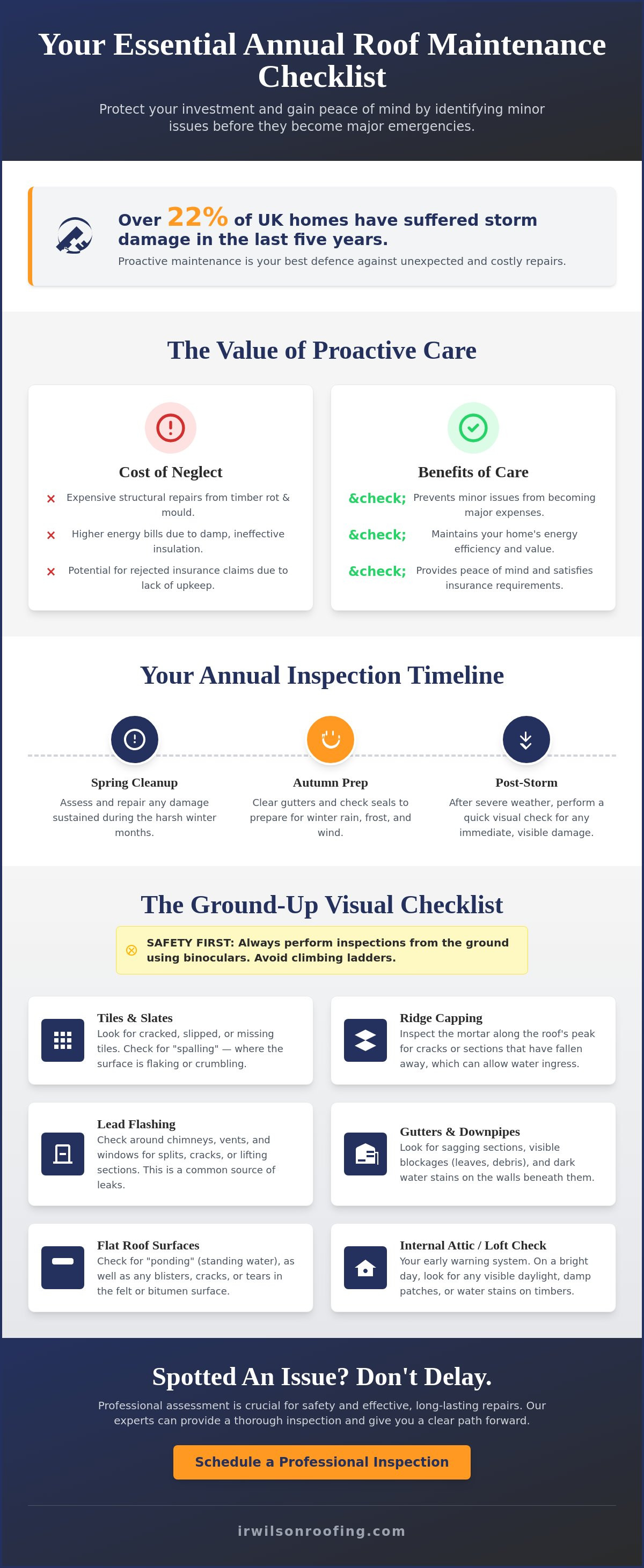
Over 22% of UK homes have suffered storm damage in the last five years, which is why following a reliable annual roof maintenance checklist is the best way to avoid unexpected bills. As a homeowner, you likely know the feeling of lying awake during a Norfolk gale, wondering if your tiles are holding up or if a hidden leak is slowly soaking into your ceiling. It is completely natural to feel a sense of dread about the potential cost of professional repairs or to feel confused by the different requirements for flat roofs versus traditional slate.
We believe that your home should be a place of safety, not a source of stress. This guide provides a professional-grade approach to inspecting your property safely and effectively. We will show you exactly what to look for across your roofline, from the condition of your leadwork to the state of your gutters. You will learn how to identify minor issues before they become emergencies, ensuring your home remains weather-tight and meets the latest energy efficiency standards. This methodical approach offers a clear path to protecting your investment and finding peace of mind before the winter weather arrives.
Key Takeaways
- Understand the financial value of proactive care and how early detection prevents minor issues from turning into costly structural repairs.
- Follow our annual roof maintenance checklist to conduct a thorough visual inspection safely from the ground using simple tools like binoculars.
- Learn to spot the specific warning signs for flat roofs, such as "ponding" water, which can compromise felt and bitumen surfaces over time.
- Identify the difference between harmless moss growth and structural "wind-lift" caused by Norfolk’s challenging coastal climate.
- Discover how to use your attic as an early warning system to find hidden leaks before they cause significant internal damage to your home.
Why an Annual Roof Maintenance Checklist is Essential in 2026
Maintaining a roof in the UK has never been more critical than it is in 2026. With increased rainfall and higher wind speeds becoming the norm across the country, your property faces constant pressure from the elements. We view regular maintenance as a form of heritage preservation for your home. By following a structured annual roof maintenance checklist, you aren't just ticking boxes; you're protecting the structural integrity of your most valuable asset. A small maintenance task today can prevent a massive structural repair tomorrow. Imagine the difference between a minor gutter clearance and a full timber replacement because of long-term rot.
Statistics show that over 22% of UK homes have suffered storm damage in the last five years. Many of these issues start as minor faults that go unnoticed until the next big gale hits Norfolk. Insurance companies have also become stricter. Many policies now require proof of regular upkeep to honour claims. If you can't show that you've looked after your tiles, leadwork, or flat roofs, you might find your claim for storm damage rejected when you need it most.
To better understand this concept, watch this helpful video:
The Cost of Neglect vs. Proactive Care
Neglecting your roof doesn't just lead to drips in the attic. Small leaks eventually cause timber rot and mould, which are far more expensive to fix than a few slipped tiles. In 2026, energy efficiency is a major concern for Norwich homeowners. Damp insulation loses its thermal properties, which means your heating bills will rise as heat escapes through the roof. Keeping your property dry is the first step in maintaining the thermal performance required by modern building regulations. We've seen how "out of sight" often leads to "out of pocket" for many local residents who ignore their roofline for too long.
When to Perform Your Annual Inspection
Timing is everything for property care. We recommend a "Spring Cleanup" to assess any damage from the winter and an "Autumn Prep" to clear gutters and check seals before the next cycle of frost. For Norfolk properties, post-storm inspections are vital because of our exposed coastal position. You should also consider various roof cleaning methods to remove moss that traps moisture against your tiles during the damp winter months. Scheduling these checks when the weather is clear ensures you have the visibility needed to spot subtle shifts in your roofline. Following an annual roof maintenance checklist helps you stay ahead of the UK weather calendar, giving you peace of mind throughout the seasons.
Exterior Roof Inspection: A Step-by-Step Visual Checklist
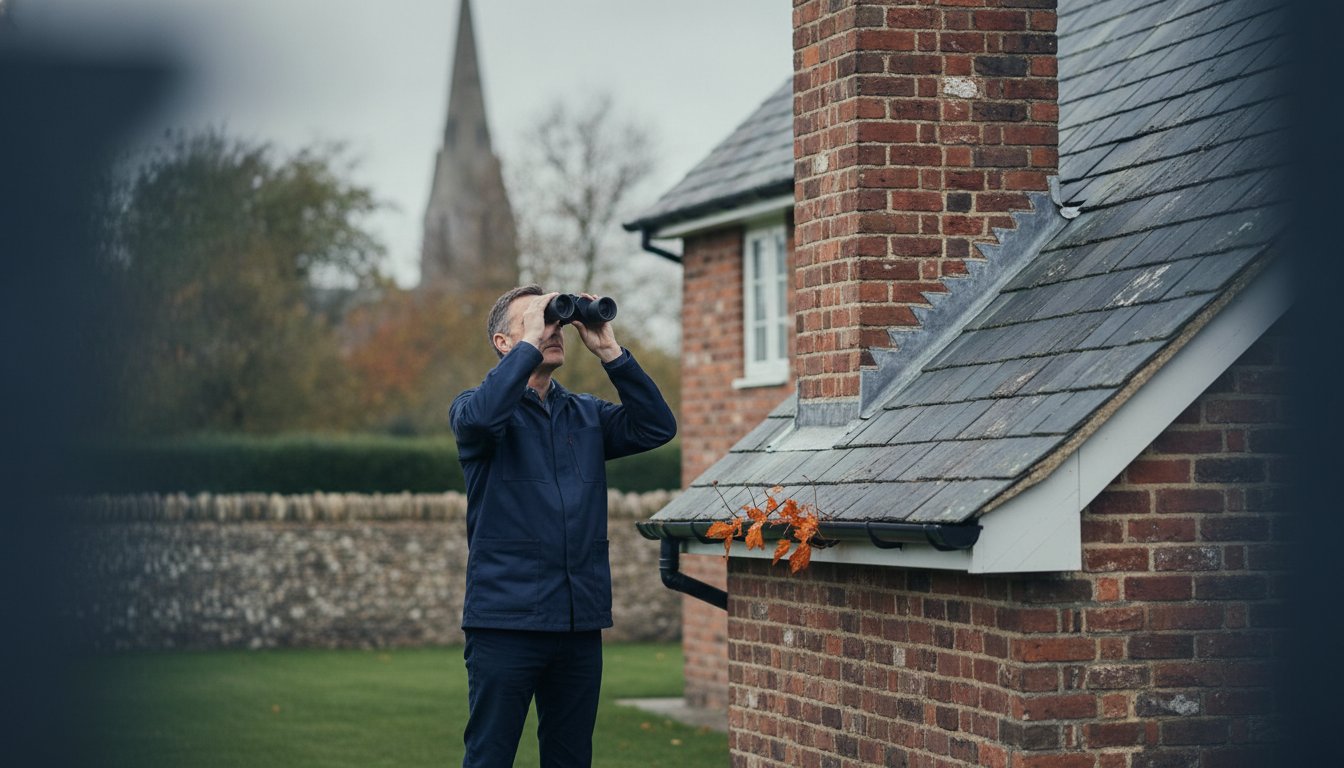
The safest way to start your annual roof maintenance checklist is with your feet firmly on the ground. We always advise against climbing ladders unless you have the correct training and equipment. Instead, use a pair of high-quality binoculars or even a domestic drone to get a clear view of your roofline. This approach aligns with the official HSE safety guidance, which emphasizes the risks of working at height. By staying on the ground, you can methodically scan for slipped slates or damaged leadwork without putting yourself in danger.
Pay close attention to the lead flashings around chimneys and dormer windows. These areas are prone to splitting because lead expands and contracts with the changing UK temperatures. Since nearly 50% of roofing issues in the UK stem from poor flashing installation, spotting a split early can save you from a major leak. You should also look at your guttering from a distance. Look for sagging sections or dark water marks on the brickwork; these often indicate a hidden blockage or a failing joint that needs attention.
Monitoring Tiles, Slates, and Ridge Capping
Look for "spalling" tiles, where the surface begins flaking or crumbling due to frost damage. This is particularly common in older clay tiles that have absorbed moisture over the years. You should also check the line of the ridge; a noticeable dip often suggests structural shifting or failing timbers underneath. Pointing is the mortar used to bed and joint ridge tiles to the roof, and checking for brittle or missing mortar is a 2026 priority to prevent wind-lift during coastal gales.
Checking the Roofline: Fascias, Soffits, and Gutters
Timber fascias are often the first place rot sets in, which can eventually compromise the stability of your bottom row of tiles. Look for "back-flow" marks, which are white or dark stains on the underside of your soffits caused by water failing to enter the gutter correctly. These marks suggest that your gutters are either blocked or incorrectly pitched. If your drainage looks suspect, you might find our guide on Guttering services in Norwich helpful for identifying specific local issues. If your visual inspection reveals cracked tiles or failing leadwork, seeking professional roofing advice can help you decide on the best course of action before the next storm arrives.
Specialist Focus: Flat Roof and Felt Maintenance
Flat roofs require a completely different maintenance philosophy than their pitched counterparts. While a tiled roof relies on gravity and overlap to shed water, a flat roof uses a subtle "fall" to direct rain toward specific drainage points. If this slope is compromised, even by a few millimetres, you will encounter the #1 enemy of felt roofs: ponding. Standing water that remains on your roof for more than 48 hours after rainfall is a clear signal that your drainage or structural deck needs attention. The weight of this water puts immense pressure on the bitumen layers and can accelerate the aging of the material significantly.
When you include a flat roof in your annual roof maintenance checklist, you must look closely for "alligatoring." This is a network of small cracks that resemble the skin of a reptile. It happens when the bitumen has been exposed to excessive UV radiation over many years, losing its flexibility and becoming brittle. You should also pay close attention to the perimeter edges and joins. Most flat roof leaks don't start in the centre of the roof; they begin at the flashings where the membrane meets the brickwork or the drip edge. Checking these junctions for signs of lifting or separation is a vital part of your yearly routine.
Common Flat Roof Failure Signals
You might notice "blistering" on your roof, which looks like small bubbles trapped under the surface. These are caused by air or moisture being heated by the sun and expanding. It is vital that you never pop these bubbles, as doing so creates an immediate entry point for water. We also look for "de-lamination," where the individual layers of felt begin to separate from one another. If you spot these issues during your inspection, our guide on flat roof repairs in Norwich provides deeper insight into the professional solutions available to restore your roof's integrity.
Maintaining Bitumen and Felt Surfaces
A proactive approach involves more than just looking for damage. You should regularly clear any debris, such as leaves or twigs, that can trap moisture and encourage organic growth. Moss and algae can take root in the mineral finish of the felt, leading to premature wear. If your roof has a solar reflective coating, check for areas where the silver or white paint has worn thin. Re-applying these coatings is a simple way to extend the lifespan of your roof by reflecting heat away from the bitumen. Finally, ensure all internal drainage outlets are clear of silt. A blocked outlet on a flat roof can lead to a "bath" effect, where water rises high enough to seep over the edge of the flashings and into your property's structure.
Addressing Common Norfolk Roofing Issues: Moss and Storm Damage
Living in East Anglia brings unique challenges that a standard national annual roof maintenance checklist might overlook. Our proximity to the coast means your property is constantly exposed to salt-laden air, which can accelerate the corrosion of metal components and leadwork. We often see lead flashings in Norfolk towns like Great Yarmouth or Cromer showing signs of "white rust" or pitting much earlier than those further inland. Additionally, our region's flat landscape offers little protection from North Sea gales. These winds create a phenomenon known as "wind-lift," where high-pressure gusts get underneath tiles or shingles, loosening the fixings and leaving your home vulnerable to the next big storm.
Many homeowners view moss as a purely cosmetic issue, but we call this the "Moss Myth." While a light dusting might look traditional, heavy organic growth is a genuine structural threat. Moss removal should never involve high-pressure washing because the force of the water strips the protective granular surface from your tiles and can saturate the batten space underneath. Instead, we look for signs that moss is impeding the natural flow of water toward your gutters, which often leads to dampness in the roof's substructure.
Professional Roof Cleaning and Moss Removal
During the damp winter months, moss acts like a sponge, holding significant amounts of water against your tiles. When this water freezes, it expands, causing "blown" tile faces and cracks. We recommend a methodical approach to cleaning, such as manual scraping followed by a specialist chemical treatment or "soft washing" to kill the spores. This preserves the tile's integrity while ensuring it remains dry. For a deeper look at safe techniques, you can read our guide on Professional roof cleaning in Norwich.
Storm Damage Assessment for Norwich Properties
With over 22% of UK homes suffering storm damage in the last five years, a post-event inspection is a vital part of your annual roof maintenance checklist. After a high-wind event in Norfolk, check your garden for fragments of slate or mortar, as these are often the first signs of trouble. Look for impact damage from fallen branches or flying debris that may have cracked a ridge tile. If you spot a problem, emergency temporary repairs are essential to prevent secondary water damage to your ceilings and insulation. If you are concerned about the state of your property after a gale, you can schedule a professional roof assessment to ensure your home remains weather-tight and secure.
When to Call the Professionals: Safety and Expert Repairs
While your annual roof maintenance checklist starts with visual checks from the garden, knowing where your DIY efforts should end is vital for your safety. We strictly advocate for the "Ladder Rule"; if a task requires you to leave the ground, it's time to call an expert. Working at height involves significant risks that require specialist training and safety equipment. Our team uses professional-grade access solutions to ensure every inspection is thorough without compromising the safety of your property or our staff. By staying on the ground, you avoid unnecessary risks while still maintaining a proactive eye on your home's condition.
A professional quotation provides more than just a price; it offers a fixed-price view on your roof’s health. We provide expert advice for Norwich and Norfolk residents, drawing on decades of experience to spot subtle issues that an untrained eye might miss. This proactive approach ensures that your home meets the latest 2026 building regulations for insulation and safety, especially if you're planning significant repairs. We take pride in our craftsmanship and believe that a digital handshake is just as important as the physical work we do on your tiles or leadwork.
The Interior Inspection: What Your Ceiling is Telling You
Sometimes the most revealing part of an annual roof maintenance checklist happens inside your home. Take a torch into your loft and look for damp patches on the rafters or peeling wallpaper on the upper floors. Musty smells often indicate trapped moisture, which can lead to timber rot if left unaddressed. If you see daylight through the roof boards, it's a clear sign of slipped tiles or felt failure. We also check for "sweating" or condensation; poor ventilation is responsible for 1 in 4 roof failures in UK homes, making airflow just as important as water-tightness. Checking your insulation levels is also crucial, as 2026 standards require specific U-values to maintain energy efficiency. For a truly modern approach to property management, The Smart Home Consultant offers bespoke planning services to help you integrate smart monitoring and energy-saving technology into your home.
Choosing a Reliable Norwich Roofing Company
Norfolk has a rich architectural heritage, and our local knowledge of housing styles is essential for quality repairs. Whether your home features traditional flint, red brick, or classic Norfolk pan tiles, we understand how these materials age and react to our coastal climate. As a long-standing, family-oriented enterprise, we prioritize personal care and the safety of your home above all else. We've built our reputation on honest, transparent work that stands the test of time. We never use high-pressure tactics; instead, we focus on building long-term relationships through steady, methodical service. For peace of mind and enduring quality, you can Contact I R. Wilson Roofing for a professional maintenance check to ensure your property is ready for whatever the weather brings.
Protect Your Home for the Seasons Ahead
Taking a proactive approach to property care is the most effective way to ensure your family remains safe and dry. We've explored how simple ground-level observations can identify slipped tiles or failing leadwork before they lead to significant internal damage. By utilizing an annual roof maintenance checklist, you transform property upkeep from a stressful emergency into a manageable routine. It's important to remember that your attic often holds the clues to your roof's health; regular interior checks are just as vital as scanning your gutters.
As a family-run business established in 1994, we understand the unique demands of Norfolk's coastal climate. Our team specializes in both flat and pitched roofs, providing expert leadwork and guttering services that stand the test of time. We believe in building lasting relationships through honest advice and dependable craftsmanship. If you're ready to secure your property's future, you can Book a Professional Roof Inspection with I R. Wilson Roofing today. We are here to provide the peace of mind you deserve, ensuring your home is ready for whatever the UK weather brings.
Frequently Asked Questions
How often should I realistically check my roof?
You should realistically check your roof at least twice a year, ideally during the spring and autumn. This schedule allows you to identify any damage caused by winter frosts and ensure your home is prepared for the heavy rainfall of the coming months. For Norfolk homeowners, it's also a good habit to perform a quick visual scan from the ground after any significant storm or high-wind event.
Can I clean the moss off my roof myself?
We generally advise against DIY moss removal, especially if it involves climbing ladders or using high-pressure washers. Pressure washing can strip the protective granules from your tiles and force water into the roof's substructure. Professional methods, such as manual scraping and soft washing with specialist treatments, are much safer and prevent the moss from returning as quickly without damaging the tile surface.
What are the most common signs of a roof leak inside the house?
The most common signs include damp patches on your ceilings, peeling wallpaper, or a persistent musty smell in the upper rooms or loft. You might also notice dark "tide marks" on the rafters or see daylight through the roof boards when you are in the attic. These signals suggest that water has bypassed your tiles and is beginning to affect the structural timbers of your home.
Is a flat roof harder to maintain than a pitched roof?
Flat roofs aren't necessarily harder to maintain, but they do require a more vigilant approach because they don't benefit from a steep gravity-fed drainage system. Including your flat roof in your annual roof maintenance checklist is vital to spot "ponding" water or alligatoring in the bitumen. While a pitched roof might hide issues for longer, flat roof problems are often easier to see if you know what to look for.
Does my home insurance cover general roof maintenance?
Most home insurance policies don't cover general maintenance or damage caused by wear and tear; they are designed for sudden, accidental events like storm damage. Insurers expect homeowners to keep their property in a good state of repair. If a leak occurs because of a long-neglected issue, your provider may reject the claim, which is why keeping records of your regular maintenance is so important.
How much does a professional roof inspection cost in Norwich?
The cost of a professional inspection can vary depending on the size of your property and the type of roofing materials used. While the UK average for a roof inspection is approximately £250, we focus on providing a methodical assessment that identifies potential issues before they become expensive emergencies. This small investment provides a clear, professional view of your roof's health and helps you plan for future upkeep.
What happens if I ignore a small crack in a roof tile?
Ignoring a small crack allows moisture to seep into the tile and the batten space below, which triggers the freeze-thaw cycle during winter. As the water freezes and expands, it can shatter the tile completely and lead to rot in the underlying timber. What starts as a hairline fracture can quickly turn into a significant leak that damages your insulation and internal ceilings.
How do I know if my gutters need repairing or just cleaning?
You'll know your gutters need repairing if you see sagging sections, leaks at the joints, or dark water marks on the brickwork behind the pipes. If water is spilling over the edge even when the gutters are clear of leaves, the pitch of the system may have shifted. While cleaning removes debris, repairs are necessary when the physical structure of the guttering is no longer directing water away from your home.