Imagine waking up to the sound of water hitting your bedroom floor during a heavy Norfolk downpour. It's a moment that triggers instant anxiety, as you worry about ruined ceilings, damaged electronics, and the looming cost of an emergency call-out. We know how stressful property maintenance can be, especially when your home’s first line of defence fails. Before you panic, it's important to remember that you can take immediate action to limit the damage. By implementing effective temporary roof leak repair solutions, you can protect your interior and gain the breathing room needed to arrange a proper, long-term fix without the pressure of an immediate crisis.
Key Takeaways
- Learn how to manage active water ingress by containing the drip and safely relieving pressure from bulging ceilings.
- Discover the most effective temporary roof leak repair solutions like emergency tarping and flashband to protect your home until help arrives.
- Understand which sealants work best on wet surfaces to ensure your patch holds up against Norfolk's unpredictable weather.
- Identify the critical safety risks of DIY repairs, specifically regarding ladder use and high winds, to avoid personal injury.
- Find out how to evaluate your temporary fix and recognise the signs that a professional, permanent repair is necessary.
Immediate Steps to Take When You Spot a Roof Leak
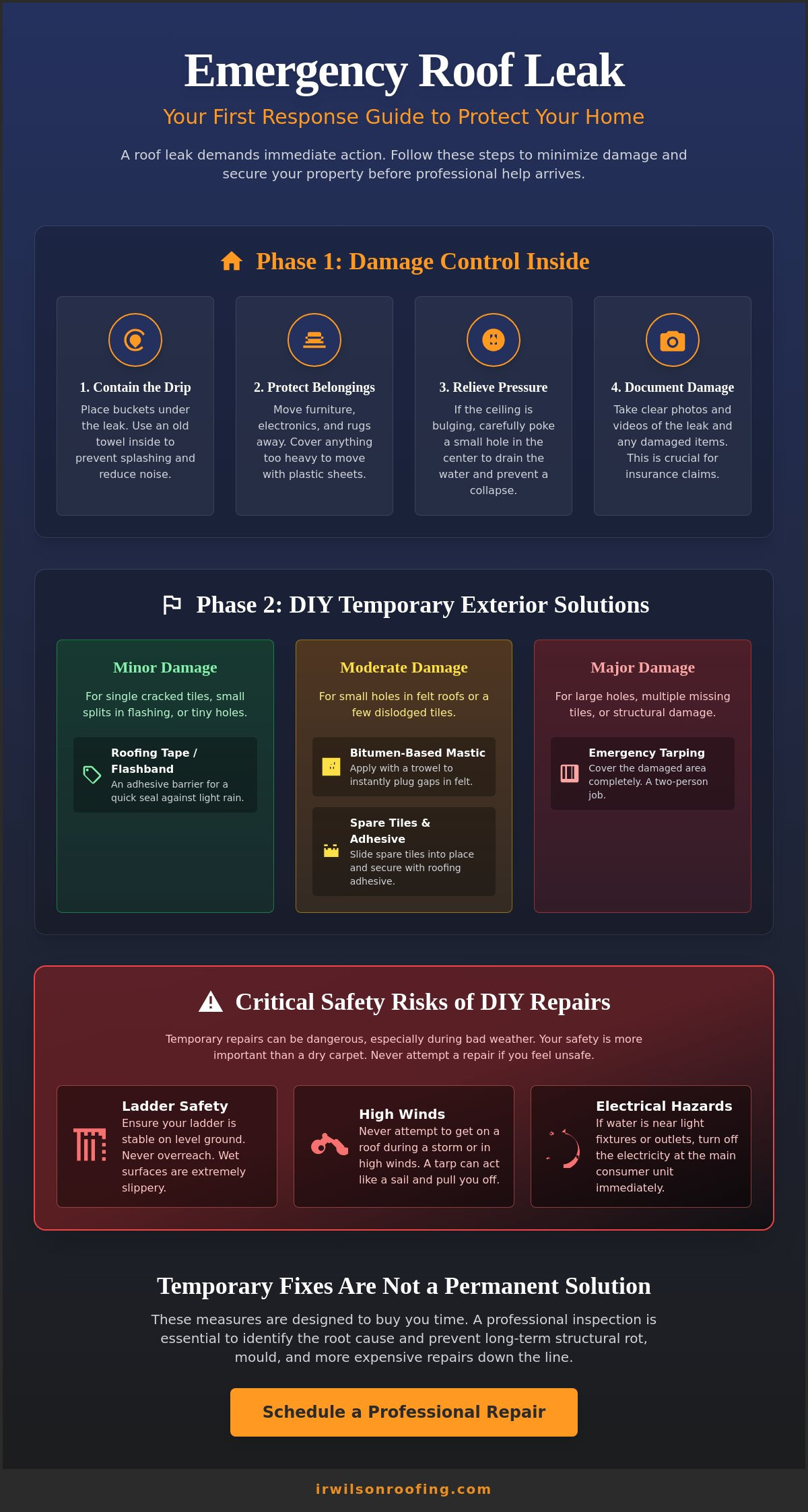
When you first see water dripping from your ceiling, your natural instinct is to panic. Don't. Your immediate priority is to stop the spread of damage inside your home before you even think about climbing a ladder. Grab the largest buckets or plastic bins you have. If the water is splashing, place an old towel at the bottom of the bucket to silence the noise and prevent spray. Move your furniture, rugs, and electronics far away from the drip zone. If an item is too heavy to move, cover it with plastic sheeting to prevent water damage.
If you see a bulge in your plaster, it means water is pooling behind it. This weight can eventually cause the entire ceiling to collapse, creating a much larger mess and a safety hazard. Take a screwdriver or a small drill bit and carefully poke a hole in the center of the bulge. This allows the water to drain into your bucket in a controlled way, relieving the pressure on your home's structure. Before things get too messy, take clear photos and videos of the leak and any damage. Your insurance provider will need this evidence to process your claim effectively. Taking these actions is the first phase of implementing temporary roof leak repair solutions that protect your property.
To better understand how to manage these initial stages, watch this helpful video:
Managing Water Ingress from the Attic
Water rarely enters the roof exactly where it drips from the ceiling. It often enters at a ridge or around a chimney and runs down a rafter before falling. When you enter your loft, stay strictly on the wooden joists. Treading on the plasterboard between them will result in you falling through the ceiling. If you find a damp rafter, you can tie a piece of string around it to act as a "drip string." This guides the water down the string and into a container, preventing it from soaking your insulation. Wet insulation loses its thermal properties and can lead to long-term timber rot if left damp. Identifying these paths is a key part of implementing effective temporary roof leak repair solutions before the weather worsens.
Protecting Your Interior Finishes
Dampness is a breeding ground for mould, so use fans or dehumidifiers to dry out carpets and floorboards immediately. If water is dripping near light fittings or sockets, turn off the electricity at the consumer unit to prevent a fire hazard. Never ignore a small damp patch during a Norfolk storm. These are often the first signs that you need to investigate further repairs before the next heavy rain causes more expensive damage. If the external damage is extensive, you may eventually need to use a heavy-duty tarp to shield the structure until we can perform a professional assessment. Quick action now saves your plasterwork and prevents the need for a full ceiling replacement later. For more information on permanent fixes, you can visit our roof repairs page.
Effective Temporary Roof Leak Repair Solutions for Homeowners
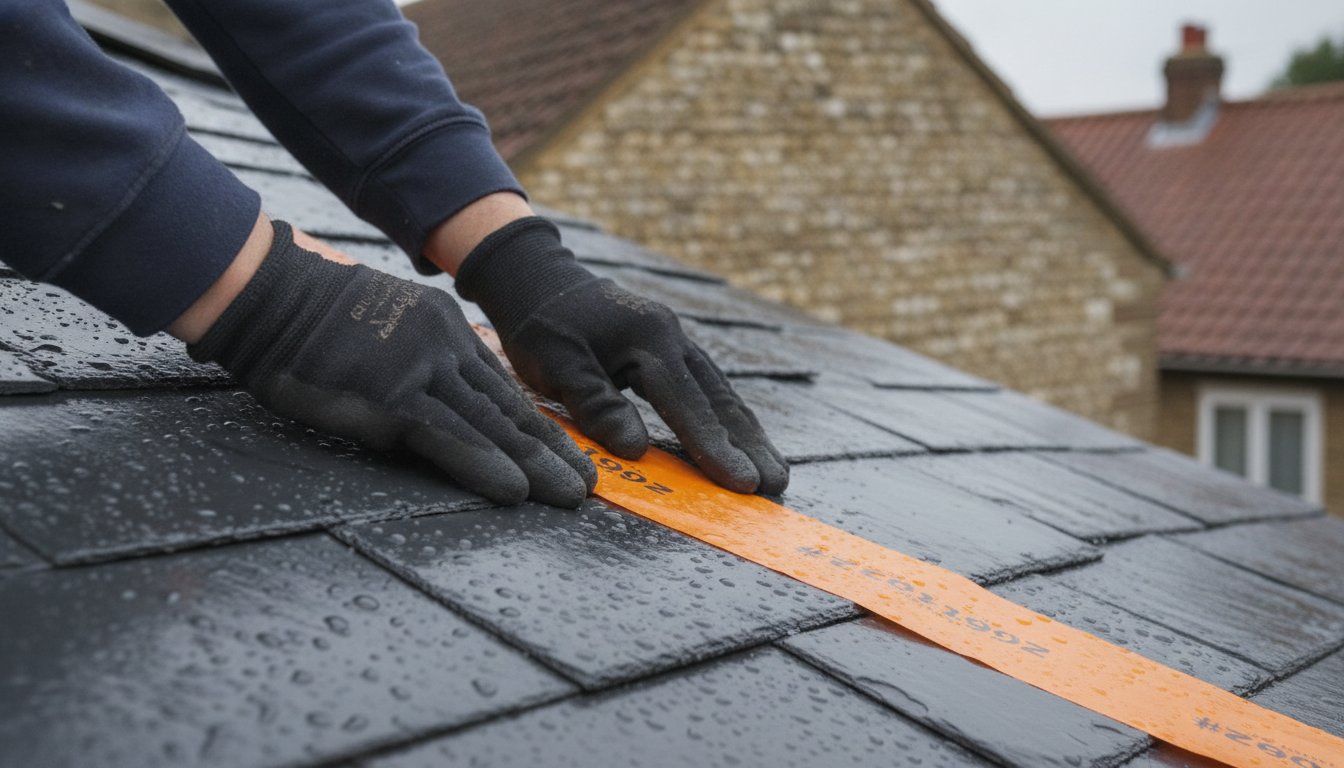
Once you've managed the immediate mess inside, your focus must shift to the exterior. Selecting the right temporary roof leak repair solutions depends on the scale of the damage and the severity of the weather. For minor issues like a single cracked tile or a small split in lead flashing, roofing tape or flashband offers a quick, adhesive barrier. These materials are designed to stick to most surfaces and provide a decent seal against light rain. If you're dealing with a small hole in a felt roof, a bitumen-based mastic can be applied with a trowel to plug the gap instantly.
For more significant damage, such as several missing tiles or a large puncture from a fallen branch, you'll need more robust measures. If you have spare tiles, you can slide them into place and secure them with "tin tags" or a bead of specialized roofing adhesive. This keeps the waterproof layer intact without the need for a full repair in the middle of a storm. These methods are designed to buy you time, preventing further water ingress while you wait for a professional assessment.
The Emergency Tarpaulin Method
A heavy-duty tarp is often the most reliable way to protect your home during an emergency. To ensure it works, the tarp must be large enough to go over the ridge of the roof. If the top of your tarp ends halfway up the slope, water will simply flow under the top edge and continue into the leak site. Secure the edges by wrapping them around wooden battens and screwing these into the rafters where possible. We strongly advise against using loose bricks to hold down a tarp. Norfolk's coastal winds are notoriously unpredictable; a loose brick can easily be lifted and blown off the roof, causing injury or further property damage. Instead, use sandbags or ensure the tarp is tucked under the eaves.
Quick Fixes for Flat Roofs
Flat roofs present unique challenges, particularly the issue of ponding water. If you see water sitting in a dip on your roof, it's likely that the felt or bitumen has started to degrade. In these situations, look for "wet-patch" repair compounds. These are thick, fibrous pastes that you can apply even while it's still raining. They are specifically formulated to displace water and bond to the surface underneath, providing an instant seal. While these patches are effective, they are only a stopgap. You can learn more about permanent solutions in our guide to Flat Roof Repairs Norwich.
Implementing these temporary roof leak repair solutions gives you the time to breathe and plan your next move. It's always a good idea to monitor the patch during the next rainfall to ensure it's holding. For ongoing tips on keeping your home dry through the seasons, feel free to browse our roofing maintenance blog.
Choosing the Right Emergency Repair Materials
Having the right tools for the job is half the battle. When you're searching for temporary roof leak repair solutions, you'll find that the aisles of your local hardware store are filled with various tubes and tubs. It's vital to choose a material that's compatible with your specific roof type. For instance, bitumen-based sealants are the traditional choice for felt roofs and older masonry. They provide a thick, water-resistant barrier that bonds well to asphalt. However, they can be messy to apply and aren't always the best choice for modern synthetic materials.
Polyurethane sealants are often superior to silicone for external roofing. While silicone is great for your bathroom, it often struggles to bond to dusty or damp roof tiles. Polyurethane is much more resilient. It handles the expansion and contraction of your roof as the Norfolk temperature changes. If you're dealing with larger areas of damage, liquid rubber coatings provide an excellent immediate waterproofing layer. You can brush these over a patch to create a seamless, flexible skin that keeps the rain out and buys you valuable time.
Flashband is another essential material to consider. This is a self-adhesive flashing tape with a lead-look finish. It's incredibly effective for sealing gaps where leadwork has slipped or around the base of a chimney. Because it's a "peel and stick" product, it's one of the most accessible temporary roof leak repair solutions for a homeowner to apply quickly during a break in the weather.
Sealants That Work in Wet Weather
Most standard sealants require a bone-dry surface to stick properly. In the middle of a storm, you don't have that luxury. You need products featuring "wet-stick" technology. These are formulated with chemicals that displace water, allowing the adhesive to reach the actual surface of the tile or felt. Without this, your patch will simply float on a thin film of water and peel away within hours. This is why standard bathroom silicone will almost always fail when used on an external roof leak.
Bitumen mastic is a solvent-based emergency waterproof filler that stays flexible and plugs gaps even when submerged.
Hardware Store Essentials vs. Professional Grade
Just remember that these items are stopgaps. There's a significant difference between the temporary felt found in DIY kits and the high-performance, heat-bonded membranes we use for permanent roof repairs. Using the right materials now prevents a small leak from becoming a structural nightmare, but they won't replace the need for a professional inspection once the skies clear.
The Risks of DIY Temporary Repairs in Norfolk Weather
While implementing temporary roof leak repair solutions can save your interior, the process of applying them carries significant personal risk. We've seen many well-meaning homeowners attempt repairs in the middle of a gale, only to find themselves in a dangerous situation. Ladder accidents remain the leading cause of DIY-related injuries during home maintenance. This risk is amplified in Norfolk, where sudden gusts from the coast can catch a large tarpaulin like a sail, potentially pulling you off balance or off the roof entirely. It's never worth risking a fall for a patch that could have waited for calmer conditions.
You must also consider the surface you're stepping on. Older properties in Norwich often feature fragile roofing materials like aged felt or weathered asbestos sheets. These can become brittle over time and may not support the weight of an adult. Falling through a roof is a catastrophic event that far outweighs the cost of a professional repair. Additionally, a poorly applied patch can actually trap moisture inside the timber structure. This creates a humid environment that encourages rot, which wouldn't have occurred if the roof had been allowed to breathe or was dried properly before sealing.
Safety Precautions for Homeowners
If you must access your roof, always follow the "Three Points of Contact" rule. This means keeping two feet and one hand, or two hands and one foot, on the ladder at all times. Never work on a roof alone; you need someone on the ground to steady the ladder and call for help if an accident occurs. We strongly advise against climbing onto any roof during a live storm or in high winds. Look for signs of structural instability first, such as sagging rafters or crumbling masonry. If the roof looks "soft" or uneven, stay off it and wait for professional equipment. Your safety is our primary concern, and no leak is more important than your well-being.
When DIY Makes the Damage Worse
A rushed repair can often lead to more expensive bills later. For example, driving nails through a tarp into your tiles creates dozens of new entry points for water once the tarp is removed. We've also seen cases where water "wicks" under the edges of a poorly secured patch, funneling even more liquid into the attic than before. Perhaps most importantly, some insurance providers may void your claim for storm damage if they determine that your DIY attempt caused further structural harm or wasn't performed to a safe standard. It's often better to focus on internal containment and wait for a professional roofer to handle the external work safely. You can read more about our professional storm damage repairs to see how our team handles these risks with the right equipment and experience.
Moving from Temporary Patching to Professional Roof Repair
After the clouds clear and you've implemented your temporary roof leak repair solutions, you might feel a sense of relief. It's natural to want to move on, but you shouldn't confuse a temporary patch with a permanent cure. Evaluating the success of your fix requires more than just checking if the drip has stopped during the next light shower. You need to look for signs of pervasive damp, lingering smells, or multiple leaks that suggest a wider failure of the roofing material. Research shows that leaking is the cause of 33% of roof replacements in the UK. This statistic highlights why a quick patch shouldn't be the end of the story for your property.
Professional leak detection is about finding the "hidden" source. As we've mentioned, water often travels along rafters far from the entry point. Our team uses years of experience to trace these paths back to the root cause, ensuring that we don't just fix the symptom but solve the problem. This methodical approach is the hallmark of I R. Wilson Roofing, where we prioritize long-term structural integrity over quick, superficial fixes. We take the time to perform tasks correctly the first time, preventing the need for repeated call-outs.
Why Temporary Fixes Fail
Emergency materials like roofing tapes and tarps aren't designed for the long haul. UV radiation from the sun quickly degrades the adhesives in emergency tapes, causing them to peel and crack within weeks. Perhaps more dangerous is the "hidden rot" factor. A temporary seal can trap moisture against wooden beams or insulation. This creates a perfect environment for timber decay to set in quietly behind your plasterboard. To ensure your home is truly protected, you should always arrange a professional assessment for Roof Repairs Norwich once the emergency has passed.
Booking a Professional Inspection in Norwich
When you book a site visit with I R. Wilson Roofing, you're getting more than just a quick glance at your tiles. We conduct a thorough inspection of the affected area and the surrounding structure to identify any secondary damage. As a long-standing, family-run business, we take personal pride in providing honest, straightforward advice. We'll provide you with a competitive, fixed-price quotation for a permanent solution, so you don't have to worry about hidden costs or unexpected bills. Our goal is to provide the quiet confidence that comes with knowing your roof has been repaired correctly, backed by our commitment to enduring quality. We invite you to reach out for a low-pressure consultation to ensure your home remains safe for years to come.
Restoring Your Peace of Mind After a Leak
Managing a sudden leak is about quick thinking and staying safe. By following the steps we've outlined, you've already done the hard work of protecting your ceilings and electronics from immediate damage. You now understand that while temporary roof leak repair solutions like tarping and specialized sealants are vital for short term protection, they are only the first chapter in keeping your property sound. Don't let a small patch give you a false sense of security, as hidden moisture can lead to structural issues that are far more expensive to fix later.
We've been a family-run business since 1994, specializing in both flat and pitched roof repairs. Our team is highly recommended by Norwich homeowners for our dependable craftsmanship and honest approach. We take pride in ensuring that every home we visit receives a permanent, professional solution that stands up to the local weather. Don't let a temporary fix become a permanent problem. Contact I R. Wilson Roofing today for a professional roof repair quote in Norwich and let us provide the lasting protection your home deserves. You've managed the crisis; now let's ensure your roof is truly secure.
Frequently Asked Questions
How long can a temporary roof repair last?
A temporary fix generally lasts between a few days and a couple of weeks depending on the weather. Most temporary roof leak repair solutions, such as tarpaulins or emergency sealants, are not designed to withstand UV rays or heavy winds for long periods. They serve as a vital stopgap to protect your home's interior while you wait for a professional to arrive. We recommend checking the patch after every rain shower to ensure it hasn't slipped.
Can I use a tarp to stop a roof leak from the inside?
Using a tarp on the inside of your attic is rarely successful and can be dangerous. If you try to catch water with plastic sheeting inside, the weight of the pooling water will likely cause your ceiling to collapse. A tarp must be placed on the exterior of the roof to shed water away from the entry point. Inside the home, stick to using buckets and "drip strings" to manage water flow into containers.
Is it safe to go on my roof during a storm to fix a leak?
You should never climb onto your roof during a live storm or in high winds. The risk of slipping on wet tiles or being caught by a gust of wind is far too high. Your safety is much more important than your plasterwork. Focus on containing the water inside using buckets and moving furniture. Wait until the rain has stopped and the roof surface is dry before attempting any external work.
What is the best tape for a leaking roof?
Self-adhesive bitumen flashing tape is the most effective tape for emergency repairs. It's designed to bond with roof tiles, slate, and masonry to create a watertight seal. Unlike standard tapes, it has a thick bituminous layer that can fill small gaps and remain flexible. It's an essential item for any homeowner's emergency toolkit and provides much better results than standard household tapes when applying temporary roof leak repair solutions.
Will insurance cover a roof leak if I tried to fix it myself?
Insurance coverage varies, but a DIY repair attempt can sometimes complicate your claim. If an insurer determines that your patch caused further damage or that you didn't take reasonable steps to prevent water ingress, they might limit your payout. Always take clear photos of the damage before you touch anything. It's often best to consult your policy or speak to a professional roofer to ensure your actions don't inadvertently void your coverage.
How much does an emergency roof repair call-out cost in Norwich?
Emergency call-out fees in the Norwich area depend on the time of day and the complexity of the work required. While minor patches or tarping involve lower costs than full structural repairs, prices are influenced by the need for specialized equipment or scaffolding. We always recommend getting a clear, fixed-price quotation before work begins. This ensures you aren't hit with unexpected costs during an already stressful property emergency.
Can I use duct tape for a temporary roof repair?
Duct tape is not suitable for roofing repairs because it isn't waterproof or UV-resistant. The adhesive will quickly break down when exposed to rain and sun, causing the tape to peel away within hours. For a reliable temporary fix, always use materials designed for the trade, such as bitumen mastic or flashing tape. These products are formulated to survive the harsh outdoor conditions on a Norfolk roof.
What should I do if my flat roof is ponding water after a leak?
If your flat roof is ponding water, avoid walking on the affected area as the structure may be weakened. Standing water adds significant weight and suggests that the roof's drainage or internal boards have failed. You can use a long-handled brush to gently clear debris from gutters to help water drain away. Once the surface is clear, a professional can assess whether the felt needs a patch or a full replacement.