
Rain doesn’t always mean a roof must be left exposed: temporary sheeting can limit water entry, but permanent repairs generally need dry conditions for materials to bond properly. Whether you can repair a roof in the rain depends on whether the work is temporary protection or a lasting fix.
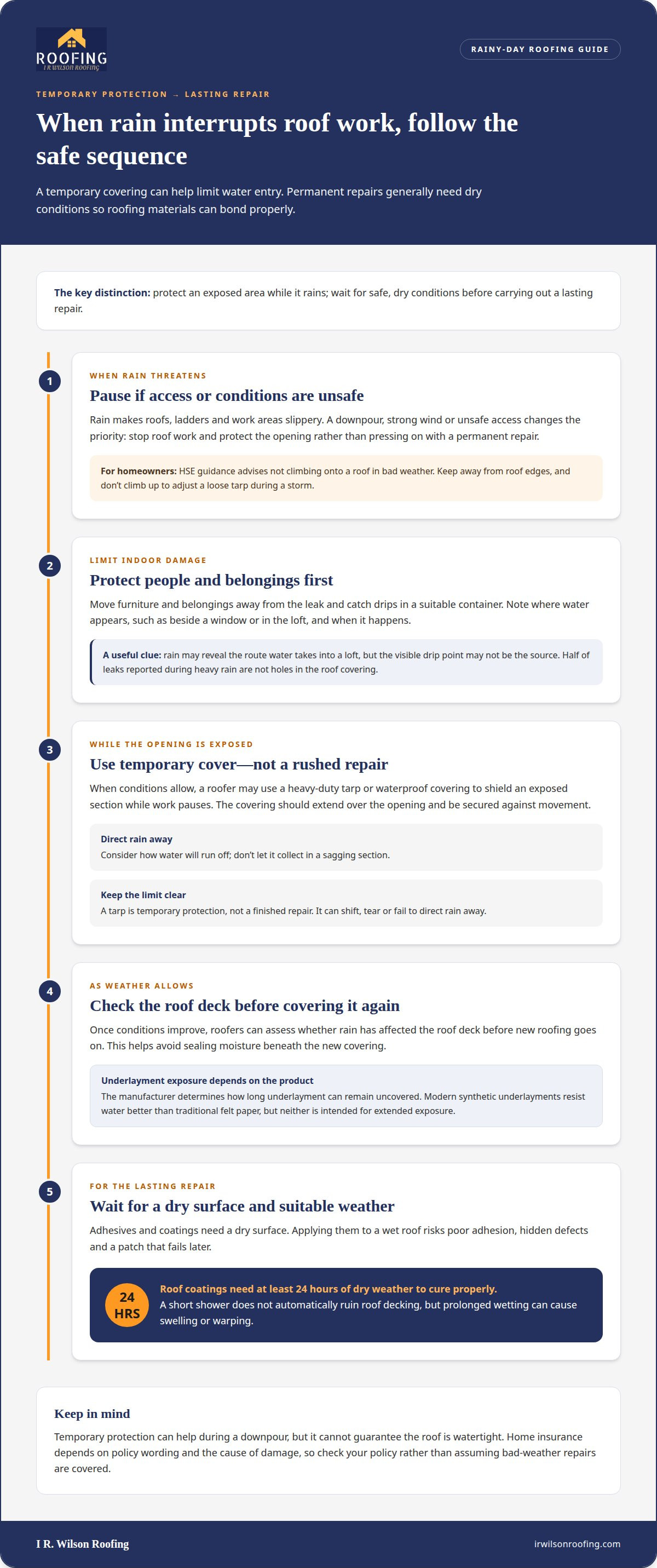
It’s understandable to want a leak stopped straight away, especially when water is coming through a ceiling. But rushing adhesive or coating work onto a wet surface can leave a repair that fails later. Roof coatings need at least 24 hours of dry weather to cure properly.
This guide explains what a roofer can do while rain is falling, how temporary coverings protect exposed areas, and why permanent repairs may need to wait until the roof is dry. You’ll also learn how to limit damage indoors without taking risks on a slippery roof.
Key Takeaways
- Rain may help reveal where water is entering, but the visible drip point may not be the source of the leak.
- Keep off a wet roof and focus on protecting people and belongings indoors while conditions are unsafe.
- Temporary coverings can help shield exposed areas during a downpour, but they are not a substitute for a lasting repair.
- For a leaking felt roof or flat roof, I R. Wilson Roofing can help assess the damage and plan the appropriate repair.
Can You Repair a Roof in the Rain?
Temporary sheeting can limit water entry during rain, but lasting repairs need dry conditions. That distinction matters during a sudden downpour, when emergency protection may help prevent further damage.
Potential Benefits of Rainy-Day Roofing
Rainy-day roofing can offer a practical advantage when the task is diagnosis or temporary protection, not permanent installation. Water entering during a downpour may reveal its route into a loft, helping roofers focus their inspection. Half of leaks reported during heavy rain are not holes in the roof covering.
Risks of Installing Roofing Materials in Rain
Installing roofing materials in rain risks poor adhesion and hidden defects. Adhesives and coatings need a dry surface, and roof coatings need at least 24 hours of dry weather to cure. Rain also makes tiles, ladders and work areas slippery, so continuing permanent work can be dangerous. A rushed patch may fail and allow further moisture inside.
Roofing Tasks Possible in Light Rain
In light rain, roofers may assess a leak from a safe position, protect exposed sections with waterproof sheeting, or secure loose covering when conditions allow. During a roof replacement, a heavy-duty tarp can shield an open area if rain threatens. A downpour, strong wind or unsafe access changes the priority: stop roof work and protect the opening.
Trapped Moisture and Insurance Considerations
Moisture trapped beneath roofing can contribute to wood rot, mould, damaged insulation and premature roof failure. A brief shower does not automatically ruin roof decking, but prolonged wetting can cause swelling or warping. Home insurance cover depends on your policy wording and the cause of damage, so review your policy before assuming bad-weather repairs are covered.
Roof safety in wet conditions
Rain reduces grip and visibility, making roof access a serious safety concern. UK health and safety guidance does not make every task in rain automatically prohibited; HSE advises homeowners not to climb onto roofs in bad weather.
Wet-Roof Safety Risks
A wet roof can turn ordinary movement into a fall risk, especially where tiles, slates or ladders are slick. Rain can also obscure fragile sections and make tools harder to handle. A roofer’s decision to pause depends on whether workers can reach and work on the surface safely. A sudden shower may change conditions before the task is complete.
Good workmanship should not come at the cost of worker safety. If a roofer cannot maintain secure footing or clear visibility, waiting for safer weather is the responsible choice. Homeowners should keep away from roof edges and avoid trying to secure a loose gutter themselves.
Health and Safety Guidance for Rainy Work
HSE guidance advises homeowners not to go onto a roof in bad weather. For professional work, rain calls for a practical assessment of the roof, access route and task. A brief inspection from a safe position differs from replacing tiles on a slippery slope. If conditions cannot be made safe, roof work should stop rather than continue under pressure.
Pausing can affect the repair schedule, but it helps protect workers and your property. While roofers wait for conditions to improve, move furniture away from an indoor leak and catch drips in a suitable container. A morning inspection may help identify fresh water entry, but it does not make a wet roof safe to climb.
If bad weather has left a leak or damaged roof, discuss the next steps with the roofing team once access is safe.
Temporary roof protection during unexpected rain
A sudden downpour during roof work can leave an opening exposed before a permanent repair is ready. A roofer may cover the exposed section with a heavy-duty tarp or waterproof covering to protect the home while work pauses. This is temporary protection, not a finished repair: water can still enter if the covering shifts, tears or fails to direct rain away.
Before work begins, the forecast helps roofers plan which section to open and when. A short weather window may allow a limited area to be repaired and covered before rain arrives. If heavy rain is forecast, keeping more of the existing roof intact can reduce the area needing temporary cover. The right choice depends on the roof layout and the work underway.
For a temporary covering to help, it needs to cover the exposed area and be secured against movement. Roofers should consider how rain will run off, rather than letting water collect in a sagging section. Don’t climb up to adjust a loose tarp during a storm. From indoors, move belongings away from a leak and note where water appears, such as beside a window or in the loft.
The underlayment manufacturer determines how long it can remain uncovered during a roof replacement. Modern synthetic underlayments resist water better than traditional felt paper, but neither is intended for extended exposure. Once the weather allows, roofers can assess whether rain has affected the roof deck before covering it again. This helps prevent moisture being sealed beneath new roofing, where it may cause later problems.
I R. Wilson Roofing: Felt Roofs
I R. Wilson Roofing can repair felt roofs that are leaking or damaged, including after bad weather. Felt roofing and flat roof repairs are practical options for addressing problems with your flat roof. A free consultation lets you discuss the issue and understand the next steps for your property.
If water is entering near the roof edge, damaged fascias or soffits may also need attention. Blocked gutters can contribute to overflow, so gutter cleaning may help when debris is restricting drainage. The right service depends on where water is getting in and what the roof inspection shows.
Plan Your Next Roofing Step
If you’re still deciding whether you can repair a roof in the rain, take the next step by arranging a clear assessment rather than applying another temporary patch. Note when water appears, which room or roof area is affected, and whether the problem follows wind or rain. These details can help narrow down the cause without putting you on a ladder.
I R. Wilson Roofing provides Flat Roof Repairs and Felt Roofs. Fascias and Soffits may also be relevant when the roof edge is part of the issue. The right starting point is your roof’s condition and layout, not simply the weather on the day.
A calm, informed next step can make a stressful leak feel more manageable. Get in touch with I R. Wilson Roofing to discuss your roof.
Frequently Asked Questions
Can Roofing Underlayment Get Wet?
Yes, roofing underlayment can get wet, but rain exposure alone doesn’t tell you whether it needs replacing. After a leak, note any ceiling staining or damp patches indoors and tell the roofer where they appeared. Water can travel from its entry point before showing indoors, so a mark below a roof slope may not sit directly beneath the defect.
Roofing when it Rains: When Will a Roofer Down Tools?
A roofer may pause when changing weather affects the planned task or makes the work area harder to manage. For example, a sudden shower during repairs can prompt the team to secure loose materials and review what remains exposed. Ask what has been completed, what has been protected, and what needs attention next. That gives you a clear update without needing to access the roof.
Should You Be Concerned About Weather Delays?
A weather delay isn’t, by itself, a reason to assume your repair has been neglected. The useful question is what the delay means for your property: whether the affected area is protected, what work remains, and what the next stage involves. If water appears in a different room or the stain spreads, record the change and share it with the roofer.
Can roof repairs be carried out safely in the rain?
Some repair-related checks may be possible without working directly on a wet roof, but homeowners shouldn’t climb up in bad weather. From indoors, note whether a leak appears during steady rain or only when wind drives rain against a particular side. These observations can help a roofer investigate the likely route of water without putting you at risk.
Which roof repairs can be done in wet weather and which must wait?
The distinction depends on the task and the materials involved. A roofer may be able to assess where water is entering, while work that relies on a clean, dry bonding surface may need different conditions. Tell the roofer if water appears around a roof edge as well as inside. That detail can help focus the inspection on the covering or drainage route.