Last Tuesday, a homeowner in Norwich discovered a dark, spreading stain on their guest bedroom ceiling, only to find that a single cracked piece of lead was the culprit. It is a common story across the county, and if you are facing a similar leak, you are likely searching for a chimney flashing repair Norfolk specialist who can provide a lasting solution. We know how stressful it is to see your property at risk, especially when the weather turns unpredictable.
This guide will help you understand why leadwork fails and what you can do to protect your home from damp and structural decay. We promise to clear up the confusion around repair options, helping you decide whether a simple repair or a full re-lead is the right choice for your chimney. It is about giving you the confidence to make an informed decision for your home's future.
We will walk you through the importance of using Code 4 lead that meets BS EN 12588:2006 standards and explain what to expect during the process. From identifying common faults to understanding 2026 industry costs, you will gain the knowledge needed to ensure your chimney remains watertight and secure for years to come.
Key Takeaways
- Learn how Norfolk’s unique coastal climate impacts your roof and why identifying lead failure early prevents costly internal damp.
- Discover why Code 4 milled lead is the industry standard for a reliable chimney flashing repair Norfolk and how it outperforms thinner materials.
- Understand the difference between a temporary patch and a professional leadwork installation that uses the correct overlapping techniques.
- Gain peace of much-needed peace of mind by learning about the safety requirements and scaffolding needed for high-level chimney repairs.
- Find out how our family’s thirty years of local experience ensures your leadwork is installed to the highest trade standards.
Why Chimney Flashing Fails: The Norfolk Property Owner’s Guide
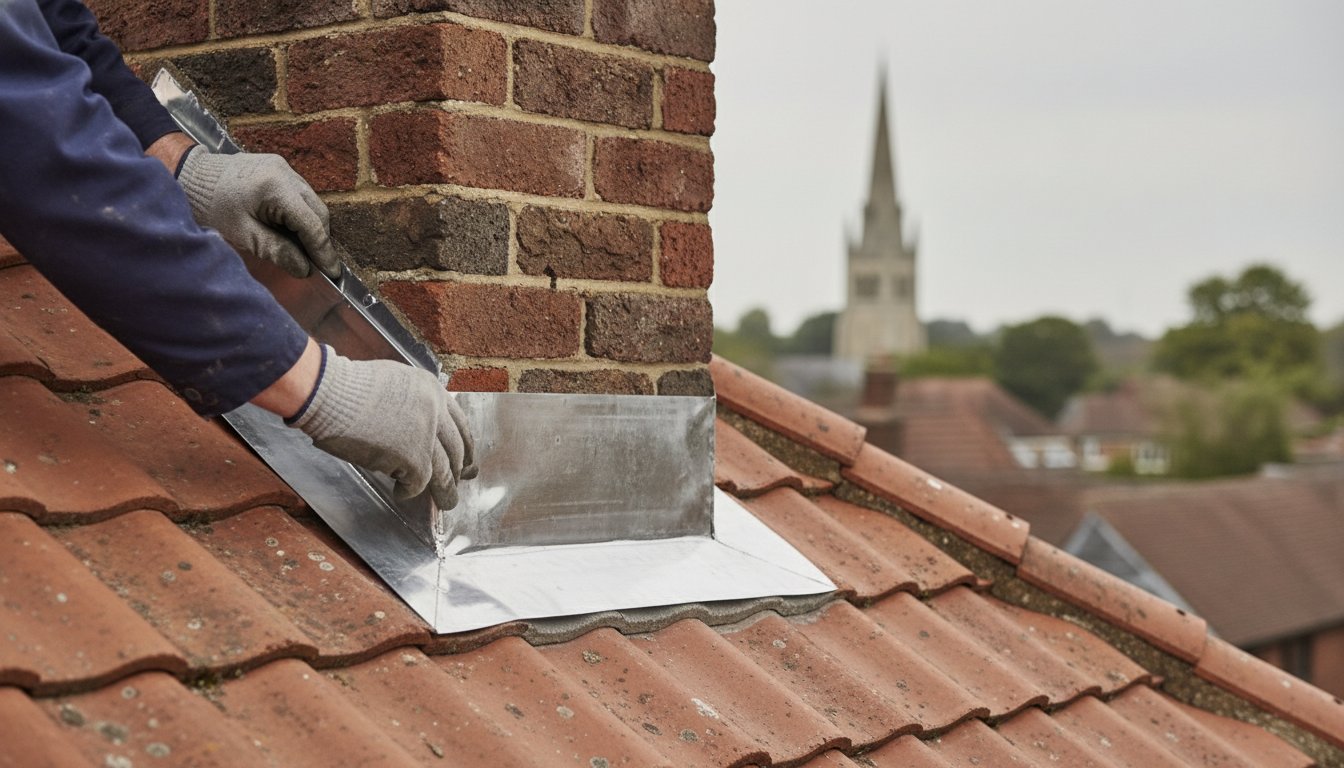
A chimney stack is one of the most exposed parts of your home. It sits high above the roofline, bearing the brunt of every storm that rolls in from the North Sea. The critical component that keeps this area watertight is Flashing (weatherproofing). This system of lead sheets bridges the gap between the brickwork of your chimney and the tiles or slates of your roof. Without it, water would simply run down the side of the masonry and straight into your loft space.
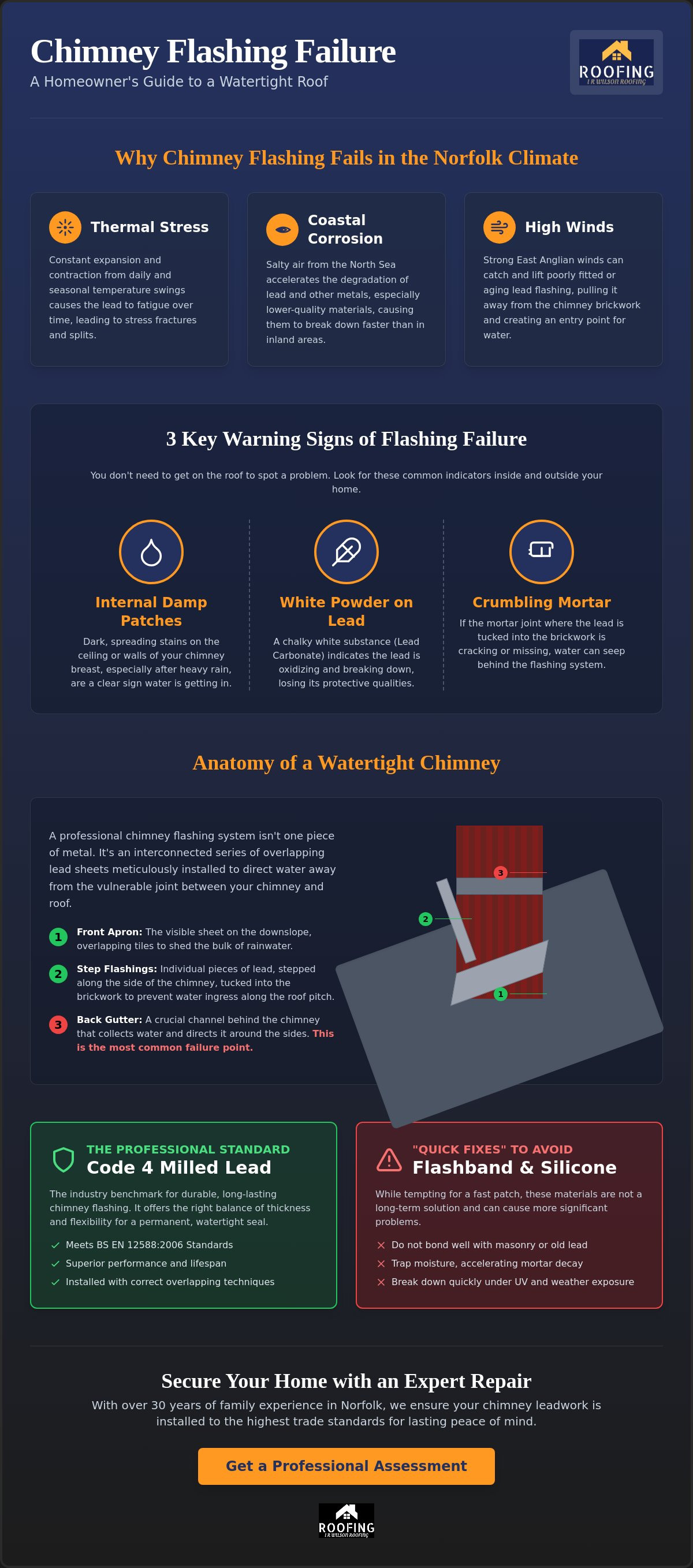
When we visit homes for a chimney flashing repair Norfolk, we often see the same issues. Lead is a remarkably durable material, but it isn't invincible. Over time, the constant cycle of heating and cooling causes the metal to expand and contract. Eventually, this leads to small stress fractures. If your flashing was installed thirty or forty years ago, it's likely reaching the end of its natural lifespan.
To better understand how these seals are maintained, watch this helpful video:
Many homeowners try to save money with "quick-fix" solutions like adhesive flashband or silicone sealant. We strongly advise against this. These materials don't bond well to old lead or masonry and often trap moisture against the brickwork, which can accelerate the decay of your mortar. A proper repair requires traditional leadwork techniques to ensure a permanent seal.
The Impact of East Anglian Weather on Leadwork
Norfolk's weather presents unique challenges for roofing. Properties in coastal towns like Cromer or Great Yarmouth deal with salt air corrosion, which can degrade lower-quality metals faster than in inland areas. In more rural parts of the county, high winds can catch loose or poorly fitted lead, pulling it away from the chimney stack. The most significant factor, however, is the temperature swing. The transition from a scorching summer afternoon to a sharp winter frost puts immense pressure on the joints, causing old lead to split along its natural grain.
Common Signs of Flashing Failure
You don't always need to climb onto the roof to know there is a problem. Keep an eye out for these warning signs:
- Internal damp patches: Look for staining on the chimney breast or the ceiling directly below the stack. These often appear after heavy rain.
- White powder (Lead Carbonate): If you see a chalky white substance on the lead, it's a sign the material is oxidising and breaking down.
- Loose pointing: Check the mortar where the lead is tucked into the brickwork. If it's crumbling or missing, water can seep behind the flashing.
If you've noticed any of these issues, it's best to act quickly. Securing a professional chimney flashing repair Norfolk now can prevent the need for expensive timber replacements or plastering work inside your home.
Anatomy of a Chimney: Understanding Your Roof’s Leadwork
Understanding the anatomy of your roof is the first step toward a successful chimney flashing repair Norfolk. Most homeowners see a bit of grey metal and assume it's a single piece. In reality, a watertight chimney relies on a coordinated system of overlapping lead sheets designed to shed water away from the masonry. If one part of this system fails, the whole stack becomes vulnerable to the elements. We take pride in ensuring every component is fitted with precision to create a seamless seal.
The front apron is the most visible part of this assembly. It sits on the downslope of the chimney, overlapping the tiles below to guide water safely away from the base of the stack. On the sides, we install step flashings. These are individual pieces of lead that follow the pitch of your roof, tucked into the brickwork at each "step" of the tiles. This overlapping technique ensures that water running down the roof cannot find a way behind the metal.
Behind the chimney, where it meets the roof ridge, sits the back gutter. This is the most common failure point we encounter during a chimney flashing repair Norfolk. The back gutter acts like a small reservoir, collecting water before directing it around the sides of the stack. Because it's hidden from view, it often fills with leaves and moss. If it isn't cleared regularly or installed with the correct fall, water can pool and eventually seep under the tiles.
Key Components of Professional Leadwork
To ensure your roof meets UK Leadwork Standards, several smaller components must work together. Underneath your tiles or slates, we often fit lead soakers. These provide a hidden secondary layer of protection that works in tandem with the step flashing. To keep everything in place, we use traditional lead wedges. Unlike plastic clips or mortar alone, lead wedges are made from offcuts of the same material, ensuring they expand and contract at the same rate as the flashing. Finally, we apply patination oil. This simple step prevents the lead from oxidising and creating unsightly white streaks on your roof tiles.
Why Traditional Leadwork Beats Modern Alternatives
Lead is a remarkable material because of its unique flexibility. A skilled roofer can "boss" or shape lead around complex chimney corners without the metal cracking. This is why it has remained the trade standard for centuries, especially for Norfolk’s many listed and period properties. While adhesive "flashband" products might only last 10 to 15 years before the glue dries out, a professionally installed lead flashing can last up to 100 years. If you want to learn more about protecting your property, you can find helpful advice on our roofing maintenance blog. Investing in quality leadwork now saves you from the stress of repeated repairs in the future.
Lead Flashing Codes: Which Material is Right for Your Repair?
When you receive a quote for a chimney flashing repair Norfolk, the price often depends on the weight of the lead used. Professional roofers refer to this as the "Code." This system, established by the Lead Sheet Association (LSA), dictates the thickness and weight per square metre of the material. Choosing the wrong code is a common mistake that leads to premature cracking. We always ensure the material matches the specific demands of your roof to avoid these issues.
Lead isn't just lead. The thickness of the sheet determines how well it can resist the thermal movement we discussed earlier. Thinner lead might be easier to install, but it won't stand up to the Norfolk wind and frost for long. Handling these heavy materials safely is also a priority for our team. We strictly follow the UK Health and Safety Executive guidance to ensure all leadwork is managed responsibly on your property.
Comparing Lead Codes and Applications
Understanding the difference between codes helps you spot a quality quote. Code 3 is the thinnest lead we use, measuring just 1.32mm. It's only suitable for light soakers that sit hidden under tiles. We never use it for exposed flashing because it's too prone to fatigue. Code 4 is the "Goldilocks" grade for most residential chimney flashing repair Norfolk projects. At 1.80mm thick, it provides the perfect balance of flexibility for bossing around corners and the durability to last decades.
For more demanding areas, we often step up the thickness. Code 5 is 2.24mm thick and is our preferred choice for back gutters. Because water often sits in these gutters longer, the extra weight prevents the metal from buckling over time. In very exposed coastal locations, we might even suggest Code 6 to ensure the wind cannot lift the edges of the leadwork.
Sand-Cast Lead for Norfolk Heritage Properties
If you own a Grade II listed building in Norwich or a traditional flint cottage, milled lead might look too "perfect" and modern. For these projects, we often use sand-cast lead. This is made using traditional methods where molten lead is poured over a bed of sand. It results in a beautiful, textured finish that satisfies conservation officers and preserves the historic character of your home. You can read more about these specialist requirements in our Leadwork for Listed Buildings Guide. Whether you need modern milled lead or traditional sand-cast, we focus on using the right grade to keep your home dry.
The Chimney Flashing Repair Process: What to Expect
When we arrive to carry out a chimney flashing repair Norfolk, our first priority is ensuring the safety of our team and your property. Working at height requires stable, specialist scaffolding. This isn't just for our protection; it provides a steady platform that allows us to work with the precision that leadwork demands. A professional repair is a methodical process that goes far beyond slapping on a bit of extra mortar or sealant. We take the time to do it right, protecting your roof tiles from damage throughout the project.
We believe in transparency. You should know exactly what is happening above your head. Our approach is designed to be as non-disruptive as possible while ensuring the final result is completely weather-tight. After we finish the installation, we perform a final inspection to check every joint and overlap. This gives you the peace of mind that your home is safe from the next Norfolk storm.
Step-by-Step: How We Repair Your Flashing
Our process follows four distinct stages to ensure a lifetime of protection. First, we remove the failed lead and clear the brickwork "chase" of any old, crumbling mortar. This ensures the new lead has a clean, deep slot to sit in. Next, we move to fabrication. We cut and "boss" the new lead on-site. This traditional technique involves shaping the metal with specialist tools to fit your chimney’s unique dimensions perfectly.
Once the pieces are ready, we move to installation. We secure the lead into the masonry using traditional lead wedges. These ensure that every piece overlaps correctly to guide water away. Finally, we finish the job by pointing the joints. We use either a specialist lead sheet sealant or a high-grade lime mortar, depending on what best suits your property’s age and style.
The Importance of Repointing the Chimney Stack
While the scaffolding is up, it's the perfect opportunity to look at the overall health of your chimney. We often recommend repointing the stack if we find the existing mortar is porous or cracked. Even the best leadwork won't stop water if it's seeping through the bricks themselves. We also take a moment to check the "flaunching," which is the concrete cap at the top of the stack. If this is cracked, it can lead to water ingress or even loose pots. If you're worried about dampness in your home, you can book a detailed chimney assessment with our experienced team today.
Trusting I R. Wilson Roofing with Your Norfolk Chimney
We are a family-run business with over 30 years of experience in the Norfolk roofing trade. When you contact us for a chimney flashing repair Norfolk, you aren't dealing with a faceless corporation or a distant call centre. You're talking to a local team that values its reputation and the safety of your home above all else. Ian and Ben Wilson take a hands-on approach to every project, ensuring that our high standards of craftsmanship are maintained on every roof we touch. This direct involvement means you can expect personal accountability and a level of care that only a family enterprise can provide.
We understand that property maintenance can be a significant source of stress. To help alleviate this, we provide fixed-price quotations and transparent, honest advice. We don't believe in high-pressure sales tactics or hidden fees. Instead, we focus on building long-term relationships with our neighbors across the county. If a simple patch repair is the most sensible solution for your property, that is exactly what we will recommend. Our goal is to provide a watertight chimney stack while ensuring you feel confident in the investment you're making in your home.
Decades of Local Expertise in Norwich and Beyond
Our team has spent decades working with Norfolk’s unique building materials, from historic Norwich flint to traditional period red bricks. This deep understanding of local architecture allows us to apply leadwork techniques that respect the heritage of your property while providing modern, durable protection. Local recommendations have always been the backbone of our business, and we've earned them through years of disciplined, reliable service. If you are currently comparing contractors, we suggest reading our Expert Roofers in Norwich Buying Guide to help you make the best choice for your specific needs.
Get a Professional Chimney Health Check
Intervening early is the most effective way to save thousands of pounds in potential timber rot and damp repairs. A small split in your leadwork can quickly escalate into a major issue if left through a wet Norfolk winter. We offer a low-pressure consultation process where we provide expert advice based on a thorough assessment of your chimney’s condition. We take the time to perform tasks correctly the first time, giving you the peace of mind that your home is secure. Book your Chimney Flashing Inspection with I R. Wilson Roofing today to ensure your property remains protected for years to come.
Secure Your Roof for the Decades Ahead
Maintaining your chimney is about more than stopping a leak; it's about preserving your home's structural integrity. By understanding why lead fails and the importance of using the correct materials, you've taken the first step toward a permanent solution. Professional leadwork ensures your property can withstand the harshest East Anglian winters without the risk of damp staining your ceilings. It's an investment that provides lasting peace of mind for you and your family.
If you suspect your flashing is cracked or splitting, seeking an expert chimney flashing repair Norfolk is essential to prevent costly internal damage. As a family-run business established in 1994, we bring decades of experience to every project. We are a highly recommended local Norwich roofing team that specialises in traditional leadwork and heritage repairs for all property types. Our team provides the honest, expert advice you need to keep your home dry and secure.
Request a Free Chimney Flashing Quote from I R. Wilson Roofing today. We look forward to helping you protect your property with craftsmanship that stands the test of time.
Frequently Asked Questions
How much does it cost to repair chimney flashing in Norfolk?
Costs for chimney work depend on the extent of the damage and the access required. A simple patch repair might cost around £150, while replacing all four sides of a chimney flashing typically averages around £525 without scaffolding. If your property requires specialist scaffolding for safe access, this can add between £500 and £1,200 to the total project cost. We provide fixed-price quotes to ensure you have a clear understanding of the investment before work begins.
Can I use a sealant or tape to fix a leaking chimney flashing?
Sealants and adhesive tapes are temporary measures that usually fail within a single season. These materials don't bond permanently to masonry or old lead and often trap moisture against the brickwork, which can accelerate decay. For a reliable chimney flashing repair Norfolk homeowners should always opt for traditional leadwork. It is the only proven method to create a watertight seal that lasts for decades rather than months.
How long should lead chimney flashing last on a UK home?
High-quality lead flashing installed to British Standards can last up to 100 years. This incredible durability is why lead remains the preferred material for heritage and modern homes alike. Its lifespan depends on using the correct thickness, such as Code 4 or Code 5, and ensuring it is fitted by a specialist. Regular maintenance checks can help identify minor issues before they lead to significant internal damp problems.
Do I need scaffolding for a simple chimney flashing repair?
Scaffolding is usually necessary for chimney repairs to ensure the safety of the roofers and the protection of your property. Working on a chimney stack involves detailed manual tasks that cannot be performed safely or accurately from a ladder. A stable working platform allows us to carry out the precise "bossing" and pointing required for a professional finish. We always prioritise safety and compliance with UK health and safety regulations.
What is the difference between Code 4 and Code 5 lead?
The difference is the thickness and weight of the material. Code 4 lead is 1.80mm thick and is the industry standard for most residential aprons and step flashings. Code 5 lead is thicker at 2.24mm and provides extra durability for larger chimneys or back gutters where water collection is higher. Using the correct code prevents the lead from cracking due to thermal expansion and contraction over time.
My chimney is leaking into my bedroom; is the flashing the only possible cause?
While failed flashing is a frequent cause of leaks, water can also enter through other weak points. Porous bricks, cracked mortar joints in the stack, or a damaged concrete "flaunching" at the top of the chimney are common culprits. During a chimney flashing repair Norfolk inspection, we check the entire stack to identify every potential entry point. This comprehensive approach ensures we stop the leak at its source.
Do you provide leadwork services for listed buildings in Norwich?
Yes, we are specialists in traditional leadwork for Grade II listed and period properties across Norfolk. We have a deep understanding of heritage requirements, including the use of sand-cast lead and traditional lime mortars. Our team works carefully to preserve the historic aesthetic of your home while providing a modern, watertight seal. We take great pride in maintaining the architectural character of our local community.
Is it better to repair or replace old lead flashing?
This depends entirely on the age and condition of the metal. If the lead is generally sound but has a single small split, a professional patch repair can be a cost-effective solution. However, if the lead is thinning, brittle, or showing signs of widespread fatigue, a full replacement is the better long-term choice. Replacing aged lead prevents the stress of recurring leaks and protects your home from expensive structural damage.