
The cap itself isn’t always the main cost factor. Access to the chimney and the condition of the stack can shape the work just as much. The cost depends on the job, with access, cap choice and any repairs to the stack affecting the quotation. A chimney pot capping service can help keep rain, birds and debris out of an unused flue, but the fitting must also allow suitable ventilation.
It’s reasonable to want a clear idea of the work before deciding. This guide explains the main cost factors, compares cap materials and their expected lifespans, and outlines when an inspection or repair may be needed alongside capping.
You’ll also learn how a straightforward cap fitting differs from work involving a damaged pot or chimney stack, so you can better understand which option may suit your property.
Key Takeaways
- Factor in roof access and the chimney’s condition when weighing up the work involved; a cap alone won’t repair a damaged stack.
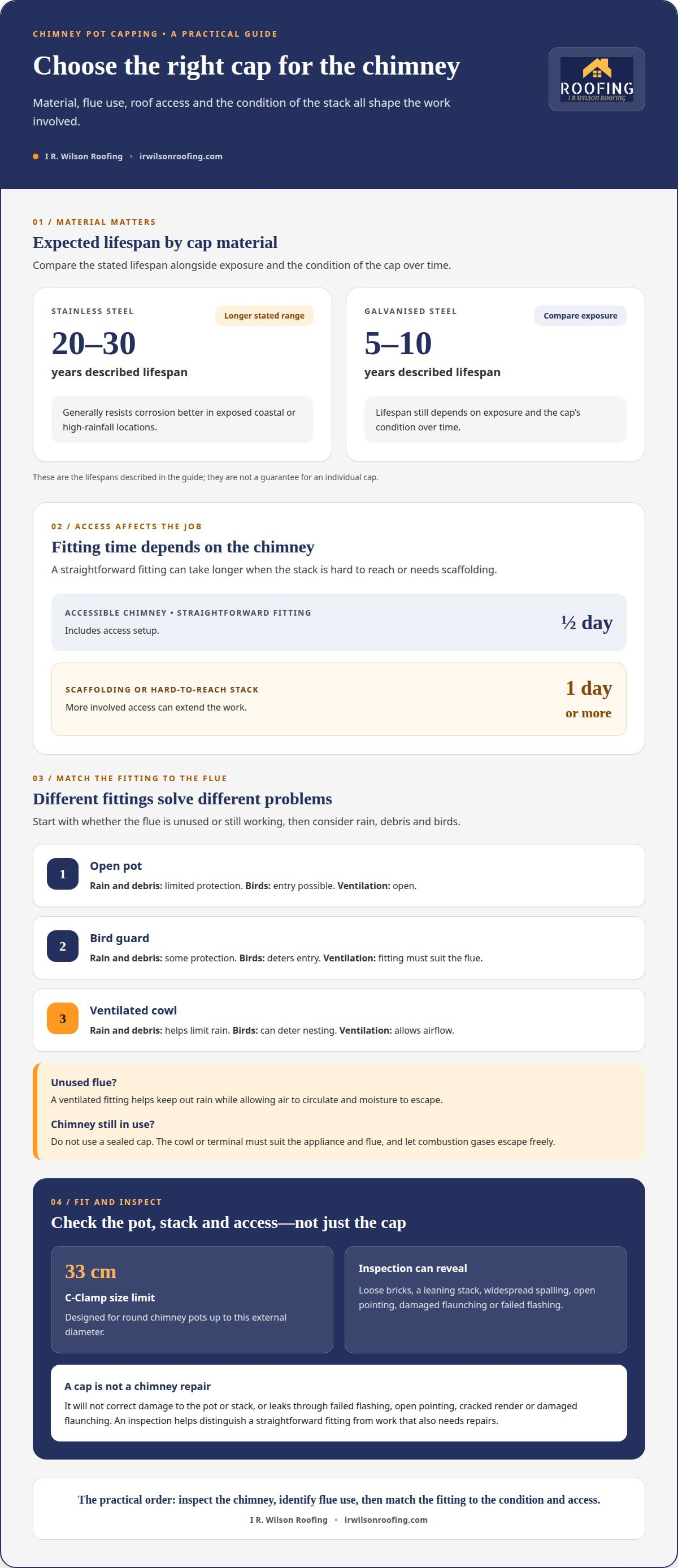
- Compare materials by expected lifespan as well as upfront suitability: stainless steel caps are described as lasting 20-30 years, while galvanised steel caps are described as lasting 5-10 years.
- For an unused flue, consider a ventilated fitting that helps keep out rain and debris while allowing air to circulate.
- Use an inspection to distinguish a straightforward fitting from a job that also needs repairs to the pot, pointing or chimney stack.
Preventing birds, debris and rain entering a flue
The right fitting depends on whether the flue is unused or still working. A ventilated option helps keep out the weather without trapping moisture inside the chimney.
Rain and Debris Prevention
A cap covers the open top of a disused chimney pot, helping keep rain, leaves and loose debris out of the flue. This can reduce water entering the internal masonry, which may otherwise contribute to damp patches, staining or musty smells indoors. It won’t fix leaks through failed flashing, open pointing, cracked render or damaged flaunching. Check the surrounding stack as well as the pot, including any older terracotta components.
Bird Nesting and Chimney Blockages
A bird guard or suitable cowl makes an open pot less inviting to nesting birds. Nests can obstruct the flue and hold moisture, so preventing access helps reduce blockage and damp risks. Unlike a plain cover, a guard creates a barrier to deter birds while keeping the flue opening usable. Fine mesh can clog with soot on some solid-fuel systems, so the fitting must suit the chimney’s use.
Moisture Ingress and Downdraught Prevention
A ventilated cowl limits direct rain entry while allowing air to circulate through an unused flue. This airflow helps moisture escape instead of building up and contributing to condensation. Some cowls also have anti-downdraught features, but rain protection alone doesn’t necessarily stop wind pushing air down the chimney. A chimney still in use needs a cowl or terminal suited to its appliance and flue, allowing combustion gases to escape freely.
| Option | Rain and debris | Birds | Ventilation |
|---|---|---|---|
| Open pot | Limited protection | Entry possible | Open |
| Bird guard | Some protection | Deters entry | Must suit the flue |
| Ventilated cowl | Helps limit rain | Can deter nesting | Allows airflow |
Choose by flue use first, then match the fitting to the specific problem.
Do I need planning permission or building regulations approval? Capping is different from removing or rebuilding a chimney stack, and the scope of work and any property restrictions matter. For a disused flue, ventilation is generally important so air can circulate and moisture can escape.
Can chimney pots be capped if the chimney is still in use? Not with a sealed cap. Use a suitable cowl or terminal that lets combustion gases escape freely.
Separately, HM Revenue & Customs sets the UK VAT registration threshold at £90,000 as of 2024/25.
Chimney cap materials and expected lifespan
Material affects how long a cap may last, while the pot’s shape determines how it attaches. Choose a fitting that suits the flue’s use and allows ventilation.
Chimney Cap and Cowl Types
Rain caps, bird guards and cowls serve different purposes. A ventilated cap suits an unused flue, while an active chimney needs a terminal suited to its appliance and flue type. C-Clamps are designed for round chimney pots up to 33 centimetres in external diameter. Matching the fitting to the pot helps secure it without sealing the flue completely.
Expected Chimney Cap Lifespan
Stainless steel caps are described as lasting 20-30 years; galvanised steel caps are described as lasting 5-10 years. Stainless steel generally resists corrosion better in exposed coastal or high-rainfall locations. For a property in a wetter setting, this difference may matter when weighing material options. Lifespan still depends on exposure and the cap’s condition over time.
How long does fitting take, and what maintenance is needed? A straightforward fitting on an accessible chimney typically takes half a day, including access setup. Scaffolding or a hard-to-reach stack can extend the job to a day or more. Include the chimney in routine roof inspections, particularly after severe weather, and deal promptly with a metal cap that rattles in high winds.
If the pot or surrounding masonry also needs attention, chimney repairs can address those issues alongside the fitting.
Chimney inspections, repairs and capping services
Capping is one part of chimney care, not a substitute for checking the pot and stack. An inspection helps determine whether the job needs a fitting, repairs or both.
What is chimney pot capping and when is it needed? A chimney pot capping service fits a suitable cover or terminal to a pot. It’s generally considered for an unused flue, especially when debris or bird activity is a concern.
How do roofers safely cap a chimney pot? They assess the pot, stack and access, then select a fitting suited to the flue. Ladders alone aren’t appropriate for many chimney repairs, particularly when lifting pots, handling mortar or closely inspecting the stack.
An inspection should look beyond the opening. Loose bricks, a leaning stack, widespread spalling, open pointing, damaged flaunching or failed flashing need attention; a cap won’t correct these defects. Before arranging a chimney pot capping service, establish whether visible damage also needs repair.
For an active gas flue, work affecting it legally requires a Gas Safe registered engineer under the Gas Safety (Installation and Use) Regulations 1998, according to the UK legislation register. Any terminal must suit the appliance and allow combustion gases to escape freely.
The practical takeaway is simple: inspect first, identify whether the flue is unused, then match the work to the chimney’s condition. This helps distinguish a fitting job from repairs to a damaged stack.
I R. Wilson Roofing: Flat Roof Repairs
I R. Wilson Roofing carries out chimney repairs and can help when a separate roofing issue needs attention too. If you’ve noticed water entering around a flat roof, its Flat Roof Repairs service may be relevant. The team also works on felt roofs, fascias and soffits, and gutter cleaning.
Keep the problems distinct: a chimney cap won’t repair a leak in flat-roof covering or clear blocked gutters. Noting where water appears, such as beneath a roof edge or near a flat-roof junction, can help clarify which issue needs attention.
For a roof concern beyond chimney capping, visit I R. Wilson Roofing to discuss the relevant work.
Choose a clear next step for your chimney
Before arranging a chimney pot capping service, note whether the flue is unused, still working or showing signs of water entry. This gives an inspection a clear starting point and helps distinguish a fitting from repairs to the pot or masonry. I R. Wilson Roofing carries out chimney repairs, while separate roof concerns may call for its Flat Roof Repairs, Felt Roofs or Fascias and Soffits services.
Use the free consultation to discuss what you’ve noticed and the next step for your property. There’s no pressure to proceed, so take the time you need to decide.
A clear assessment can help you move forward with confidence.
Frequently Asked Questions
What Affects the Total Cost of Capping a Chimney?
The total cost depends on roof access, the fitting selected and the chimney’s condition. A straightforward fitting differs from work that needs scaffolding, a replacement pot or repairs to pointing and flaunching. Ask for the quotation to separate the cap from any additional repair work. That makes it easier to understand what’s included and why the proposed work suits your chimney.
Who Should Cap a Chimney?
A qualified roofer with experience working on chimneys should assess and cap the pot. The work involves roof-height access and checking the stack, not simply placing a cover over the opening. If the chimney serves a gas appliance, work affecting its flue legally requires a Gas Safe registered engineer under the Gas Safety (Installation and Use) Regulations 1998, according to the UK legislation register.
Does capping a chimney stop damp?
Capping can help limit rain entering through an open chimney, but it won’t stop damp caused by other defects. Water may still enter through failed flashing, cracked render or open pointing. If damp patches appear after rain, note their position and timing; those clues can help identify whether the chimney opening or another part of the roof needs attention.
Should You Have Capping Installed?
Consider capping a chimney if it’s unused and its open pot allows rain, debris or birds to enter. First establish whether the flue is genuinely out of use, especially if you’ve moved into a property or inherited an older fireplace. If an appliance still uses it, a sealed cap isn’t suitable; the terminal must match the appliance and flue.
How much does chimney pot capping cost in the UK?
The quotation is based on the fitting and work involved. Key considerations include access to the chimney, whether scaffolding is needed, the cap or cowl chosen, and any damage to the pot or stack. A quotation should clarify whether it covers fitting alone or includes related repairs.