
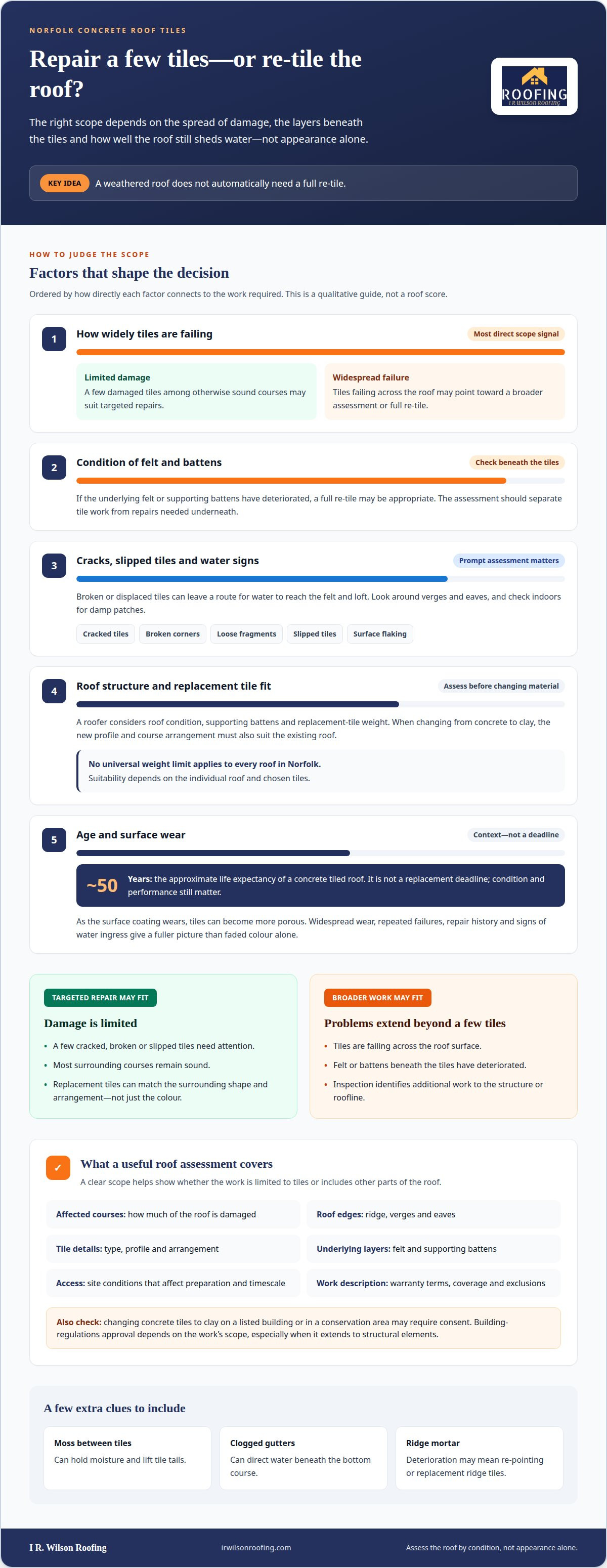
A weathered roof does not automatically need a full re-tile. For concrete roof tile replacement in Norfolk, storm-cracked or slipped tiles may need replacing to help prevent water reaching the felt and loft. Concrete tiles can also be replaced with clay when the new tiles suit the roof’s shape and arrangement. Extra consent may be needed for listed buildings or properties in conservation areas.
It’s understandable to wonder whether storm damage means the whole roof has reached the end of its life. A concrete tiled roof has a life expectancy of about 50 years, but appearance alone doesn’t decide whether it needs replacing.
This guide explains when individual tiles need attention, what to consider when changing from concrete to clay, and how roof age and condition affect the choice between a repair and a re-tile. You’ll also learn what a roofer assesses when checking damage, helping you make a clear, informed decision about your home.
Key Takeaways
- After a storm, cracked, broken or displaced tiles can leave a route for water to reach the roof felt and loft, so prompt assessment helps identify the extent of the damage.
- When replacing tiles, matching their shape and arrangement to the surrounding courses matters as well as choosing a similar colour.
- A full re-tile may be appropriate if tiles are failing across the roof or the battens and felt beneath them have deteriorated.
- Age is one factor in assessing concrete tiles: their surface coating gradually wears and they can become more porous, but weathered appearance alone doesn’t settle the decision.
Tile replacement after storm damage
After a storm, look for broken or slipped tiles, especially around verges and eaves, where wind can disturb the edges and leave the roof exposed.
Frost and Impact Tile Damage
Look for cracks, broken corners, loose fragments and surface flaking. Impact and bad weather can crack or break tiles, while older clay tiles may flake after years of frost. A replacement should match the surrounding tiles’ shape and arrangement, not just their colour, so it sits correctly within the existing courses.
Replacement Preparation and Timescale
Repair timescales vary. Replacing a few accessible tiles involves less work than repairing damage across a wider roof area. The roofer assesses the affected courses, access, tile type and whether the felt or battens also need attention. This clarifies the work required and helps set a realistic schedule. Clear access around the property makes preparation easier.
Roof Structure and Tile Weight
Concrete tiles can be replaced without changing the roof structure if that structure remains suitable for the chosen tiles. There is no universal weight limit for every roof in Norfolk. An assessment considers the roof’s condition, supporting battens and the weight of the replacement material. When changing from concrete to clay, the tile profile and course arrangement also need careful attention.
Approval, Warranties and Damage Risks
Changing concrete tiles to clay on a listed building or in a conservation area may require consent. Building-regulations approval depends on the work’s scope, particularly if repairs extend beyond the tiles to structural elements. Have the written work description set out any warranty terms, coverage and exclusions. Cracked or slipped tiles can let water reach the felt and loft, so prompt storm-damage repairs help limit exposure. Check indoors for damp patches and inspect for damage near the eaves.
Domestic and commercial tiling services
Whether the property is a home or business, the right roofing work depends on whether damage is limited to individual tiles or affects a wider area. Concrete interlocking tiles are common on post-war and modern homes. Their size and weight make accurate handling and fixing important. A roofer assesses the tile courses, ridge, verges and roof edges before defining the work.
A small repair may involve replacing individual tiles and securing slipped ones. If the ridge mortar has deteriorated, work may include raking it out and re-pointing, or removing ridge tiles and fitting replacements. Sound ridge and edge work helps keep tiles secure. Matching the replacement tile’s profile and arrangement helps it sit correctly among the existing courses.
A full re-tile may suit a roof where tiles are failing across the surface or the underlying battens and felt have perished. Commercial roofing also needs a scope suited to the building and the extent of the affected area. The assessment should distinguish tile replacement from work needed beneath the tiles, rather than treating every discoloured or weathered surface as a reason to re-tile.
Which Norfolk roofers specialise in concrete tile replacement and have good reviews? Look for roofers whose work includes tile and ridge repairs; Norfolk ridge-tile specialists listed in the market have an average rating of 5.0 out of 5. For a useful comparison, focus on whether the proposed work explains the tile fixing, mortar and any underlying repairs.
For help with roof tiling and related repairs, explore roof tiling services and consider which scope fits your property.
Concrete roof tile lifespan
A concrete tiled roof has a life expectancy of about 50 years, but that figure isn’t a replacement deadline. On a Norwich property, the key question is whether the tiles remain sound and shed water, not whether their colour has faded. A weathered surface alone doesn’t mean the roof needs replacing.
Concrete tiles change gradually with age. Their surface coating wears away, and the tiles become more porous over time. During an assessment, a roofer considers how widely the surface has deteriorated and whether the tiles still perform as intended. This helps distinguish normal ageing from a condition that needs repair or replacement.
A few weathered tiles among otherwise sound courses may need targeted repairs rather than full replacement. Widespread surface wear alongside repeated tile failures points to a broader problem worth assessing. Moss between tiles can hold moisture and lift tile tails, while clogged gutters can direct water beneath the bottom course. These signs help build a fuller picture of the roof’s condition.
Use age as a reason to look more closely, not as the sole basis for a decision. A roofer can weigh the spread of wear, visible damage, repair history and signs of water ingress. For concrete roof tile replacement in Norfolk, this assessment helps distinguish a roof that looks tired from one that no longer performs reliably. Judge the tiles by their condition as well as their age.
I R. Wilson Roofing: Felt Roofs
I R. Wilson Roofing can help when an assessment reveals problems beyond the tiles themselves. If the felt beneath the roof is damaged or deteriorated, its felt roofing service addresses that part of the roof. Where inspection identifies deteriorated supporting timber, timber replacement may also be relevant. These repairs address underlying issues rather than simply covering visible tile damage.
For a separate flat roof, I R. Wilson Roofing also provides flat roof repairs. Fascias and soffits can be repaired when damage affects those roofline components. The right work depends on the roof’s needs, so a clear assessment helps match the problem to an appropriate repair.
For a free consultation, contact I R. Wilson Roofing.
Plan the right next step for your roof
Before committing to work, consider how you want your roof to serve your property in the years ahead. A repair plan should reflect the roof’s condition and your priorities, not appearance alone. This gives you a practical basis for deciding what to address now and what may belong in a broader project.
For concrete roof tile replacement in Norfolk, a clear discussion about your property and the work you’re considering can turn uncertainty into a manageable next step. I R. Wilson Roofing also offers Flat Roof Repairs, Felt Roofs, and Fascias and Soffits when those parts of your property need attention.
Take the next step at a pace that feels right for you. A straightforward discussion can help you explain your concerns and understand the work involved, without pressure to decide before you’re ready.
Frequently Asked Questions
Can a roofer swap concrete tiles for clay?
Yes, a roofer can replace concrete tiles with clay when the new tiles suit the roof. The assessment should consider the clay tile’s profile, how it fits the existing courses, the roof pitch and the supporting structure. For example, a Norfolk pantile has a different shape from a concrete interlocking tile. Listed buildings and properties in conservation areas may also require consent for this change.
How are broken roofing tiles fixed?
A roofer first identifies the damaged tile and checks nearby tiles and their fixings. They remove the broken piece, fit a suitable replacement and secure it so it sits correctly within the surrounding courses. For example, a cracked tile near a verge may mean checking adjacent edge tiles too. If water has reached the roof space, the repair may also need to address resulting damage.
How much does roof tile installation cost?
There is no single installation price for every roof. I R. Wilson Roofing provides a competitive quotation after an assessment, with factors such as roof area, tile choice, access and preparation affecting the cost. A small replacement job differs from tiling an entire roof. The quotation should clearly describe the work and materials included.
How much does concrete roof tile replacement cost in Norfolk per square metre?
A per-square-metre figure depends on the roof and the work included, so it is not a standard rate for properties in Norwich. I R. Wilson Roofing provides a competitive quotation after an assessment. It takes account of the measured roof area, tile type, access and whether the job includes repairs beneath the tiles.
What affects the cost of replacing concrete roof tiles in Norfolk?
Key factors include the number of tiles to replace, roof access and layout, and whether the work extends to battens, felt or timber. Matching an older tile profile can also affect the scope. For example, a repair limited to one roof slope differs from damage extending to the ridges or verges. A tailored quotation sets out the work needed for your property.