

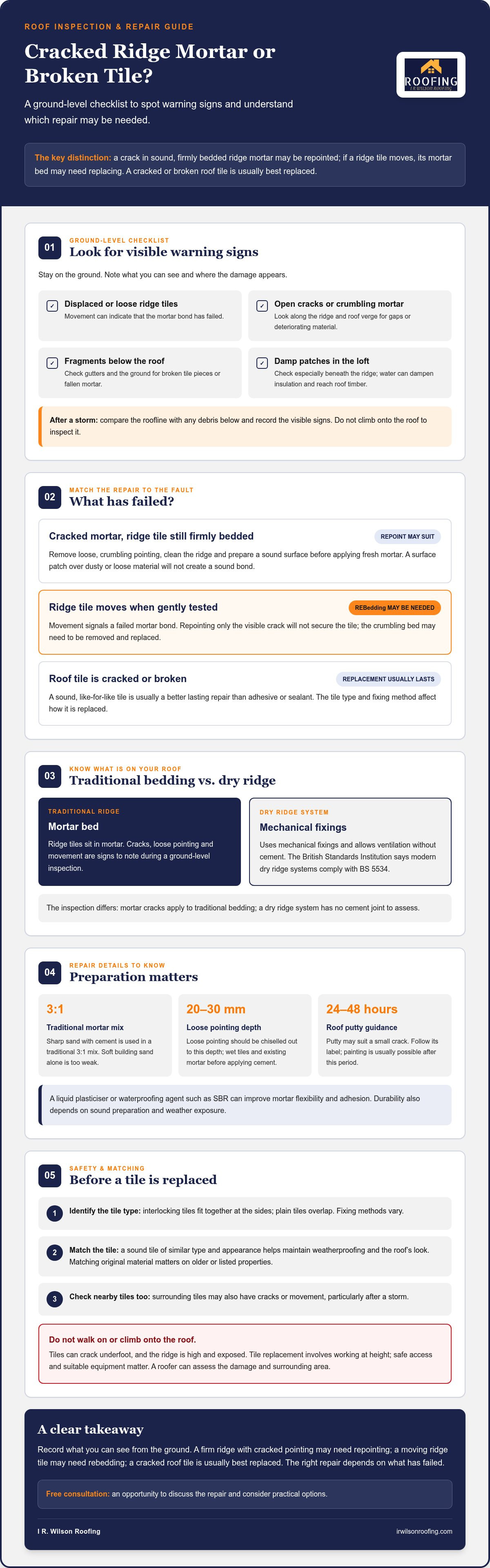
A cracked roof tile may be sealed temporarily, but replacing a damaged tile is the lasting repair. Cracked cement on ridge tiles can sometimes be repointed if the tiles are still firmly bedded. If a ridge tile moves, its mortar bed needs replacing, not just a surface patch. The right repair depends on what has failed.
It’s understandable to hope a visible crack can be fixed quickly, but a patch may hide a problem beneath the surface. This guide explains how to spot failing ridge mortar, when rebedding is needed, and why cracked or broken roof tiles should usually be replaced. You’ll also learn what you can safely inspect from the ground and when to leave roof work to an experienced roofer.
Key Takeaways
- If a ridge tile moves, the mortar bed may need replacing rather than simply patching over the visible cracks.
- Look for warning signs from the ground, such as loose tiles, crumbling mortar, fragments in gutters, or damp in the loft.
- Modern dry ridge systems use mechanical fixings and ventilation without cement; the British Standards Institution says they comply with BS 5534.
- A cracked or broken roof tile is usually best replaced with a sound, like-for-like tile rather than relying on adhesive or sealant.
What is Ridge Tile Re-bedding?
Ridge tile rebedding involves removing crumbling mortar and securing the tiles on a fresh mortar bed. This helps hold them in place and closes gaps where wind-driven rain could enter.
Watch this roofing demonstration to see how ridge tiles are removed and prepared for repair:
Roof Security and Water Ingress
A sound mortar bed secures ridge tiles and helps keep rain out. Water can dampen loft insulation and reach roof timber, where persistent moisture can cause rot and weaken the roof structure. If a tile moves when gently tested, its mortar bond has failed, and repointing the visible crack alone won’t secure it. A roofer should explain whether the repair needs rebedding or repointing, and how safe access will be managed.
Causes of Cracked Ridge Tiles
Cracks can follow sudden temperature changes, long-term deterioration, falling branches, debris or unusually large hailstones. Poor roof design or installation can also leave tiles vulnerable, and installation work may damage them. These causes matter because a fresh patch won’t correct a loose tile or continuing damage. For repairs, sharp sand is used with cement in a traditional 3:1 mix; soft building sand alone is too weak. A liquid plasticiser or waterproofing agent such as SBR can improve mortar flexibility and adhesion.
Ridge Tile Repair Methods and Rules
For a lasting mortar repair, remove old, crumbling material, clean the ridge and tiles, then apply fresh bedding. Don’t apply cement over dusty old mortar, which gives the new mix a poor bond. Roof putty may suit a small crack; follow its label, as painting is usually possible after 24-48 hours. A like-for-like repair differs from changing the roof’s form, and planning or building rules can depend on the property and scope. If you’re unsure, get project-specific guidance before work. Don’t climb onto the roof: tiles can break underfoot, and the ridge is high and exposed. Use a roofer experienced in safe roof access.
Inspecting cracked ridge tiles and mortar verges
From the ground, look for displaced ridge tiles, open cracks in the mortar and damage along the roof verge. Cracked cement on ridge tiles can leave gaps, so note where the damage is and whether mortar debris has collected below.
Signs of Cracked Mortar and Debris
Loose or missing ridge tiles, broken tile pieces in gutters and mortar fragments on the ground can all indicate a failing ridge. After a storm, compare the roofline with any debris below. Check the loft for damp patches, especially beneath the ridge. Don’t climb onto the roof to inspect it; record visible signs from the ground.
Traditional Bedding and Dry Ridge Systems
Traditional ridge tiles sit in a mortar bed, while dry ridge systems use mechanical fixings and allow ventilation without cement. According to the British Standards Institution, modern dry ridge systems comply with BS 5534. This difference matters during inspection: mortar cracks apply to traditional bedding, while a dry system has no cement joint to assess. Repointing or dry ridge installation costs depend on the work involved, including access and ridge length, and are given after a quote request.
Causes of Crumbling Ridge Mortar
On older UK roofs, freeze-thaw cycles, high winds and heavy rain can make mortar porous and brittle. Water entering hairline cracks can freeze and break away the mortar face. Cracked cement on ridge tiles should not simply be covered with fresh mortar if the underlying surface remains dusty or loose. Remove loose pointing, clean the ridge, and prepare a sound surface first. Loose pointing should be chiselled out to a depth of 20-30 mm; wet the tiles and existing mortar before applying cement. Repair durability depends on sound preparation and exposure to weather.
If visible damage extends beyond the ridge, explore roof repair support for the wider roof issue.
Removing and replacing damaged tiles
A cracked or broken roof tile is usually better replaced than patched with adhesive or sealant. A patch may be temporary, but it won’t repair the damage or address its cause. A sound, matching tile helps maintain the roof’s weatherproofing and appearance.
The replacement method depends on the tile type and how it is fixed. Interlocking tiles fit together at the sides, while plain tiles overlap, and fixing methods vary too. On an older or listed property, matching the original material and appearance matters. A tile from the same period may sometimes be available at a reclamation yard. If you’re unsure what type is fitted, identify the material and style before planning the repair.
A roofer typically assesses the broken tile and surrounding area, then removes the damaged piece without disturbing sound tiles. The replacement is positioned and secured according to its type and fixing. Nearby tiles should also be checked for cracks or movement, since one visible break may not be the only damage. After a storm, this wider inspection can show whether further repairs are needed.
Replacing a roof tile involves working at height, and clay or concrete tiles can crack underfoot. Don’t walk on the roof to attempt a repair. Work is best done in dry weather from a safe working platform; roof ladders or crawling boards help protect surrounding tiles. A roofer has the tools and safety equipment to replace the tile and spot other roof problems. Avoid relying on roofing cement or silicone as a lasting fix, particularly where water could enter and freeze.
I R. Wilson Roofing: Flat Roof Repairs
I R. Wilson Roofing can help if an inspection finds wider roof damage alongside cracked ridge mortar. Its Roof Repairs service is suited to problems extending beyond one tile, while Flat Roof Repairs address leaks or damage on a separate flat roof. Fascias and Soffits and Gutter Cleaning can also help with related exterior maintenance.
A free consultation gives you the chance to discuss the repair and consider a practical next step. If your roof needs attention, contact I R. Wilson Roofing to talk it through.
Choose a clear next step for your roof
If you’ve spotted cracked cement on ridge tiles, start with a safe, informed assessment rather than climbing onto the roof. Note what you can see from the ground, such as displaced tiles or mortar debris, and describe those signs when arranging professional advice. This gives the roofer a useful starting point and helps you plan work based on your roof’s actual condition.
I R. Wilson Roofing also provides related property maintenance, including Flat Roof Repairs, Felt Roofs, and Fascias and Soffits. These services may be useful if your inspection reveals roof or exterior concerns beyond the ridge. A conversation can help you identify a practical next step for your home.
Acting early can make roof maintenance easier to manage. You can move forward at a steady pace with a clearer idea of what your home needs.
Frequently Asked Questions
Can I repair a roof tile without removing it?
Only as a temporary measure. Roofing cement or silicone may cover a small crack, but it won’t restore the tile’s strength, so arrange a replacement rather than relying on a patch. For a home in Norwich, note whether the crack crosses the tile or sits at an edge. That detail helps explain the damage when arranging an inspection.
How Do I Know When Ridge Tiles Are Failing?
Look for a ridge tile that appears out of line, gaps between tiles or mortar that has broken away. From the loft, check for fresh damp marks after rain, especially beneath the roof peak. A ridge tile that shifts when gently tested has lost its mortar bond. It’s safer to describe what you can see from the ground.
It’s just a wee crack… or is it?
A fine line may be limited to the mortar surface, but a widening crack or one accompanied by loose material needs attention. The key question is whether the ridge tile remains firmly bedded. Even a small-looking defect can expose the roof to wind and rain, so note its position and whether it changes after wet or windy weather.
What causes a broken roof tile?
A falling branch or roof debris can break a tile, and unusually large hailstones may also cause damage. Temperature changes and gradual ageing can create splits that grow over time. Tiles can also be damaged during roof installation. If the break appeared after a storm, note any nearby fallen branches or debris as useful context for the roofer.
Why repair now rather than later?
Open gaps can let birds, squirrels or insects enter and nest in the roof. Rain getting inside can also affect loft insulation and roof timber, turning a visible defect into a broader maintenance concern. If you notice new debris or signs of entry, arrange an assessment before the opening becomes an easier route into the roof space.