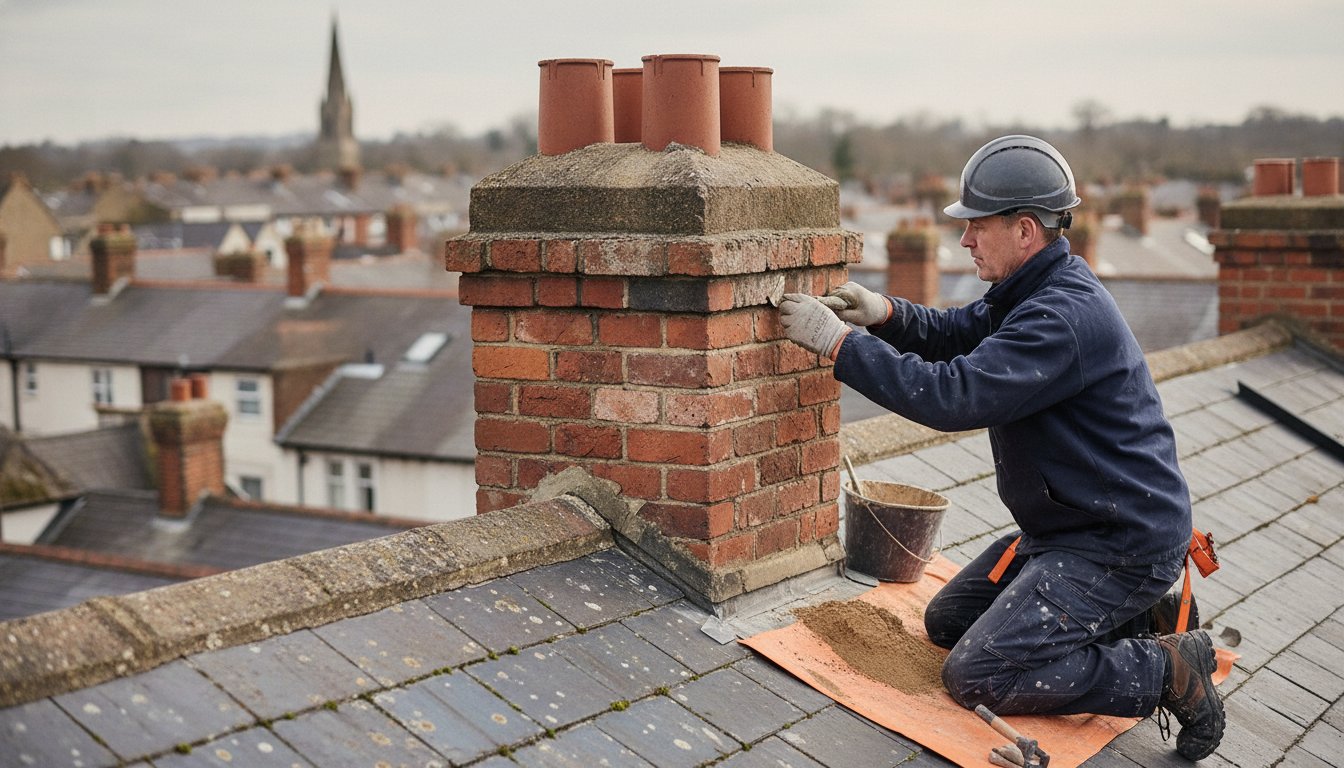
Last Tuesday, Sarah in the Golden Triangle discovered a pile of flint and mortar on her doorstep after a particularly sharp gust from the North Sea. It's a sinking feeling we know well, as it often signals that your chimney stack is no longer winning the battle against the Norfolk elements. When you're faced with falling masonry or damp patches on your ceilings, finding dependable chimney repair Norwich specialists becomes a top priority to keep your family safe and dry.
We understand the anxiety that comes with property maintenance, especially when it involves working at height. You deserve to know that the job will be done correctly the first time without any hidden costs or surprises. This article will help you identify common chimney faults, from perished mortar to failing leadwork. We'll explain how to restore your stack to a professional, watertight standard, ensuring you gain the peace of mind that only comes from thirty years of family-run expertise and a commitment to honest, fixed-price craftsmanship.
Key Takeaways
- Learn how to spot "spalling" bricks and moss growth before these early warning signs lead to serious structural damage or internal damp.
- Understand the vital role of professional repointing and flaunching in creating a weather-resistant barrier against the harsh Norfolk frost.
- Discover why traditional leadwork is the most critical component for ensuring your chimney stack remains completely watertight during heavy rain.
- Find out how to secure a fixed-price quotation for your chimney repair Norwich to ensure total cost transparency and peace of mind.
- Gain insights into why choosing a long-established, local family business provides the personal accountability and craftsmanship your home deserves.
Common Signs Your Norwich Chimney Needs Professional Repair
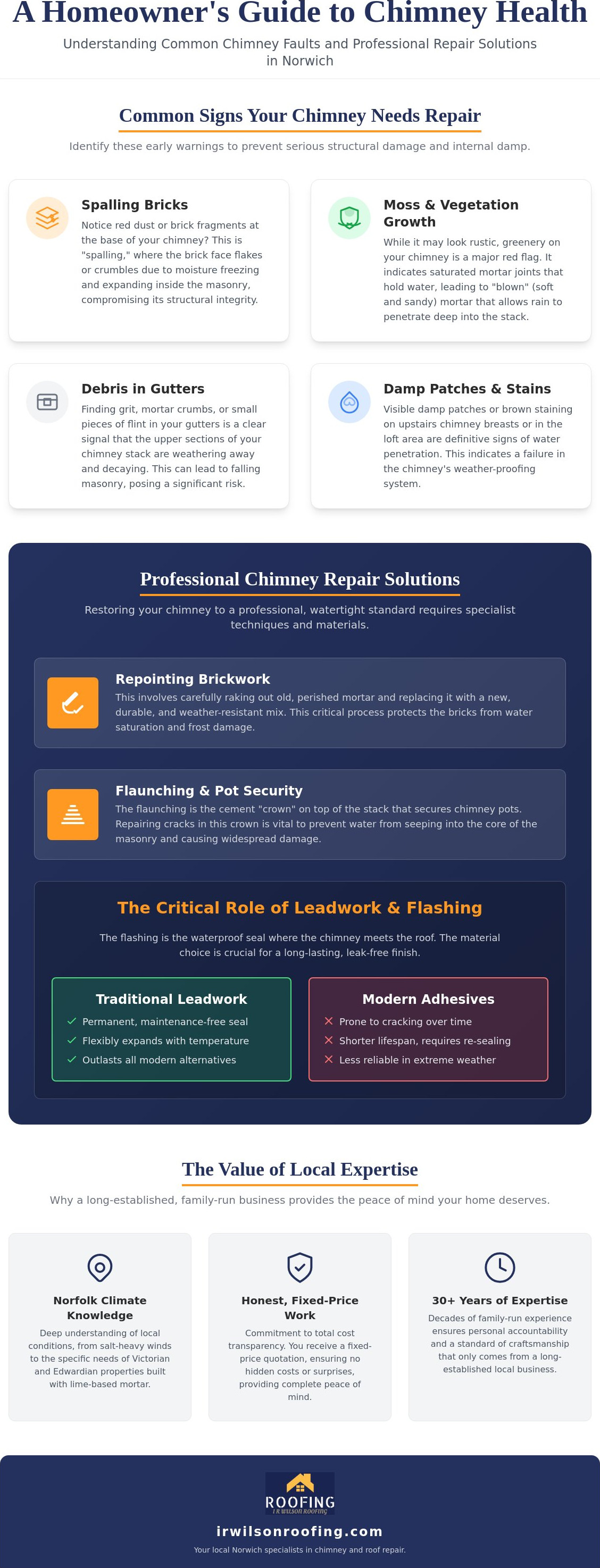
Identifying chimney damage early can save you from a costly full rebuild. One of the most frequent issues we see is "spalling," where the face of the brick begins to flake or crumble. This happens because bricks absorb moisture which then expands when it freezes, a common occurrence during cold Norfolk winters. If you notice red dust or brick fragments around the base of your stack, it's a sign that the structural integrity of your masonry is under threat. These Common chimney problems often start small but quickly escalate if the underlying moisture issue isn't addressed.
Moss and vegetation growth are also major red flags. While a bit of greenery might look traditional, it actually means your mortar joints are saturated and holding water. This trapped moisture creates "blown" joints, where the mortar becomes soft and sandy, allowing rain to penetrate deep into the stack. When this happens, you'll likely start seeing damp patches or brown staining on your upstairs chimney breasts or around the loft area.
To better understand how these issues are addressed, watch this helpful video showing a typical UK chimney restoration:
The Impact of the Norfolk Climate on Masonry
Norwich homes face unique environmental challenges. Our proximity to the coast means we deal with high rainfall and salt-heavy winds that accelerate the erosion of traditional mortar. Many Victorian and Edwardian terraces, especially in areas like the Golden Triangle, were originally built with lime-based mortar. We've found that these older stacks require specific care; using modern, hard cement for a quick fix often traps moisture and causes the original bricks to decay even faster. Professional chimney repair Norwich services must always account for these traditional building materials to ensure a long-lasting, breathable finish.
Debris in Gutters: A Warning Sign
Your gutters act as a catchment area for your roof's health. If you find grit, mortar crumbs, or small pieces of flint while performing your annual gutter cleaning in Norwich, your chimney is likely the culprit. This debris is a clear signal that the upper sections of your stack are weathering away. Catching these signs during a routine inspection allows us to perform targeted repointing before the stack becomes dangerous. Ignoring this decay often leads to falling masonry, which poses a significant risk to anyone walking below during a Norfolk gale. We always recommend a quick visual check of your gutters to help determine your chimney repair Norwich requirements.
Professional Chimney Repair Services: From Repointing to Leadwork
When we assess a chimney repair Norwich project, we look beyond the surface to ensure the entire structure is weather-tight. A common task is repointing, which involves carefully raking out perished mortar and replacing it with a durable, weather-resistant mix. This process protects the brickwork from further saturation. We also pay close attention to the flaunching. This is the concrete "crown" at the top of the stack that secures your chimney pots. If this crown is cracked, water will seep into the heart of the masonry, leading to internal damp issues and weakened bricks.
Deciding between a repair or a full rebuild depends on the depth of the decay. If the stack is leaning or the internal masonry has turned to dust, repointing is no longer a safe or effective option. Our team prioritizes structural integrity to ensure your chimney can withstand the pressure of North Sea gales without the risk of falling masonry. Ensuring professional installation and maintenance is key to keeping your home safe and functional for the long term.
Specialist Leadwork and Flashing
The lead flashing is the essential waterproof seal where your chimney stack meets the roof tiles. Ian and Ben Wilson prioritize traditional leadwork because it provides a permanent, maintenance-free seal that far outlasts modern adhesive alternatives. Lead is the only material that can expand and contract with Norfolk temperature shifts without cracking. Properly installed leadwork prevents leaks from entering your roof space, protecting your timbers and ceilings from rot.
Chimney Pot Replacement and Capping
Cracked pots aren't just an eyesore; they're a safety hazard that can lead to falling debris. We replace damaged pots and can install specialized cowls to stop birds nesting and prevent downdraughts. Even if your chimney is disused, it still needs adequate ventilation to stop condensation from building up inside the flue. If you're concerned about the state of your stack, you can read more about our local roofing projects to see how we restore traditional Norfolk homes.
Choosing a Reliable Chimney Specialist in Norwich and Norfolk
Selecting the right team for your chimney repair Norwich project is about more than just finding the lowest price. It's about finding craftsmen who take personal accountability for the safety of your home. As a family-run business established in 1994, we don't believe in the faceless approach of large national corporations. Ian and Ben Wilson are directly involved in our service delivery, ensuring that our thirty years of local expertise are applied to every brick we lay and every lead flashing we boss. This hands-on mentality is what has built our reputation across Norfolk for three decades.
Cost anxiety is a significant hurdle for many homeowners. We address this by providing clear, fixed-price project fees. You shouldn't have to worry about hidden extras once the work has commenced. Our long-standing experience with local building regulations and the specific architectural needs of Norwich properties allows us to price accurately from the start. We also maintain full public liability insurance and strictly follow health and safety protocols for working at height. For guidance on technical standards and safety, we often look to the National Association of Chimney Engineers to ensure our workmanship meets the highest industry benchmarks.
Our Process for Norwich Homeowners
We've developed a steady, methodical rhythm to our work that mirrors the disciplined nature of the roofing trade itself. Our process begins with a thorough assessment of your stack, resulting in a competitive, no-pressure quotation. Once work begins, we handle everything from masonry restoration to the seamless integration of your chimney with the rest of your roof. Whether we're performing flat roof repairs in Norwich or working on a traditional pitched roof, we ensure the final inspection leaves your home completely watertight.
Request Your Free Chimney Inspection
It's always better to act before a minor mortar crack becomes a major internal leak. If you've noticed debris in your gutters or dampness on your ceilings, don't wait for the next storm to test your masonry. We invite you to contact Ian and Ben today for a professional chimney repair quote. We'll provide an honest appraisal of your stack's condition and a straightforward plan to protect your home from the Norfolk elements for years to come.
Secure Your Home Against the Next Norfolk Storm
Your chimney is your home's primary defense against the unpredictable East Anglian weather. By recognizing the early signs of masonry decay and prioritizing specialist leadwork, you can avoid the stress of falling bricks and internal damp. We've spent over thirty years perfecting these traditional techniques, ensuring every stack we restore is built to last. Our team takes pride in providing a service that combines technical authority with the personal care of a local family business. We're here to help you maintain a safe, watertight property with the transparency of fixed-price project fees that eliminate the worry of hidden costs.
If you're ready to protect your investment, Get a Competitive Chimney Repair Quote from Ian & Ben for any postcode in the city. We've been a family-run enterprise since 1994 and specialize in the expert chimney repair Norwich homeowners trust to keep their properties secure. Don't wait for the Norfolk winds to pick up before checking your stack. Let's work together to ensure your home remains structurally sound and dry, regardless of what the elements throw your way.
Frequently Asked Questions
How much does chimney repointing cost in Norwich?
The cost of repointing depends entirely on the size of your chimney stack and the current condition of the mortar. We provide fixed-price quotations following a physical inspection to ensure you have a clear, honest figure without any hidden extras. Every property is different, so we avoid providing generic estimates that might not reflect the specific masonry needs of your home.
Do I need scaffolding for a chimney repair?
Yes, professional scaffolding is almost always necessary to carry out a safe and thorough chimney repair. Working at height with heavy masonry and tools requires a stable platform that a simple ladder cannot provide. We coordinate the access requirements for you, ensuring the setup is secure and protects both our team and your roof tiles throughout the project.
How long does a typical chimney repair take to complete?
Most chimney projects are completed within one to three days, though this depends on the complexity of the work and the Norfolk weather. A straightforward repointing job or pot replacement might only take a single day. More extensive restoration work or intricate leadwork requires a bit more time to ensure every joint is perfectly sealed and the structure is sound.
Can a leaking chimney cause damp inside my house?
A leaking chimney is one of the most frequent causes of damp patches appearing on upstairs ceilings or chimney breasts. Water often finds its way through perished mortar or failing lead seals and travels down the internal structure of the flue. Hiring a specialist for chimney repair Norwich is the most effective way to stop this moisture from damaging your plasterwork and interior decor.
What is chimney flaunching and why does it fail?
Chimney flaunching is the sloped mortar or concrete "crown" at the very top of the stack that holds your pots in place. It fails because it's the most exposed part of your roof, taking the full brunt of Norfolk's freeze and thaw cycles. Over time, this exposure causes the concrete to crack and crumble, which allows rainwater to seep into the heart of the masonry stack.
Is lead better than mortar for chimney flashing?
Lead is far superior to mortar for creating a permanent, waterproof seal where the chimney meets your roof tiles. Mortar is rigid and will eventually crack as your property naturally settles, leading to inevitable leaks. We prioritize traditional leadwork because it's flexible enough to expand and contract with temperature changes, providing a maintenance-free barrier that lasts for decades.


