
After a typical Norfolk downpour, seeing a "miniature lake" sitting on your extension roof is more than just an eyesore. It's a heavy burden that stresses your timber and invites leaks into your home. We understand the worry that comes with water pooling after rain, especially when you're concerned about the weight on older felt roofing. You aren't alone in wanting a permanent fix for these recurring issues.
Discovering the right flat roof drainage solutions is the best way to protect your property and ensure a dry, stable structure. This 2026 guide explains how to achieve the 1:80 fall required by current British Standards to stop standing water for good. We'll compare the benefits of scuppers versus internal drains and show you how a professional assessment of your roof's pitch can prevent costly structural damage before it starts.
Key Takeaways
- Recognise why water remaining on your roof for over 48 hours is a critical warning sign of hydrostatic pressure risks.
- Compare effective flat roof drainage solutions like interior drains and scuppers to find the most reliable option for your specific extension.
- Learn how professional laser level assessments identify subtle low points to correct the pitch and meet current British Standards.
- Understand the vital role that fascias and soffits play in directing water away from your property to maintain a dry, well-draining roof system.
The Hidden Dangers of Ponding Water on Flat Roofs
When we assess a property, we look for more than just visible leaks. To understand how water moves, it helps to look at What is a flat roof? and its required pitch. If water remains on the surface for more than 48 hours after it stops raining, it's officially classified as "ponding." This isn't just a damp patch; it's a sign that your current flat roof drainage solutions aren't performing as they should.
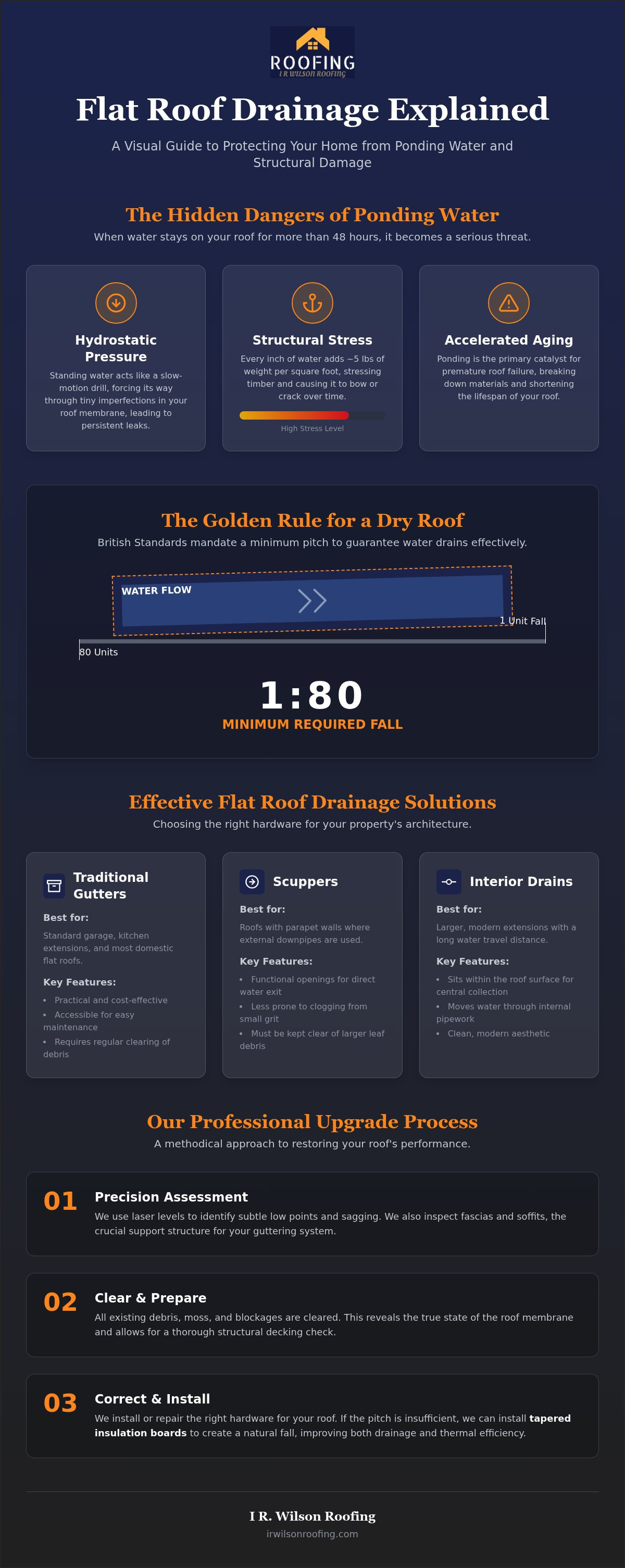
Standing water creates hydrostatic pressure. This force acts like a slow-motion drill, finding tiny membrane imperfections or seams to push through into your home. The weight alone is a major concern. Every inch of standing water adds approximately 5lbs of weight per square foot to your roof structure. Over time, this extra load can cause the timber beneath to bow or crack. Ponding water is the primary catalyst for premature felt roof failure in Norwich homes.
Why Norwich Properties Are Prone to Drainage Issues
Many homes across Norfolk and Suffolk feature older bitumen felt roofs that naturally settle over time. This movement creates "dips" or depressions where water inevitably collects. Because Norwich is a green city, debris from nearby trees frequently blocks existing outlets and gutters, making the situation worse. Combined with the consistent Norfolk rainfall, these factors make investing in effective flat roof drainage solutions essential for protecting your property's value.
Comparing Effective Flat Roof Drainage Solutions
Choosing the right hardware depends on your property's architecture and the total surface area. For larger modern extensions, interior drains are a reliable choice. These systems sit within the roof surface, collecting water at a central point and moving it through internal pipework. Alternatively, scuppers are effective for roofs with parapet walls. These are functional openings that allow water to exit directly into external downpipes. All these installations must adhere to UK building regulations to ensure they can handle heavy East Anglian storms.
For most domestic flat roofs in Norwich, traditional guttering is the most practical and cost-effective choice. It's accessible, easy to maintain, and works perfectly for standard garage or kitchen extensions. If your roof is currently too level, we can install tapered insulation. This method uses insulation boards cut at an angle to create a natural fall. It provides a double benefit: it improves your home's thermal efficiency while directing water toward your chosen flat roof drainage solutions.
Gutters vs. Scuppers: Which is Right for Your Roof?
Your choice usually hinges on the roof's footprint and maintenance preferences. External gutters are ideal for smaller structures like garages. They are easy to clear, though they do require regular attention. You can find more detail in our guide to guttering services in Norwich. Scuppers or internal drains are better for larger modern footprints where water has a longer distance to travel. While scuppers are less prone to clogging from small grit, they must be kept clear of larger leaf debris to function safely. If you need a professional opinion on your specific layout, feel free to browse our latest project advice.
Professional Assessment and Installation in Norfolk
When we visit your property, we don't just look at the surface. We use laser levels to conduct a professional survey, identifying the subtle "low points" where water tends to gather. This precision is vital for implementing effective flat roof drainage solutions that actually work for your specific home. We also examine your fascias and soffits. These aren't just decorative; they provide the essential structural support for your guttering perimeter. If they're rotting or loose, your drainage will eventually fail regardless of the membrane's quality.
At I R. Wilson Roofing, our approach to flat roof repairs in Norwich focuses on addressing the root cause of the problem. We don't just patch a leak; we look at why the water was sitting there in the first place. A properly pitched flat roof should have a minimum fall of 1 in 80 to ensure water clearance. If your roof is flatter than this, we'll recommend ways to correct the slope and integrate better flat roof drainage solutions during the repair process.
Steps to Upgrade Your Roof Drainage System
If your current system is struggling to keep up with the Norfolk weather, we follow a methodical process to restore its performance:
- Step 1: We clear all existing debris and moss. This reveals the true state of the membrane and ensures we don't miss hidden cracks or thinned areas.
- Step 2: We assess the structural decking for "sagging." Over several decades, timber can dip, creating permanent puddles that trap water even on a sunny day.
- Step 3: We install or repair the appropriate drainage hardware. This might include new eaves trays to direct water into high-capacity gutters or replacing worn outlets with modern, sealed units.
Protecting Your Home with Reliable Drainage
Managing water on a flat roof doesn't have to be a source of stress. By understanding the risks of ponding water and choosing the right flat roof drainage solutions, you can protect your home's structure for decades. Whether your property requires modern scuppers or high-capacity gutters, the key is ensuring a consistent 1 in 80 fall to keep the surface dry and stable.
We take pride in our 30 years of experience serving the Norwich community. As a family-run business, we bring expertise in both flat and pitched roofing to every assessment. Our team focuses on providing dependable results that respect your property and your budget. We'll ensure your roof remains a reliable shield through every Norfolk storm.
Your home is your most important investment. We look forward to helping you maintain it with the care and honest craftsmanship it deserves.
Frequently Asked Questions
How much fall should a flat roof have for proper drainage?
A flat roof should have a minimum finished fall of 1 in 80 to allow water to flow effectively toward your outlets. When we design a new surface, we typically aim for a 1 in 60 design fall. This extra pitch accounts for any minor structural settlement over time, ensuring that the water continues to clear even as the building ages.
Can I fix standing water on my flat roof without replacing it?
It is often possible to resolve minor pooling by clearing blockages or repairing specific sagging areas. However, if the entire surface is too level, we might recommend installing tapered insulation over your existing structure. This is one of the most effective flat roof drainage solutions because it creates a new slope while improving thermal efficiency without a full structural teardown.
How often should I clean the drains on my flat roof in Norwich?
We recommend cleaning your roof drains and gutters at least twice a year. In a leafy city like Norwich, autumn is a critical time to remove fallen leaves and twigs that can quickly block scuppers or internal outlets. Regular maintenance prevents water from backing up, which protects your felt membrane from unnecessary pressure that leads to leaks.
What are the signs that my flat roof drainage is failing?
The most obvious sign is "ponding," which is water that remains on the surface 48 hours after rainfall. You should also look for dark damp patches on interior ceilings or green algae growth on the roof's low points. These indicators suggest your current flat roof drainage solutions are failing, often because the structural decking has started to sag under weight.