Imagine the sinking feeling of opening your coastal retreat after a month away, only to find a damp patch spreading across the ceiling because of a loose tile you didn't know was there. For many owners, holiday home roof maintenance in Norfolk feels like a constant battle against the North Sea gales and salt air, especially when you aren't on-site to spot the early warning signs. It's a genuine worry that a small leak could turn into a major structural issue while the house sits empty between bookings.
We understand that you need to feel confident your property is guest-ready and secure, even from a distance. This 2026 guide will show you how to protect your investment from the unique wear of the Norfolk coast and help you avoid the high costs of emergency repairs or timber replacement. We'll outline a reliable maintenance routine, explain how new 2026 thermal regulations affect your repairs, and provide the peace of mind that comes from knowing your roof is handled by local professionals who value craftsmanship over quick fixes.
Key Takeaways
- Understand how the North Sea’s salt air and wind-driven rain specifically accelerate the wear on your property’s leadwork and fixings.
- Learn a simple visual inspection routine for holiday home roof maintenance Norfolk that helps you spot slipped tiles and sagging gutters before guests arrive.
- Identify why flat roofs and guttering are the most common sources of leaks in holiday lets and how to secure these vulnerable points.
- Discover how to avoid the "absentee owner" trap by moving from reactive repairs to a proactive, "set and forget" maintenance strategy.
- Gain confidence in your property’s longevity by partnering with a local, family-run roofing specialist who understands the unique demands of the Norfolk coast.
Why Norfolk Holiday Homes Require Specialized Roof Maintenance
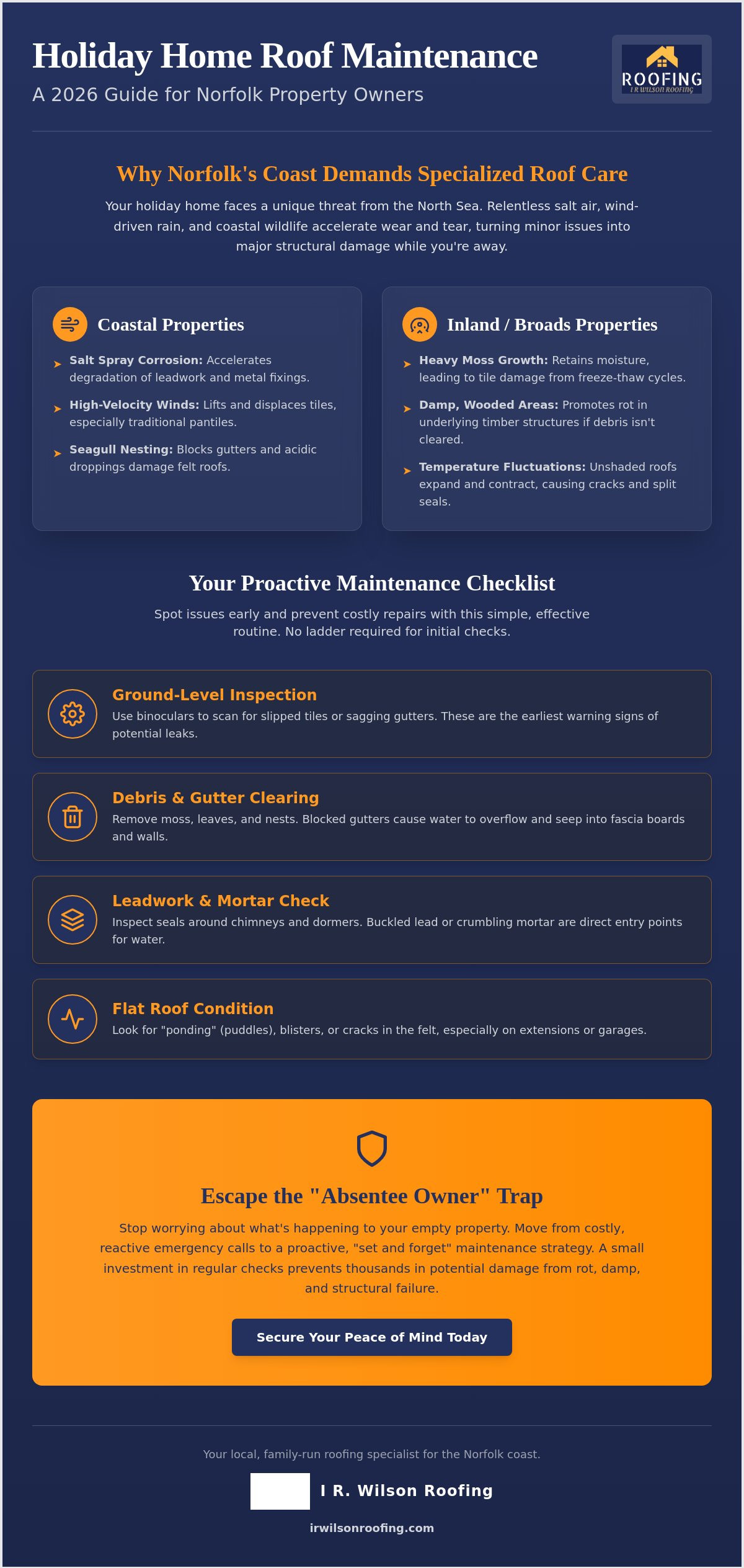
Norfolk’s coastline is famous for its beauty, but the same elements that draw guests to your holiday home are precisely what threaten its structural integrity. The North Sea brings more than just a view; it delivers a constant stream of salt-laden air that acts as a slow-motion corrosive on your property. Unlike homes in the Midlands, a coastal property faces a relentless chemical assault that demands a proactive approach.
This environment makes holiday home roof maintenance Norfolk a specialized task. Salt spray doesn't just sit on the surface. It penetrates the microscopic pores of your roof construction and materials, accelerating the degradation of leadwork and metal fixings. Over time, this leads to brittle flashings and rusted gutter brackets that fail just when the autumn storms arrive.
To better understand the importance of keeping these surfaces clean and functional, watch this helpful video:
In towns like Cromer or Sheringham, the wind-driven rain is particularly aggressive. It doesn't just fall; it's pushed horizontally, finding its way under traditional clay pantiles that might be perfectly adequate elsewhere. Then there's the wildlife. Seagulls are a staple of the coast, but their nesting habits can be disastrous. Large nests quickly block gutters, while their highly acidic droppings can eat through the protective layers of felt roofs on extensions or garages. Our "big skies" also mean your roof has very little shade or cover. This leads to significant temperature fluctuations, causing materials to expand and contract rapidly, which often results in cracks or split seals.
Coastal vs. Inland Roofing Challenges
The challenges shift as you move away from the shoreline. While coastal villages deal with salt spray and high-velocity winds that lift tiles, properties nestled in the damp, wooded areas of the Norfolk Broads face a different enemy: moss. Heavy moss growth retains moisture against the tile surface, leading to "freeze-thaw" damage during the winter months. Each area of Norfolk requires a slightly different eye for detail during an inspection.
The Financial Risk of Neglect
Neglecting these issues while a property is empty is a significant gamble. A single slipped tile might seem minor, but it allows water to seep into the roof space for weeks before anyone notices. By the time a guest reports a damp patch, you could be looking at a full ceiling collapse or extensive timber replacement due to rot. It is also a matter of insurance. Many providers expect a certain standard of upkeep. If they determine a leak was caused by long-term neglect rather than a one-off storm event, they may refuse to cover the internal damage.
The 2026 Holiday Home Roof Maintenance Checklist
Effective holiday home roof maintenance Norfolk starts with a methodical approach. You don't always need a ladder to spot trouble. We recommend using a pair of binoculars for a ground-level inspection once or twice a year. By standing back and scanning the ridge line, you can easily spot slipped tiles or sections of guttering that have begun to pull away from the fascia boards. These early signs are your best defense against the heavy rainfall common in our region.
Debris removal is the next priority. Moss and leaves act like sponges, holding moisture against your roof tiles and promoting rot in the underlying timber. If you notice moss clumps on your lawn or patio, it's a clear signal that your roof needs attention. Clearing this debris prevents the "freeze-thaw" cycle from cracking your tiles during a cold Norfolk winter. While you're looking up, check the leadwork around chimneys and dormer windows. These watertight seals are critical. If the lead looks buckled or the mortar pointing is crumbling, water will eventually find its way into your living room.
Flat roofs on extensions or garages require a specific eye. Look for "ponding," which is when water sits in deep puddles rather than draining away. You should also check for blisters or cracks in the bitumen felt. These often occur due to the thermal expansion issues we mentioned earlier. For any work involving heights, we always advise following the Health and Safety Executive guidance to ensure the safety of yourself and your contractors. If you're unsure about the state of your property’s exterior, you can find more advice on our roofing maintenance blog.
Pre-Season Preparation (Spring)
Before your first guests arrive in the spring, we suggest a quick "health check" of your roof. Winter storms often leave behind loose tiles or debris that can cause damp smells if left unaddressed. We focus on ensuring your fascias and soffits are clean and free from rot, as these protect the edges of your roof rafters. A tidy exterior also gives your guests immediate confidence in the quality of their stay.
Winterization Routine (Autumn)
Autumn is the time to prepare for Norfolk’s famous gales. We recommend securing any loose tiles and performing a professional gutter cleaning to handle the increased winter rainfall. This is also the best time for a final inspection of flat roof extensions. Catching a weak spot in October is far better than dealing with an emergency call-out in the middle of a January storm when the property might be empty.
Flat Roofs and Guttering: The Vulnerable Points of Holiday Lets
Flat roofs are often the Achilles' heel of any coastal property. While pitched roofs use gravity to shed water, flat extensions on garages or sunrooms rely on a perfect, unbroken seal to stay watertight. In our professional experience, these areas are the most frequent source of emergency call-outs for holiday home roof maintenance Norfolk. The relentless exposure to salt air and the rapid temperature shifts common to our "big skies" can cause older materials to fail much faster than they would inland.
Modern bitumen felting has evolved into a highly dependable solution for these challenges. It provides a robust, multi-layer defense that handles the North Sea gales far better than the thin, single-ply alternatives often found on older holiday lets. However, even the best materials require a watchful eye. We regularly check for signs of "alligatoring," where the surface develops a pattern of small cracks that look like reptile skin. This is a clear signal that the bitumen is losing its flexibility and is no longer providing a reliable barrier. For owners with properties in the city or nearby villages, arranging flat roof repairs in Norwich through a specialist ensures these issues are caught before water reaches the structural deck.
Guttering is the second most common failure point we encounter. When joints leak or downpipes become blocked by seagull nests and debris, water doesn't just drip; it cascades down the external walls. This saturates the brickwork and can lead to rising damp or internal mold. Your fascias and soffits are your property's silent protectors in this regard. They provide the secure mounting point for your guttering and prevent wind-driven rain from reaching the ends of your roof timbers. If these boards are allowed to rot, the entire drainage system can sag, leading to a total failure of water management. Following specialist maintenance advice is the best way to ensure these components work together to keep your investment dry.
Maintaining Bitumen Felt Roofs
We recommend a professional assessment of your felt roof at least once a year. While DIY patch kits are available, they rarely withstand the high-wind environments of the Norfolk coast. A patch that lifts during a winter storm can allow significant water ingress while the property sits empty. We focus on ensuring the edges and joins are fully bonded, as these are the spots where the wind is most likely to cause damage.
Guttering and Drainage Solutions
For holiday homes in particularly exposed areas, we often suggest upgrading to high-capacity gutters. These systems are designed to handle the intense, sudden downpours that have become more frequent in recent years. Investing in professional guttering services ensures your downpipes are correctly positioned to move water away from the building's foundations. We also find that leaf guards are a sensible addition for properties near trees, as they prevent the blockages that lead to overflowing gutters during the off-season.
Managing Maintenance When You Live Away From Norfolk
Owning a coastal retreat should be a source of relaxation, but distance often creates a unique type of anxiety. Many owners fall into the "absentee owner" trap. This is when you only address roofing issues after a guest calls to complain about a damp smell or a visible leak. By that point, the damage is already done, and you’re forced into expensive, reactive fixes. Proactive holiday home roof maintenance Norfolk is about preventing that phone call. It ensures your property remains a secure investment while you are hundreds of miles away.
Building a relationship with a local, family-run roofing specialist is the most effective way to manage a remote property. We understand the value of a "set and forget" routine that provides you with total peace of mind. When a storm hits the coast, you shouldn't be left wondering if your tiles held firm. You need a team on the ground that can act as your eyes and ears, providing regular updates and professional assessments without you needing to make the trip up the A11.
The Value of Local Expertise
A Norwich-based roofer understands our county’s specific weather patterns better than anyone else. We know exactly how the wind-driven rain affects properties in different coastal villages. Having a single point of contact who can handle both emergency repairs and planned maintenance is invaluable for remote owners. It helps you avoid the "cowboy" trap, where unverified tradesmen might provide sub-standard work while you aren't there to supervise. We recommend looking for established, incorporated businesses that value their local reputation and offer clear accountability.
Remote Communication and Trust
Trust is built through transparency and clear communication. We use digital reports and photo evidence to keep our clients informed. This means you receive a clear view of your roof’s condition through high-resolution images sent directly to your inbox. When we provide quotations, we focus on clear, technical advice that avoids high-pressure sales jargon. We want you to understand exactly what is happening with your property so you can plan your maintenance budget with confidence. Always request "before and after" photos for any task. It acts as a digital handshake, proving the work was completed to a high standard. To learn more about protecting your investment, you can read our latest roofing maintenance guides.
Finally, establish an emergency protocol before you need one. If a major gale is forecast, knowing you have a professional ready to check the property for storm damage can save you thousands in potential timber rot or internal repairs. This proactive approach turns your holiday home from a source of stress into a truly worry-free investment.
Partnering with I R. Wilson Roofing for Your Norfolk Property
Choosing the right partner for holiday home roof maintenance Norfolk is about finding a team that values your investment as much as you do. We've spent over 30 years protecting homes across the county from the unique challenges of our coastal climate. As a family-run business, Ian and Ben Wilson provide a level of personal service that larger firms simply can't match. We take pride in our heritage and the quiet confidence that comes from decades of earned expertise in Norfolk's specific roofing needs.
Our team specializes in the full spectrum of roofing care. Whether your property features traditional clay tiles or modern bitumen felt roofs, we have the technical authority to handle the job. From intricate leadwork and chimney repairs to essential timber replacement and insulation upgrades, we ensure every layer of your roof is sound. We don't believe in quick fixes that fail after the next storm. Instead, we focus on enduring quality that keeps your property secure and your guests comfortable.
Our Approach to Holiday Home Care
We understand that a holiday let is a business, and timing is everything. We offer reliable scheduling that respects your guest booking calendar, ensuring maintenance happens during changeovers or quiet periods to avoid disruption. You'll always receive honest, expert advice on the most cost-effective repair options. If a simple tile replacement will solve the problem, we'll tell you. Our goal is to build a long-standing relationship based on transparency and local pride. We treat your property with the same care we would our own, ensuring every fascia, soffit, and gutter is functioning perfectly.
Get Your Property Guest-Ready
Preparing for a busy season starts with a clear view of your roof's health. Booking a professional roof cleaning or a detailed visual inspection is the easiest way to ensure your property is ready for visitors. We provide competitive roofing quotations that help you plan your upkeep without any high-pressure sales tactics. This methodical approach identifies potential issues like blocked downpipes or "ponding" on flat roofs before they become emergencies. Secure your holiday home’s future with a professional roof check from I R. Wilson Roofing and enjoy the peace of mind that comes from knowing your coastal investment is in safe hands.
Securing Your Coastal Retreat for the Years Ahead
Norfolk holiday homes are significant investments that deserve more than just a "wait and see" approach. By moving from reactive repairs to a proactive routine, you protect your property from the North Sea's harshest elements while ensuring it stays guest-ready year-round. We've seen how salt air and wind-driven rain can compromise a roof; however, regular checks on leadwork and flat roof seals prevent the stress of emergency call-outs. Managing holiday home roof maintenance Norfolk doesn't have to be a burden, even if you live hundreds of miles away.
Since 1994, our family-run business based in Norwich has provided the local expertise and transparent communication owners need to feel confident. Whether your property requires attention for traditional pitched tiling or modern flat roofing solutions, our team delivers the craftsmanship your home deserves. Take the first step toward a worry-free ownership experience today. You can Request a Competitive Roofing Quotation for Your Holiday Home and let us handle the hard work. We look forward to helping you keep your Norfolk retreat in peak condition for many seasons to come.
Frequently Asked Questions
How often should I have my Norfolk holiday home roof inspected?
We recommend a professional inspection at least once a year. Ideally, this should happen in late autumn to prepare for Norfolk’s winter storms. For properties right on the coast, an additional quick check in the spring helps identify any salt corrosion or loose fixings caused by winter gales. Regular holiday home roof maintenance Norfolk ensures small issues don't become major structural problems while the property is unoccupied.
Will my insurance cover roof damage if I haven’t had it maintained?
Most insurance policies require you to keep the property in a good state of repair. If a leak is caused by a long-term issue like a slipped tile or blocked gutter rather than a specific storm event, the insurer may refuse the claim. They often view lack of maintenance as "fair wear and tear," which is typically excluded from standard building cover.
Can salt air really damage my roof tiles and leadwork?
Yes, salt air is highly corrosive to metal fixings and leadwork. It accelerates the degradation of the mortar and can make some types of roof tiles more porous over time. In coastal villages, we often see lead flashings that have become brittle or pitted much faster than they would inland. This chemical reaction is why specialized coastal maintenance is so critical for Norfolk owners.
What are the signs that my holiday home’s flat roof needs urgent repair?
Look for "ponding" water that stays on the surface for more than 48 hours after rain. Other urgent signs include visible blisters, cracks in the bitumen felt, or damp patches appearing on the ceiling inside. If you notice the edges of the felt lifting or "alligatoring" on the surface, the material is likely reaching the end of its life and needs professional attention to prevent a total failure.
Is it better to repair or replace a felt roof on a Norfolk coastal property?
The choice depends on the age and overall condition of the roof deck. A small, isolated leak can often be fixed with a professional felt repair. However, if the bitumen has become brittle across the entire surface or if the underlying timber is soft, a full replacement is usually more cost-effective in the long run. Modern high-performance felts offer much better durability against North Sea winds than older materials.
How much does a typical roof maintenance check cost in Norfolk?
Costs vary depending on the size of the property and the complexity of the roof design. While we don't provide fixed prices without an assessment, a standard maintenance check involves a thorough visual inspection of all tiles, leadwork, and drainage systems. This proactive step is always a smaller investment than the cost of emergency repairs or replacing internal ceilings damaged by an unnoticed leak.
Can you coordinate repairs with my holiday let management company?
We frequently work alongside local letting agents and property managers across Norfolk. We can arrange key collection and schedule our visits during changeover windows to minimize guest disruption. Our team provides digital reports and photo evidence directly to you or your agent. This ensures everyone is on the same page regarding the property’s condition and any necessary holiday home roof maintenance Norfolk.
What is the best time of year to schedule roof cleaning and gutter maintenance?
Late autumn is the most effective time for gutter cleaning once the majority of leaves have fallen. For roof cleaning and moss removal, spring or early autumn is best. Scheduling these tasks before the peak holiday season ensures your property looks its best for guests and that the drainage system is fully prepared for the heavy rainfall we often see in the winter months.