
Water dripping through a ceiling can make it tempting to call a roofer and start repairs straight away. Before work begins, take clear photos or videos of the leak and any damage to ceilings or belongings. Making a home insurance claim for a leaking roof starts with recording what you can safely see and contacting your insurer to ask what evidence and next steps they require.
It’s understandable to wonder whether the leak, roof repair or damage inside your home will be covered. That depends on your policy and what caused the leak, so your insurer must confirm the details. This guide explains how to limit further damage safely, document the problem, and prepare useful questions for your insurer and roofer before arranging repairs. I R. Wilson Roofing provides roofing advice and repairs in Norwich, Yarmouth, Beccles, Wymondham, Mulbarton and Wroxham, across Norfolk and Suffolk.
Key Takeaways
- When making a home insurance claim for a leaking roof, your policy wording and the leak’s cause help determine what may be covered.
- Make the area safe, limit further damage where you can, and keep dated photos, videos and notes about when the leak appeared.
- Before committing to non-urgent repairs, ask your insurer about approval, the excess, the repair scope and any quotes it needs.
- A roofer can inspect and repair roof damage, but only your insurer can confirm cover. If you’re in Norwich or nearby, ask I R. Wilson Roofing about roof repairs and expert advice.
Making a home insurance claim for a leaking roof: what may be covered?
A leak is stressful, but you don’t have to guess what your policy covers. The answer depends on your policy wording and your insurer’s assessment. The cause, timing and circumstances matter too, so check before assuming either the roof repair or damage inside your home will be paid for.
Homeowners insurance can include different types of cover, so look specifically at your buildings cover and the sections on exclusions, excess and claim conditions.
A roof inspection can help identify where water is getting in. This video shows what to expect during one:
Does home insurance cover a leaking roof?
Policies may treat sudden damage differently from gradual deterioration. For example, a leak noticed after a storm and water staining from a long-standing roof problem may be assessed differently. That example doesn’t predict the outcome: policy wording, leak cause and insurer assessment determine the claim outcome.
Check two things separately: whether your policy may cover damage to the home, such as a water-stained ceiling, and whether it may cover fixing the roof problem that let water in. These aren’t necessarily treated alike. Before making a home insurance claim for a leaking roof, ask your insurer what applies to both, what excess you’d pay, and whether it needs to inspect or approve work first. A roofer can assess the roof, but can’t decide your insurance cover. If you’re in Norwich or nearby, contact I R. Wilson Roofing for expert advice about roof repairs.
How to make a roof leak insurance claim: protect, record and report
A steady, practical order can help you protect your home and give your insurer a clearer picture. If you’re making a home insurance claim for a leaking roof, start with safety, not the roof itself.
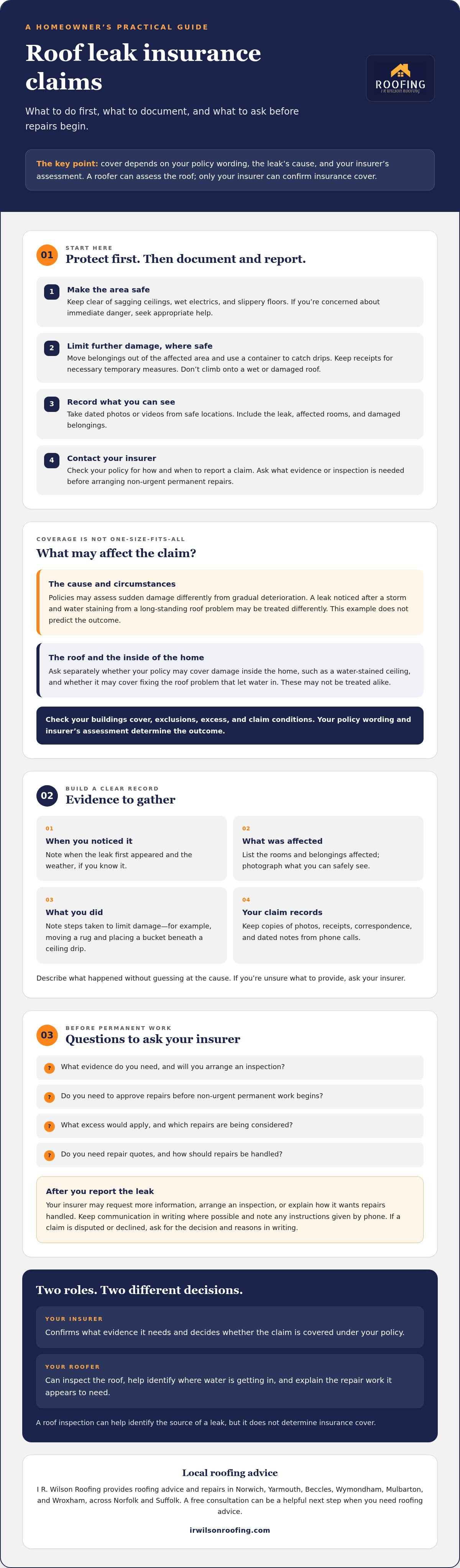
- Make the area safe. Keep clear of sagging ceilings, wet electrics and slippery floors. If you’re concerned about immediate danger, seek appropriate help.
- Limit further damage where safe. Move belongings out of the affected area and use a container to catch drips. Don’t climb onto a wet or damaged roof. Keep receipts for necessary temporary measures, and ask your insurer before arranging non-urgent permanent repairs.
- Record what you can see. Take dated photos or video from safe locations, including the leak, affected rooms and damaged belongings.
- Contact your insurer. Check your policy for how and when to report a claim, then ask what evidence or inspection it needs.
What evidence should you gather before contacting your insurer?
Note when you first noticed the leak, the weather if you know it, which rooms and belongings are affected, and what you’ve done to limit damage. For example, record moving a rug and placing a bucket beneath a ceiling drip. These details help you explain what happened without guessing at the cause.
Keep copies of photos, receipts and all claim correspondence, including dates and notes from phone calls. If you’re unsure what to provide, ask your insurer rather than arranging non-urgent permanent work first. A roofer can assess the roof and carry out repairs, but your insurer decides what evidence it needs and whether the claim is covered.
If you’re in Norwich or nearby and need roofing advice, ask about roof repair help and a competitive quotation.
After reporting a leaking roof claim: inspections, repairs and next steps
Once you’ve reported the leak, your insurer may ask for more information, arrange an inspection or explain how it wants repairs handled. Keep communication in writing where possible, and note any instructions given over the phone. Before agreeing to non-urgent permanent work, confirm whether approval is needed, what the excess is, which repairs are being considered and whether the insurer requires quotes.
A roofer can inspect the roof and explain the repair work it appears to need. That assessment is separate from the insurer’s decision about cover. For homeowners in Norwich, Yarmouth, Beccles, Wymondham, Mulbarton and Wroxham, across Norfolk and Suffolk, a local roofer can help identify the source of the leak and discuss suitable repairs. You can also read our Norwich roof repairs guide or contact us for expert advice and a quotation.
What if the insurer delays, disputes or declines the claim?
Ask the insurer to set out its decision and reasons in writing. Compare its explanation with your policy wording, including any relevant exclusions and claim conditions. If something remains unclear, ask the insurer to explain how it reached its decision and what information it considered.
If you’re unhappy with the response, follow the insurer’s complaints process and keep copies of your messages and any reply. Check the Financial Ombudsman Service’s current guidance for information about whether your complaint may be eligible and what steps apply. Keep the roof safe while the claim is being reviewed, but clarify with the insurer before proceeding with non-urgent permanent repairs.
Take the next step with confidence
Making a home insurance claim for a leaking roof is easier to manage when you take it step by step. Check your policy rather than assuming what’s covered, keep clear records of the leak and any damage, and ask your insurer about approval and repair requirements before committing to non-urgent work. A roofer can assess the roof and explain repair needs, while the insurer decides whether your claim is covered.
I R. Wilson Roofing is a family-run business operated by Ian Wilson and his son Ben. The team carries out roof repairs and temporary emergency repairs for homes in Norwich, Yarmouth, Beccles, Wymondham, Mulbarton and Wroxham, across Norfolk and Suffolk. If you need a roofer’s advice, get in touch to discuss your roof and the next practical steps.
Arrange a roofing consultation
With a clear record, the right questions and practical roofing guidance, you can make a considered plan for your home.
Frequently Asked Questions
Should I call my insurer before arranging roof repairs?
Yes, contact your insurer before committing to non-urgent permanent repairs and ask whether it needs to inspect the damage or approve the work. If immediate temporary steps are needed to protect your home, keep a record of what you do and any receipts. A roofer can assess repair needs, but cannot determine insurance cover. I R. Wilson Roofing offers expert roofing advice for homeowners in Norwich and nearby areas.
What evidence do I need to make a roof leak insurance claim?
Keep dated photos or video of visible damage, taken from a safe place, and note when you first noticed the leak. Record affected rooms and belongings, weather conditions if known, and steps taken to limit further damage. Keep receipts and copies of messages or notes from calls with your insurer. Ask what else it needs, as evidence requirements can vary between claims.
What should I do if my insurer declines a leaking roof claim?
Ask the insurer to explain its decision in writing, then compare the reasons with your policy wording. If you still disagree or need clarification, use the insurer’s complaints process and check current Financial Ombudsman Service guidance for information about possible next steps. A roofer can advise on the roof’s repair needs, but can’t overturn or decide the insurer’s coverage decision.