On the morning of 14th October 2025, a homeowner in Cringleford discovered three distinct chunks of crumbling mortar scattered across their driveway after a night of standard Norfolk gusts. It is a stressful sight that leaves you wondering if your roof is still watertight or if the next storm will send a heavy tile sliding into your garden. We know you want a home that feels secure, and you shouldn't have to check your lawn for debris every time the wind picks up. Professional ridge tile pointing Norwich residents trust is about more than just aesthetics; it is about the structural integrity of your roof.
This guide provides a clear roadmap for protecting your property throughout 2026 and beyond. We will help you identify early warning signs of failure and explain the practical differences between traditional mortar bedding and modern dry ridge systems. You'll gain a full understanding of the repair process and learn how to find a reliable, family-run roofer who prioritises quality craftsmanship over high-pressure sales. By the end of this article, you will have the confidence to make an informed decision that keeps your family safe and your attic dry.
Key Takeaways
- Learn why ridge tile pointing is essential for preventing water ingress and how it protects the structural integrity of your roof’s highest point.
- Spot the early warning signs of deterioration from the safety of the ground, from visible cracks to the "gutter warning" of loose mortar grit.
- Compare traditional mortar methods with modern dry ridge systems to find the most durable solution for professional ridge tile pointing Norwich properties require.
- Understand why "over-pointing" is a short-term fix to avoid and how a professional, safety-first process ensures a long-lasting, guaranteed repair.
- Discover how simple maintenance preserves your roofline and why attempting high-level DIY repairs on steep Norfolk pitches is never worth the risk.
Understanding Ridge Tile Pointing for Norwich Properties
When you look at the peak of your roof, you'll see a row of tiles sitting right at the very top. These are your ridge tiles, and the mortar finish you see between them is called the pointing. For homeowners in Norfolk, ridge tile pointing Norwich is a vital maintenance task that protects the rest of your home from the elements. While it looks like a simple decorative finish, its job is much more practical. It acts as a primary seal against the weather, ensuring your roof remains watertight for years to come.
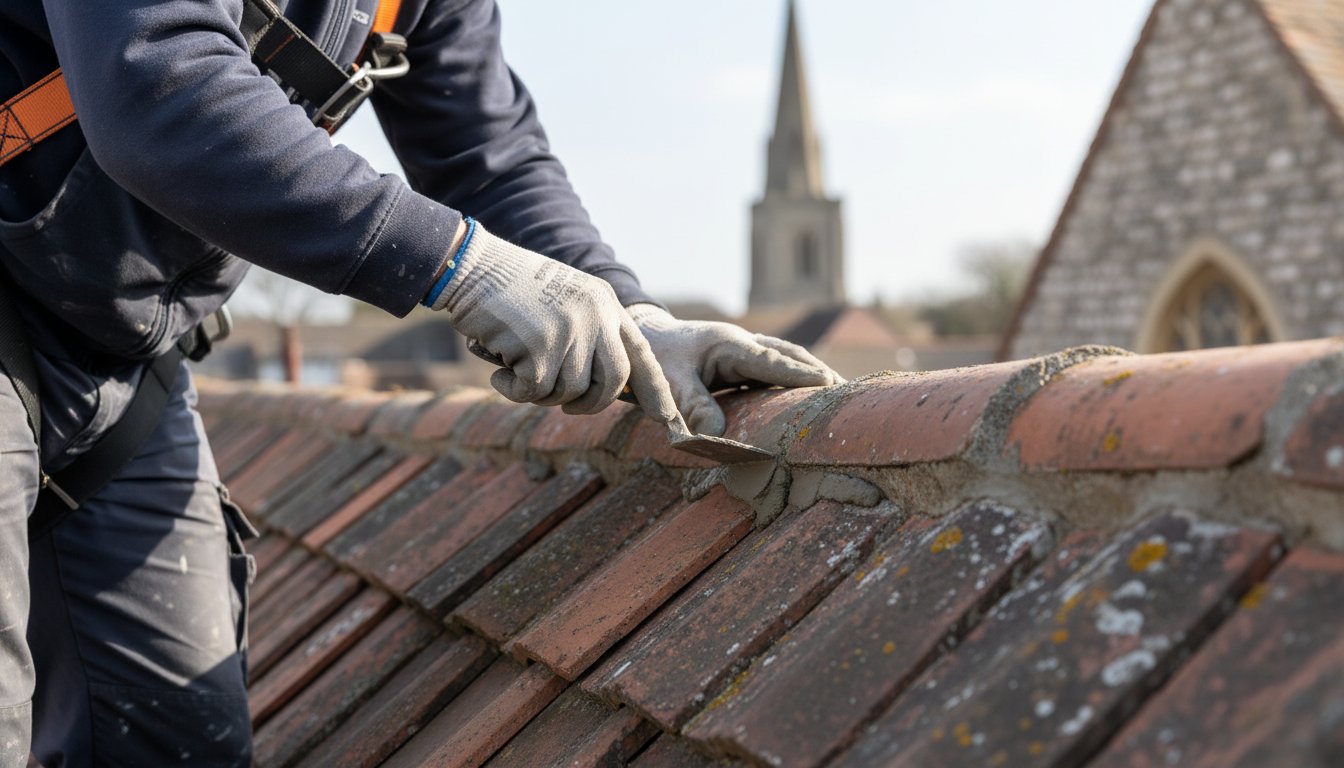
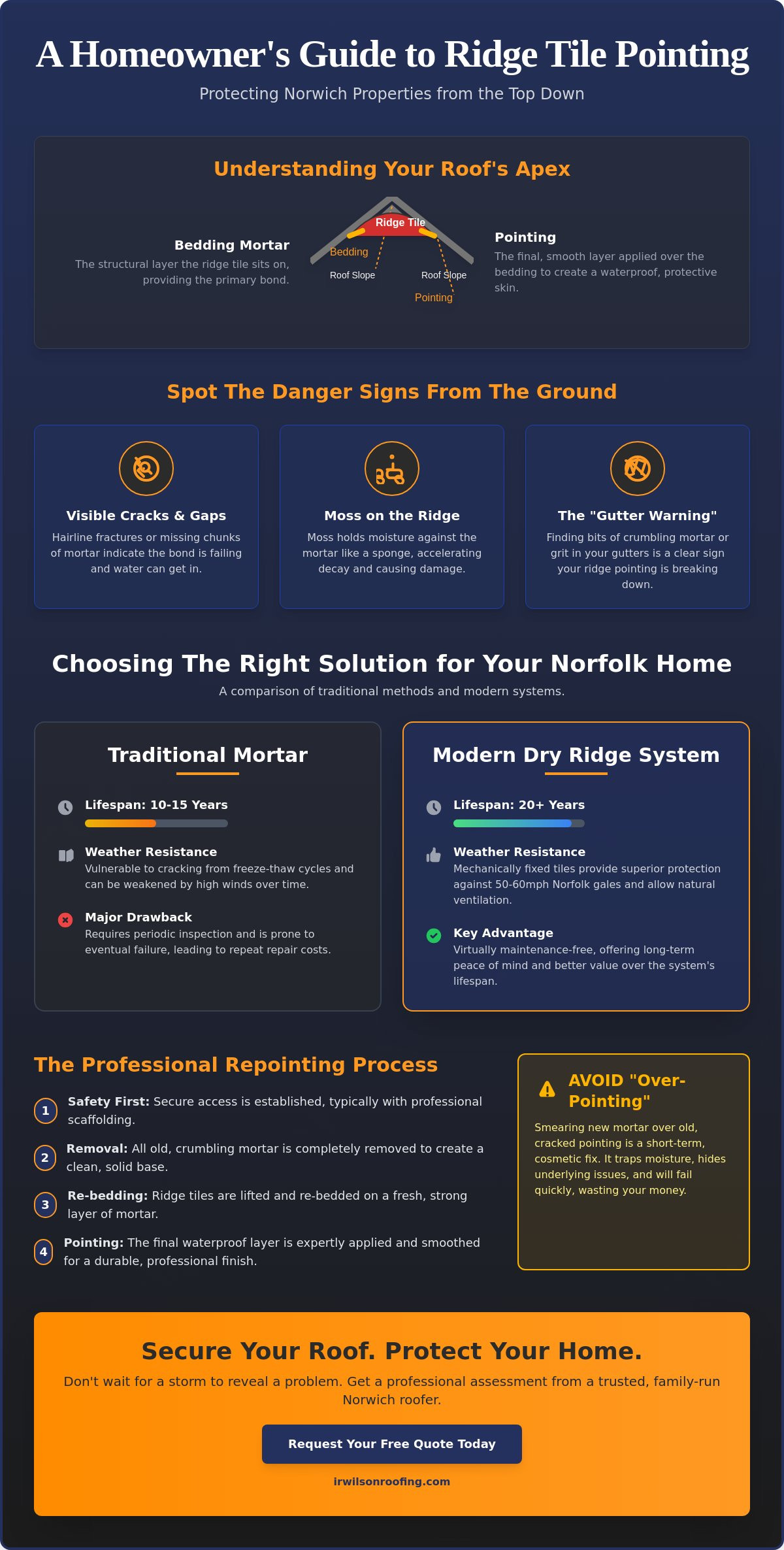
We often find that clients confuse "bedding" with "pointing." It's a common mistake, but the difference is simple. Bedding is the thick, structural layer of mortar that the tile actually sits on. It provides the initial bond to the roof. Pointing is the final application of mortar smoothed over the edges to create a protective, waterproof skin. This secondary layer is what we focus on during a repair to ensure your roof looks professional and stays secure. As a family-run business, we know that getting this detail right is the difference between a dry loft and an expensive leak.
To better understand this concept, watch this helpful video:
What are Ridge Tiles and Where are They Located?
The ridge is the horizontal line where two roof slopes meet at the highest point of the building. These tiles act as a cap for the entire structure, covering the gap where the two sides of the roof join. You can learn more about the different materials used by Understanding Roof Tiles and their specific functions. In Norwich, we typically see three main styles of ridge tiles:
- Half-round tiles: These are curved and very common on traditional brick homes.
- Angled tiles: These have a sharper, triangular profile often seen on modern builds.
- Decorative tiles: These include fleur-de-lis or scroll patterns, frequently found on Victorian terraces in the Golden Triangle.
The Importance of Pointing in the Norfolk Climate
Our local weather puts immense pressure on your roofline. Norwich properties face biting North Sea winds that can reach 50 to 60mph during winter gales. These winds create uplift that can loosen tiles if your ridge tile pointing Norwich isn't sound. We also deal with significant temperature shifts in East Anglia. These changes cause the mortar to expand and contract. Over time, this movement creates hairline fractures in the cement.
If you don't address these cracks, water enters your loft space. This leads to damp, timber rot, and damaged insulation. We recommend checking your pointing every 10 to 15 years to ensure it remains fully functional. At I.R. Wilson Roofing, we pride ourselves on delivering reliable craftsmanship that stands up to the Norfolk elements. We are fully insured and offer a dependable service to give you total peace of mind regarding your home's safety.
Signs Your Norwich Roof Needs Ridge Tile Repointing
You don't need to climb a ladder to understand the health of your roof. Most homeowners can spot the early warning signs of failing ridge tile pointing Norwich from the safety of their garden or driveway. We've seen many cases where a simple five minute walk around the property has saved local families from expensive structural repairs later on. Identifying these issues early is the best way to maintain the integrity of your home against the unpredictable Norfolk weather.
External Warning Signs to Look For
The most obvious indicator is visible cracking in the mortar lines between your ridge tiles. These often appear as thin, hairline fractures at first, but they quickly expand as water enters and freezes during the winter months. If you notice gaps where the mortar has fallen out completely, your tiles are no longer securely bonded. You should also look for moss growth that clusters specifically along the very top of your roof. Moss acts like a sponge, holding moisture against the mortar and accelerating its decay. This is a common issue with ridge tile pointing Norwich that we see in older properties near the city centre.
Misalignment is another red flag. If a tile looks skewed or sits at a different angle than the rest of the row, the bedding has likely failed. When tiles become loose, they can slide or even blow off during high winds, creating a significant safety risk for anyone walking below. To ensure your home stays protected, we suggest checking that any contractor you hire is part of a Government-endorsed quality scheme, which gives you peace of mind that the work follows strict industry standards.
Don't ignore your gutters. If you find grey grit, small stones, or chunks of hardened sand in your downpipes, it's a clear sign your ridge mortar is disintegrating. This "gutter warning" often precedes a major leak by several months, as the protective barrier between your tiles is literally washing away.
Internal Symptoms of Ridge Failure
Sometimes the first signs of trouble appear inside your home. If you have access to your loft, wait for a bright day and turn off the lights. If you can see pinpricks of daylight coming through the roof felt near the ridge, the mortar has likely perished. This opening allows drafts and moisture to enter your roof space, often leading to damp patches on the ceilings directly below the ridge line. These damp spots may only appear after heavy, driving rain.
Water ingress from a failing ridge can quickly escalate into a larger roof leak repair job if it isn't addressed. Once the internal timber starts to rot, the costs of fixing the damage can double. If you've spotted any of these signs, we're happy to provide a free, no-obligation estimate to assess the condition of your ridge tiles using a professional drone or ladder inspection.
Traditional Mortar vs. Modern Dry Ridge Systems in Norfolk
Norwich is a city of architectural layers. From the historic flint-walled properties near the Cathedral to the red-brick Victorian terraces in the Golden Triangle, mortar has been the standard for centuries. Traditional ridge tile pointing Norwich projects involve a mixture of sand and cement to bed and point the tiles. This method preserves the original character of a home, which is vital for the 1,500+ listed buildings across the city. However, modern roofing technology now offers the Dry Ridge system. This mechanical method uses screws and clamps instead of wet mortar to secure the ridge line.
The Pros and Cons of Mortar Pointing
Mortar remains the preferred choice for period properties where a modern look would feel out of place. It provides a seamless, classic finish that matches the historic aesthetic of NR2 and NR3 postcodes. The downside is its vulnerability. Norfolk winters bring freeze-thaw cycles where moisture enters small cracks, freezes, and expands, eventually blowing the mortar face off. In a coastal county like Norfolk, traditional mortar pointing typically lasts between 10 and 15 years before the salt-heavy air and moisture necessitate a repair. We often see mortar fail prematurely on exposed rooftops near the Broads where wind-driven rain is more intense.
Why Dry Ridge is Growing in Popularity
The Dry Ridge system is a high-performance alternative that we recommend for many homeowners. Instead of relying on a chemical bond, it uses stainless steel screws and waterproof unions to fix tiles to the roof structure. This provides superior wind resistance, which is crucial given that East Anglia has seen an increase in peak wind speeds during seasonal storms over the last decade. It's a reliable way to ensure your roof stays intact during the worst weather.
- Ventilation: Dry ridge systems include a breathable membrane that allows moisture to escape from the roof void, preventing timber rot.
- Maintenance: There is no mortar to crack or fall out, making it a fit and forget solution for the long term.
- Speed: Installation is often faster because we don't have to wait for specific weather windows to allow mortar to cure.
While the initial outlay for a dry ridge system can be 20% to 30% higher than a standard mortar repair, the lack of ongoing maintenance makes it more cost-effective over a 25-year period. We find that modern detached homes in Cringleford or Sprowston benefit most from this system. If you own a heritage property, we can provide expert ridge tile pointing Norwich services using traditional mixes to keep your home looking its best. As a family-run business, we take pride in helping you choose the right fit for your property. You can learn more about our approach at irwilsonroofing.com.
The Professional Ridge Pointing Process: What to Expect
Safety is our first priority on every job. We don't take shortcuts with ladders when a project requires stable scaffolding. High-level roof work in Norfolk demands a secure platform so our team can work with precision and care. You might see some builders offering "over-pointing," which involves patching new mortar over the old. We strongly advise against this. It's a temporary fix that typically fails within 18 months because the new layer cannot bond to the dusty, degraded material underneath. True ridge tile pointing Norwich requires a complete strip and re-bed to ensure your home stays dry for the next 20 years.
Preparation and Old Mortar Removal
We start by carefully lifting each ridge tile to inspect what's happening underneath. This is the only way to check the condition of your timber battens and roofing felt. If we spot rot or damage, we'll let you know immediately. We clear the "bed" entirely, removing all the old, brittle mortar until we have a clean surface. This preparation ensures the new bond is unbreakable. While the tiles are up, we also check for any necessary leadwork repairs at your chimney junctions to prevent future damp issues.
Re-bedding and Final Pointing
Our team uses a specific mix of sharp sand and cement tailored for the local climate. We often include a plasticiser to help the mortar withstand the freeze-thaw cycles we see in East Anglia. We apply a fresh mortar bed and reset the tiles in a straight, even line that restores the look of your roofline. The final pointing stage involves smoothing the edges to create a "weatherstruck" finish. This encourages water runoff and prevents moisture from sitting against the tile edges. We always wait for a dry window in the Norwich weather. Applying mortar in the rain leads to "washout," which ruins the structural integrity of the repair.
If you're worried about the state of your roof, our family-run team is here to help. You can contact us for a free ridge pointing estimate to get an honest assessment of your property.
Maintaining Your Roofline and Choosing a Norwich Roofer
Investing in professional ridge tile pointing Norwich ensures your home stays dry and secure for decades. However, a roof is a complete system. You can't look at the ridge tiles in isolation from the rest of the roofline. When we visit a property, we often find that the health of the mortar is directly linked to how well the owner manages water runoff and moss growth. Maintaining these elements doesn't just save your roof; it saves your bank account from avoidable emergency repairs.
Attempting DIY repairs on a roof is a risk we never recommend. Norfolk homes often feature steep pitches and traditional clay tiles that become incredibly slick when damp. A fall from even a single-storey extension can result in life-altering injuries. Professional roofers use specialized scaffolding and safety harnesses to manage these heights. Beyond the physical danger, an amateur pointing job often fails within twelve months because the mortar mix wasn't right for the local climate or the tiles weren't prepared correctly. It's always cheaper to do the job right once than to pay for a professional to fix a botched DIY attempt later.
Post-Repair Maintenance Tips
Once your ridge tiles are secure, a small amount of vigilance goes a long way. We suggest homeowners perform a visual inspection from the ground at least twice a year. The best times are in early spring and late autumn. Grab a pair of binoculars and look for any new cracks or signs of mortar debris in your gutters. If you see grey grit or chunks of cement in the troughs, it's a sign that the "freeze-thaw" cycle is starting to take its toll.
- Check after storms: High winds exceeding 50mph can vibrate loose tiles. Check your garden for any fallen mortar after a major weather event.
- Manage moss growth: Moss acts like a sponge. It holds moisture against the ridge bedding, which leads to rapid deterioration during winter frosts.
- Clear your channels: Ridge health is tied to overall guttering services in Norwich. If your gutters are blocked, water can back up under the eaves and cause dampness that weakens the entire roof structure.
Why Local Family-Run Expertise Matters
When you're looking for a quote, don't just settle for the lowest number. A reliable roofing quote should always include details on public liability insurance, typically covering up to £2 million, and a clear written guarantee on the work performed. At I.R. Wilson Roofing, we believe in personal accountability. Ian and Ben Wilson maintain a "boots-on-the-ground" approach, meaning the people you talk to on the phone are the same people climbing the ladder to inspect your tiles.
We understand the specific building nuances found across the city. Whether you own a Victorian terrace in NR2 or a modern detached home in NR7, we know which materials and techniques work best for that specific architecture. Being a family-run business means our reputation is our most valuable asset. We don't use high-pressure sales tactics or faceless sub-contractors; we provide honest, hardworking service that treats your home with the respect it deserves. We've spent years building trust in the community, one ridge tile at a time.
Don't leave your home's safety to chance as the next winter season approaches. We're here to provide the calm, expert guidance you need to keep your roof in top condition. Request a free, no-obligation ridge tile inspection from our team today and ensure your property is fully protected.
Protecting Your Norwich Home Against the Norfolk Elements
Maintaining your roofline is about more than just kerb appeal; it's about protecting your biggest investment from the ground up. Whether you prefer the heritage look of traditional mortar or the mechanical security of a modern dry ridge system, proactive care prevents the kind of water ingress that leads to expensive structural repairs. Since 1994, our family-run team has helped local homeowners make these decisions with clear, honest advice and dependable craftsmanship. We understand how the unpredictable Norfolk weather impacts different property types across the city.
Securing professional ridge tile pointing Norwich is the most effective way to ensure your roof remains weather-tight through 2026 and beyond. As a fully insured business that's highly recommended by residents throughout the area, we focus on delivering quality that lasts. We've built our reputation on being reliable tradesmen who treat every property as if it were our own. You don't have to wait for a leak to appear before you take action on your roof's health.
Contact I.R. Wilson Roofing for a free ridge tile inspection in Norwich to receive a straightforward, no-obligation estimate. We look forward to helping you keep your home safe and sound for many years to come.
Frequently Asked Questions
How much does ridge tile pointing cost in Norwich?
Professional ridge tile pointing Norwich services typically cost between £250 and £600 for a standard semi-detached house. This price includes all labour and materials like sand, cement, and plasticiser. We've seen local material costs rise by 12% since 2023, so getting a fixed quote is vital. Your final bill depends on whether we need scaffolding or if we're simply replacing a few sections of mortar.
How long does ridge tile pointing last on a typical Norfolk home?
You can expect traditional mortar pointing to last between 10 and 15 years on a typical Norfolk home. Our coastal winds and high rainfall in East Anglia mean the mortar faces constant stress. We use a 3:1 sand and cement mix to ensure the bond stays strong against the 40mph gusts we often see in winter. Regular inspections every 24 months help catch small cracks before they cause leaks.
Can I repoint my own ridge tiles?
It's possible to repoint your own tiles, but we don't recommend it due to the high safety risks and technical requirements. Most DIY attempts fail because the old mortar isn't fully removed, which prevents the new mix from bonding correctly. In 2023, falls from height accounted for 33% of all workplace fatalities in the UK. It's safer to hire a family-run team with the correct insurance and specialist roof ladders.
Is it better to repoint or install a dry ridge system?
A dry ridge system is usually the superior long-term solution because it uses mechanical fixings instead of mortar. This system allows for natural roof movement and provides 5000mm² of ventilation per linear metre to prevent loft damp. While traditional ridge tile pointing Norwich remains popular for period properties, the dry ridge method meets modern NHBC standards. It's a reliable solution that doesn't crack over time.
What happens if I ignore cracked ridge pointing?
Ignoring cracked mortar leads to water leaking into your roof space, which can rot your timber rafters within 12 to 18 months. Loose tiles also become a serious safety hazard during high winds. A single ridge tile weighs about 3kg; if it slides off a two-storey roof, it can cause significant damage to property or people below. Fixing a small crack now prevents a £2,000 internal repair bill later.
How long does the ridge repointing process take?
We usually complete a standard repointing job in one to two working days. This timeframe includes the essential step of grinding out the old, degraded mortar to a depth of 25mm. We don't rush the process because the new mix needs specific weather conditions to set properly. If your roof is particularly large or requires complex scaffolding, we might need an extra 24 hours to finish the work safely.
Does home insurance cover ridge tile repairs after a storm?
Most UK home insurance policies cover ridge repairs if a specific storm event with winds exceeding 47mph caused the damage. However, insurers won't pay for repairs if the mortar failed due to age or lack of maintenance. We recommend checking your policy's buildings section for accidental damage or storm clauses. We can provide a detailed written report to support your claim if a storm has hit your property.
What is the best time of year to have my ridge tiles repointed in Norwich?
The best time for ridge work is between April and September when the weather is dry and temperatures stay above 5°C. Mortar can't set correctly in freezing conditions or during heavy rain. Norwich sees an average of 14 rain days in October, so we try to schedule major repointing projects during the drier summer months. This ensures the bond is permanent and your roof remains watertight for the coming winter.