What if that single cracked tile on your roof is actually a ticking clock for your home’s interior? In our part of Norfolk, a small breach can quickly become a major problem when the coastal weather turns. We know that replacing broken roof tiles in Norwich is often a task homeowners face with a bit of dread. You might feel uncertain about matching your existing materials or worry about hidden water damage already forming in the attic. It's completely natural to feel protective of your property and cautious about the repair process.
We're here to provide the steady, professional guidance you need to keep your home dry and secure. This guide will help you identify damage early, understand the 2026 building regulations regarding roof coverings, and ensure your repairs blend in perfectly with your original architecture. We'll walk you through the assessment process and explain how to achieve a leak-proof finish that stands up to the elements. You'll gain the clarity needed to address these small issues before they become costly headaches, ensuring your roof remains a reliable shield for your family for years to come.
Key Takeaways
- Understand how a single broken tile can lead to significant water ingress and why Norfolk’s frost and wind cycles make prompt action essential.
- Learn to identify the specific clay, concrete, or slate materials used in your home’s construction to ensure a perfect aesthetic match.
- Discover the safety risks and long-term costs associated with DIY repairs, including the common mistake of causing more damage by walking on old tiles.
- Follow our professional guide on replacing broken roof tiles in Norwich to understand the specific tools and techniques required for a leak-proof finish.
- Gain peace of mind by learning how local craftsmanship and knowledge of Norwich building styles provide a more reliable defense against the elements.
The Risks of Ignoring Broken Roof Tiles in Norwich Properties
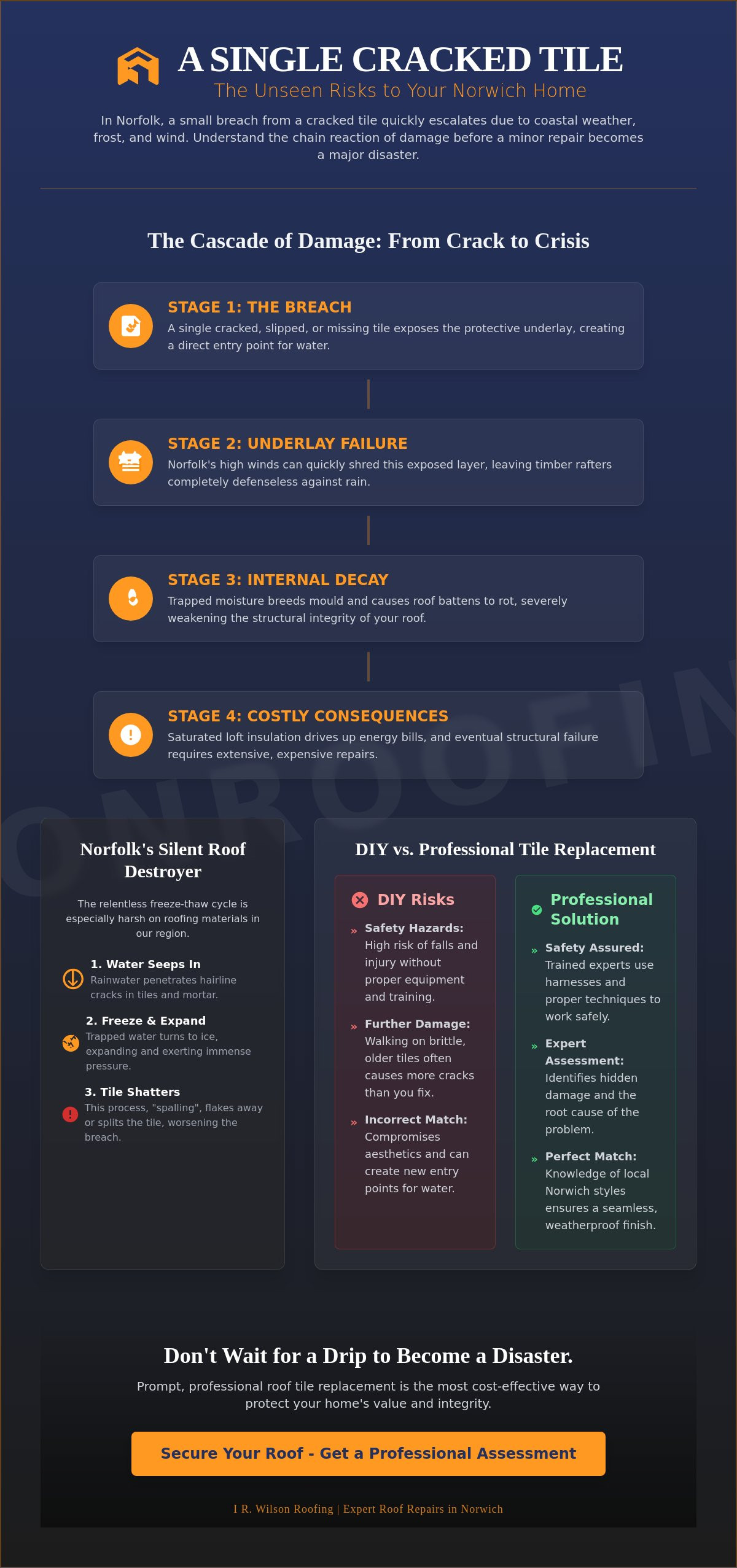
A single cracked or slipped tile might look like a minor cosmetic flaw, but it's actually a critical breach in your home's armor. In Norwich, our proximity to the coast means we face a specific blend of damp air and sudden temperature shifts. When you delay replacing broken roof tiles Norwich properties often suffer from accelerated decay that isn't always visible from the ground. This isn't just about a drip in the attic. Once a tile fails, the protective underlay beneath it is exposed to the elements. Norfolk's high winds can quickly shred this secondary layer, leaving your timber rafters and battens completely unprotected from the rain.
We often see how Norwich's high humidity levels exacerbate the problem. Moisture gets trapped behind damp tiles, creating a breeding ground for mould that can spread into your living spaces before you even notice a visible leak. This damp environment softens the roof battens, which are the wooden strips your tiles hook onto. If these battens rot, they can no longer support the weight of the roof, potentially leading to a much larger structural failure that requires extensive roof repairs to resolve.
The Norfolk Freeze-Thaw Cycle
The Norfolk winter brings a relentless freeze-thaw cycle that is particularly harsh on roofing materials. Water seeps into the porous surfaces or hairline cracks of Clay, Concrete, and Slate. When the temperature drops, that trapped water expands as it turns to ice. This physical pressure causes "spalling," where the face of the tile flakes away or the entire unit splits. Older clay tiles, which are a staple of Norwich's historic architecture, are particularly vulnerable to this process. It doesn't stop at the tiles either. The mortar bedding on your ridge tiles can crack and crumble under the same pressure, eventually leading to loose components that could slide off during a storm.
Secondary Damage: Beyond the Tile
The damage from a broken tile rarely stays at the site of the break. Water is deceptive. It often enters through a small gap and travels down the length of a rafter, causing damp patches on ceilings several meters away from the actual hole. This makes the source difficult to track without professional experience. Additionally, your loft insulation acts like a sponge. Once it becomes saturated, it loses its ability to trap heat, which drives up your energy bills during the colder months. We believe that early intervention is the most cost-effective strategy for any homeowner. It's far simpler to swap a few tiles now than to replace entire sections of timber or saturated insulation later.
Identifying Your Roof Tile Type: Clay, Concrete, and Slate in Norfolk
Norwich roofs serve as a visual timeline of British building history. You'll find everything from red-brick Victorian terraces in the Golden Triangle to post-war estates in Mile Cross. The materials vary as much as the eras. When you are replacing broken roof tiles Norwich homeowners need to look closer than just the general colour or shape. An incorrect match doesn't just hurt your kerb appeal. It can compromise the roof's physical integrity. For instance, replacing lightweight slate with heavy concrete tiles can put dangerous stress on your existing rafters. It's vital to follow UK building regulations, which state that if a new covering is significantly heavier than the original, a structural engineer may need to check the roof's load-bearing capacity.
Traditional Norfolk Pantiles
You'll frequently see the iconic S-shape profile on heritage buildings across the city. These are the famous Norfolk Pantiles. Hand-made versions carry subtle irregularities that give older properties their unique character. Modern machine-made versions offer more uniformity but often look out of place next to 19th-century originals. We also have to consider the difference between interlocking pantiles, which snap together for better weatherproofing, and non-interlocking versions that rely on a larger overlap to keep the rain out. Getting this distinction right is essential for a watertight finish that lasts.
Concrete and Slate Alternatives
Many mid-20th-century homes in Norwich use concrete tiles. These are incredibly durable but carry significant weight and can become brittle after decades of Norfolk frost. Natural slate, typically Welsh or Spanish, is another common sight. While it's beautiful and can last a century, it's also very brittle. A single wrong step during a DIY attempt can crack several slates at once. We also see many modern extensions using synthetic or fibre-cement slates. These are lighter and require specific fixing methods that differ from natural stone. Identifying exactly what you have is the first step toward a successful repair.
For homeowners in conservation areas, finding the right match usually involves sourcing reclaimed materials. We often search for weathered tiles that won't look "new" or out of place against your existing roofline. This attention to detail preserves the heritage of our local streets. If you're still trying to determine your specific tile type, you can read more about local material matching on our blog to see photos of common Norwich roofing styles.
DIY vs. Professional Tile Replacement: Safety and Long-Term Costs
It is tempting to grab a ladder and attempt a quick fix when you spot a slipped tile. However, replacing broken roof tiles Norwich homes require is rarely as simple as it looks from the ground. Working at height carries significant risks. Without professional scaffolding or fall arrest equipment, a simple slip can have life-altering consequences. Beyond personal safety, there's the health of your roof to consider. Most homeowners don't realize that walking on an older roof often causes more damage than the original broken tile. Brittle clay and aged concrete can snap under the concentrated weight of a footstep, turning a single-tile job into a multi-tile disaster in seconds.
Properly seating a tile requires technical precision. Each tile has a "nib" on the back that must hook securely over the wooden batten. If this isn't aligned perfectly, the tile remains loose. This is especially dangerous during the high-wind storms we often experience in Norfolk. You also need to consider your home insurance. Many providers stipulate that structural repairs must be performed by competent professionals. If a DIY repair fails and leads to water damage, your insurer might reject the claim. This leaves you with a much larger bill than the cost of a professional roofer.
The Hidden Costs of DIY Errors
The most common error we encounter is the accidental breaking of nibs on adjacent tiles. When you force a new tile into a tight space, you can easily damage the surrounding structure without knowing it. Other frequent issues include:
- Wind Security: Failing to use the correct clips or nails for the specific tile type, which leads to tiles sliding off in the next gale.
- Leadwork Damage: Accidentally disturbing lead flashing around chimneys or in valleys, creating a new entry point for water.
- Underlay Tears: Poking holes in the felt or modern breathable membrane while sliding tiles in and out.
When to Call a Professional Roofer
If you notice sagging along the roofline or see daylight through the loft, the issue is likely more than just a broken tile. These are signs of structural fatigue or rotten timbers. In such cases, the expertise of a member of the National Federation of Roofing Contractors is invaluable. They ensure the work meets modern safety and quality standards. When replacing broken roof tiles Norwich properties need to withstand local weather, an expert eye can spot secondary issues before they escalate. For a clear understanding of the work required, we recommend requesting a professional roofing quotation in Norwich. This provides an honest assessment of your roof's condition and ensures the repair is handled with the right equipment.
The Step-by-Step Process of Replacing a Roof Tile Correctly
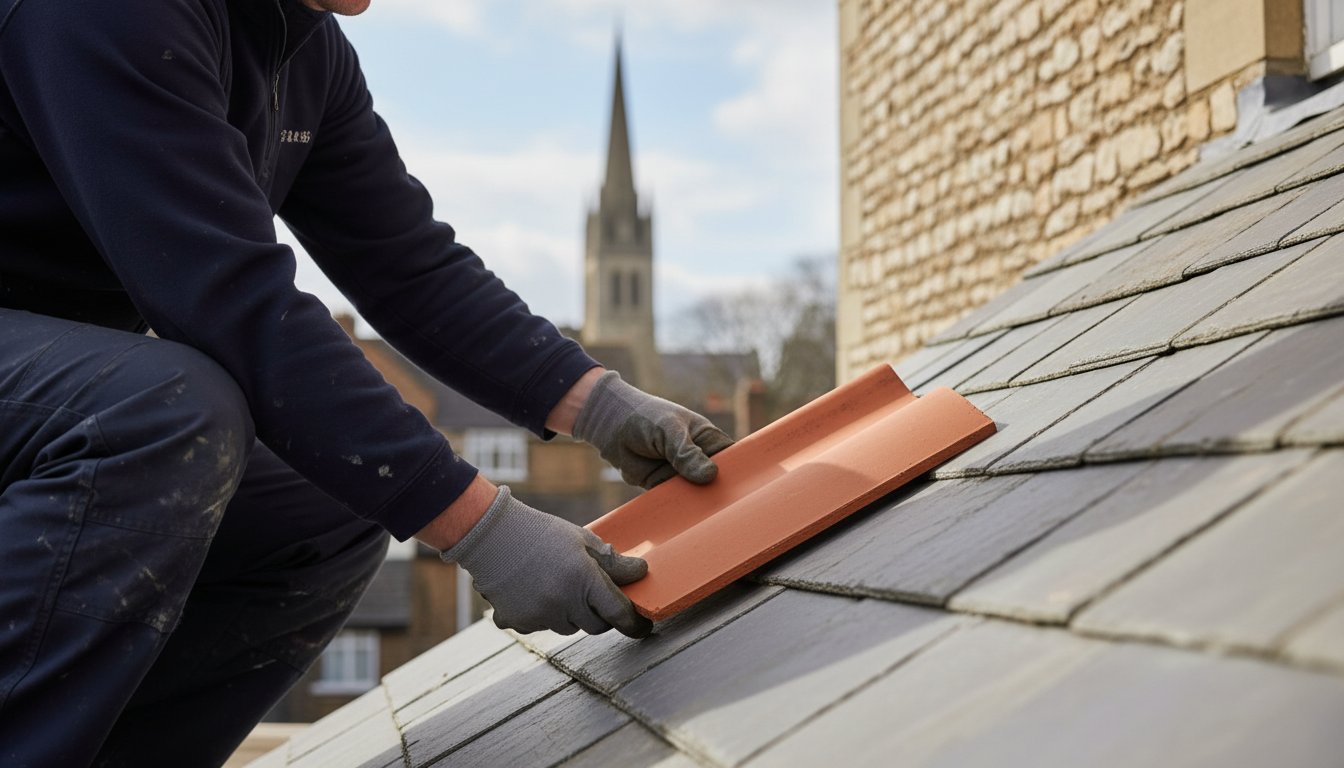
We approach every roof with a methodical plan to ensure the repair is as durable as the original structure. When replacing broken roof tiles Norwich homeowners often see us start by establishing safe access. We use specialized roof ladders and crawl boards to distribute our weight evenly across the surface. This prevents the "chain reaction" of damage where walking on old tiles creates new cracks. Once we reach the damaged area, we gently pry up the overlapping tiles above the broken piece using a slate ripper or a pry bar. This allows us to slide the damaged unit out without disturbing the surrounding course or breaking the delicate "nibs" that hold everything in place.
After the broken tile is removed, we perform a thorough inspection of the exposed area. We look closely at the wooden battens and the underlying felt. If we find that the wood has become soft or punky, we may need to perform a small section of timber replacement to ensure the new tile has a solid anchor. We then seat the new tile, making sure the nibs hook firmly over the batten. A final check of the interlock system ensures the tiles sit flush against each other, leaving no gaps for wind-driven rain to enter. This disciplined approach is what distinguishes a professional repair from a temporary fix.
Inspecting the Roof Felt and Battens
Roof felt serves as the secondary waterproof barrier that catches any moisture that might bypass the tiles. If we discover small tears in this bitumen or breathable underlay, we apply specialized roofing patches to restore the seal. However, if the wooden batten is too soft to hold a new tile nail, the timber must be replaced. A tile is only as secure as the wood it’s attached to, so we never nail into rot. Ensuring these hidden components are sound is vital for the long-term health of your roof space.
Securing Against Wind Uplift
Norfolk’s coastal gales can create significant suction, known as wind uplift, which can lift tiles right off the roof. To combat this, we use copper or stainless steel nails and specific tile clips in high-exposure areas. This is especially important for ridge tiles, which we secure using modern dry-fix systems or high-quality mortar mixes that won't crack during the next frost. We align every new tile perfectly with the existing course to maintain the roof's natural water-shedding ability. If you want to see how we handle these technical details on site, you can view our latest project gallery for examples of our local craftsmanship.
Expert Roof Repairs: Why Local Norwich Craftsmanship Matters
Norwich is a city that values its history and its homes. We understand that your property is likely your most significant investment. It is also the place where your family should feel safest. Choosing a local, family-run business like I R. Wilson Roofing ensures that you aren't just another entry in a corporate database. We take immense personal pride in every project we handle. Whether we are simply replacing broken roof tiles Norwich homeowners have spotted after a gale or managing a complex structural issue, we bring the same level of steady discipline to the task. We don't just fix roofs. We protect homes.
Our team possesses a deep understanding of Norfolk's unique architectural landscape. We know how the damp coastal air interacts with traditional materials and which specific fixing methods work best for our climate. This local knowledge allows us to provide a level of care that national contractors often miss. We believe that high-quality workmanship should always be paired with competitive, transparent pricing. You won't find hidden fees or high-pressure sales tactics when you speak with us. Instead, we provide clear, honest explanations of the work required to keep your roof in top condition. Our versatility allows us to manage everything from precision flat roof repairs in Norwich to the delicate replacement of historic clay pantiles.
Our Heritage in the Norwich Community
Ian and Ben Wilson maintain a direct, hands-on approach to every project we undertake. This personal involvement ensures that our high standards of craftsmanship are met on every job site. We have spent years building a reputation for reliability and neighborly professionalism across the county. We value long-term relationships and personal recommendations over aggressive marketing. When the unpredictable Norfolk weather turns and you need urgent storm damage repairs in Norwich, you can count on us to respond with efficiency. We treat your property with the same respect we would show our own homes.
Get Your Free Roofing Consultation
We invite you to contact us if you have concerns about the state of your roof covering. You might have noticed a single slipped tile or a damp patch appearing in your loft. Whatever the issue, we are here to provide expert advice tailored to your specific situation. As expert roofers in Norwich, we provide the technical authority and calm competence needed to resolve your roofing issues correctly the first time. We take the time to perform tasks right, ensuring your peace of mind and the long-term safety of your home. Reach out to our team today for a low-pressure consultation and let us help you maintain a leak-proof roof for years to come.
Protect Your Home for the Seasons Ahead
Addressing a damaged roof is one of the most important maintenance tasks for any homeowner. We've explored how identifying the correct material and understanding the risks of the Norfolk freeze-thaw cycle can prevent minor leaks from turning into structural rot. Replacing broken roof tiles Norwich properties require isn't just about the exterior; it's about preserving the timber and insulation that keep your family warm. Taking action now ensures that a small repair doesn't escalate into a costly renovation later.
As a family-run business serving the community since 1994, we understand the specific nuances of local heritage roofing and Norfolk Pantiles. Our team is highly recommended for efficient storm damage and emergency repairs, bringing a steady, professional hand to every project. We take the stress out of maintenance by ensuring your roof remains a dependable shield for your property. Get a competitive quote for your roof repair from I R. Wilson Roofing today and let us help you protect the value and safety of your home. You can rest easy knowing your roof is in the hands of seasoned local professionals who care about your results.
Common Questions About Roof Tile Repairs
How much does it cost to replace a few broken roof tiles in Norwich?
The cost for replacing broken roof tiles in Norwich varies depending on the type of tile required and the ease of access to your roof. While minor repairs are generally affordable, the final price is influenced by whether we need to source reclaimed heritage materials or use specialized safety equipment. We recommend requesting a professional assessment to understand the specific requirements for your property.
Can I replace a roof tile from the inside of my attic?
You cannot correctly replace a roof tile from inside your attic. Tiles are designed to be laid from the outside, overlapping each other to create a watertight seal, and are secured to wooden battens that sit above the roof felt. Attempting to fix a tile from the inside would likely tear your protective underlay and wouldn't allow the tile to hook securely over the batten.
How do I find a matching tile for my 100-year-old Norfolk home?
Finding a match for a historic home usually involves sourcing materials from local reclamation yards that specialize in Norfolk heritage tiles. We often look for weathered clay pantiles that match the specific profile and patina of your existing roof. This ensures the repair doesn't look out of place and preserves the traditional character of your property.
Is a cracked roof tile an emergency that needs immediate repair?
A cracked tile is an urgent issue because it represents a breach in your home's primary defense against water. While it might not cause an immediate leak on your ceiling, moisture will begin to saturate the battens and insulation below. In our damp Norfolk climate, even a small crack can lead to timber rot and mould growth if left through a winter season.
What is the difference between a slipped tile and a broken tile?
A slipped tile has physically moved out of position, often because a fixing nail has rusted away or a wooden batten has thinned. A broken tile has sustained physical damage, such as a crack or a snapped corner, usually due to frost or impact. Both issues create an opening for water ingress and require professional attention to restore the roof's integrity.
Do I need scaffolding for a simple roof tile replacement?
Scaffolding is not always necessary for replacing broken roof tiles in Norwich, especially for minor repairs on lower roof pitches. We often use specialized roof ladders and crawl boards to distribute weight and work safely. However, we assess every job individually. If the repair is in a high-risk area or above a fragile structure like a conservatory, we will discuss the safest access methods with you.
How long does it take for a professional to swap a broken tile?
A single tile replacement can often be completed in under an hour if access is straightforward and the replacement tile is already identified. The process involves carefully lifting the surrounding tiles, removing the debris, and securing the new unit. If we discover damaged battens or torn felt underneath, the repair will take slightly longer to ensure the area is fully restored.
Will insurance cover the cost of replacing tiles after a storm in Norwich?
Insurance coverage depends on your specific policy and the cause of the damage. Most insurers will cover repairs caused by sudden events, such as a severe storm or a fallen branch, but they rarely cover tiles that have failed due to age or general wear and tear. It's best to check your policy wording or speak with your provider to see if your repair qualifies for a claim.