
The longest-lasting roof isn’t automatically the right choice for your property. Long-term flat roof solutions depend on sound installation, drainage and ongoing maintenance as well as the covering itself: properly installed built-up roofing can remain watertight for more than 40 years with regular maintenance, while two-layer SBS bituminous coverings typically last 20-30 years.
When leaks or ageing materials make the next step uncertain, it’s natural to focus on lifespan. But a roof’s condition matters just as much as its age. A targeted repair may suit localised damage, while recurring faults or underlying problems can point to replacement.
This guide compares built-up and SBS systems, explains what affects durability and maintenance, and outlines signs that can help you weigh repair against replacement. You’ll have a clearer basis for deciding what suits your roof, rather than choosing on lifespan figures alone.
Key Takeaways
- Compare roof systems by more than their expected lifespan: installation quality, drainage and maintenance all affect how well they perform.
- Learn which routine checks can help catch early signs of wear, from pooling water to damage around roof details.
- Use the roof’s condition, not age alone, to judge whether a local repair or a broader replacement may be more suitable.
- See how I R. Wilson Roofing’s flat roof repair service can help address damage and assess practical next steps for your roof.
Built-up roofing longevity and maintenance
In the UK, properly installed built-up roofing can remain watertight for more than 40 years with regular maintenance; roofing felt typically lasts 10-20 years. Comparing long-term flat roof solutions means weighing service life against drainage, installation conditions and upkeep. EPDM, GRP, PVC and single-ply systems differ in their typical lifespans and maintenance needs.
A roof’s lifespan also depends on drainage, installation and moisture control. Standing water or trapped damp can undermine a roofing system, so an inspection should look for pooling, cracks, blisters and damaged edges.
EPDM Roofing
EPDM is a rubber membrane that offers an alternative to felt roofing. It is laid in one piece without overlapping, reducing joints where water could get beneath the surface. UK roofs can realistically last 25-30 years or longer, but the membrane still needs clear drainage and checks for damage. Compared with felt, its longevity may suit a different maintenance horizon.
GRP Roofing
GRP, also called fibreglass, creates a seamless surface with fewer joints where leaks might develop. Its stated lifespan is 30-50 years, exceeding typical felt roofing figures. Installation conditions matter: temperature and dampness can affect the finished surface. A cold-applied, one-piece liquid system may suit some roof layouts, but has different installation requirements.
Modern three-layer felt roofing can last 20-30 years when properly specified and installed. Built-up bitumen systems use layers to form a protective covering; insulation and sound detailing also matter. Regularly clear gutters and arrange an annual roof check to spot early defects. For long-term flat roof solutions, weigh the roof’s structure, drainage and maintenance needs alongside lifespan. A practical choice should also suit the roof’s layout and the upkeep it will need.
| Option | Typical lifespan or warranty | Maintenance consideration |
|---|---|---|
| Three-layer felt | 20-30 years | Check seams and pooling water |
| EPDM rubber | 25-30 years or longer | Inspect membrane and drainage |
| GRP | 30-50 years | Temperature and dampness affect installation |
| PVC | 20-30 years | Inspect joints and edges |
| Single-ply | 20-25-year warranties | Keep outlets clear and check for damage |
Choose by weighing expected lifespan, installation conditions, maintenance needs and budget, rather than lifespan alone.
SBS bituminous membrane durability and installation
For a UK roof, properly installed modified bitumen can last 20-25 years without major issues. The final result depends on sound preparation, dry conditions and careful detailing at vulnerable points.
There isn’t one reliable UK average replacement cost per square metre. The price depends on the roof’s size, existing deck (the base surface beneath the roof covering), insulation, access and specified system. I R. Wilson Roofing provides a competitive quotation after assessing the project.
SBS Bituminous Membranes
SBS-modified bitumen is a flexible form of bituminous membrane. A two-layer SBS covering typically lasts 20-30 years, while exposed membranes may age differently from protected ones. SBS membranes can remain elastic and cold-resistant down to −25 °C and below. That flexibility helps them accommodate movement, but does not remove the need for sound joints, outlets and edge details.
EPDM is another membrane option. Its joints and perimeter details need careful installation, and trapped moisture beneath any roof covering can compromise the build-up. Before a new membrane is laid over existing layers, an assessment should consider the deck (the base surface beneath the roof covering), insulation and drainage.
Installer Workmanship and Guarantees
Workmanship has a direct bearing on lasting performance. The critical areas include edges, joints, outlets, upstands (raised sections where the roof meets a wall or another vertical surface) and flashing points, where poor detailing can let water in. An “approved installer” quotation should identify the membrane system and the scope covered by that approval. Read the written guarantee for its duration, coverage and exclusions; a long warranty does not replace sound installation.
Before installation, inspect the roof build-up and specify repairs to the deck (the base surface beneath the roof covering) or insulation where needed. For example, sound drainage and sealed outlets help prevent standing water from stressing the membrane. A roof inspection can clarify these details; roofing advice for your property can help you understand the practical next steps.
Flat roof repair versus replacement
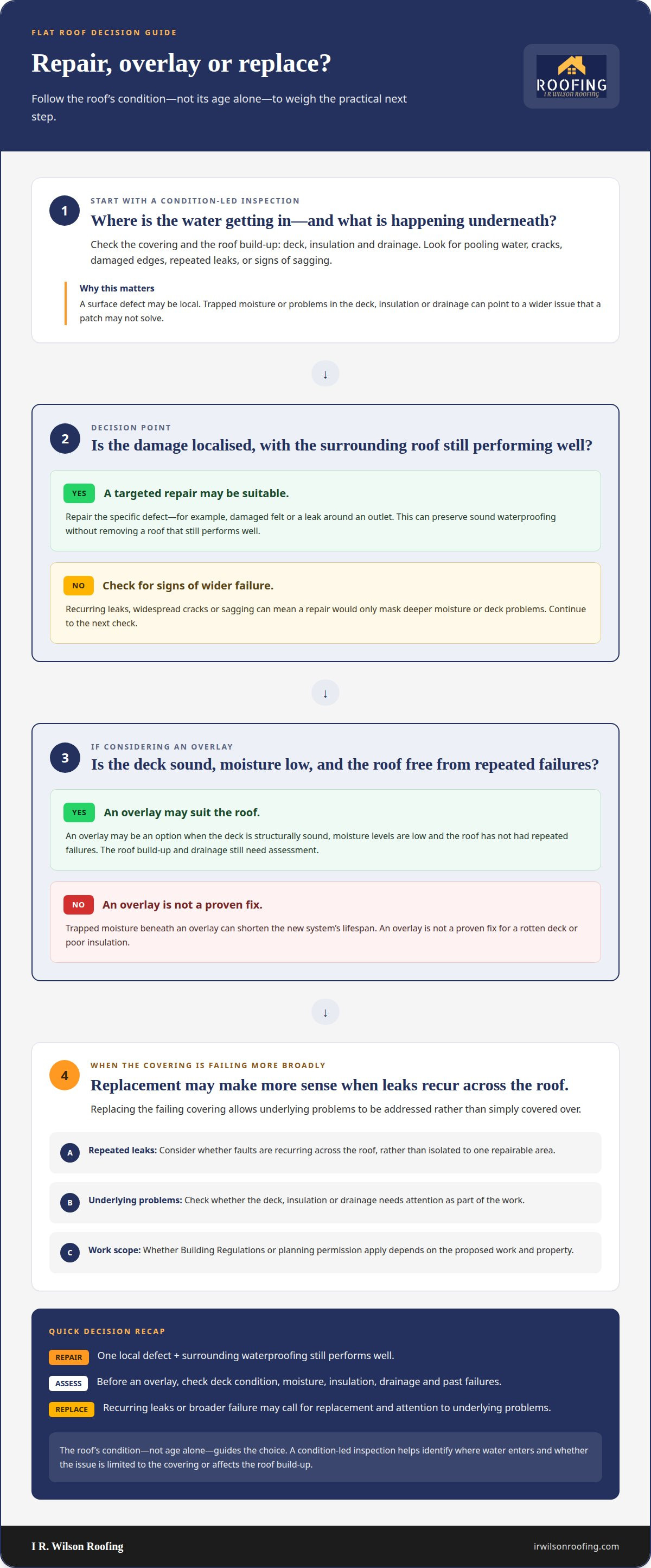
Choose based on the roof’s condition, not age alone: a local defect may need repair, while recurring leaks can signal wider failure. Whether Building Regulations or planning permission apply depends on the proposed work and property, so establish the project’s scope before deciding.
Flat Roof Repair
A repair targets a specific defect, such as damaged felt or a leak around an outlet. It can preserve sound waterproofing and avoid removing a roof that still performs well. For example, a local felt repair may address one damaged area without replacing the whole covering. But repeated leaks, widespread cracks or sagging may mean a repair would only mask deeper moisture or deck problems.
A condition-led inspection should identify where water is getting in and check the deck, insulation and drainage. An overlay may suit a structurally sound deck with low moisture levels if the roof has not suffered repeated failures. Trapped moisture beneath an overlay can shorten the new system’s lifespan, so an overlay is not a proven fix for a rotten deck or poor insulation.
Flat Roof Replacement
Replacement removes the failing covering and allows underlying problems to be addressed. It may make more sense when leaks recur across the roof, the deck is rotten or moisture is trapped below the surface. A new EPDM rubber membrane is one possible waterproofing system, but the right choice depends on the roof structure, insulation and drainage.
For blocks of flats, work may involve Section 20 consultation requirements, leaseholder contributions, budget cycles, access planning and resident disruption, according to the UK legislation portal. The practical decision guide is straightforward: repair isolated damage on a sound roof; investigate recurring failure or hidden moisture before choosing replacement. Weather exposure matters, but the condition of the deck and waterproofing is central.
I R. Wilson Roofing: Flat Roof Repairs
I R. Wilson Roofing provides flat roof repairs for leaks, damaged felt and other local defects. Fixing a specific fault can help protect the rest of the roof, while recurring leaks or widespread deterioration may point to a larger problem. The right next step depends on your roof’s condition and where water is getting in.
Felt roofing is another option for flat roof work. Fascias and soffits, along with gutter cleaning, may also be relevant when roof edges or blocked drainage contribute to water-related concerns. For example, clearing a blocked gutter can help water drain away from the roofline.
Plan your next roofing step with confidence
Choosing long-term flat roof solutions starts with understanding what your property needs now. Note where water appears, any changes indoors and whether the issue returns after rainfall. These details make a conversation about your roof more specific and help keep attention on the underlying cause, not just a visible mark.
I R. Wilson Roofing offers flat roof repairs and felt roofing. Fascias and soffits may also be relevant if the roof edge needs attention. Start with the concern you’ve noticed and the roof’s condition. Sharing those details helps focus the discussion on practical next steps for your property.
A considered decision gives you a clearer way forward. Take the next step when you’re ready.
Frequently Asked Questions
What Actually Determines Lifespan?
Installation quality, drainage, the roof deck, moisture and maintenance all influence lifespan. The roof deck is the solid base beneath the roof covering, and its condition helps determine how well the roof performs. For example, a blocked outlet on a Norwich property can leave water standing and put extra strain on the covering. Regular inspections can help identify damaged joints or drainage problems early. The material matters, but performance also depends on the layers beneath it and how well water drains away.
When Is Overlay Appropriate?
An overlay may be appropriate when the existing roof deck, the solid base beneath the roof covering, is structurally sound, moisture levels are low and the roof hasn’t suffered repeated failures. It can suit a project where budget constraints prevent stripping the full roof. A condition-led assessment should check the deck and look for trapped moisture first. If the deck is rotten or insulation is poor, covering the old roof can conceal rather than resolve the underlying problem.
Which System Is Best Overall?
No single system suits every property; the best fit depends on roof condition, layout, insulation and maintenance needs. For example, a roof with awkward details needs different planning from a simple garage roof. Compare the complete roof build-up, not just the visible membrane. Consider how the system will handle drainage and detailing, and whether the existing structure is suitable.
Which flat roof technology lasts the longest?
EPDM membranes have an expected lifespan of 50 years or more in some product specifications, while UK roofs can realistically last 25-30 years or sometimes longer. GRP is stated to last 30-50 years. These figures describe different systems and conditions, so they aren’t a like-for-like guarantee for a particular roof. Installation, exposure and maintenance affect real-world performance.
Which flat roofing materials last longest in the UK, and what are their typical lifespans?
Expected lifespans vary: felt roofing typically lasts 10-20 years, while modern three-layer felt can reach 20-30 years when properly specified and installed. Two-layer SBS coverings typically last 20-30 years; PVC membranes, 20-30 years; and GRP, 30-50 years. EPDM can realistically last 25-30 years or longer in the UK. Regular upkeep and installation quality affect performance.