
Can you reduce roof noise without working from above? Yes, soundproofing a flat roof from inside can help by adding mass and sound-absorbing material beneath the roof deck, often as part of a suspended ceiling. One described build-up creates a 300 mm cavity and uses two layers of 15 mm plasterboard, but the right arrangement depends on the existing roof and the noise you’re trying to control.
Rain drumming overhead or traffic noise filtering into a room can make a home less comfortable. First, distinguish sound travelling through the roof from echoes within the room, as each calls for a different approach. This guide explains how ceiling layers, insulation and underlayments can help reduce noise, what to consider before changing the roof structure, and when a roofing repair may be part of the solution.
Key Takeaways
- Identify whether noise is travelling through the roof or echoing inside the room, as the source affects the best treatment.
- A suspended ceiling with sound-absorbing material can help reduce noise, but the build-up needs to suit the existing roof and available ceiling height.
- Mineral wool and foam boards can help limit sound vibrations, while insulation may also support the roof’s thermal performance.
- For rain or other impact noise, underlayments can dampen sound before it reaches your living space; roof repairs may also be needed if structural issues contribute.
How can noise through a roof be reduced?
Start by identifying whether sound travels through the roof structure or echoes inside the room. The right fix depends on the noise path and the roof’s condition.
Airborne Noise Paths
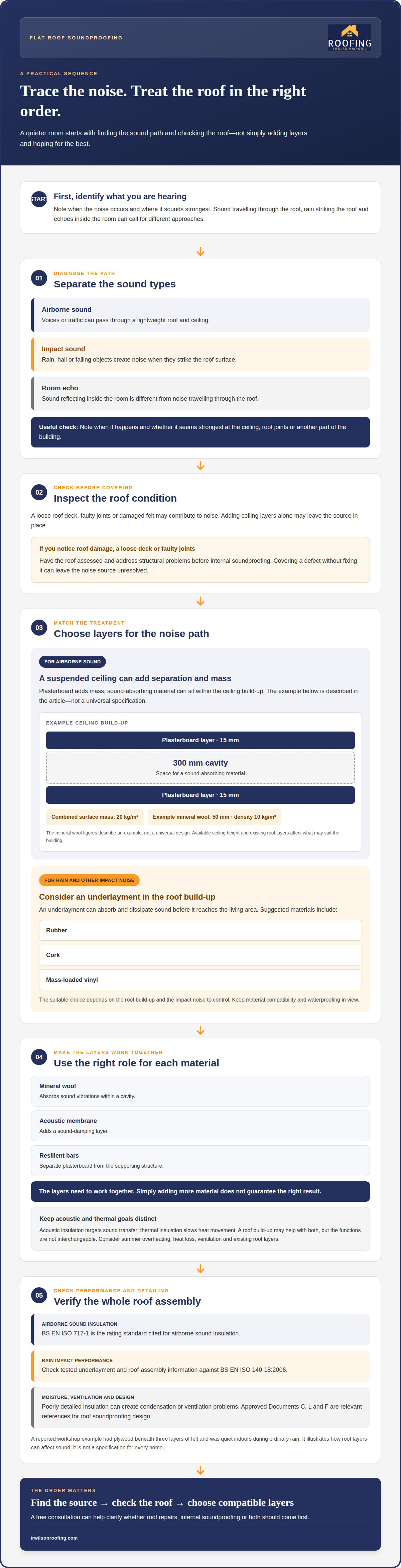
Airborne sound, such as voices or traffic, can pass through a lightweight roof and ceiling. A suspended ceiling can add separation, while plasterboard adds mass. One described build-up creates a 300 mm cavity and uses two 15 mm plasterboard layers, with a combined surface mass of 20 kg/m². According to the British Standards Institution (BSI), BS EN ISO 717-1 is the rating standard for airborne sound insulation.
To trace the noise, note when it occurs and where it sounds strongest. Check whether it seems to come through the ceiling, around roof joints or from another part of the building. A loose roof deck or faulty joints can also contribute, so treating the ceiling alone may not address the cause.
Arrange a professional assessment if the noise comes with signs of a loose deck, faulty joints or other roof damage. A roofer can identify and repair structural problems before you consider adding layers to the ceiling. Covering a defect without fixing it can leave the source of the noise in place.
Soundproofing Costs
There is no single UK price for flat roof soundproofing; the cost depends on the work required and is given after a quote request. Factors include the roof’s condition, the chosen ceiling build-up, the materials involved, and whether structural repairs are needed. A 300 mm cavity, for example, needs more room than a shallow ceiling treatment.
Bring in a professional if you cannot identify the noise path or suspect roof defects. An assessment can establish whether the priority is repairing the roof, adding a ceiling or addressing both. This helps match the work to the problem instead of adding layers that may not tackle the source of the sound.
Roof insulation for noise reduction
Mineral wool can absorb sound vibrations within a flat roof build-up, while foam boards are another insulation option. One described ceiling build-up uses 50 mm mineral wool with a density of 10 kg/m³. These figures describe an example, not a universal specification. The effective material and position depend on the existing roof layers and the noise path.
Acoustic insulation targets sound transfer; thermal insulation slows heat movement through the roof. A roof build-up may help with both, but the functions are not interchangeable. Thermal performance also affects how a room responds to heat, so consider summer overheating as well as heat loss when choosing insulation. The existing roof layers and ventilation help determine a suitable design.
Mineral wool, acoustic membranes and resilient bars work in different ways. Mineral wool absorbs sound within a cavity; a membrane adds a sound-damping layer, while resilient bars separate plasterboard from the supporting structure. Their effectiveness depends on how the layers work together, not simply on adding more material. A green roof can also reduce sound: vegetation, soil and other layers absorb and deflect noise while adding thermal insulation.
UK roof upgrades may need to consider Approved Document C, Approved Document L and Approved Document F, which are references relevant to roof soundproofing design. Yes, a poorly detailed insulation build-up can create condensation or ventilation problems by changing how moisture moves through the roof. Correct layer placement matters. For advice on flat roof insulation, consider how the existing construction and intended sound reduction work together.
Underlayment to reduce impact noise
Soundproofing a flat roof should address airborne and impact noise together. Airborne sound, such as traffic, travels through the roof structure; impact noise begins when raindrops strike the roof surface. An underlayment can absorb and dissipate sound before it reaches the living area, helping reduce impact noise. It may form one part of the solution, alongside measures suited to airborne sound.
Rubber, cork and mass-loaded vinyl are suggested underlayment materials for reducing noise from rain, hail or falling objects. The suitable material depends on the roof build-up and the type of impact you want to control. Effective soundproofing a flat roof considers both types of noise rather than treating every sound as the same problem.
For example, one reported workshop roof had plywood beneath three layers of felt, and ordinary rain was quiet indoors. This illustrates how roof layers can affect the sound heard below, but it is not a specification for every home. Existing construction, material compatibility and waterproofing all matter when considering changes to a flat roof.
Look at the tested acoustic information for the underlayment and roof assembly. A product’s rain impact acoustic performance is specified against BS EN ISO 140-18:2006. This helps distinguish impact-noise performance from airborne sound insulation ratings. Choose a build-up suited to the actual noise source, while keeping the roofing layers weatherproof.
I R. Wilson Roofing: Flat Roof Repairs
I R. Wilson Roofing can help if roof noise may be linked to a loose deck, faulty joint or damaged felt. These issues need attention before internal soundproofing can effectively address the noise. Flat Roof Repairs focus on the roof’s condition, while Felt Roofs may be relevant when the roof covering itself needs work.
If rain noise has increased alongside signs of a leak or visible roof damage, a repair assessment can help establish whether the covering or structure needs attention. Addressing the roof first gives any later acoustic work a sounder starting point. The right next step depends on the cause of the noise and the condition of the existing roof.
Contact I R. Wilson Roofing to discuss your flat roof.
Take the Next Step Towards a Quieter Home
A quieter room starts with a clear plan for the roof, not simply adding layers and hoping for the best. Before arranging internal work, consider whether the roof needs attention first. Soundproofing a flat roof is more likely to address the real problem when the underlying structure and covering are in suitable condition.
I R. Wilson Roofing provides Flat Roof Repairs and Felt Roofs for roofing concerns, as well as Fascias and Soffits for roof edges. The right service depends on your property’s needs, so discuss the noise issue and the roof’s condition together.
A practical assessment is a sensible first step towards a more comfortable home.
Frequently Asked Questions
Can I soundproof a flat roof from inside?
Yes, you can reduce sound from inside without removing the outer roof covering. This is most practical when the roof is in sound condition and there is enough ceiling height for additional layers. Plan around lights, cables and access hatches before work begins. Gaps around these features can leave paths for sound to travel through.
How can you soundproof a flat roof from rain and traffic noise?
Choose a treatment suited to the noise: rain creates impact noise, while traffic is airborne sound. Notice whether the noise changes during rainfall or continues independently, then use that clue to guide the design. A Norwich home beside a busy road may need a different approach from a room mainly disturbed by raindrops.
How do you add acoustic insulation to a flat roof from inside?
Install the material as part of a planned ceiling build-up, rather than fitting it without considering the surrounding construction. The installer should account for joists, wiring, lights and the ceiling finish. Keep the insulation continuous where possible, and pay attention to edges and service openings so sound cannot easily bypass the treated area.
How do you soundproof a flat roof during a roof replacement?
Plan acoustic and thermal layers alongside the replacement roof design, before completing the new covering. This lets you consider the roof build-up, ceiling depth and interior services together. Discuss the noise problem and how the room is used at the planning stage, so the chosen construction suits the property and avoids disruptive changes later.