

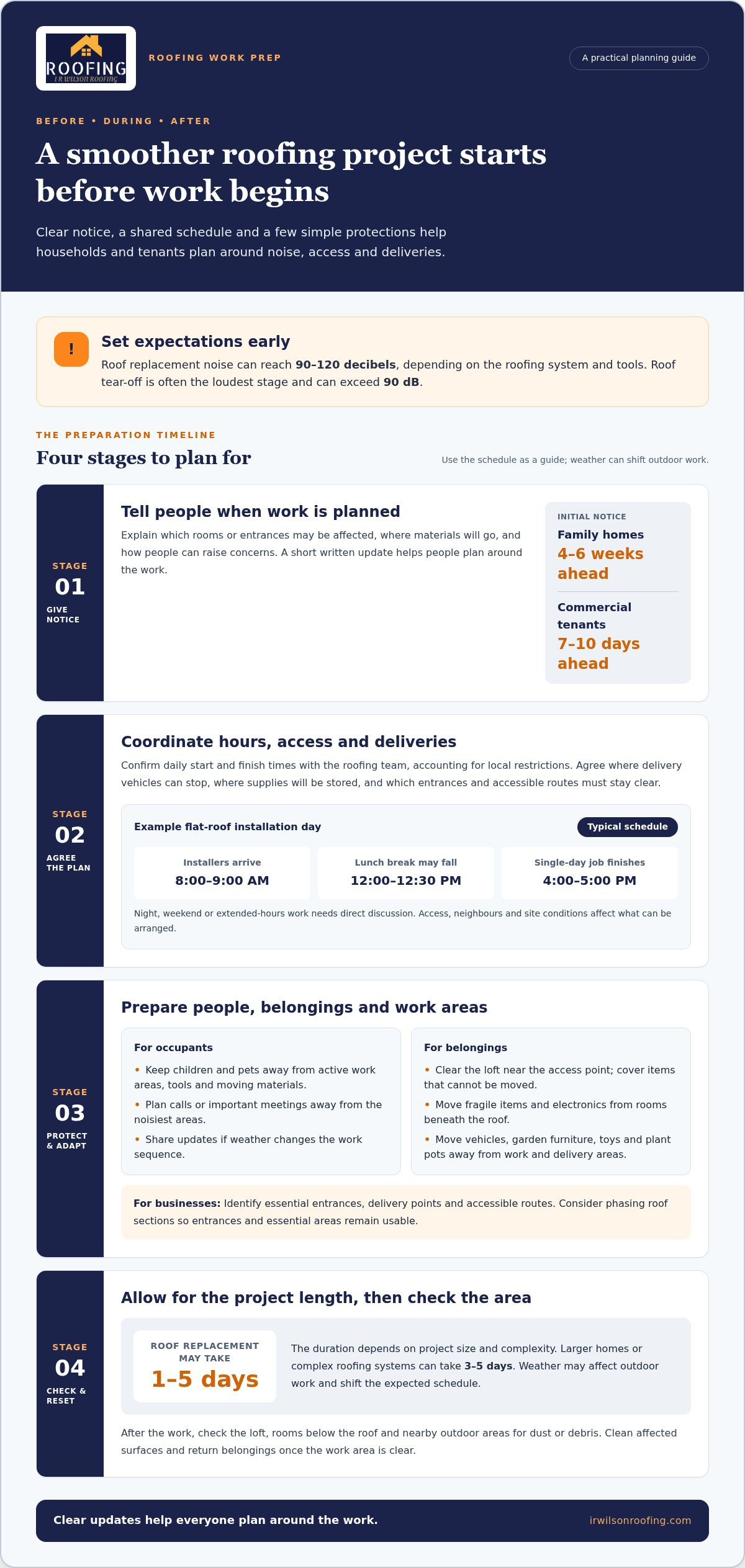
The most useful preparation happens before the first roof tile comes off. For family homes, give occupants initial notice 4-6 weeks before work begins; tell commercial tenants 7-10 days ahead. A clear plan for dealing with roofing noise and disruption also means explaining which parts of the property will be affected and keeping children and pets away from the active work area.
It’s understandable to worry about noise, deliveries and people needing access to your property. A little notice and clear communication can help everyone plan, whether that means finding a quieter place to work or keeping a shared entrance clear. This guide explains how to prepare household members or tenants, coordinate access, deliveries and schedules, and address concerns calmly if disruption becomes an issue.
Key Takeaways
- Roofing noise and restricted access can affect tenants, customers and daily routines, so plan how people will use the property during the work.
- Agree the noisiest stages, working hours, delivery arrangements and clear access routes with the roofing team before work starts.
- Move or cover furniture and outdoor belongings, and relocate vehicles from areas where materials or debris could cause a problem.
- If a flat roof needs attention, I R. Wilson Roofing carries out Flat Roof Repairs to help address the roofing issue at its source.
1. How can I prepare my family or tenants for roof noise?
For families, dealing with roofing noise and disruption starts with early, clear notice. Give household occupants initial notice 4-6 weeks before roofing work begins. For commercial tenants, share the planned start date 7-10 days ahead. Explain which rooms or entrances may be affected, where materials will be placed, and how people can raise concerns. A short written update helps tenants plan meetings, deliveries and customer access.
Roof replacement noise can reach 90 to 120 decibels, depending on the roofing system and tools used. Tell children and tenants when work is expected, and keep children and pets away from active work areas, tools and moving materials. Closed doors and soft furnishings can make a quieter room more comfortable. If you work from home, plan calls away from the noisiest area or arrange a temporary alternative for important meetings.
Roof replacement may take 1-5 days, depending on the project’s size and complexity. Larger homes or complex roofing systems can take 3-5 days. Weather can affect outdoor work and shift the expected schedule, so tell occupants how updates will be shared. For example, a revised daily plan can help someone working from home move calls around noisy roof removal.
In a business, noise, vibration, debris and restricted access can interrupt staff and customer routines. Dealing with roofing noise and disruption also means identifying essential entrances, accessible routes and delivery points before work starts. Move vehicles away from work and material storage areas, then tell staff and customers which routes will remain open.
Phasing a roofing project can prevent every area from being affected at once. Agree which roof sections and entrances will be tackled first, then share the schedule with tenants. This gives people a practical way to adjust their routines and raise concerns promptly, reducing avoidable stress while the roof is repaired.
2. Planning contractor access, deliveries and work schedules
For roofing work in the UK, agree working hours in advance and account for any local restrictions that apply to the site. Work usually takes place during the day, so confirm the daily start and finish times before the project begins.
Ask for a simple schedule showing the expected start date, noisy stages and completion estimate. Roof tear-off is often the loudest stage, and some work can exceed 90 dB. If anyone at home is sensitive to noise, plan calls, rest periods or time away around those tasks. A clear daily update also helps owners prepare if weather changes the sequence.
Plan access before materials arrive. Agree where the delivery vehicle can stop, where supplies can be stored and which entrance must stay clear. For example, keep a front path open for residents while setting aside another area for materials. Move parked vehicles from delivery routes and discuss how the roofers will access the roof safely.
A typical flat-roof installation day may start with installers arriving between 8:00 and 9:00 AM. A lunch break may fall around 12:00-12:30 PM, with a single-day job finishing between 4:00 and 5:00 PM. Night, weekend or extended-hours scheduling needs direct discussion, since access, neighbours and site conditions affect what can be arranged.
For a commercial roofing project, consider phasing work so entrances and essential areas remain usable. To plan access and timings around your property, explore roofing project support.
Agree working hours with the roofing contractor in advance and account for local restrictions; roofing work typically takes place during normal daytime hours. Night, weekend or extended hours need to be discussed directly, and the schedule should identify noisy stages such as roof tear-off, which can exceed 90 dB.
3. Protecting belongings during roofing work
Before work starts, clear the loft floor near the access point and move boxes away from areas directly beneath the roof. Cover anything you can’t relocate with dust sheets, especially clothes, books and soft furnishings. Keep a clear route through the loft so you can reach stored belongings without entering the work area.
Inside the house, move fragile ornaments, pictures and electronics away from ceilings beneath the work. Roof repairs can cause movement and noise overhead, so secure pictures and put glassware in a cupboard to reduce the risk of accidental knocks. Cover furniture in rooms below the roof and close doors to limit dust spreading through the house.
Make a room-by-room plan before the roofers arrive. Note which belongings need moving or covering, and which rooms should stay accessible. If a bedroom is below the roof, temporarily move bedding and clothes elsewhere. This also gives the household a usable space during the noisiest work.
Outside, move vehicles from the driveway and any area used for deliveries or equipment. Bring garden furniture, children’s toys and plant pots away from the roof edge, where falling debris could reach them. If a large item can’t be moved, place it well clear of the work area and cover it appropriately. Keep paths clear for residents and roofers.
After the work, check the loft, rooms below the roof and nearby outdoor areas before putting everything back. Look for dust or debris, clean affected surfaces, and return belongings once the work area is clear.
I R. Wilson Roofing: Flat Roof Repairs
I R. Wilson Roofing carries out Flat Roof Repairs when damage or wear means your flat roof needs attention. If you’ve noticed a leak, loose felt or other visible damage, a free consultation gives you the opportunity to discuss the issue and understand the work involved.
For flat roofs, I R. Wilson Roofing also provides Felt Roofs. The right approach depends on the roof’s condition and the issue you’re dealing with. Clear communication about the work can help you prepare your household and organise belongings before roofing begins.
To discuss a roof concern or arrange a free consultation, contact I R. Wilson Roofing.
Keep your next roofing step straightforward
A considered approach to dealing with roofing noise and disruption helps protect everyday routines while keeping the roof issue in view. Once the work is complete, note any remaining concerns and keep a record of repairs or maintenance to address later. This gives you a clear starting point for looking after your property.
I R. Wilson Roofing provides Flat Roof Repairs, Felt Roofs, and Fascias and Soffits. If your roof needs attention, these services can address the relevant part of your property. Sharing what you’ve noticed is a practical first step towards discussing the work your home needs.
With a clear plan, you can move forward with greater confidence while protecting your home and routine.
Frequently Asked Questions
How can I prepare my family or tenants for roof noise?
Give each person a clear plan for the part of the home they use most. If a tenant works night shifts or a child studies at home, agree on a quieter room or temporary place to work before noisy tasks begin. Put the site contact and agreed access route somewhere everyone can find them, such as a shared household note.
Can I reduce noise on an existing metal roof?
Yes. If a metal roof rattles, loose panels or fasteners may be vibrating, so have them checked and secured. Insulation in the roof void or ceiling space can also reduce rain noise reaching rooms below. These measures address different sources of noise: vibration in the roof covering and sound transmitted indoors during rainfall.
Can I request weekend or after-hours roofing work?
Yes, you can request weekend or after-hours roofing work, but don’t assume those times will suit the site. Agree the proposed hours directly and explain any fixed constraints, such as tenant access or business opening hours. For a shared property, record the agreed schedule and inform affected occupants before work starts.
Can roofers install a new roof quietly?
No, replacing a roof cannot be silent: removing old coverings and fastening new materials creates noise. Ask for the loudest tasks to be grouped into a planned daytime period instead of being spread unpredictably throughout the day. A clear work sequence also helps you distinguish installation noise from unexpected sounds that may need prompt attention.
How Disruptive Is a Roof Replacement for the Neighbors?
Roof replacement noise can carry beyond the property boundary. Nearby residents, including those a few houses away, may hear the work indoors. In densely populated residential areas, providing brief advance notice to neighbours about noisy work and deliveries can prevent surprises. Share a contact route so they can raise any specific concerns during the job.