
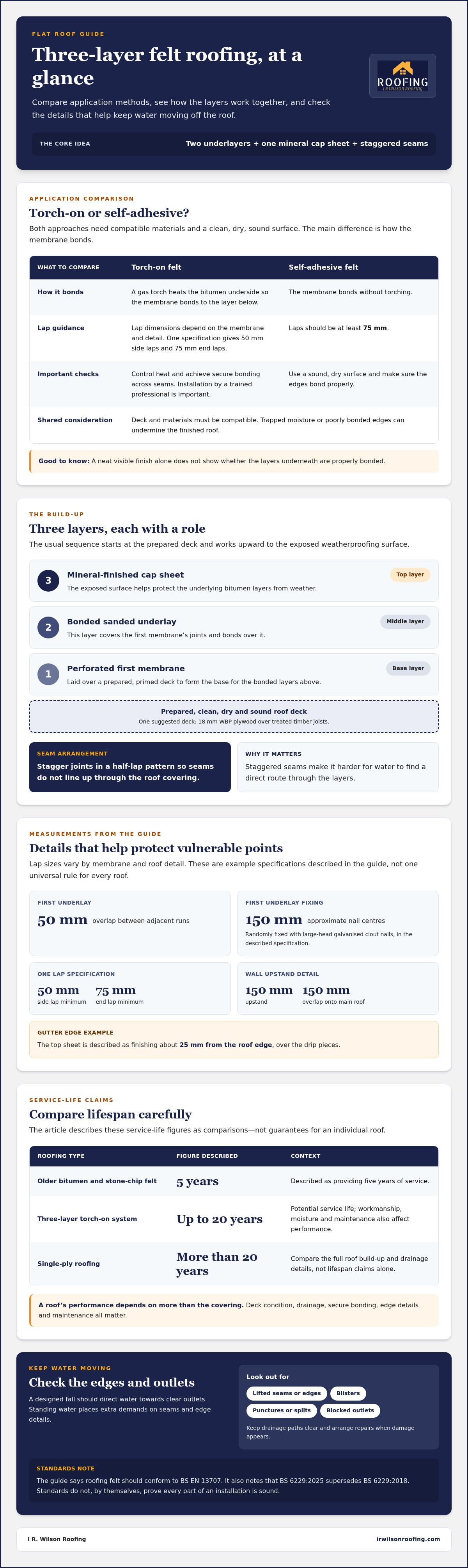
A three-layer felt roof specification typically describes two waterproofing underlayers beneath a mineral-finished cap sheet, with the joints staggered in a half-lap arrangement. In a common torch-on system, the first layer is a perforated membrane, the second is a sanded underlay bonded over it, and the top layer is a mineral cap sheet. Together, the layers protect the roof, while staggered joints help prevent seams from lining up.
The visible finish is only part of the picture: the deck, bonding and edge details all affect how well the roof sheds water. This guide explains how the layers work together, what to know about torch-on felt, and why details such as laps and wall upstands matter. It will help you understand what a sound felt-roof build-up involves and what to consider for your flat roof.
Key Takeaways
- A three-layer felt roof combines two underlayers with a mineral-finished cap sheet, with joints staggered to help limit water paths.
- Deck condition and preparation affect how well the membranes bond, so the roof build-up matters as much as the visible finish.
- Lap sizes and careful detailing at edges and wall junctions help protect vulnerable seams from water ingress.
- Standards can change: BS 6229:2025 supersedes BS 6229:2018, according to the British Standards Institution.
What is the best torch-on roofing felt system?
A suitable torch-on roofing system is matched to the deck, drainage and exposure, rather than chosen for its finish alone. A UK flat roof needs a designed fall towards clear outlets. The fall and drainage layout depend on the deck and the outlet positions.
Service Life Compared with Older Felt
Service life is how long the roofing remains effective before it needs major repair or replacement. Older bitumen and stone-chip felt was described as providing five years of service, while a three-layer torch-on system can potentially last up to 20 years. That comparison helps you weigh a layered build-up against repeating repairs, but workmanship, moisture and maintenance also affect roof performance.
A common modern arrangement has two underlayers beneath a mineral-finished cap sheet. One described specification uses a 2 mm underlay and a 4 mm cap sheet. Single-ply roofing is also described as lasting more than 20 years, so compare the full roof build-up and drainage details, not lifespan claims alone.
Standards and Certification Claims
Standards identify technical requirements for materials or roofing work; they don’t, by themselves, prove that every part of an installation is sound. Roofing felt used in the guidance should conform to BS EN 13707, according to the British Standards Institution. The British Standards Institution also states that BS 6229:2025 supersedes BS 6229:2018. Ask what a certificate or guarantee covers, including materials, installation and exclusions.
Torch-on felt layers are heated and bonded with a gas torch, so installation by a trained professional is important. The system needs compatible membranes, secure bonding and carefully finished laps. A three-layer felt roof specification should also account for outlets and edges, where poor detailing can leave routes for water to enter.
What Is A 3 Layer Felt Roof System?
A three-layer system combines a perforated first membrane, a bonded underlay and a protective mineral cap sheet. Warning signs include lifted seams, blisters, punctures or water lingering near outlets. Keep drainage paths clear and arrange repairs when damage appears.
Applying the Perforated First Layer
The perforated membrane is the first felt layer, laid over a prepared, primed roof deck. It helps form the base for the bonded layers above, so a clean, dry and sound substrate matters for adhesion. A suggested deck is 18 mm WBP plywood over treated timber joists. The first underlay can be randomly fixed with large-head galvanised clout nails at about 150 mm centres, with adjacent runs overlapping about 50 mm.
Torch-On and Self-Adhesive Application
Torch-on felt uses a gas torch to heat the bitumen underside, bonding the membrane to the layer below. The deck and materials must be compatible, and the installer must control heat and adhesion across seams. Self-adhesive membranes bond without torching; their laps should be at least 75 mm. Both approaches need sound, dry surfaces, since trapped moisture or poorly bonded edges can undermine a lasting finish.
Three-Layer Membrane Installation Sequence
The usual sequence is perforated first layer, bonded sanded underlay, then mineral cap sheet. The top sheet protects the underlying bitumen layers from weather, while a half-lap arrangement keeps joints apart. This helps avoid seams lining up through the roof covering. Installation quality also depends on neat edges and secure junctions, not just the central roof area. Clear outlets and address damaged seams during maintenance. For help with a felt roof, explore felt roofing work.
Flat-roof felt waterproofing layers
On a flat roof, waterproofing depends on the complete membrane build-up and its junctions. Each layer covers the seams below, while careful detailing directs rain towards outlets and away from vulnerable edges.
How the layers manage water
The first underlay creates a base across the deck, and the next bonded layer covers its joints. The mineral cap sheet forms the exposed weatherproofing surface. In a three-layer arrangement, installers stagger the seams so joints do not line up through the build-up, making it harder for water to find a direct route through the layers.
Bonding matters at every interface. A loose edge can let water track beneath the membrane, while a blister may indicate a problem below the surface. Follow the manufacturer’s instructions for compatible materials and application. A neat finish alone cannot show whether the underlying layers are properly bonded.
Laps, edges and wall junctions
Lap dimensions vary by membrane and detail. One specification describes minimum side laps of 50 mm and end laps of 75 mm. At a wall, additional felt can form a bonded 150 mm upstand and overlap the main roof by 150 mm. These junctions matter because rain can collect where the roof meets a wall.
At the gutter edge, the top sheet is described as finishing about 25 mm from the roof edge over the drip pieces. Keep outlets clear so water can drain away; standing water places extra demands on seams and edge details. After storms, look for lifted edges, splits or blocked outlets. Prompt repairs can address damage before water reaches the deck.
I R. Wilson Roofing: Flat Roof Repairs
I R. Wilson Roofing carries out flat roof repairs and works on felt roofs when damaged seams, lifting edges or leaks need attention. If water is getting in or you have noticed wear around the roof edges, a repair can address the problem before it affects more of the roof.
Clear drainage matters too. Gutter cleaning can remove blockages that prevent rainwater from flowing away, while fascias and soffits complete the roof edge. The right work depends on the cause, whether that is a damaged felt layer, an edge detail or blocked drainage. A clear assessment helps identify a practical next step for your roof.
For help with your flat roof, contact I R. Wilson Roofing or visit irwilsonroofing.com.
Plan the right next step for your roof
A three-layer felt roof specification gives you a useful basis for discussing the work, but the next decision depends on your roof’s actual condition. Note any visible leaks, damaged edges or persistent drainage problems. These observations can help focus a repair assessment on the areas needing attention.
I R. Wilson Roofing provides flat roof repairs and works on felt roofs, as well as fascias and soffits. A free consultation gives you the opportunity to discuss your roof and the work it may need. The first step towards a repair or other roofing work is understanding what is happening on your property.
A considered next step can make roof maintenance feel more manageable and help you move forward with confidence.
Frequently Asked Questions
How long will the flat roof felt last?
Felt roof lifespan varies with installation quality, exposure, drainage and upkeep. Older felt roofs commonly fail between five and ten years, while a modern three-layer system may serve for up to 20 years. For a Norwich property, look for changes after severe weather, such as new leaks or loose edges. Clearing debris from outlets helps water drain freely and reduces avoidable strain on the covering.
More Layers, More Security, Or Hidden Weakness?
More layers can provide added protection, but they do not automatically make a roof more dependable. Each layer needs sound bonding, and trapped moisture or a poorly sealed seam can undermine the build-up beneath an intact-looking surface. For example, a blister may indicate separation below the top sheet. Judge the whole system, including its substrate and junctions, rather than counting layers alone.
What Is the Critical Role of Edge Detailing in Ensuring System Integrity?
Edge detailing helps prevent water from working beneath the roof membrane at exposed boundaries. A poorly finished gutter edge can let rain track under the felt, while a weak wall junction can create a vulnerable entry point. Check that the covering meets the edge components cleanly and remains secure. After strong winds, visible lifting or a new leak near an edge needs prompt attention.
What materials make up a three-layer felt roof system?
A typical system combines a perforated first membrane, a sanded bitumen underlay and a mineral-finished cap sheet. In torch-on systems, the cap sheet described here is polyester-based, with mineral granules on its surface. The roof deck supports these waterproofing materials but is not itself one of the felt layers. Material compatibility matters, so the membranes should form a coordinated roofing system.
What are the typical felt layer thicknesses and weights for a three-layer flat roof?
A described torch-on build-up uses a 2 mm underlay and a 4 mm mineral cap sheet. The first perforated layer’s thickness and the roll weights depend on the particular membrane product. Compare manufacturer product information for the complete layer set, rather than treating thickness alone as a measure of performance. The roof design and intended application guide which products belong together.