
A small split in roof felt can let water into your property. Felt roof maintenance in Norfolk can address damage by patching rips or punctures, and cutting, drying and resealing blistered areas. If water pools, clearing debris and repairing drainage issues can help the roof shed water more effectively.
Ponding water and damp patches can be worrying, particularly when the cause isn’t obvious indoors. This guide explains how patching and sealing work, what to look for around drains and roof edges, and when repairs may be more suitable than replacement. It also covers how felt roof repairs can help protect garages, extensions and other flat-roofed buildings in Norwich and across Norfolk, including Yarmouth, Beccles, Wymondham, Mulbarton and Wroxham.
Key Takeaways
- Spot rips, punctures and blisters early; damaged felt can be patched, while blisters need to be cut, dried and resealed.
- Clear leaves and debris from the roof and gutters, especially in autumn and winter, to help reduce ponding water.
- Look for cracking, loose edges and damp patches, as these can point to water getting beneath the felt.
- Consider the roof’s age and maintenance history when weighing up repairs versus replacement, and address drainage problems as part of the repair.
Patching and sealing damaged flat roofs
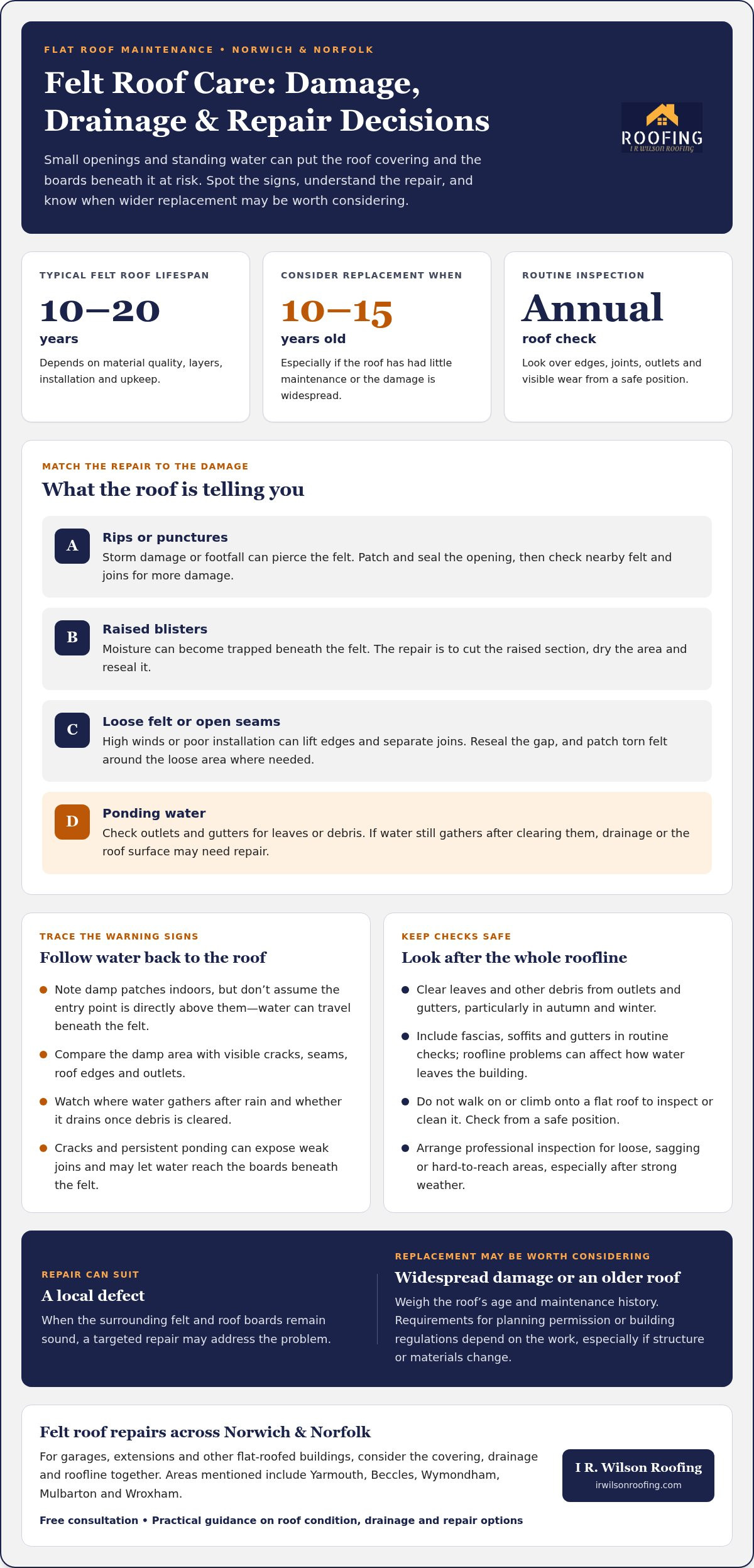
Leaks, splits, blisters and loose felt need repairs that close openings where water could enter. The right repair depends on the damage: patch rips or punctures, cut and reseal blisters, and secure loose sections at the joins.
Repairing Leaks, Splits and Blisters
Start by locating the leak and examining the felt for a split, puncture or raised blister. Storm damage and footfall can tear or pierce the surface, leaving the roof vulnerable to water ingress. A damp patch indoors may help you identify the area, but inspect the felt around it as well. Water can travel beneath the surface before appearing inside.
Blisters form when moisture becomes trapped beneath the felt, and a split blister can let water through. To repair it, cut the raised section, dry the area and reseal it. Patch and seal rips and punctures. Check the surrounding felt and joins for further openings, so the repair addresses more than the visible leak point.
Resealing Loose Felt
High winds or poor installation can loosen felt and open gaps at roof joins. Look for lifted edges, separated seams or sections that no longer lie flat. These openings let water travel beneath the covering, even when the main felt surface appears intact. Note where the felt has lifted and whether the damage reaches a join or roof edge.
Resealing closes a gap, while patching can cover felt torn around the loose area. The damaged section needs attention alongside the seam: sealing only the visible edge may leave a nearby split exposed. Check the repaired area and adjoining joins for remaining gaps. Prompt repairs can help limit water ingress before it reaches the boards below.
Storms or footfall can rip or puncture felt roofing, leaving the roof vulnerable to leaks. Blistered felt can be repaired by cutting, drying and resealing the raised section to close the damaged area.
Ponding water and drainage issues
Water that remains on a flat roof after rain can point to blocked drainage or a low area. Persistent ponding keeps felt wet and can leave cracks or weak joins exposed to water. Note where water gathers and whether it drains after rainfall. Regular felt roof maintenance in Norfolk includes watching for these patterns and noting whether the problem persists.
To trace a leak, look for damp patches indoors beneath the pooled area, then compare them with visible cracks, seams and outlets. Water can travel under felt before appearing inside, so the indoor mark may not be directly below the entry point. Check for debris near outlets and in gutters. If an outlet is clear but water still collects, the drainage or roof surface may need repair.
Leaves and other debris can obstruct outlets and gutters, slowing water flow across the roof. Cadw advises clearing debris from flat roofs and gutters, particularly during autumn and winter. Check around outlets after leaves fall, and note whether water still gathers after debris is cleared. Persistent ponding calls for attention to drainage as well as the felt surface.
Age-related cracking can let water beneath the felt, where it may rot the underlying boards and cause internal damage. Look for cracks alongside damp ceilings or deteriorating roof edges. Effective felt roof maintenance in Norfolk considers both the opening and the drainage conditions that keep water there. For ongoing ponding, flat roof repair support can help address drainage and felt damage together.
If ponding occurs alongside age-related cracks, the concern extends beyond the felt. Cracks can let water into the roof, where underlying boards may rot and internal damage may follow. Possible consequences include damage to both the boards beneath the felt and the roof interior.
Roof repairs in Norwich and Norfolk
Felt roofs cover garages, extensions and commercial buildings across Norwich and Norfolk. A sound repair plan considers the roof covering, drainage and roofline together.
Common Issues and Leak Diagnosis
Common problems include slipped felt, leaks, damp patches and sagging areas. Start by noting where moisture appears indoors, then relate it to roof edges, joints and visible damage. Water can travel beneath felt, so the leak may not be directly above the damp mark.
A clear explanation of the likely entry point and required repair helps you understand the proposed work. Look for an account of how the repair will address the leak, not just its indoor symptom.
Repair or Replacement Decisions
Repair can suit a local defect when the surrounding felt and roof boards remain sound. Consider replacement if damage is widespread, the roof is older than 10-15 years and has had little maintenance. A properly installed felt roof typically lasts 10-20 years, depending on material quality, layers and upkeep.
There isn’t one approval answer for every job. Planning permission and building regulations requirements depend on the scope of work, particularly where replacement changes the roof’s structure or materials. Establish the applicable requirements before work begins.
Inspection, Cleaning and Maintenance
Inspect the roof annually, checking edges, joints, outlets and visible wear. Carefully clear leaves and moss, and check gutters for blockages. Don’t walk on the roof to clean it: inspect from a safe position and leave access and repairs to a roofer.
Keep an eye on fascias, soffits and gutters too. A blocked gutter or damaged roofline can affect how water leaves the building, so include these areas in routine checks.
Roof Lifespan, Weather and Safety
Wind can loosen felt and expose gaps, making Norfolk’s exposed and coastal locations worth monitoring after strong weather. A typical felt roof lasts 10-20 years, though its condition depends on installation and maintenance.
Wet felt and roof edges can create a fall risk. Don’t climb onto a flat roof. Check from the ground and arrange a professional inspection for loose, sagging or hard-to-reach areas.
I R. Wilson Roofing: Flat Roof Repairs
I R. Wilson Roofing can help with damaged felt, recurring leaks or ponding water. Its flat roof repair and felt roofing services address problems with the roof covering, while gutter cleaning can clear debris that obstructs drainage. Fascias and soffits can also be considered when roofline damage affects the area around your roof.
If you’ve noticed damp inside, loose felt, or water that remains after rainfall, describe the signs and where they appear. This gives the team a useful starting point for discussing the repair work your roof may need. For a flat roof in Norwich or elsewhere in Norfolk, get in touch with I R. Wilson Roofing to discuss your repair, or visit the I R. Wilson Roofing website.
Take the next step towards a sound roof
A change in your roof’s condition may be easier to address before it affects more of the property. Note new damp marks, recurring leaks or water that lingers after rain. These details make a conversation about your roof clearer and more useful. A planned approach to felt roof maintenance in Norfolk can help focus future checks on areas that need attention.
I R. Wilson Roofing offers a free consultation to discuss your roof and possible next steps. Its Flat Roof Repairs, Felt Roofs, and Fascias and Soffits services cover common needs around flat roofs and rooflines. Share the signs you’ve noticed and discuss the options with the team.
A clear next step can make roof care feel more manageable.
Frequently Asked Questions
What are the signs that a felt roof needs repair or replacement?
Cracks, lifted edges, recurring leaks, damp patches or sagging areas can signal that a felt roof needs attention. A local defect may be repairable if the surrounding covering and boards remain sound. Widespread wear, repeated failures or signs of board rot can point towards replacement. Consider replacement if the roof is older than 10-15 years and has had little maintenance. Note visible changes from the ground.