What if that small damp patch on your upstairs ceiling isn't just a loose tile, but a sign that your chimney's structural integrity is under threat? We understand the stress that comes with spotting water ingress, particularly when you're met with confusing quotes and the fear of mould or structural damage. It’s a common worry for many in our community, but finding a permanent solution shouldn't be a source of frustration.
This guide explains how to secure your home with professional chimney leak repair Norwich residents can trust to stand up to our local weather. As a local, family-run roofing business, we believe in providing clear, honest advice that removes the guesswork from property maintenance. We’ll show you how to identify early warning signs and explain the essential repairs, from leadwork to masonry, required to meet current standards like Approved Document J. You'll learn exactly what's needed to keep your chimney watertight, ensuring your home remains safe and dry throughout 2026 and beyond.
Key Takeaways
- Spot the early warning signs of water ingress, including interior masonry staining and damp patches on your ceiling, before they lead to costly damage.
- Understand how the unique Norfolk freeze-thaw cycle affects your mortar and why professional chimney leak repair Norwich services are essential for a watertight finish.
- Discover the technical differences between minor repointing and full leadwork replacement to ensure you get the right solution for your roofline.
- Learn how simple preventative steps, such as installing cowls and booking annual inspections, can protect your home's structural integrity.
- Gain peace of mind by working with a local, family-run team that brings over 30 years of hands-on experience to every chimney project.
Signs of a Chimney Leak: How to Spot Trouble Early
Spotting a leak early is the best way to avoid the stress of a major structural repair. Many homeowners in Norwich don't realize they have a problem until a heavy winter storm forces water through the ceiling. By then, the moisture has often already compromised the timber and plaster. Our team at I R. Wilson Roofing has spent over 25 years helping families identify these issues before they escalate. We've found that a chimney leak often presents differently than a standard roof leak. While a broken tile might cause a drip several feet away from the entry point, chimney issues usually concentrate moisture directly around the chimney breast or the hearth.
If you notice any of the following signs, seeking professional chimney leak repair Norwich services quickly will prevent the moisture from reaching your floor joists or causing long-term mould growth. We recommend a simple walk-through of your home once a month to check for these subtle changes.
Internal Indicators of Water Ingress
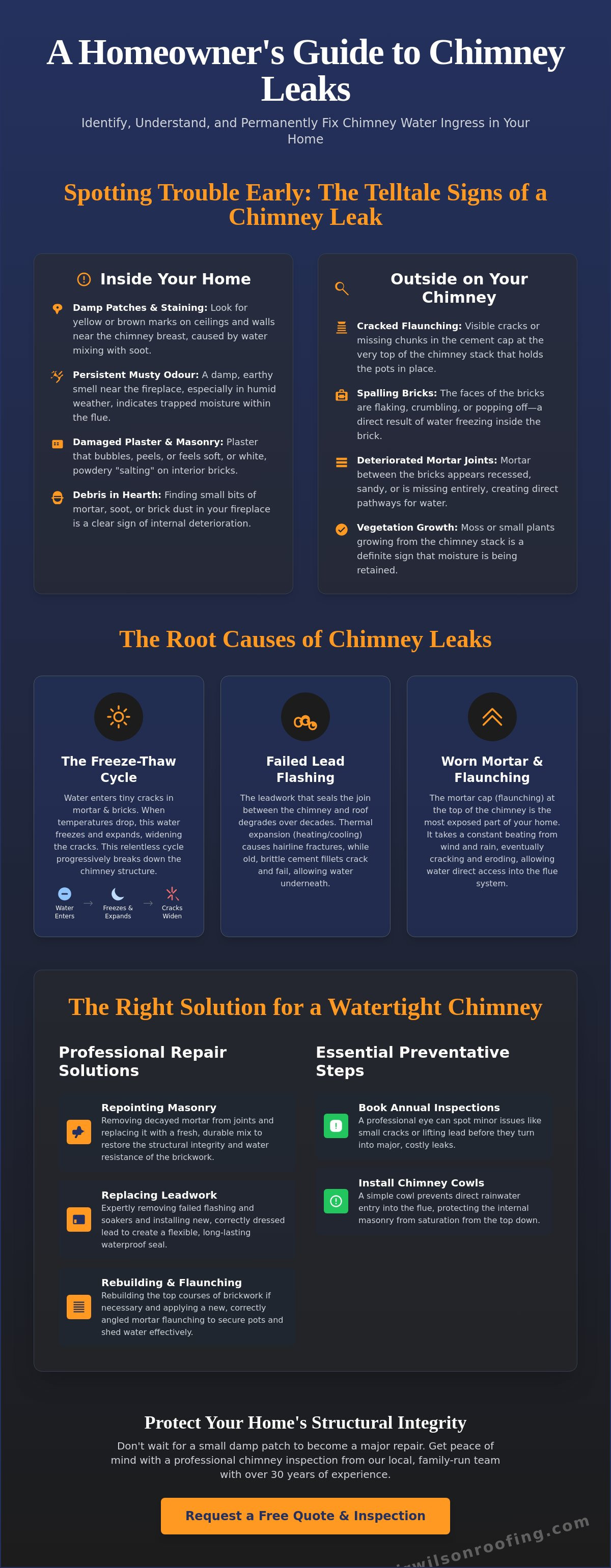
The most common sign of a leak is the appearance of brown or yellow staining on your wallpaper or ceiling. These marks are caused by water picking up soot and tar as it travels through the masonry. You might also notice a persistent musty odour near the fireplace, especially during humid weather. This smell indicates that water is trapped within the flue or the damp-proof course has failed. When moisture sits behind your walls, the internal plaster may begin to bubble, peel, or feel soft to the touch. In some cases, you might even see "salting" or white powdery deposits on the interior bricks. This is a sign that minerals are being leached out of the masonry by constant water saturation. If you find small bits of mortar or brick-dust in your hearth, it's a clear signal that the internal structure is deteriorating.
External Red Flags to Watch For
You don't need to climb a ladder to inspect your roof. We suggest using a pair of binoculars to safely check the stack from ground level. Look closely at the "flaunching," which is the mortar at the very top that holds the pots in place. If you see cracks or vegetation like moss growing there, water is definitely getting in. Understanding the basic chimney components and function helps you realize that the stack is a complex structure where masonry meets the roofline. Watch for "spalling," where the faces of the bricks begin to flake away. This happens when water enters the brick and freezes, causing the surface to pop off. Finally, check the mortar joints between the bricks. If they look recessed or are missing entirely, the stack is no longer watertight. Catching these external issues early allows us to perform targeted chimney leak repair Norwich before the damage requires a full rebuild.
Common Causes of Chimney Leaks in Norwich and Norfolk
Norfolk's weather presents a specific set of challenges for traditional masonry. We deal with damp North Sea winds and sharp temperature drops that create a relentless "freeze-thaw" cycle. When water enters small cracks in your chimney's mortar, it freezes and expands, physically pushing the bricks apart. Over time, these tiny fissures grow into significant gaps. Many older properties in East Anglia use traditional red bricks which are naturally more porous than modern engineering bricks. These bricks can soak up moisture like a sponge during a typical Norwich downpour, eventually allowing damp to seep through to your internal walls. Understanding these local factors is the first step toward the lasting chimney leak repair Norwich homes often require after a harsh winter.
Failed Lead Flashing and Soakers
Lead is a remarkable material, but it isn't immortal. It serves as the flexible bridge between your rigid chimney stack and your roof tiles. Over 30 or 40 years, the constant cycle of heating in the sun and cooling at night causes the metal to fatigue. This thermal expansion eventually creates hairline fractures that let water slip behind your tiles. We also find that many older properties in our area still rely on cement "fillets" instead of proper lead soakers and flashing. Cement is brittle and cannot move with your house. It almost always cracks, leaving your home vulnerable. If you're worried about the state of your stack, we've shared more tips on maintaining traditional Norfolk roofs to help you stay ahead of the weather.
Deteriorating Mortar and Flaunching
The flaunching is the heavy mortar "cap" that sits at the top of your chimney. Its job is to hold the chimney pots steady and direct rainwater away from the flue. Because it's the most exposed part of your home, it takes a beating from high winds and our region's salt-heavy air. Once the flaunching cracks, water doesn't just sit on the roof; it travels inside the stack. This is why we emphasize that chimney leak repair Norwich projects must address the very top of the structure to be successful. Proper repointing of the brickwork below the flaunching is equally vital to keep the entire stack stable and watertight. We take pride in matching the mortar to your existing brickwork, ensuring the repair is as aesthetically pleasing as it is functional.
Professional Repair Solutions: From Leadwork to Repointing
Choosing the right method for chimney leak repair Norwich depends entirely on the current state of your masonry and roofline junctions. We don't believe in one-size-fits-all fixes. Instead, our team assesses the specific point of entry to determine if you need a targeted repair or a more substantial intervention. Most issues we encounter fall into three categories: masonry erosion, leadwork failure, or top-level flaunching cracks. By identifying the exact cause, we can provide a watertight solution that protects your home without unnecessary expense. This focused approach is why we are trusted for chimney leak repair Norwich projects of all sizes.
Precision Repointing and Masonry Care
When mortar joints become sandy or start to fall out, the structural bond of your chimney weakens. We use a methodical process of raking out the old, failing mortar to a specific depth before applying fresh material. For many of the historic properties we service in Norwich, we utilize traditional lime mortar. Unlike modern cement, lime mortar allows the building to breathe and move slightly, which is essential for preventing the older, softer red bricks from cracking. This precision work keeps your bricks secure and prevents water from soaking into the heart of the stack.
Expert Lead Flashing Replacement
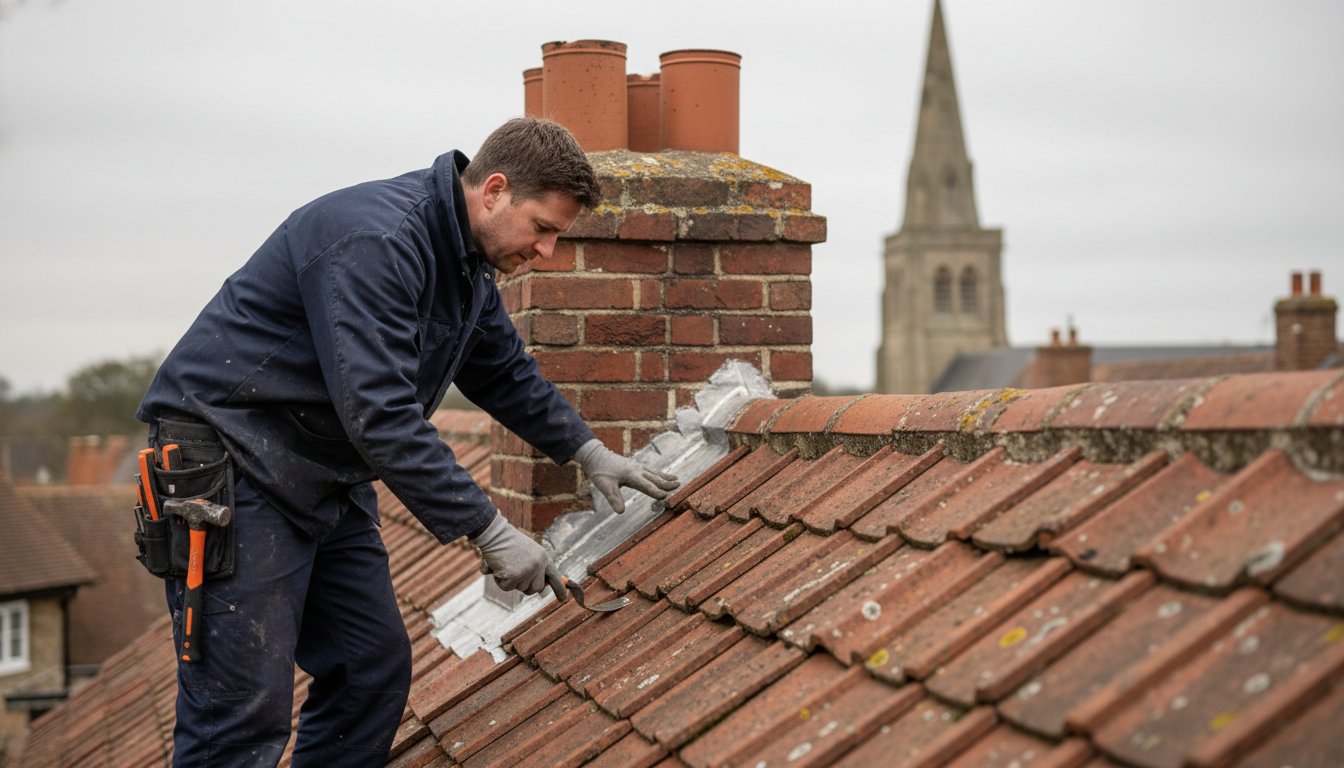
The base of the chimney is a high-risk area for water ingress. We specialize in installing high-quality leadwork, including step flashing that follows the line of your tiles and counter flashing that is tucked deeply into the brickwork joints. To ensure your new lead lasts for decades and maintains its appearance, we always apply patination oil. This treatment prevents the unsightly white carbonate staining that can occur after rainfall. As dedicated leadwork specialists, we ensure these junctions are flexible enough to handle thermal expansion while remaining completely watertight.
For more severe cases, a simple repair might not be enough. We use a clear framework to help you understand the best path forward for your property:
- Minor Repointing: Best for early-stage mortar erosion where bricks remain solid and correctly aligned.
- Flaunching and Pot Re-seating: Necessary when the mortar cap at the very top has cracked, allowing water to run down the flue.
- Partial or Full Rebuild: Essential if the stack has a visible lean, if the bricks are "spalling" (faces falling off), or if there is significant internal structural damage.
Our goal is always to restore the safety and integrity of your roofline. We take pride in our craftsmanship, ensuring that every project, from a small patch to a full rebuild, meets our high standards for durability and local heritage. We are always happy to explain the technical details of our work so you feel confident in the long-term protection of your home.
Chimney Maintenance: Preventing Damp and Structural Issues
Prevention is always better than cure. We've seen how a small crack in the flaunching can turn into a major project if it's left to the elements for too long. Maintaining your chimney isn't just about the way it looks from the street; it's about safeguarding the structural core of your house. In Norwich, where our winters can be damp and our autumns windy, a proactive approach keeps your home dry and your repair bills low. By taking a few simple steps now, you can avoid the stress of emergency call-outs during the next big storm.
Installing Chimney Cowls and Caps
An open chimney pot is essentially a direct funnel for rainwater to enter your home. Installing a cowl is one of the simplest ways to prevent internal damp. We fit various types depending on your specific needs. Rain cowls deflect water away from the flue, while bird-guard cowls prevent jackdaws from nesting and creating dangerous blockages. If you have an unused fireplace, a ventilation cowl is essential. It allows the stack to "breathe," which prevents the build-up of condensation and those musty smells often associated with trapped moisture. These small additions are a cost-effective way to reduce the need for a chimney leak repair Norwich service in the future.
The Value of Regular Inspections
We recommend a professional visual check at least once a year, ideally after the severe storms that often hit Norfolk in late autumn. Catching a loose tile or a hairline crack in the mortar now can save you thousands in structural repairs later. Early detection is the key to avoiding a full chimney leak repair Norwich project. For a complete look at maintaining your property's exterior, you can read our Norwich roof cleaning guide. This helps you monitor moss growth, which can trap moisture against your chimney's base and accelerate the decay of your mortar joints.
Don't overlook the role of your guttering. When gutters near the chimney stack become blocked with leaves or silt, water can overflow and saturate the surrounding masonry. This constant moisture weakens the mortar joints and can lead to internal staining that looks like a direct chimney leak. We frequently see homeowners attempt "DIY" fixes using silicone sealant or mastic. While these might seem like quick solutions, they usually fail within months because they can't handle the way a chimney expands and contracts with the sun. These temporary patches often trap moisture inside the brickwork, which causes the bricks to flake or "spall." This leads to much more expensive professional fixes down the line. If you're unsure about the current condition of your roofline, you can read more about our local maintenance tips to help you plan your next steps.
Reliable Chimney Repair Services from I R. Wilson Roofing
Choosing a team for your chimney leak repair Norwich project shouldn't feel like a gamble. We understand that your home is your most significant investment, and a leaking chimney can feel like a direct threat to that security. As a family-run business with over 30 years of experience in Norwich and the surrounding Norfolk villages, we've built our reputation on a foundation of honest advice and dependable craftsmanship. Ian and Ben Wilson remain directly involved in every project we take on. This hands-on approach ensures that the high standards we've set over three decades are maintained on every roof we climb.
We believe in providing cost-effective solutions that solve the root cause of the problem rather than just masking the symptoms. Whether you're dealing with a minor mortar failure or a complex leadwork issue, we'll explain exactly what's needed in plain English. Our goal is to provide peace of mind through transparent communication and a job well done the first time.
Why Choose a Local Family Business?
Local accountability matters in the roofing trade. We aren't a faceless corporation or an national aggregator; we're your neighbors. When we perform a chimney leak repair Norwich, our family name is attached to the work. This creates a level of personal responsibility that you simply won't find with larger, transactional companies. We combine this neighborly warmth with a deep technical authority in both traditional and modern roofing techniques. Our team is equally comfortable working on the steep pitches of a Victorian terrace as we are addressing chimney junctions on a modern flat roof. We take immense pride in our heritage and the long-term relationships we've built with homeowners across the city.
Get Your Professional Chimney Assessment
If you've spotted any of the warning signs we've discussed, the best time to act is now. We offer free, no-obligation quotations for all residents in Norwich and Norfolk. When we visit your property, we'll conduct a thorough assessment of your chimney stack, flashing, and flaunching. We'll provide you with a clear, fixed-price quote so you know exactly where you stand before any work begins. For more tips on what to look for when hiring a contractor, you can read our Norwich roofer buying guide. We want you to feel confident that you're making the right choice for your home's future. Don't let a small leak become a structural headache. Contact I R. Wilson Roofing for an expert chimney inspection and let our family protect yours.
Secure Your Roofline for the Seasons Ahead
Protecting your home from water ingress starts with understanding the specific vulnerabilities of your chimney stack. We've explored how identifying early signs like damp patches and deteriorating mortar can prevent minor issues from becoming major structural headaches. By choosing professional chimney leak repair Norwich services, you ensure that traditional masonry techniques and expert leadwork are used to create a truly watertight seal. Regular maintenance, such as installing cowls and booking annual inspections, remains the most effective way to safeguard your property against Norfolk's unpredictable weather.
Our team at I R. Wilson Roofing has been family-run since 1994, and we take deep pride in being the expert leadwork specialists highly recommended by local Norwich residents. Ian and Ben are ready to bring their decades of hands-on experience to your property, offering the honest advice and reliable craftsmanship your home deserves. Don't wait for the next storm to test your roof's integrity. Get a Free Chimney Repair Quote from Ian and Ben Today and enjoy the peace of mind that comes with a professionally secured chimney. We look forward to helping you keep your home dry and safe for years to come.
Frequently Asked Questions
How much does chimney leak repair cost in Norwich?
The cost of a repair depends entirely on the specific issue we find during our inspection. A minor job involving the replacement of a few bricks or sealing a small crack will be priced differently than a full leadwork replacement or a stack rebuild. We recommend that you check with local professionals for a tailored quote that reflects the current state of your masonry and the access requirements of your property.
Can I fix a chimney leak from the inside of my house?
You cannot fix a chimney leak from the inside. While you might be tempted to apply damp-proof paint to hide a staining ceiling, this only masks the symptoms while the internal structure continues to decay. A permanent fix requires us to identify and seal the entry point on the roof. Addressing the lead flashing or mortar joints externally is the only way to stop water from saturating your home's masonry.
How long does it take to repoint a chimney stack?
Most standard repointing projects are completed within one to two days. This timeframe allows us to carefully rake out the old, failing mortar to the correct depth before applying the fresh mix. The exact duration depends on the size of your chimney and the weather conditions. We never rush this process because a methodical application is essential for ensuring the new joints remain watertight for decades to come.
Do I need scaffolding for a chimney repair in Norfolk?
Scaffolding is almost always necessary for chimney work to ensure the safety of the team and the protection of your roof tiles. While some very minor tasks can be reached using specialized roofing ladders, most professional repairs require a stable working platform. You should check whether your contractor manages the scaffolding arrangements or if this is something you need to coordinate separately with a local provider.
Is a leaking chimney covered by my home insurance?
Insurance coverage usually depends on what caused the damage. Policies often cover "perils" like storm damage or a lightning strike that causes sudden water ingress. However, most insurers will not pay for repairs caused by gradual wear, such as old mortar or weathered leadwork. It is best to consult your policy documents or speak directly with your insurance provider to see if your specific chimney leak repair Norwich is covered.
What happens if I leave a chimney leak untreated?
Ignoring a leak leads to expensive structural problems and potential health risks. Constant moisture will eventually rot your roof timbers and cause the internal plasterwork on your chimney breast to fail and fall away. Damp conditions also encourage the growth of black mould, which can affect your family's respiratory health. In the worst cases, the masonry can become so unstable that the entire stack requires a full rebuild.
How do I know if my chimney needs repointing or a full rebuild?
Repointing is the right choice if your bricks are still in good condition but the mortar is crumbling away. We look for "spalling," where the faces of the bricks are flaking off, or a visible lean in the stack as signs that a rebuild is necessary. We can help you determine the best chimney leak repair Norwich strategy by assessing the structural integrity of your masonry during a professional site visit.
Why is water coming down my chimney flue when it rains?
Water inside the flue is usually a sign that the top of your chimney is unprotected. This happens when the flaunching has cracked or if your chimney pot lacks a cowl. Without a cowl, rain falls directly into the open pot and travels down the flue to your hearth. Installing a high-quality cowl is a simple, effective way to stop this type of leak and prevent birds from nesting in the stack.


