Imagine waking up after a heavy Norfolk downpour only to find your gutters sagging and dark, damp patches appearing on your loft insulation. For many homeowners, this is the first sign that their timber roofline has finally succumbed to our wet East Anglian climate. You likely already know that ignoring these signs leads to more expensive structural repairs; yet, the stress of finding a trader who won't just "cap over" the rot is enough to make anyone hesitate. We believe your home deserves better than a quick fix that simply hides a deeper problem.
If you are looking for professional fascia and soffit replacement Norwich services, you've come to the right place. We understand that your roofline is the handshake of your home, and it needs to be as durable as it is attractive. This 2026 guide will show you how to achieve a maintenance-free exterior that protects against damp and increases your property value for decades to come. We'll walk you through the essential differences between capping and full replacement, the latest ventilation standards required by building regulations, and how the right materials ensure your home stays dry and secure.
Key Takeaways
- Learn the specific roles of fascias and soffits in protecting your roof rafters and maintaining vital attic ventilation.
- Discover why a full fascia and soffit replacement Norwich is superior to "capping," which can trap moisture and accelerate timber decay.
- Compare the benefits of low-maintenance uPVC against traditional timber for homes in Norfolk conservation areas.
- Understand our methodical replacement process, including the critical inspection of rafter tails for signs of rot.
- Find out how choosing a family-run business with 30 years of local experience provides peace of mind for your property.
Understanding Your Roofline: What Are Fascias and Soffits?
The roofline is the structural bridge between your walls and your roof tiles. It's the most vulnerable point for water ingress in many Norfolk homes because it bears the brunt of driving rain and wind. While most people don't think about these boards until there's a leak, understanding their role is the first step toward a lasting home. These components do more than just finish the look of your house; they are the primary line of defence for your rafters and loft space.
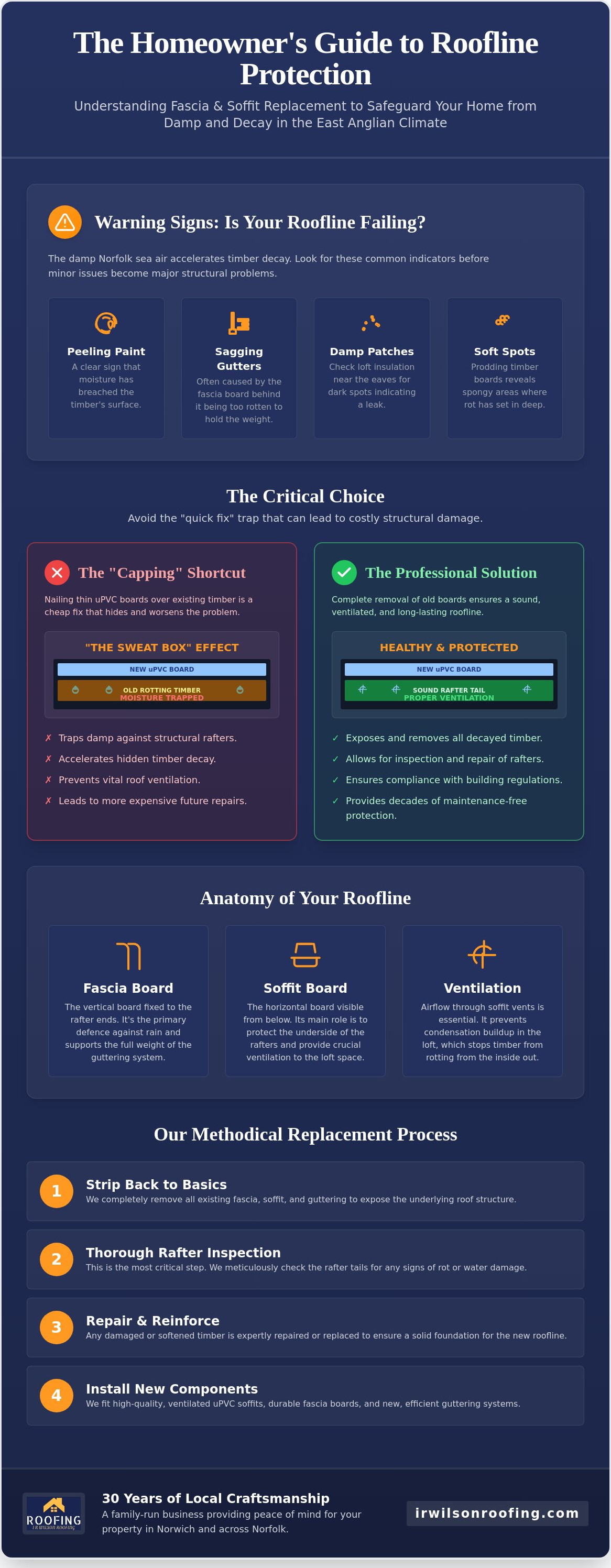
A fascia is the vertical board that carries the weight of your guttering. It's often the first thing you see from the street and is responsible for supporting thousands of litres of water during a heavy storm. The soffit is the horizontal board visible from below that provides vital ventilation to your roof space. For a deeper look at the technical history, you can find the architectural definition of fascia here.
To better understand how these components look and function, watch this helpful video:
The Functional Anatomy of Your Eaves
Fascias and soffits work together to create a weather-tight seal around your home. The fascia acts as the primary barrier against rain, while the soffit protects the underside of the rafters. Airflow is the most critical part of this relationship. Modern soffit vents allow air to circulate, which prevents loft condensation and prevents timber from rotting from the inside out. For semi-detached and detached Norwich properties, bargeboards play a similar role. They protect the gable ends and ensure the roof tiles at the edge stay secure against the wind. When these parts fail, the structural integrity of your entire roof is at risk.
Identifying Common Signs of Failure
If you haven't considered a fascia and soffit replacement Norwich homeowners often wait until damage is visible from the ground. Look for peeling paint or "soft spots" on traditional timber boards. These are clear indicators that moisture has breached the surface. Sagging gutters are another major warning sign. While you might think it's just a loose bracket, it's often because the fascia board behind it has become too rotten to hold the weight. When considering a fascia and soffit replacement Norwich residents should look for these signs of wear before the next winter storm arrives.
In our experience, the damp Norfolk sea air accelerates timber decay significantly. The salt and moisture in the atmosphere can turn a small crack into a structural issue in just a few seasons. We've seen many homes where the exterior looks fine, but the rafter tails behind the boards have already begun to soften. Catching these issues early is the key to protecting your property's value and avoiding more expensive roof repairs later.
Full Replacement vs. Capping: Avoiding the "Quick Fix" Trap
When you start looking for quotes, you'll likely notice a significant price gap between different contractors. Some traders offer "capping," which involves nailing thin uPVC boards directly over your existing wooden fascias. It's a tempting option because it's cheaper and faster. However, this is often a shortcut that leads to structural disaster. At I R. Wilson Roofing, we refer to this as the "Sweat Box" effect. By sealing old, potentially damp timber behind a layer of plastic, you trap moisture against your home's rafters. Without the ability to breathe, the wood rots at an accelerated rate, hidden from view until the damage is severe.
Choosing a full fascia and soffit replacement Norwich ensures that your home is protected from the inside out. We've seen many cases where capping has caused rafters to soften so much that they can no longer support the weight of the roof tiles. Maintaining proper airflow is a critical requirement under UK building regulations, and capping rarely allows for the ventilation your loft space needs to stay dry. Investing in a full replacement might cost more upfront, but it prevents a much larger bill for structural timber repairs just five years down the line.
Why We Refuse to "Cover Up" Problems
We believe in doing the job right the first time. Our team strips every project back to the structural timber rafters. This transparency allows us to inspect the rafter tails for any signs of decay that need addressing. It's also the only way to effectively deal with bird nests or pest infestations that often hide behind old, crumbling boards. Once the area is clear and sound, we install modern eaves protectors. These felt-support trays prevent water from ponding behind the guttering and direct it safely away from your roofline. It's a methodical approach that provides true peace of mind.
When (If Ever) is Capping Appropriate?
In very rare circumstances, capping might be suitable for brand-new, pressure-treated timber that is in pristine condition. However, for the vast majority of period properties and established homes in our area, it's simply not an option we recommend. About 90% of the projects we undertake require a full-depth replacement to ensure the property remains weather-tight. If you want to know more about our commitment to quality, you can read our guide on expert roofers in Norwich. We take pride in our reputation, and that means being honest about what your home actually needs.
If you're worried about the state of your timber or noticed sagging gutters, we're happy to provide a professional assessment of your roofline's current health.
Material Selection: uPVC, Timber, and Aluminium in Norfolk
Choosing the right material for your fascia and soffit replacement Norwich project depends largely on your home's age, location, and architectural style. While uPVC has become the industry standard for its durability, it isn't the only option available. We work with a variety of materials to ensure your roofline matches the character of your property while providing the long-term protection your home needs. Each material offers distinct advantages, from the low-maintenance nature of modern plastics to the historical accuracy of traditional wood.
uPVC is the dominant choice for modern Norwich estates and suburban homes. It's essentially maintenance-free, requiring only an occasional wipe down with soapy water to keep it looking new. Unlike wood, it won't rot, warp, or require regular painting. This makes it an ideal solution for homeowners who want to "fit and forget" their roofline. In our experience, high-quality uPVC boards provide a clean, sharp finish that instantly refreshes the look of a property.
For those living in high-exposure areas or seeking a contemporary look, aluminium is a premium, ultra-durable choice. It's incredibly light yet virtually indestructible against the elements. While it carries a higher initial cost, its lifespan often exceeds 40 years, making it a sound investment for coastal or high-exposure properties in Norfolk. Conversely, timber remains the essential choice for many of Norwich's conservation areas, such as the Golden Triangle or the city centre. In these neighbourhoods, planning regulations often dictate that you must use traditional timber to maintain the area's historical integrity.
The Rise of Woodgrain and Coloured uPVC
Homeowners are no longer limited to the standard white boards of the past. Anthracite Grey and Rosewood finishes have become incredibly popular in 2026, often used to complement modern window frames and composite doors. Modern uPVC technology has significantly improved UV stability, which prevents the yellowing or warping often seen in older, cheaper installations. Modern uPVC can now mimic traditional timber aesthetics for period homes, providing the visual warmth of wood without the maintenance burden. This allows you to achieve a heritage look while enjoying the benefits of a rot-proof material.
Matching Traditional Norfolk Aesthetics
Norwich has a unique architectural heritage defined by red brickwork and traditional Norfolk pantiles. Your choice of roofline material should complement these features, not clash with them. In Victorian and Edwardian neighbourhoods, decorative bargeboards are a common feature that adds significant character to gable ends. Replacing these requires a steady hand and an eye for detail to preserve the original charm. Choosing the right material is critical for roof replacement Norwich projects, as the roofline acts as the visual frame for your entire property. We take the time to ensure the colour and profile of your new boards enhance your home's kerb appeal and protect its market value.
The Professional Replacement Process: What to Expect
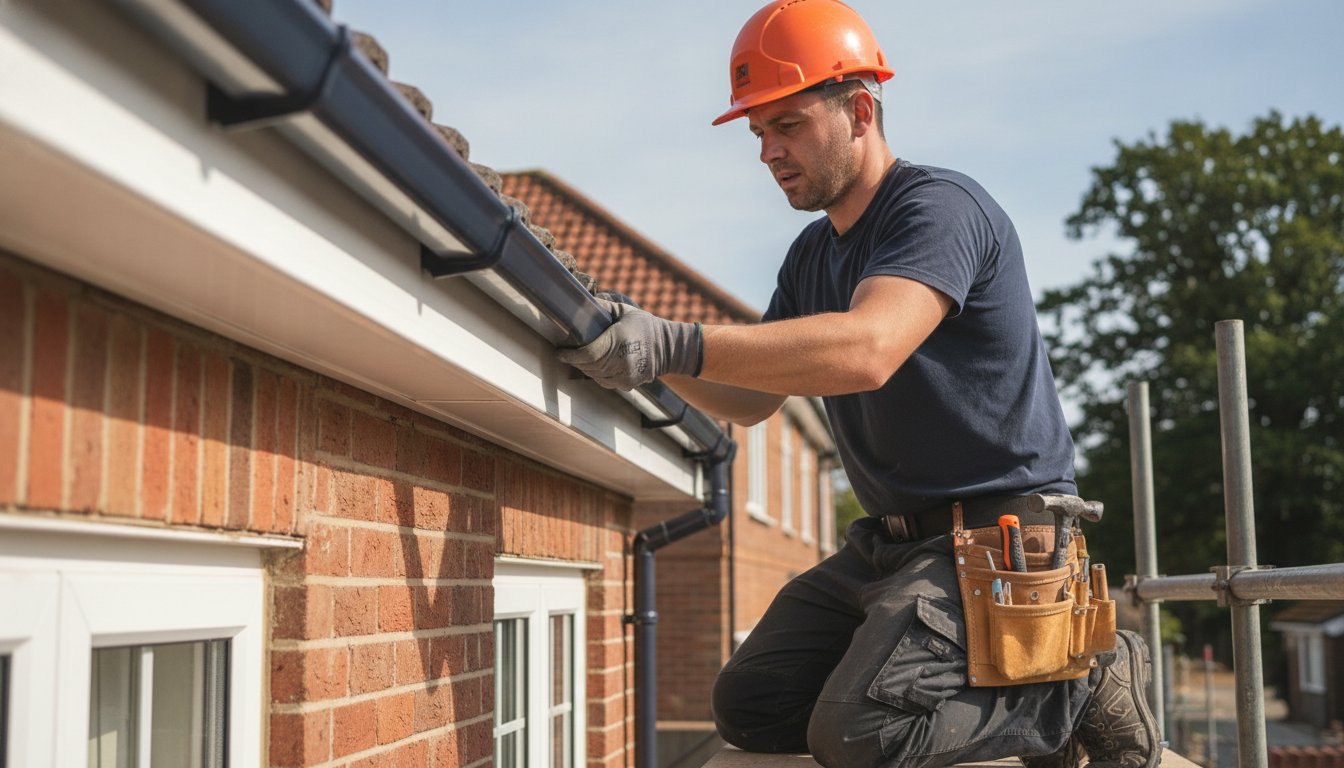
A high-quality fascia and soffit replacement Norwich homeowners can depend on involves a disciplined, multi-step approach. We don't believe in cutting corners because we know how much you value the safety of your property. The process begins with establishing safe access using professional scaffolding or towers. This provides our team with a stable platform to work from and ensures we can reach every corner of your roofline without compromise. Once we're in position, we carefully lift the first row of roof tiles to expose the underlying felt and rafter tails.
The next phase is the complete removal of all existing timber boards. We never leave old wood behind because it can hide active rot or pest issues. After the boards are gone, we perform a thorough inspection of the rafter tails. If we find any softening or decay, we address it immediately to ensure the new installation has a solid structural foundation. Following this, we install the new uPVC or timber boards, alongside critical eaves trays. These felt protectors are essential for directing water into your gutters rather than allowing it to seep behind your new fascias. We then integrate the system with our guttering services in Norwich to guarantee a seamless water management system. Finally, we conduct a rigorous inspection and remove all debris from your site.
The Secret to Longevity: Eaves Trays and Ventilation
Many older homes suffer from "felt ponding," where the edge of the roofing felt has rotted away or sagged over time. We solve this by installing high-impact eaves protectors. These rigid trays replace the rotted felt edge and ensure that every drop of rain goes exactly where it should: into the gutter. We also pay close attention to airflow. Depending on your roof's pitch, we calculate the precise amount of ventilation needed to prevent condensation in your loft space. This methodical attention to detail is what allows our installations to last for decades without the need for constant maintenance.
Working with Norfolk Weather
Our local climate requires a proactive approach to scheduling. We monitor the forecast closely to ensure your home is never left exposed to heavy rain during the transition. Because our air can be quite salty near the coast, we exclusively use stainless steel fixings. This prevents the unsightly "rust bleeding" often seen on cheaper installations where standard nails are used. We also manage complex transitions, such as where the main roofline meets a dormer requiring flat roof repairs. If you want to ensure your home is protected by a team that understands these technical nuances, you can book a professional roofline assessment with us today.
I R. Wilson Roofing: 30 Years of Local Craftsmanship
Choosing a contractor for your home maintenance is a decision based on trust. Since 1994, I R. Wilson Roofing has been a cornerstone of the local community, providing a family-run legacy of roofing excellence. We believe that the best work comes from personal accountability. This is why Ian and Ben Wilson maintain direct involvement in every project we undertake. When we arrive at your property, you're getting decades of combined experience and a commitment to doing the job right the first time. We've built our business on the simple principle that a job well done is the best advertisement we could have.
Our reputation for reliability extends across all our services, from urgent storm damage repairs to comprehensive roofline refurbishments. We understand that property maintenance can be stressful, so we aim to make the process as straightforward as possible. One way we do this is through our fixed-price quotations. We provide a clear, detailed breakdown of the work required so that you aren't surprised by "hidden extras" once the project has started. This transparency is a hallmark of how we've operated for over 30 years in Norwich.
The Benefit of a Family-Run Business
One of the biggest advantages of working with us is the personal touch. You won't find any commission-based salesmen here. When you contact us for a fascia and soffit replacement Norwich, you deal directly with the expert roofers who will be performing the work. This eliminates the risk of miscommunication and ensures that the advice you receive is grounded in technical reality, not a sales target. Our local reputation has been earned through thousands of word-of-mouth recommendations from homeowners across Norfolk who value honest, hardworking service.
Craftsmanship is a point of pride for our team. Unlike national chains that often prioritise speed and volume, we take the time to ensure every joint is perfect and every fixing is secure. We live and work in this community, so we see our finished projects every day. That sense of local heritage drives us to maintain the highest standards on every street, from the historic city centre to the newest housing developments. We treat your property with the same care and respect as we would our own homes.
Get Your Professional Roofline Quote
We invite you to experience the difference that 30 years of local expertise can make. Our team provides transparent and competitive quotations for any fascia and soffit replacement Norwich project. We don't just give you a price; we offer expert advice on which materials will be the most cost-effective and durable for your specific property type. Whether you are looking for the low-maintenance benefits of uPVC or need to match traditional features in a conservation area, we have the skills to deliver an exceptional result. You can request your fascia and soffit replacement quote today and take the first step toward a maintenance-free roofline.
Securing Your Home's Future in Norwich
Your roofline is more than just a decorative trim. It's a critical barrier that keeps the Norfolk damp away from your home's structural timbers. We've explored why a full-depth fascia and soffit replacement Norwich is the only way to ensure your rafters stay dry and why "capping over" old rot is a gamble you don't need to take. By choosing the right materials and insisting on modern eaves protectors, you're making a long-term investment in your property's health.
Since 1994, our family-run business has focused on providing this exact peace of mind. We are specialists in timber-to-uPVC conversions, ensuring that every project we touch is built to last for decades. You deserve a roofline that looks as good as it performs, handled by professionals who value their local reputation as much as you value your home. Our team takes the time to do things properly, so you can stop worrying about rotting wood and start enjoying a maintenance-free exterior.
Get a Professional Quote for Your Norwich Roofline Replacement. We look forward to helping you protect your property for years to come.
Frequently Asked Questions
How much does it cost to replace fascias and soffits in Norwich?
The total cost for your project depends on several factors, including the size of your property, the complexity of the roofline, and the materials you select. Because we believe in transparency, we provide fixed-price quotations only after a physical assessment of your home. This approach ensures you don't face unexpected "hidden extras" mid-project and allows us to account for the actual condition of your rafter tails.
How long does a typical roofline replacement take to complete?
Most standard semi-detached or detached properties take between two and four days to complete from start to finish. Larger homes or those with complex architectural features may require up to a week. We work in manageable sections to ensure your home is always protected from the weather and never left exposed to rain overnight.
Can I replace my fascias and soffits without replacing the gutters?
You can reuse your existing gutters if they are in excellent condition, but we usually recommend a full upgrade. Since we must remove the guttering to access the fascia boards, the additional labour for installing new gutters is minimal. Replacing everything together ensures the entire system is covered by a fresh warranty and eliminates the risk of old seals failing shortly after your new roofline is installed.
What is the difference between capping and full replacement?
Full replacement involves stripping away all old timber boards to the bare rafters, whereas capping involves nailing thin uPVC over your existing wood. We strictly advocate for full fascia and soffit replacement Norwich services because capping often traps moisture against the wood. This "sweat box" effect can cause your structural rafters to rot rapidly without you ever noticing from the ground.
Do I need scaffolding for a fascia and soffit replacement?
We almost always use professional scaffolding or secure access towers to ensure the safety of our team and your property. Stable platforms allow us to perform the precise carpentry required for a high-quality finish. While some companies might use ladders to cut costs, we believe the risk to the installation quality and site safety is simply too high.
Are uPVC fascias and soffits really maintenance-free?
Modern uPVC is incredibly durable and requires no painting, sanding, or chemical treatments throughout its lifespan. It won't rot, peel, or warp like traditional timber. The only maintenance required is a quick wipe down with soapy water every year or two to remove surface dust or cobwebs. This makes it an ideal, cost-effective choice for busy homeowners.
Will new fascias and soffits help stop damp in my loft?
Yes, a professionally installed roofline is a primary defence against loft damp and condensation. By including modern soffit vents and eaves protectors, we ensure that air flows correctly through your roof space. This ventilation is critical for preventing the moisture buildup that leads to mould and structural timber decay, keeping your home's "lid" healthy and dry.
Do I need planning permission to change my roofline in a Norwich conservation area?
While standard replacements are usually considered permitted development, properties in Norwich conservation areas often face stricter rules. In neighbourhoods like the Golden Triangle, you may be required to use specific materials or profiles to maintain the local character. We have extensive experience working with local regulations and can advise you on whether traditional timber or high-quality uPVC is the most appropriate choice for your specific street.