Did you know that many roof structures deemed "beyond saving" don't actually require a full, five-figure replacement? It's a common misconception that a few decaying beams mean your entire roof is destined for the skip. When it comes to roof timber repair Norwich homeowners often fear the worst, but a targeted restoration is frequently the more sensible, cost-effective path. We understand the anxiety that comes with spotting a sagging ridge or the tell-tale signs of wood rot in your loft. You want a home that's safe and stable, but you're likely worried about hidden costs and the terrifying thought of structural collapse.
We've spent years perfecting the art of timber restoration to keep local properties standing strong. Our approach focuses on surgical repairs, identifying exactly which trusses need attention to avoid the disruption and expense of a complete overhaul. In this article, we'll help you identify different types of timber damage and explain how professional repairs meet the latest 2026 building standards. You'll discover how to restore your home's structural health while gaining the peace of mind that comes from dependable, expert craftsmanship and honest, local advice.
Key Takeaways
- Learn how targeted structural restoration can save you thousands of pounds by avoiding the massive expense of a complete roof replacement.
- Discover the specific visual cues, such as sagging ridgelines or interior plaster cracks, that signal your roof timbers require urgent attention.
- Understand the structural differences between traditional rafters in Victorian homes and the modern engineered trusses found in newer Norwich developments.
- Gain insight into the professional process for roof timber repair Norwich homeowners trust to restore stability through expert surveys and methodical bracing.
- Find out how to ensure your property remains safe and compliant with the latest building regulations during complex structural timber work.
Understanding Roof Trusses and Timbers in Norwich Properties
Your roof is more than just a layer of tiles and felt. It relies on a complex network of wood that keeps your home standing. A Timber roof truss acts as the structural skeleton of your property. It ensures that the immense weight of your roof is safely transferred down to the load-bearing walls. Without this internal strength, your home would be vulnerable to the elements and structural shifts.
In Norwich, our homes face unique challenges. We often deal with biting North Sea winds and heavy seasonal rain that put significant pressure on aged wood. Ensuring the structural integrity of these timbers is vital to prevent sagging or total failure. When we perform a roof timber repair Norwich residents can trust, we always prioritize using high-grade, pressure-treated timber to resist damp and rot for decades to come.
To see how specific timber damage is addressed in a single rafter, watch this helpful video:
Traditional Rafters vs. Modern Trussed Rafters
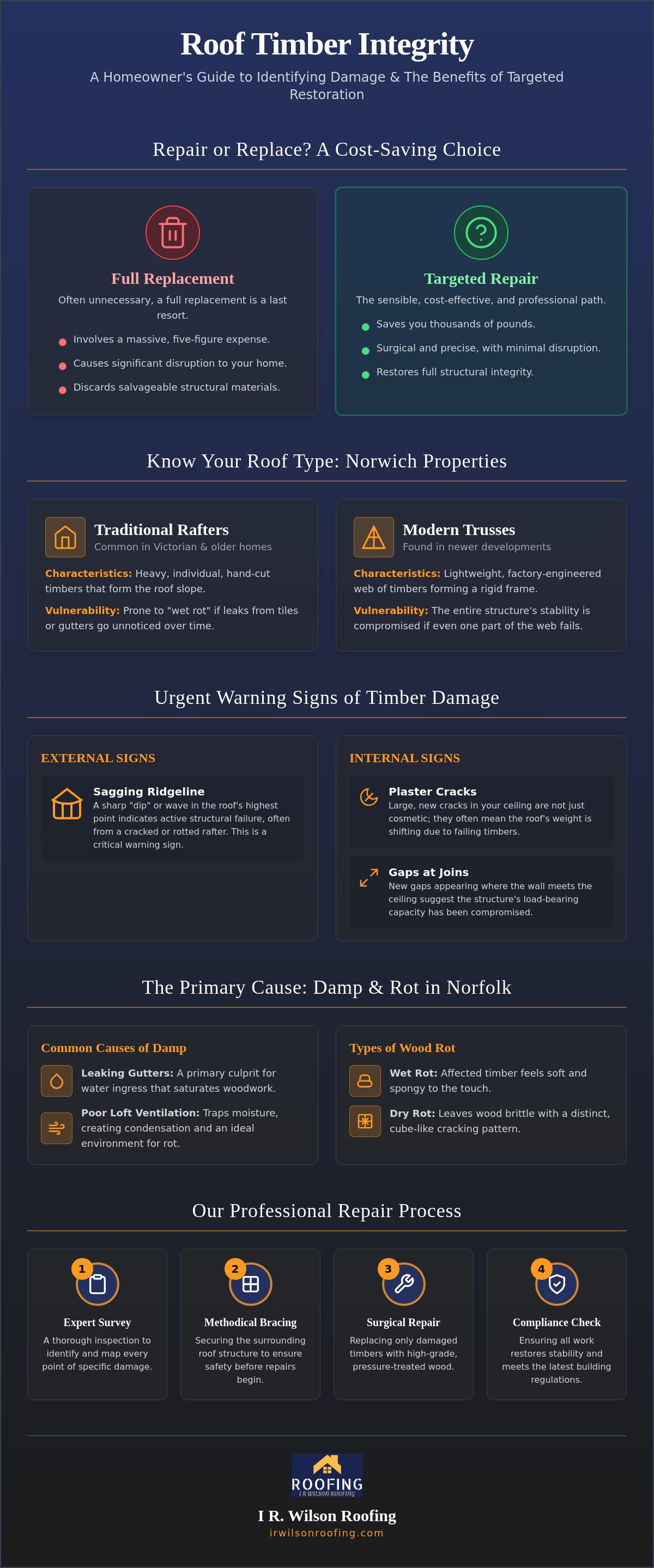
The architectural history of Norwich means repair methods aren't one-size-fits-all. This is why roof timber repair Norwich projects require a deep understanding of local building eras. If you live in a Victorian terrace in the Golden Triangle, your roof likely features heavy, hand-cut rafters. These are sturdy but can suffer from "wet rot" if leaks go unnoticed. Conversely, modern homes in areas like Sprowston use factory-engineered, lightweight trusses. These modern components are efficient but require specialized handling because if one part of the web fails, the whole structure's stability is compromised.
The Role of Timber in Your Roof’s Health
Your roof's woodwork works hard every day. It balances the weight of heavy clay tiles, winter snow, and the uplift from strong gusts. A roof truss is the primary framework that transfers the weight of the roof to the load-bearing walls. We ensure every piece of timber we replace is high-grade and treated to withstand Norfolk’s damp climate. This methodical approach protects your investment and keeps your family safe.
Identifying Common Signs of Roof Timber Damage
Spotting early warning signs of structural decay is the most effective way to manage your home's maintenance budget. While many local roofing companies focus only on slipped tiles, we believe it's vital to look deeper at the skeleton of the building. Understanding the health of your woodwork requires both external observation and a trip into the loft. If you live in an older property, you might find expert guidance on timber frames helpful for understanding how traditional structures breathe and age.
Internal warnings are just as telling as external ones. Large cracks in your ceiling plaster or new gaps where the wall meets the ceiling aren't just cosmetic issues. They often indicate that the roof weight is shifting because the timber beneath is no longer doing its job. When inspecting for roof timber repair Norwich needs, we look for these subtle shifts that suggest the load-bearing capacity has been compromised.
Sagging and Deflection: What It Means
Take a walk across the street from your Norwich home and look at the ridgeline. In heritage Victorian terraces, you might notice a slight wave. This is often just natural settling. However, a sharp "dip" or a section of tiles that looks lower than the rest usually points to active structural failure. This deflection often means a rafter or purlin has cracked or rotted through. Catching this early prevents the need for the major structural repairs that can cost upwards of £6,000.
Timber Rot and Damp Issues in Norfolk
Damp is the biggest enemy of Norfolk roofs. Leaking gutters are a primary culprit for wood rot, which is why we often recommend professional gutter cleaning as a first line of defence. Poor loft ventilation also leads to condensation, creating the perfect environment for rot to thrive. In the loft, check the health of the wood itself. Wet rot feels spongy, while dry rot leaves timber brittle with a distinct cracking pattern. Don't ignore tiny holes either; these are clear signs of woodworm infestations.
For modern homes, we also check the mechanical health of the structure. Look for bent metal connector plates or split timber chords in engineered trusses. If you've noticed any of these signs, it's wise to check your timber health before a minor issue becomes a dangerous problem.
The Professional Roof Timber Repair Process
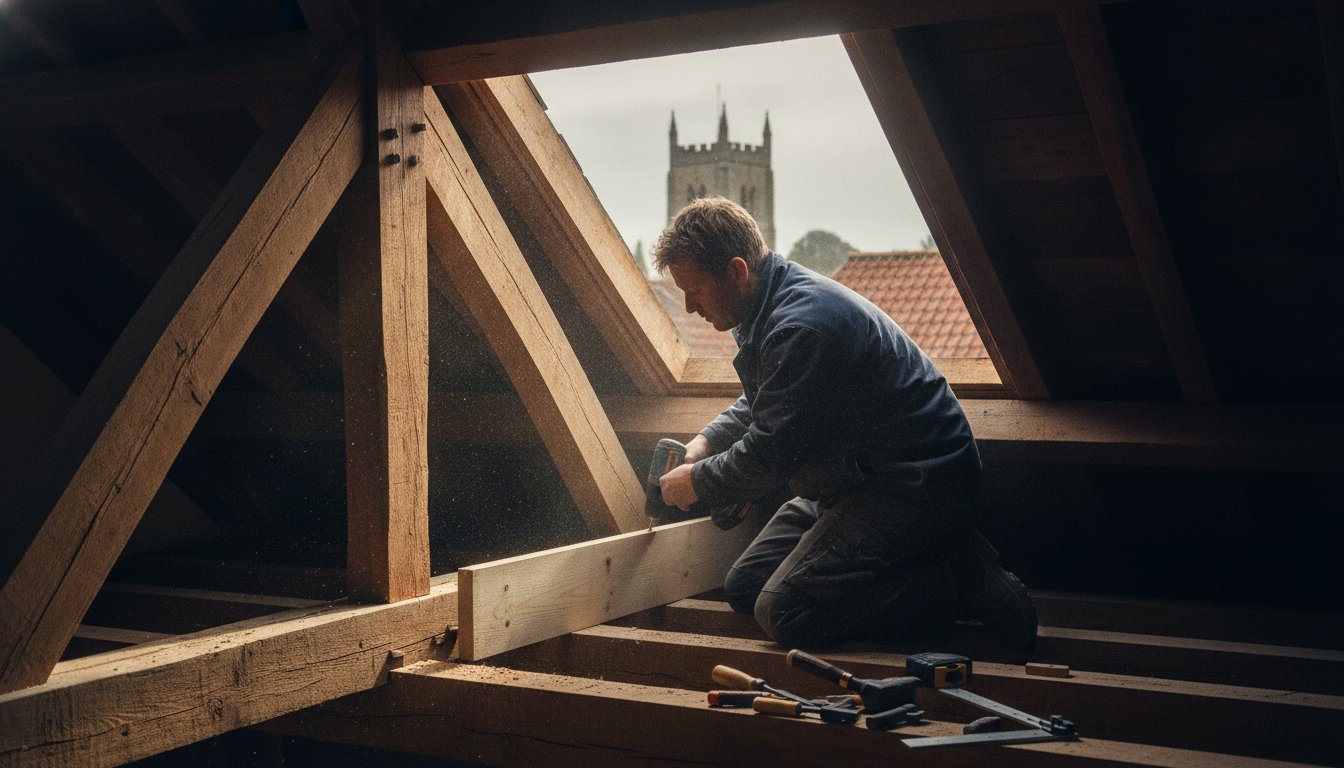
When we approach a roof timber repair Norwich project, we treat it with the precision of a surgical restoration. A full roof replacement is often unnecessary if the underlying issues are caught and treated by professionals who value craftsmanship over quick fixes. We follow a disciplined five-step process to ensure your home remains stable and safe for the long term.
- Step 1: Structural Survey. We begin with a comprehensive survey to assess the load-bearing capacity of your existing framework.
- Step 2: Shoring and Bracing. Our team installs temporary supports to secure the structure, protecting your ceilings and walls while we work.
- Step 3: Surgical Removal. We carefully cut away only the decayed or damaged timber sections to preserve as much of the original structure as possible.
- Step 4: Reinforcement. We install matching replacements or reinforce weakened chords using timber "scabbing" or steel flitch plates.
- Step 5: Final Inspection. We perform a rigorous final check and ensure the area is weatherproofed, leaving your roof stronger than we found it.
Timber Splicing and Scabbing Techniques
We often use a technique called 'scabbing' to restore strength to your roof. This involves bolting new, high-grade wood alongside a weakened rafter to share and redistribute the structural load. For every repair, we use kiln-dried, pressure-treated timber. This material is specifically chosen because it won't warp or succumb to the damp conditions often found in Norfolk lofts. We don't rely on simple nails for these structural connections. Instead, we use heavy-duty mechanical fixings and bolts to create a bond that can handle the immense weight of your roof tiles.
Correcting "Roof Spread" and Structural Stress
Roof spread occurs when the horizontal forces of the rafters are not properly contained, causing walls to lean. This is a common problem in older properties where original collar ties have failed or been removed during past renovations. We resolve this by installing lateral bracing and new collar ties to pull the structure back into perfect alignment. If you're concerned about similar issues on a different part of your property, you can find more information in our guide to Flat Roof Repairs Norwich, which covers timber decking and structural health for flat structures. Our goal is always to provide a cost-effective restoration that saves you the stress and expense of a total rebuild.
Secure Your Home's Future with Expert Restoration
Protecting your property doesn't always mean facing the daunting cost of a total roof overhaul. By understanding the specific needs of your home's structural skeleton and catching signs of decay early, you can choose targeted solutions that restore safety without unnecessary expense. Whether you're managing a heritage Victorian terrace or a modern family home, professional roof timber repair Norwich ensures your roof remains resilient against Norfolk's unpredictable weather. Targeted repairs are not just about fixing wood; they're about preserving the long-term value of your investment.
We take immense pride in our craftsmanship and the long-standing reputation we've built since establishing our family-run business in 1994. Ian and Ben Wilson lead our team with a hands-on approach, specializing in the delicate task of structural timber replacement and restoration. We're here to provide the technical expertise and honest advice you need to feel confident in your home's stability. Don't let hidden rot or structural shifts compromise your safety. You can book a structural roof timber inspection with I R. Wilson Roofing today to get a clear, expert assessment of your property's health. We look forward to helping you keep your home standing strong for years to come.
Frequently Asked Questions
Is it safe to live in a house with a damaged roof truss?
Living in a house with a damaged roof truss depends entirely on the severity of the structural failure. While minor cracks or localized rot don't usually cause immediate collapse, they significantly weaken your home's ability to withstand heavy snow or high winds. We recommend getting an expert assessment as soon as you spot any movement. If the damage is extensive, a structural engineer may advise temporary shoring to ensure your family's safety while repairs are planned.
How much does it typically cost to repair roof timbers in Norwich?
The cost of roof timber repair Norwich varies based on the scale of the decay and how easily we can access your loft. Minor repairs to a single rafter are relatively straightforward, while moderate structural work often ranges between £1,000 and £3,000. Major restoration involving multiple trusses can exceed £6,000. These figures represent industry averages for the UK in 2026, though a detailed survey is always required to provide an accurate estimate for your specific property.
Can I repair a roof truss myself using DIY methods?
We strongly advise against DIY repairs on any structural roof component. Trusses are precision-engineered units where every chord and connector plate is under specific tension or compression. Altering them without technical expertise can lead to sudden structural failure. Furthermore, most structural roofing work is "notifiable" under UK Building Regulations. This means it must be carried out by a competent professional to ensure your home remains legal, safe, and fully covered by your insurance provider.
What is "roof spread" and can it be fixed without a new roof?
Roof spread is a structural condition where the weight of the roof pushes the tops of the external walls outwards. This often occurs in older Norwich homes where horizontal ties have weakened over time. It can absolutely be fixed without a full roof replacement. We use targeted roof timber repair Norwich techniques, such as installing new lateral bracing and collar ties, to pull the structure back into alignment. This approach is far more cost-effective than a complete rebuild.
How long does a professional roof timber repair take to complete?
Most professional timber repairs are completed within one to three working days. Minor tasks like scabbing a few rafters or treating a small area of rot are often finished quickly with very little disruption to your home life. More complex projects involving structural realignment or extensive timber replacement might take up to a week. We always provide a methodical timeline after our initial survey so you know exactly how long the work will take.
Will my home insurance cover the cost of structural timber repairs?
Insurance coverage usually depends on what caused the timber damage in the first place. Most UK policies cover "perils" such as storm damage, fire, or impact from a fallen tree. However, they rarely cover repairs needed due to long-term neglect, wet rot, or general wear and tear. It's wise to review your policy documents or contact your insurer directly to see if structural restoration is included. We can often provide the detailed reports required by insurers for valid claims.