Last October, a homeowner in Thorpe St Andrew discovered a damp patch in their loft that eventually led to a structural repair because of a single rotting timber board. It's a common story in Norfolk. Our damp winters can quickly turn a small maintenance task into a headache for your property. You likely feel that same sense of dread when you see peeling paint on your old timber boards or notice your guttering starting to pull away from the brickwork. We understand that your home is your most valuable asset. You want to ensure it stays dry and secure without being overcharged by contractors who simply hide rot behind new plastic.
This guide explains how a professional fascia and soffit replacement Norwich service protects your home from the elements while instantly improving its appearance. We've put this 2026 guide together to help you understand the latest materials and installation standards. You'll learn exactly what to look for in a quality roofline replacement, from proper ventilation to the long term guarantees that provide true peace of mind for your family. We'll also cover how to avoid common pitfalls so your home remains rot-free for decades to come.
Key Takeaways
- Learn how your fascia and soffit work together to support your guttering and provide essential ventilation to protect your roof from damp.
- Discover why Norfolk’s coastal winds and high humidity make a professional fascia and soffit replacement Norwich a vital investment for your home’s longevity.
- Compare the maintenance needs and durability of modern uPVC versus traditional timber to choose the right material for your property.
- Understand our professional installation process, including safe access and full rafter inspections, to ensure a secure and flush finish.
- Find out why a local, family-run roofing company offers the specialized knowledge and personal accountability needed for a job done right the first time.
Understanding Your Roofline: Fascias and Soffits in Norwich Homes
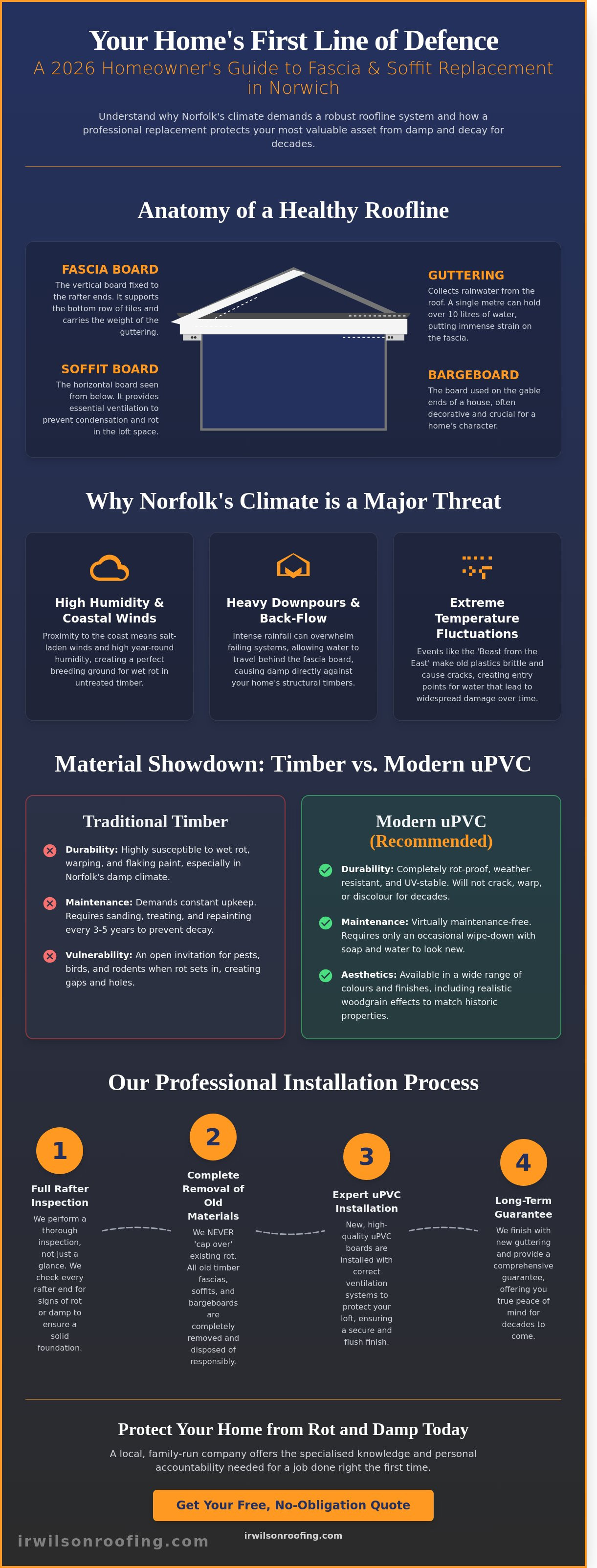
Your roofline is more than just a decorative trim. It's a hard-working system that protects your rafters and interior from the unpredictable Norfolk elements. When we discuss Fascia (architecture), we're referring to the long, straight board that runs along the lower edge of the roof. It's fixed directly to the lower ends of the roof trusses and usually does the heavy lifting by supporting the bottom row of tiles and carrying all the guttering.
The soffit is the board you see when looking up from the ground. It sits underneath the fascia, bridging the gap between the wall and the roof edge. For many homeowners considering fascia and soffit replacement Norwich, the main goal is ensuring these boards are properly ventilated. This airflow is vital because it prevents moisture from building up in your loft space.
In many of the Victorian terraces found in areas like the Golden Triangle or NR3, you'll also see bargeboards. These are the boards used on the gable ends of the house. Because they're often more decorative, they require specific attention to maintain the historic character of Norwich's streets. Your roofline is your home's first line of defence, standing between the timber structure and the driving rain common across East Anglia.
To better understand how these components work together, watch this helpful video:
The Anatomy of a Healthy Roofline
A well-maintained roofline acts as the primary barrier against damp. The fascia board must be strong enough to support gutters during heavy Norfolk downpours. A single metre of guttering can hold over 10 litres of water during a storm, placing immense strain on the fixings. If your boards are rotting, they won't hold that weight. Meanwhile, soffit vents work to stop condensation from rotting your roof timbers from the inside out. We've seen loft temperatures fluctuate by over 20 degrees Celsius between seasons, making this ventilation crucial for your home's health.
Common Roofline Styles in Norfolk Architecture
Norwich has a rich architectural heritage, from medieval timber frames to modern developments. Traditional homes often feature softwood or hardwood boards that require painting every 3 to 5 years. Many residents now choose uPVC for their fascia and soffit replacement Norwich projects. Modern uPVC options come in various finishes, including woodgrain effects that respect the look of historic properties while offering much lower maintenance. Whether you're in a flint-faced cottage or a 1930s semi-detached, matching the local street-level aesthetic is essential for maintaining your property's value. We focus on providing solutions that look right and last for decades.
Why Norfolk Weather Demands a Robust Fascia and Soffit System
Living in East Anglia brings specific challenges that many homeowners overlook until it's too late. Our proximity to the coast means Norwich properties face high humidity and salt-laden winds that accelerate the decay of traditional timber rooflines. When we visit homes for a fascia and soffit replacement Norwich assessment, we often see how the local climate has punished older installations. The moisture levels here stay high year-round, which creates a breeding ground for wet rot in wooden boards that haven't been treated or maintained recently.
Extreme weather events have also left their mark on our city's housing stock. The 2018 "Beast from the East" saw temperatures plummet, causing older plastic materials to become brittle and crack under the weight of snow and ice. These small fractures might seem minor, but they allow water to seep in during the heavy downpours that characterize Norfolk winters. This leads to "back-flow," where water travels behind the fascia board instead of into the gutter. It’s a silent issue that causes dampness to settle directly against your home’s structural skeleton.
Your roofline also serves as the first line of defence against local wildlife. Gaps in a decaying soffit are an open invitation for rodents or nesting swifts. While we appreciate our local birds, they can cause significant mess and damage to insulation if they find a way into your loft space. Ensuring your roofline is secure keeps your home energy-efficient and pest-free.
Signs of Failure in Your Norwich Property
You don't always need to climb a ladder to spot trouble. Look for peeling paint or dark "soft spots" on your timber boards from the ground. If you notice your gutters are overflowing during rain, don't assume it's just a blockage. Often, the fascia has started to rot, causing the gutter brackets to pull away and lose their pitch. A "sagging" appearance along the roofline is a clear signal that the fixings are no longer secure in the wood. If you're worried about what you see, our family-run team at I.R. Wilson Roofing can provide a professional, honest assessment of your roofline's condition.
The Hidden Danger: Rafter Foot Rot
The biggest risk of delaying a fascia and soffit replacement Norwich isn't the boards themselves; it's the rafter feet. Rafter feet are the structural ends of your roof timbers that provide the framework for your entire roof. When water gets behind a failed fascia, it travels upward through capillary action and soaks these timber ends. Replacing a fascia board is a straightforward task, but repairing rotten rafter feet is a major structural job that can cost five times as much as a standard replacement. Catching the moisture ingress early protects the very bones of your home from expensive long-term damage.
Timber vs. uPVC: Making the Right Choice for Your Replacement
Choosing between timber and uPVC is a major decision for any homeowner. While traditional softwoods were the standard for decades, they require a rigorous maintenance schedule. You'll likely need to sand and paint timber every 3 to 5 years to prevent the wet Norfolk weather from taking hold. In contrast, modern uPVC is a "fit and forget" solution. It doesn't rot, warp, or peel, and a simple wipe down with soapy water once a year keeps it looking new for over 30 years. This durability is why we recommend it for most fascia and soffit replacement Norwich projects.
The cost-benefit analysis is clear for most of our clients. While high-quality uPVC might have a slightly higher upfront cost than basic softwood, you save hundreds of pounds in paint and labor over its lifespan. However, we believe in doing the job right. If your roof's structural rafters have begun to decay, we don't just cover it up. We prioritize high-quality timber replacement for the underlying supports to ensure your home remains structurally sound before the final fascia is installed. This approach ensures your investment is a long-term fix rather than a temporary patch.
- uPVC Longevity: Resists UV fading and moisture for 30+ years.
- Timber Maintenance: Requires regular stripping, priming, and painting to avoid rot.
- Structural Integrity: Essential to replace internal timber if rafter feet are soft.
The "Capping" Trap: Why Full Replacement is Better
Some contractors offer a cheaper service called "capping" or over-cladding. They simply nail thin uPVC boards directly over your old timber. We strongly advise against this. If the original wood is damp or rotting, capping traps that moisture against your rafters. This creates a greenhouse effect for fungi, which can cause the hidden structure to fail in as little as 24 months. A full fascia and soffit replacement Norwich involves removing every bit of old timber, inspecting the rafter feet, and installing thick, load-bearing uPVC boards. It's the only way we can guarantee the work for the long haul.
Aesthetic Options for Norwich Homeowners
Your roofline doesn't have to be plain white. While white remains a clean choice, we offer a range of modern finishes like Anthracite Grey, Black, and Woodgrain effects. These deeper tones provide a striking contrast against traditional Norfolk red brick. To complete the look, we recommend matching your new boards with our professional guttering services in Norwich. Choosing a Rosewood or Golden Oak finish can maintain the character of a period cottage while providing the durability of modern materials. We'll help you select a style that enhances your home's kerb appeal and protects its value.
The Professional Process: What to Expect During Installation
Replacing your roofline is a technical task that requires precision and a methodical approach. When we undertake a fascia and soffit replacement Norwich project, we follow a disciplined four-step process to ensure your home remains dry and secure for decades. We don't believe in shortcuts like "capping," which involves covering old, rotting wood with plastic. Instead, we perform a full strip-back and replacement to protect the structural integrity of your roof.
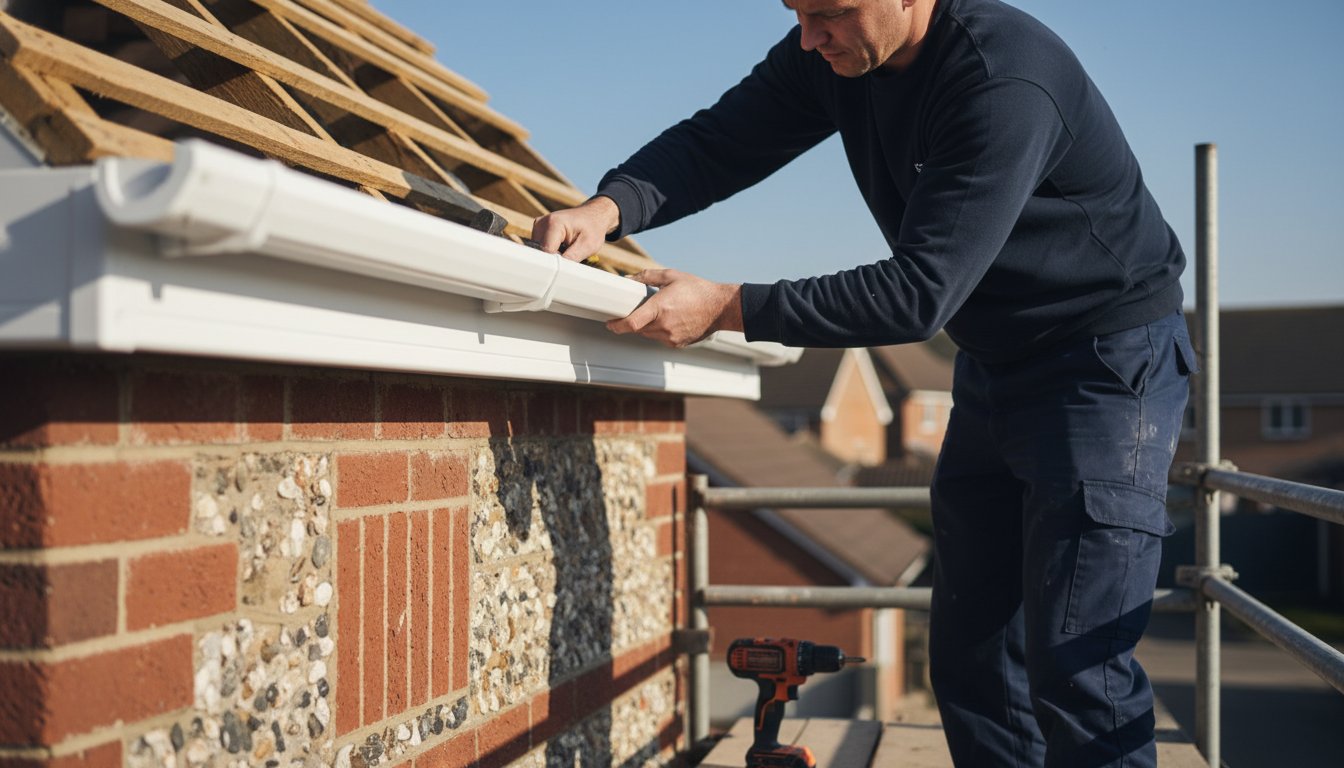
- Step 1: Safe Access. We begin by setting up professional Easi-dec platforms or full scaffolding. Safety is our priority, and these platforms provide a stable base for our team to work at height without leaning heavy ladders against your gutters.
- Step 2: Complete Removal. We strip away all old timber fascia and soffit boards. This stage is vital because it allows us to inspect the rafter ends. In roughly 15% of the older properties we service in Norfolk, we find some degree of "wet rot" at the rafter feet which must be repaired before the new boards are fixed.
- Step 3: Eaves Protection. We install heavy-duty eaves protectors and bird combs. The combs prevent small birds and large insects from nesting in your roof space, while the protectors shield your roof felt from UV damage.
- Step 4: Precision Fitting. We install your new uPVC boards using marine-grade stainless steel fixings. These won't rust or leave unsightly orange streaks on your new white or anthracite grey finish.
Why Eaves Trays are Non-Negotiable
The most common cause of roofline failure isn't the board itself, but the perishing of the roof felt behind it. Over time, traditional bitumen felt becomes brittle and cracks, which allows rainwater to pond behind the fascia board rather than flowing into the gutter. We install rigid PVC eaves trays to solve this issue. Eaves trays bridge the gap where old felt often perishes, creating a permanent waterproof ramp that directs every drop of rain into the guttering system. This simple addition prevents the rafter ends from dampening and ensures your fascia and soffit replacement Norwich lasts its full 20-year guarantee period.
Ensuring Proper Ventilation
Your loft needs to breathe to stay healthy. Without adequate airflow, warm air from your home hits the cold underside of the roof tiles and turns into condensation. This "sweating" can lead to sodden insulation and black mould growth on your ceiling joists. We prevent this by installing either vented soffit boards or discrete over-fascia vents. Over-fascia vents are often the preferred choice for modern Norwich homes because they sit hidden beneath the roof tiles, providing a sleek look while still delivering the 10mm or 25mm continuous airflow required by current UK Building Regulations. I.R. Wilson Roofing ensures airflow meets current building regs on every single installation we complete.
If you've noticed sagging gutters or peeling paint on your roofline, it's time for a professional assessment. You can book a free, no-obligation estimate with our family-run team to discuss the best ventilation and protection options for your home.
Choosing a Reliable Norwich Roofing Company for Your Project
Selecting the right team for your fascia and soffit replacement Norwich is about more than just finding the lowest quote. It's about finding a partner who understands how Norfolk weather affects local properties. We've seen many installations fail because the fitter didn't account for the specific rafter spacing or pitch common in Victorian terraces or mid-century semi-detached homes across the city. A flush fit isn't just a cosmetic preference; it's a technical requirement to prevent nesting birds and water ingress from rotting your roof timbers.
Our local knowledge ensures that every component is measured and fitted to the exact dimensions of your property. We don't believe in "over-cladding" old, rotten timber. Instead, we perform a full replacement to ensure the structural integrity of your roofline. We back this commitment to quality with 10-year insurance-backed guarantees. This provides you with long-term security, knowing that your investment is protected by more than just a verbal promise.
The Value of a Personal Touch
We take pride in being a family-run business. When you contact us, you won't be passed around a corporate call centre. You'll deal directly with Ian or Ben Wilson, ensuring a level of personal accountability that national franchises simply can't match. We provide a no-obligation quotation process for all Norwich residents. This means we'll visit your home, assess the condition of your boards, and provide a clear plan without any high-pressure sales tactics. You can see examples of our craftsmanship and recent local projects by visiting our Facebook page.
Next Steps for Your Roofline
Preparing for a roofline survey is straightforward. We recommend clearing any obstructions from your driveway or side paths to allow for safe ladder or tower access. When you receive a quote from us, it will be a transparent, fixed-price document. It includes everything from the high-quality uPVC materials to the professional labour and the responsible disposal of your old materials. There are no hidden costs or surprise additions once the work begins.
If you're still researching your options, we've put together a comprehensive resource to help you make an informed decision. You can view our expert roofers in Norwich guide for more tips on what to look for in a contractor. We believe an informed customer is our best customer, and we're always happy to answer technical questions about the materials or methods we use.
Your roofline is the first line of defence for your home's structure. Don't leave it to chance with a "quick-fix" solution. Contact I.R. Wilson Roofing for your free Norwich survey today and let us provide the dependable, professional service your home deserves.
Secure Your Norwich Home for the Years Ahead
Your roofline is the first line of defense against the damp Norfolk climate. Upgrading to modern uPVC or high-grade timber protects your rafters and prevents the expensive structural rot that often follows neglected maintenance. It’s about more than just curb appeal; it’s about long-term peace of mind. At I R. Wilson Roofing, we’ve operated as a family-run business since 1994, building our reputation on craftsmanship and honest communication. We provide fixed-price quotations with no hidden fees, ensuring you know exactly what the project costs before we start.
Our team is fully insured and highly recommended across the county for our methodical approach to every fascia and soffit replacement Norwich project. We take pride in doing the job right the first time, so you can stop worrying about your roof and focus on enjoying your home. Get your free, no-obligation fascia and soffit quote in Norwich today. We look forward to helping you protect your property with a solution that lasts.
Frequently Asked Questions
How much does fascia and soffit replacement cost in Norwich?
According to 2024 industry data from Checkatrade, a full fascia and soffit replacement typically costs between £100 and £150 per linear metre in the UK. For a standard semi-detached home in Norwich, you can expect a total investment ranging from £1,200 to £2,500 depending on the property size. We always provide a fixed, no-obligation estimate after a site visit so you know the exact cost before work begins.
How long does it take to replace the roofline on a standard semi-detached house?
Replacing the roofline on a standard semi-detached house usually takes our team 1 to 2 days to complete. We work methodically to remove old timber and install new uPVC components without leaving your rafters exposed to the elements for long. This timeframe includes setting up safe access equipment and performing a thorough site clear-up to ensure your garden is left exactly as we found it.
Can I replace my fascias and soffits myself?
You can replace fascias and soffits yourself, but we don't recommend it due to the significant safety risks and technical precision required. Working at height involves specialist equipment and an understanding of roof ventilation that's hard to master as a hobbyist. Our family-run team ensures every fascia and soffit replacement Norwich project meets current building regulations, which protects your 20-year guarantee and prevents future structural rot.
Do I need scaffolding for a fascia and soffit replacement?
We use scaffolding or specialist access towers for almost every project to ensure the safety of our installers and your property. The Health and Safety Executive (HSE) requires appropriate fall protection for any work at height that lasts more than a few hours. Using professional scaffolding allows us to work with much greater precision, ensuring your new roofline is perfectly level and securely fixed to the rafter ends.
Is it possible to just replace the fascia without the soffit?
It's possible to replace only the fascia, but we rarely advise this because the soffit is usually attached to the same timber structure. If your fascias are rotting, there's an 85% chance that the soffit boards or the rafter ends behind them have also sustained water damage. Replacing both components at the same time ensures a uniform look and provides a complete, watertight seal that protects your home for decades.
What is the best material for rooflines in the Norfolk climate?
High-quality uPVC is the best material for the Norfolk climate because it resists the salt air and high moisture levels common in the East of England. Unlike traditional timber, uPVC won't warp, rot, or require painting every 3 to 5 years. This material provides a durable, low-maintenance solution that stands up to the 600mm of annual rainfall and 1,200 hours of sunshine we see in Norwich.
Will new fascias and soffits help with my damp problem?
A professional fascia and soffit replacement Norwich will help resolve damp issues caused by water leaking into the eaves or overflowing from old gutters. Modern installations include over-fascia ventilation and felt trays that direct rainwater away from your internal walls and into the guttering. By sealing the gap between your roof and the brickwork, we stop damp from penetrating the loft space and damaging your ceiling joists.
How often should I clean my uPVC fascias and soffits?
You should clean your uPVC fascias and soffits once every 12 months to prevent the buildup of atmospheric grime and green algae. A simple wash with warm, soapy water is usually enough to maintain their appearance and keep the finish looking new. Regular cleaning also gives you a chance to inspect your guttering for blockages, ensuring your entire drainage system functions correctly before the winter months arrive.