Imagine waking up to a damp patch on your bedroom ceiling after a night of those relentless Norfolk coastal winds, only to find that a hidden leak has been quietly damaging your timber joists for months. It’s a common worry for homeowners in our area, especially when you aren't sure if your roof is truly watertight or if you're facing an expensive total replacement. Our professional flat roof inspection service Norfolk is designed to look beneath the surface, identifying these invisible issues before they become a structural crisis.
We understand that home maintenance is stressful, particularly with unreliable quotes and rising material costs causing 86% of UK contractors to report price hikes in 2026. You deserve a clear, honest assessment of your roof's health from a local, family-run team that values its reputation and your safety. By catching problems like ponding water or deteriorated flashing early, we can help you extend your roof's lifespan and save you thousands in avoidable emergency repairs. This article explains how a thorough, hands-on inspection provides the peace of mind you need to keep your home dry and secure through every season.
Key Takeaways
- Learn how Norfolk’s unique coastal climate, including salt air and high winds, accelerates the wear on traditional felt and bitumen roofs.
- Discover the specific signs of early roof failure, such as blistering and perished flashings, that often go unnoticed from the ground.
- Understand the "Rule of Two" and why booking a professional flat roof inspection service Norfolk every two years prevents expensive emergency repairs.
- Find out what a thorough assessment involves, including physical walk-overs to detect soft spots and timber saturation before they damage your ceilings.
- See how a dependable, family-run approach provides a clear and honest roadmap for maintaining your roof’s health and structural integrity.
Why Regular Flat Roof Inspections are Essential for Norfolk Properties
A professional flat roof inspection service Norfolk is more than just a quick look from a ladder. We perform a comprehensive structural and surface health check to ensure your property remains watertight through the seasons. This involves examining the condition of common flat roof materials like bitumen and high-performance felt for signs of fatigue. We don't just look for holes; we check the integrity of the entire system, from the timber deck to the top waterproof layer.
To better understand what we look for during a professional assessment, watch this helpful video:
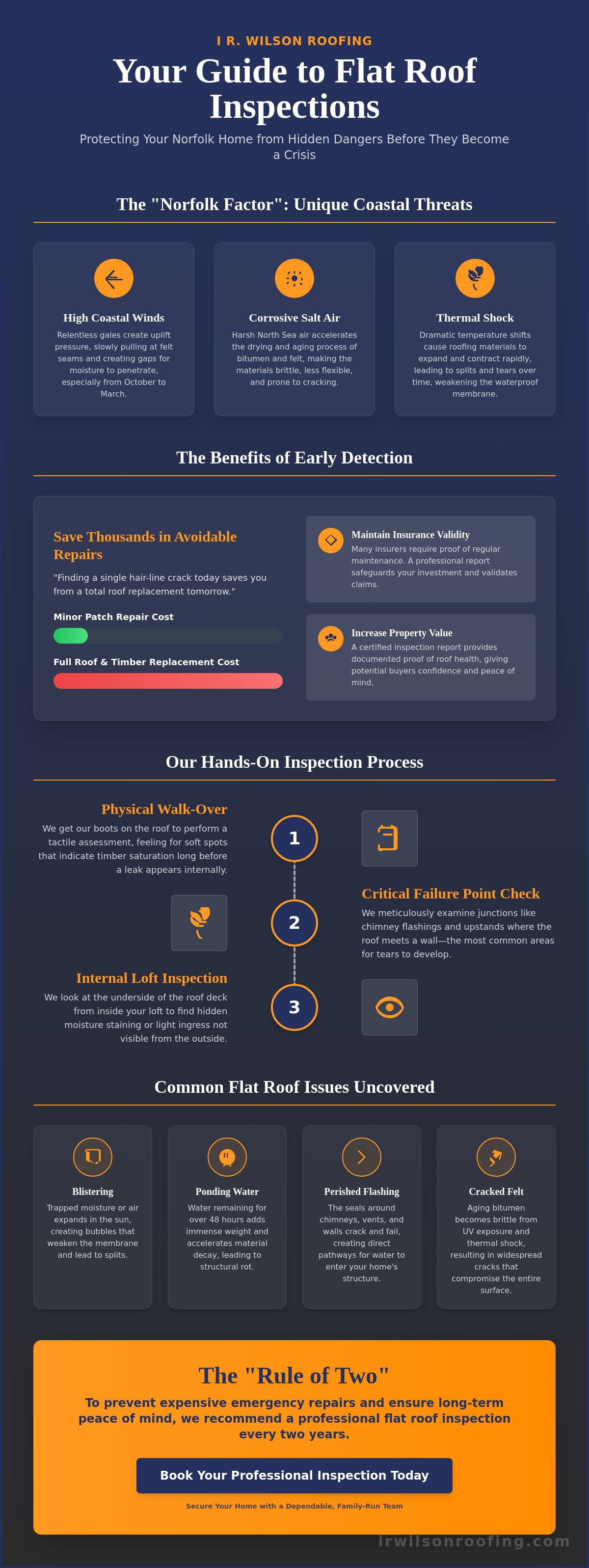
Living in Norfolk brings unique environmental challenges that many national companies overlook. The "Norfolk Factor" includes harsh North Sea salt air and persistent coastal winds that batter roof seams daily. These gales, which typically affect the Norwich area from October through March, do more than just blow debris into your gutters. They create uplift pressure that can slowly pull felt edges away from the roofline, creating tiny gaps where moisture enters. Salt air also accelerates the drying out of older bitumen, making it brittle and prone to cracking.
We always tell our clients that finding a single hair-line crack in 2026 saves you from a total roof replacement in 2027. This preventative mindset is vital for maintaining your home insurance validity. Many insurers now require proof of regular maintenance, especially for older Norfolk properties, before they'll approve a claim for storm damage. Having a professional report in your files acts as a safeguard for your investment and your peace of mind.
The Impact of Norfolk Weather on Flat Roofs
Temperature shifts in East Anglia can be quite dramatic, leading to "thermal shock." This occurs when roofing membranes expand in the sun and contract rapidly during cold coastal nights, causing the material to split over time. During the prolonged Norwich rainy season, which can last over eight months, we often see standing water on flat surfaces. Ponding is defined as water that remains on a roof for more than 48 hours, and it's a primary cause of structural deck rot as moisture eventually bypasses the waterproof membrane.
Financial Benefits of Early Detection
Catching a leak early makes a massive difference to your bank balance. When you compare the cost of a minor patch repair to a full timber deck replacement, the savings are clear and immediate. If you're planning to sell your home, a certified inspection report can increase property value by providing buyers with documented proof of roof health. If you've already noticed damp spots or internal damage, it's time to consider flat roof repairs Norwich to prevent further structural issues from developing.
What to Expect During a Professional Flat Roof Inspection Service
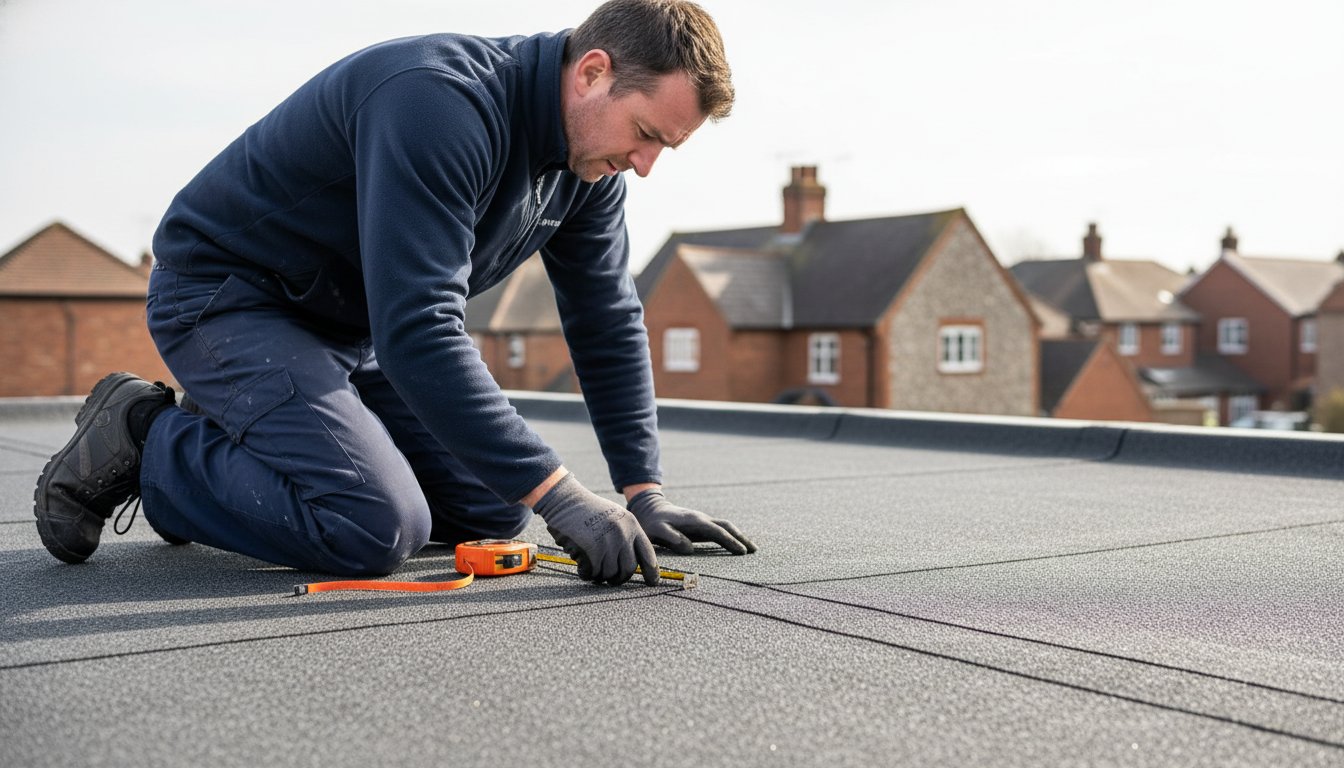
We don't believe in cutting corners with a quick drone flyover or a glance from the driveway. While cameras have their place, they can't feel the "give" in a timber deck or hear the crunch of brittle, sun-damaged felt. A true flat roof inspection service Norfolk involves getting our boots on the roof to perform a tactile, physical walk-over. This hands-on approach allows us to identify hidden soft spots that suggest timber saturation long before a damp patch ever appears on your bedroom ceiling.
Our process begins with a comprehensive visual assessment of the entire roofline. We pay special attention to critical failure points like chimney flashings and upstands where the roof meets the house wall. These junctions are where property movement and settlement often cause the first tears in the waterproof membrane. We also include an internal loft space check. By looking at the underside of the roof, we can correlate surface issues with moisture staining or light ingress that might not be obvious from the outside.
Step 1: Surface and Membrane Analysis
Our team examines the waterproof layer for "alligatoring," which is a pattern of small cracks in bitumen that resembles reptile skin. This is a clear sign of solar degradation on older felt roofs and indicates the material is becoming brittle. We also inspect every lap seam for signs of lifting. The persistent winds in East Anglia can cause these joints to peel back, creating a "scoop" that catches driving rain. Whether your roof uses a reflective coating or a traditional gravel spar finish, we evaluate if that protection is still intact or if the underlying membrane is dangerously exposed to the elements.
Step 2: Structural Integrity and Drainage Check
Testing for "sponginess" in the roof deck is a vital part of our visit. If the surface feels springy or soft underfoot, it's usually a sign that moisture has compromised the wood. Catching this early can be the difference between a simple repair and an expensive timber replacement. We also clear and inspect all drainage outlets to ensure water isn't backing up under the felt. When drainage is blocked, standing water can quickly rot your fascias and soffits, leading to even more structural damage. If you're worried about the condition of your roof, you can browse our latest maintenance advice to see how we help local families keep their homes dry and secure.
Identifying Common Flat Roof Issues Found in Norfolk Homes
Once we're up on the roof, our focus shifts to the specific symptoms of age and environmental wear. While every property is different, many homes in our region share similar vulnerabilities. Identifying these issues during a flat roof inspection service Norfolk allows us to provide you with a clear plan of action. We often find that small signs on the surface point to much larger problems underneath that haven't yet caused a visible leak inside your home.
Blistering and bubbling are among the most frequent sightings. These raised areas occur when moisture or air becomes trapped between the layers of the roof membrane. When the sun warms the roof, the trapped pocket expands and stretches the material. If left alone, these blisters eventually crack, creating a direct path for water to enter. It's a clear indicator that the roof is reaching the end of its natural lifespan or that the original installation was compromised by trapped damp.
We also pay close attention to the flashings. These are the seals around the edges, chimneys, and where the flat roof meets a vertical wall. Because different parts of a building move at different rates, these joints are under constant stress. Cracked or perished flashings are usually the first point of failure on a Norfolk roof. If the leadwork or sealant has pulled away, even by a few millimetres, the driving coastal rain will find its way in.
Organic growth is another concern that many homeowners overlook. Moss and lichen thrive in our damp East Anglian climate, particularly on north-facing extensions. Moss retains moisture against the roof surface, which accelerates the decay of the underlying membrane. This constant dampness prevents the felt from drying out, leading to premature rot in the timber deck beneath.
Bitumen and Felt Specific Failures
Older "pour and roll" bitumen roofs require a specific set of eyes. These systems often suffer from "alligatoring," where the bitumen dries out and cracks in a pattern like reptile skin. On more modern systems, we look for "pinholing" in torch-on felt. These are tiny, needle-like punctures that are almost invisible to the untrained eye but allow water to seep through slowly. If we catch these early, we can often discuss options for fixing felt roof sections rather than replacing the entire structure.
Drainage and Guttering Complications
A flat roof is only as good as its drainage. If your gutters are full of debris, water can "wick" backwards into the roof timbers. We always inspect the drip edge to ensure water is running off efficiently into the channel. If the water isn't clearing, it sits on the edge of the felt and eventually rots the supporting wood. Investing in regular gutter cleaning Norwich is one of the simplest preventative measures you can take to protect your roof's structural integrity.
Timing Your Inspection: When Does Your Roof Need a Professional Eye?
We recommend following the "Rule of Two" for any property in East Anglia. This means booking a professional flat roof inspection service Norfolk at least every two years. Because flat roofs don't have the natural runoff of pitched tiles, they face a higher risk from standing water and organic growth. Regular checks ensure that tiny issues, like a hairline crack in a seam, don't turn into a major leak during a wet Norwich winter. Catching these problems early is the most effective way to avoid the stress of an emergency call-out.
The autumn window is the ideal time for this maintenance. By checking the roof before the heavy frosts and persistent rains of November arrive, we can clear drainage outlets and repair any summer heat damage. This proactive approach keeps your home dry when the weather is at its worst. We also suggest a quick assessment after any major East Anglian gale. These storms can cause wind-lift, where the pressure pulls at the edges of the felt, potentially breaking the waterproof seal without being obvious from the ground. A quick check now prevents a much larger bill later.
Inspections for Homebuyers and Sellers
If you're moving house, a specialist report is invaluable. Mortgage lenders in Norfolk frequently request a dedicated roofing assessment for properties with flat-roofed extensions. A general building surveyor might identify that a roof is "flat," but they often lack the technical expertise to judge the remaining life of the membrane. Hiring a specialist roofer in Norwich provides a level of detail that protects both buyers and sellers. For a seller, a clean bill of health prevents "gazundering," where a buyer tries to lower their offer at the last minute due to perceived roofing issues. It's a small investment that keeps the sale moving forward.
Emergency and Post-Storm Inspection
Sometimes you can't wait for a scheduled visit. If you notice ceiling sagging or damp patches after heavy rain, your roof has already failed. You can often spot trouble from the ground by looking for displaced stone chippings or visible tears in the felt along the roofline. When we find these issues, we move quickly to provide storm damage repairs that secure your property and prevent further internal damage. Don't leave your home's safety to chance; you can request a free, no-obligation estimate to get an honest appraisal of your roof's condition.
The I R. Wilson Approach: Dependable Flat Roof Inspections in Norfolk
Our flat roof inspection service Norfolk is built on the values of a traditional family business. Ian and Ben Wilson lead our team with a commitment to providing honest, expert advice that puts your home's safety first. We've seen how stressful roof maintenance can be for homeowners, especially when you're faced with vague quotes or high-pressure sales tactics. We don't operate that way. Instead, we provide a calm, professional assessment that tells you exactly what your roof needs and why.
We bridge the gap between a general building surveyor and a traditional roofer. A surveyor might identify a damp patch without knowing the technical cause, while some roofers might suggest a full replacement when a simple fix would suffice. We offer the best of both worlds: a formal, detailed assessment alongside the technical skill to carry out a high-quality bitumen felt repair if we find a fault. Our "No-Obligation" promise means you'll receive a clear, written quotation with no pressure to commit on the spot.
Why Experience Matters in Norfolk Roofing
Our history in the local community stretches back over 30 years. We've been serving Norwich and the surrounding areas since 1994, which gives us a deep understanding of how local weather patterns affect different roofing systems. We know which materials stand up best to the coastal winds and which older systems are most likely to fail. This local expertise ensures our advice is practical and grounded in decades of real-world results. All our work is fully insured and carries long-term guarantees, acting as a digital handshake and a promise of enduring quality for every client.
Booking Your Free Norfolk Roof Estimate
Getting a professional eyes on your roof is a straightforward process. We provide site visits throughout Norwich and all the surrounding villages, moving methodically to identify any potential issues before they become emergencies. Our written quotations are transparent and easy to understand. We include a full breakdown of materials, labour costs, and expected timeframes, so you know exactly what to expect. We take our time to do things correctly the first time, prioritizing long-term relationships over quick transactions. If you're ready for an honest appraisal of your roof's health, Contact I R. Wilson Roofing for your flat roof inspection today.
Secure Your Property Against the Norfolk Elements
Protecting your home from the unpredictable East Anglian climate starts with understanding what is happening above your head. We've discussed how the "Norfolk Factor" of salt air and coastal winds can quietly degrade even the toughest bitumen felt. By sticking to the "Rule of Two" and identifying issues like ponding or perished flashings early, you'll avoid the high costs of structural timber rot and emergency call-outs. A proactive approach is always more affordable than a reactive one.
I R. Wilson Roofing has been a trusted part of this community since 1994. As a family-run business led by Ian and Ben Wilson, we take personal pride in every roof we step on. We're specialists in bitumen felt and flat roof repairs, and we stand behind our craftsmanship with long-term guarantees. Our professional flat roof inspection service Norfolk provides the honest, expert assessment you need to make informed decisions about your property. All our work is fully insured, giving you total peace of mind that your home is in safe hands.
Don't wait for a damp patch to appear on your ceiling. Book Your Free Flat Roof Inspection with I R. Wilson Roofing Today. We're here to help you keep your home dry and secure for years to come.
Frequently Asked Questions
How much does a flat roof inspection cost in Norfolk?
A basic flat roof inspection in the UK typically starts from £150. The average cost for a standard residential survey falls between £150 and £500, depending on the complexity of the structure. If you require specialized services like thermal imaging to detect moisture or heat loss, prices generally range from £300 to £500. We always provide a clear, no-obligation estimate before starting any work.
How long does a professional flat roof survey take to complete?
A standard residential survey usually takes between one and two hours to complete. We move methodically across the roof to check the membrane, drainage outlets, and flashings. If your property is larger or has multiple extensions, it may take slightly longer. We don't rush our assessments because we want to ensure we identify every potential issue before it becomes a problem.
Can a drone survey replace a physical roof inspection?
While drone surveys are helpful for high-access areas and start from £200 to £300, they cannot replace a physical inspection. A camera can't feel for "sponginess" in the timber deck or identify brittle seams that only a hands-on walk-over reveals. Our flat roof inspection service Norfolk prioritizes tactile checks to ensure we find the hidden leaks that digital photos often miss.
What should be included in a professional roofing report?
A professional report must include a structural and surface health check of the entire roofing system. We provide a clear breakdown of the condition of your felt or bitumen, the efficiency of your drainage, and the integrity of your chimney flashings. You'll receive a list of any necessary repairs, such as timber replacement or guttering work, along with photos of the affected areas.
Will my home insurance cover a flat roof inspection after a storm?
Most home insurance policies cover inspections and repairs if you've suffered clear storm damage, such as wind-lift or impact from falling branches. Many insurers now require proof of regular maintenance before they'll approve a claim for older properties. Keeping a record of your biennial inspections is the best way to prove you've taken reasonable steps to protect your home.
How often should I have my flat roof inspected in East Anglia?
We recommend a professional check every two years to combat the effects of the East Anglian climate. The combination of North Sea salt air and heavy gales can cause bitumen to perish faster than in more sheltered regions. Regular inspections allow us to catch minor issues like blocked drainage or small cracks before they turn into expensive emergency repairs.
Do you provide inspections for commercial properties in Norwich?
Yes, we provide expert assessments for industrial roofing and commercial buildings throughout the Norwich area. Our team understands the specific requirements of larger flat roof systems and ensures all work complies with national UK Building Regulations. We help business owners maintain their property's value by identifying structural risks and providing dependable, long-term maintenance plans that fit their budget.
What happens if the inspection finds my roof needs a total replacement?
If we find that a replacement is the only safe option, we'll explain why and provide a transparent quote. Under UK Building Regulations, you must meet Part L thermal insulation requirements if you replace 25% or more of a roof. We'll guide you through the process of installing a modern "warm roof" system that is energy efficient and fully compliant with national standards.