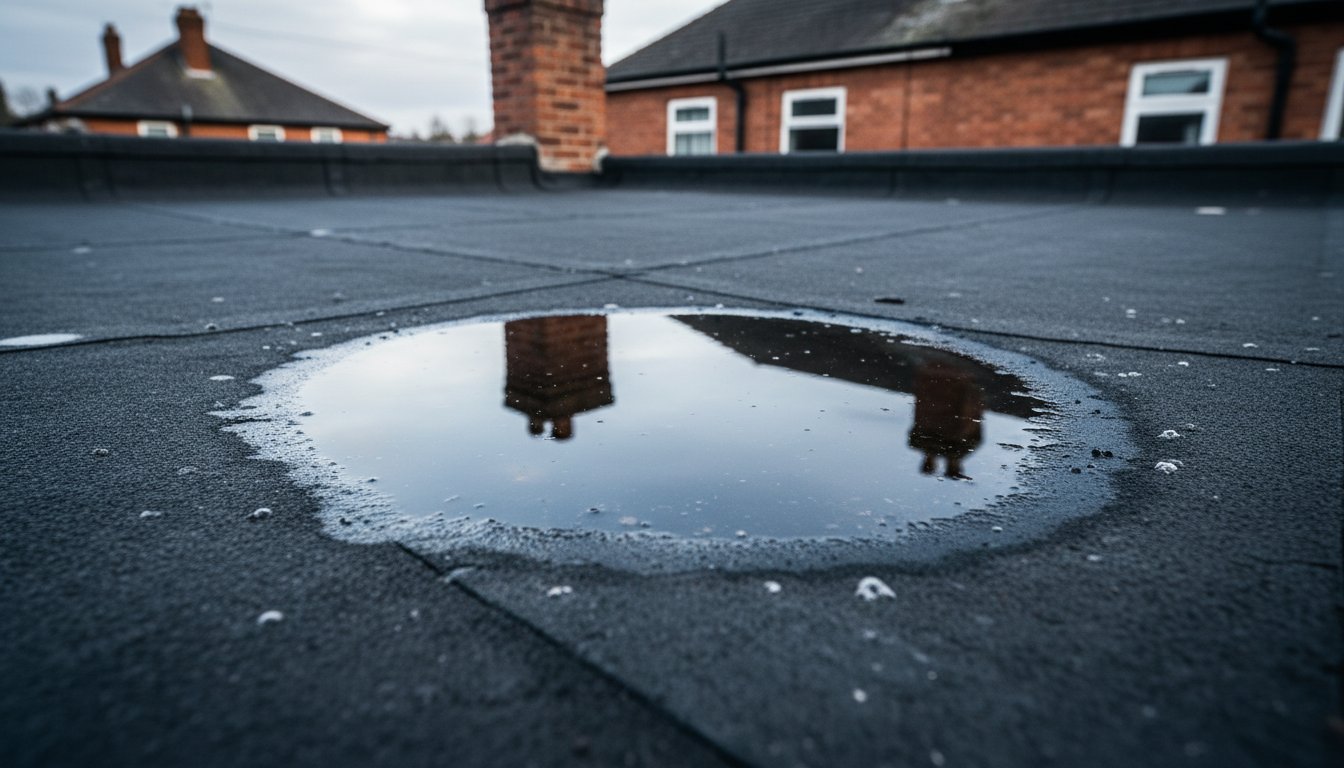
What if that small puddle on your extension isn't just a harmless bit of rainwater, but a signal that your roof's structure is under threat? It's stressful to see water pooling or damp patches on the ceiling, especially when you're worried about the high costs of a complete overhaul. We understand how confusing it is to get conflicting advice from different tradesmen while you're just trying to diagnose common flat roof problems UK properties often encounter. At I R. Wilson Roofing, we value our reputation for honesty and want to help you make an informed choice for your property.
This 2026 guide helps you identify the most frequent issues, from minor leaks to the latest BS 6229:2025 standards. You'll learn how to tell the difference between a simple repair and a necessary investment, giving you the peace of mind that your home is fully protected. We'll walk through specific signs of wear, the impact of the Future Homes Standard 2026 on your insulation, and exactly when it's time to call in a professional team to ensure your roof meets the required 0.15 W/m²K U-value.
Key Takeaways
- Understand how the UK's high rainfall and temperature shifts fatigue flat roof membranes and why modern materials are designed to handle these specific stresses.
- Learn to spot the early warning signs of common flat roof problems UK homeowners face, such as ponding water and "roof hives" that signal trapped moisture.
- Discover the "invisible" threats like interstitial condensation that can rot your timber structure from the inside out if left unchecked.
- Get a clear breakdown of the "25% rule" and the age-based criteria that determine whether a quick repair or a full replacement is your most cost-effective path.
- See how local expertise in Norfolk housing stock ensures your flat roof meets the strict 2026 insulation standards while protecting your home's long-term value.
Why UK Weather Challenges Modern Flat Roof Systems
A flat roof is technically defined as any roof with a pitch under 10 degrees. While the name suggests a perfectly level surface, your roof actually needs a slight slope to function correctly. We always aim for a minimum 1:80 fall to ensure water flows toward your guttering rather than sitting in stagnant pools. Understanding the history and construction of flat roofs helps explain why these systems are so common in UK extensions and garages, yet so vulnerable to our specific weather patterns. The unique climate in our country is the primary driver behind most common flat roof problems UK homeowners experience.
To better understand how these issues develop over time, watch this helpful video:
The Impact of British Rainfall and UV Exposure
Bitumen in older felt roofs often suffers from UV degradation. Over years of exposure, the sun's rays strip away the oils that keep the material flexible. This makes the membrane brittle and prone to cracking. When winter arrives, the freeze-thaw cycle creates even more stress. Water enters tiny surface cracks, expands as it freezes, and physically tears the membrane apart. For our customers in coastal areas across Norfolk, salt-air corrosion adds another layer of complexity. The abrasive atmosphere can accelerate the breakdown of metal flashings and certain coatings. If you're noticing these early signs of wear, our team at I R. Wilson Roofing provides flat roof repairs that can often extend the life of your current system before the damage spreads.
Understanding the Life Expectancy of Materials
Traditional felt roofs, particularly older two-layer systems, often reach the end of their reliable life after just 10 to 15 years. Modern high-performance membranes are designed to meet the strict 2026 standards, offering significantly better thermal performance and durability. Under the Future Homes Standard 2026, replacement roofs must achieve a maximum U-value of 0.15 W/m²K. This usually means we'll upgrade your insulation alongside the membrane to ensure your home stays warm and efficient. We've seen a shift toward materials like GRP fibreglass and EPDM because they handle the British elements with far more resilience than the systems of the past. A professionally installed EPDM rubber roof typically lasts between 25 and 50 years in the UK climate. As a family-run business, we at I R. Wilson Roofing prioritize these long-lasting solutions because we want your home to be protected for decades, not just a few seasons. We take our time to do things correctly the first time, ensuring your investment is secure.
Identifying the Most Common Flat Roof Defects
Spotting a roofing issue early can save you thousands in structural repairs. While some problems are surface-level, others signal deeper trouble that could compromise the safety of your home. We've spent years climbing ladders across Norfolk, and we've found that most common flat roof problems UK homeowners face follow a predictable pattern. Understanding these signs helps you decide whether you need a quick patch-up or a more permanent solution. At I R. Wilson Roofing, we believe in providing clear, honest advice so you can protect your property with confidence.
Ponding Water and Drainage Failure
If you see standing water on your roof 48 hours after the rain has stopped, it's a significant red flag. This isn't just a "nuisance puddle" that will eventually evaporate. It's often a sign that the drainage fall has failed or the roof deck is beginning to sag. In Norwich, we frequently find that what looks like a major leak is actually caused by debris in the guttering. However, when water sits directly on the membrane for days, the cumulative weight puts immense "stress-strain" on your roof joists. Over time, this weight causes the timber to bow. This creates a deeper dip that collects even more water, eventually leading to structural failure if it's not addressed.
Blistering and Membrane Separation
You might notice "roof hives" or small bubbles appearing across the surface during the warmer months. These blisters are typically caused by moisture that was trapped between the layers during the original installation. When the sun hits the roof, that moisture expands into water vapour and forces the membrane to stretch and lift. Whatever you do, never step on or try to "pop" these blisters. Puncturing them creates an immediate path for water to enter your home's structure. In many cases, we can install professional pressure-release vents to save the existing roof, but this requires a steady, expert hand to ensure the seal remains watertight.
Cracking and "alligatoring" are also frequent issues. This happens when the surface loses its elasticity, leaving it looking like cracked reptile skin. Once these cracks appear, your roof is vulnerable to the freeze-thaw cycles mentioned earlier. Vegetation like moss and lichen then takes hold in these gaps. These plants are more than just an eyesore; their roots physically pry apart the seams of your roof, and they hold onto moisture like a wet sponge. This keeps the membrane in a constant state of dampness, which accelerates the decay of the underlying timber. If you're worried about the state of your membrane, you can find more detailed diagnostic tips on our blog to help you spot these issues before they cause internal damage.
Hidden Issues: Condensation and Structural Movement
Not every wet patch on your ceiling is caused by a hole in the roof membrane. Some of the most common flat roof problems UK homeowners deal with actually start from the inside. Hidden issues like condensation and structural shifting can be just as damaging as a visible puncture, yet they often go unnoticed until the timber structure is compromised. We believe in looking beneath the surface to ensure your home stays dry and structurally sound for the long term.
Condensation vs. A Genuine Leak
Interstitial condensation is a particularly sneaky problem. It happens when warm, moist air from your kitchen or bathroom rises and hits the cold underside of the roof deck. If your property lacks a functional vapour control layer (VCL), this moisture turns into water droplets that rot your timber joists from within. A key diagnostic tip: if you see a "leak" on a cold, dry day when it hasn't rained for a week, you're likely dealing with condensation rather than a puncture. Look for dark spots or a musty smell in the ceiling below. These are early signs of timber decay that require immediate attention to avoid a full roof collapse. Modern UK extensions must be designed to manage this airflow, often requiring "warm roof" insulation to keep the dew point outside of the timber structure.
Flashing and Joint Failures
Thermal movement also plays a massive role in roof failure. Flat roofs are exposed to the full force of the sun all day, causing them to expand and contract more than pitched roofs. If your membrane has become brittle with age, this constant shifting creates stress cracks, especially at the joints. We often see poor-quality previous repairs that try to "hide" these cracks with thick bitumen or tape. These patches usually fail within a single season because they can't handle the movement and often trap moisture underneath, which accelerates rot.
Detailing is where the real skill of a roofer is tested. We find that 90% of leaks occur at the edges and flashings rather than in the centre of the roof. Leadwork around chimneys and walls is a common weak point because it requires precision to handle the building's natural movement. Professional leadwork is essential for flat roof longevity because it provides a durable, flexible seal that moves with your home instead of pulling away. When membranes shrink at the edges, they create gaps that allow water to bypass your protection entirely. Investing in high-quality detailing now prevents the stress of emergency repairs later. We take pride in these technical details because they are what truly keep your home dry for decades.

Diagnostic Guide: When to Repair vs. Replace
Deciding whether to patch up a leak or invest in a full replacement is often the most stressful part of home maintenance. We've seen many cases where a simple fix was possible, but we've also seen "cheap" patches that ended up being a waste of money. When diagnosing common flat roof problems UK homeowners often face, we use a clear framework to help you make the right choice for your budget and your home's safety. Our goal is to provide a solution that gives you long-term peace of mind rather than a temporary fix that fails at the next heavy downpour.
The "Age Rule" is our first benchmark. If your flat roof is over 20 years old, the material has likely reached the end of its natural life. At this stage, the membrane becomes brittle, and fixing one leak often leads to another appearing nearby because the entire surface is fatigued. We also follow the 25% rule; if more than a quarter of the roof area is damaged, Building Regulations usually require a full replacement. This also involves an insulation upgrade to meet the 2026 thermal standards of 0.15 W/m²K. We believe in being transparent about these costs so you can balance short-term fixes with the value of a long-term guarantee.
Safety is our absolute priority. If you notice a "spongy" feeling when walking on the roof or see visible sagging from inside the room, the timber deck or joists have likely rotted. These are structural issues that a simple patch cannot fix. Ignoring a sagging roof is dangerous, as the weight of ponding water can eventually lead to a collapse. We always take the time to inspect the underlying timber to ensure your home remains a safe environment for your family.
Signs Your Roof Needs Immediate Professional Attention
Internal dampness, mould growth, or active dripping during heavy rain are obvious signs of failure that require a pro. You should also check for visible "dips" in the roofline from an upstairs window. If you see the membrane pulling away from the brickwork or the fascias, your home's structure is wide open to water ingress. These gaps allow rain to bypass the waterproof layer entirely, leading to rapid timber decay if left unsealed.
When a Patch Repair is a Cost-Effective Solution
A repair is often a viable and smart choice if the membrane is generally healthy but has suffered an isolated puncture or a small tear. We frequently find that many issues are actually caused by damaged fascias and soffits, which can be replaced to restore proper drainage and protect the roof edges. Getting a professional flat roof repair in Norwich is always a safer and more reliable option than trying to use DIY bitumen paint, which rarely provides a long-term seal. If you're still unsure about the state of your roof, you can request a free, no-obligation estimate to get a clear diagnosis from our experienced team.
Reliable Flat Roof Solutions in Norwich and Norfolk
I.R. Wilson Roofing has been a fixture in the local community since 1994. We know that a Victorian terrace in the Golden Triangle requires a different approach than a modern garage in a newer development. Our team brings deep local knowledge of Norfolk housing stock to every job. This expertise is vital because the way common flat roof problems UK homeowners face manifest can vary significantly depending on the age and construction of the building. We don't believe in one-size-fits-all solutions; instead, we provide honest assessments that respect the heritage and structural needs of your home.
Why a Family-Run Business Makes a Difference
When you call us, you're speaking directly with the people who will be on your roof doing the work. There's a level of personal accountability in a family-run business that you just don't find with large, faceless corporations. We've built our reputation over three decades by prioritizing long-term relationships and word-of-mouth recommendations in the Norwich community. We offer neighborly advice based on what your property actually needs, rather than trying to hit aggressive corporate sales targets. Every project we undertake is fully insured and backed by our long-term guarantees, acting as a digital handshake and a promise of enduring quality. We take pride in our craftsmanship, and that shows in the quiet confidence we bring to every repair and installation.
Next Steps for Your Property
The best way to handle common flat roof problems UK weather throws at you is to catch them before they escalate into expensive emergencies. A professional inspection can identify small issues like hairline cracks or minor membrane shrinkage before they turn into internal water damage. We also emphasize the importance of regular gutter cleaning. Blocked channels are a primary cause of ponding water, which puts unnecessary weight on your roof's structural joists. Keeping your drainage clear is the simplest way to extend the life of your flat roof and protect your timber deck from rot.
If you're worried about the state of your roof, we're here to help. We provide fixed-price quotes so you know exactly what to expect without any hidden surprises or "pioneer" pricing. Our methodical approach ensures that we take the time to do things correctly the first time, giving you a roof that stands up to the British elements for years to come. You can Contact I.R. Wilson Roofing for your Norwich flat roof repair today to book a free, no-obligation estimate and ensure your home stays dry and protected.
Securing Your Home’s Future Today
Your flat roof doesn't have to be a source of constant worry. By understanding the signs of common flat roof problems UK properties experience, you've already taken the first step toward protecting your investment. Whether you're dealing with minor ponding or navigating the new 2026 insulation standards, knowing the difference between a simple patch and a necessary replacement is key to saving money and stress. We believe in providing the clarity you need to make the best decision for your property.
We’ve been serving the Norfolk community as a family-run business since 1994. Our team is fully insured and highly recommended across the region for our honest, "boots-on-the-ground" approach. We specialize in high-performance bitumen felt and flat roof repairs, ensuring every job meets our high standards of craftsmanship. You don't have to guess about the safety of your home. We're here to provide the technical authority and neighborly warmth you expect from a local tradesman.
Get a Free, No-Obligation Flat Roof Estimate in Norwich
We’re ready to help you secure your property with a solution that lasts for decades. Your home is in safe hands with our experienced team.
Frequently Asked Questions
How long should a typical flat roof last in the UK?
A typical flat roof's lifespan depends entirely on the materials used and the quality of the installation. Traditional felt systems often last between 10 and 15 years, while modern high-performance membranes like EPDM rubber can reliably protect your home for 25 to 50 years. Regular maintenance and professional installation are the most important factors in reaching these upper limits. We always recommend choosing durable materials to ensure your property stays dry for decades.
Is ponding water on a flat roof always a sign of a leak?
Ponding water isn't an immediate leak, but it is a major warning sign that your drainage isn't working correctly. If puddles remain on the surface for more than 48 hours after rainfall, the standing weight can stress your roof's structure. This often leads to common flat roof problems UK homeowners face, such as membrane degradation or timber sagging, which eventually cause water to enter your home. Clearing your gutters is a simple first step to resolve this.
Can I walk on my flat roof to inspect it myself?
You should avoid walking on your flat roof unless it was specifically designed as a balcony or terrace. Stepping on older felt or GRP can cause the brittle surface to crack, while walking on "roof hives" or blisters can puncture the membrane instantly. It's much safer to inspect your roof from an upstairs window or call a professional who has the right safety equipment and training. We can provide a thorough inspection without risking further damage to the surface.
What is the most common cause of flat roof leaks in the UK?
Poor detailing around edges, joints, and flashings is the most common cause of leaks we see. While people often look for holes in the center of the roof, 90% of water ingress happens where the roof meets a wall or chimney. If the leadwork or sealant has pulled away due to thermal movement, rain will find its way into the structure regardless of how healthy the rest of the membrane looks. Professional leadwork is vital for a watertight seal.
Will insurance cover my flat roof repair if it was caused by storm damage?
Insurance usually covers flat roof repairs caused by sudden, accidental events like storm damage or falling trees. However, most policies won't pay for issues caused by general wear and tear or a lack of maintenance. If your roof is over 15 years old and has been leaking slowly, your insurer might argue the damage was preventable. We can provide the professional reports and fixed-price quotes you need to support a legitimate claim after a storm.
How much does it typically cost to repair a small leak on a felt roof?
The cost of a small felt roof repair depends on the extent of the damage and ease of access. In 2026, the average daily rate for a professional roofer in the UK is between £250 and £350. We always provide a clear, no-obligation estimate after a physical inspection so you don't have to worry about unexpected costs. Patching a single puncture early is much cheaper than dealing with the structural rot caused by a long-term leak.
What is blistering, and does it mean I need a new roof?
Blistering occurs when moisture gets trapped between the layers of the roof membrane and expands into water vapor during warm weather. These "roof hives" don't always mean you need a full replacement. If the blisters are isolated and the rest of the material is in good condition, we can often install pressure-release vents to solve the problem. However, if the blisters are widespread and popping, it's a sign the membrane has failed and needs professional attention.
How do I know if my flat roof timber is rotting?
A "spongy" or bouncy feel when pressure is applied to the roof is a clear indicator that the timber deck is rotting. You might also notice visible sagging in the roofline or dark, damp patches on the ceiling inside your home. These structural issues are serious common flat roof problems UK property owners shouldn't ignore. If the wood is decaying, it's essential to replace the timber to ensure the roof remains safe and stable for your family.