
A neat-looking roof can still hide a poor repair. Knowing how to spot a bad roof repair job starts with looking for loose or mismatched tiles, poorly fitted flashing around chimneys, skylights or valleys, and signs that underlayment or drip edges are missing or misplaced. Damp patches, recurring leaks and water marks indoors can also signal trouble, even if the source is elsewhere on the roof.
It’s understandable to hope a completed repair has solved the problem, especially when the roof is difficult to inspect safely. A careful visual check can help you notice warning signs without climbing onto the roof. This guide explains what flashing, drip edges and underlayment do, what visible defects may indicate, and how to interpret leak clues inside your home. You’ll also learn when a recurring leak or uneven finish warrants a closer professional assessment.
Key Takeaways
- Look closely at flashing around roof features for gaps, poor joins or signs that water could get beneath it.
- Understand how drip edges and underlayment help protect the roof, and notice when their positioning may be wrong.
- Track recurring damp patches and leaks, since water can appear indoors far from where it enters the roof.
- Use visible warning signs to decide when a closer roof assessment or repair is needed.
1. Flashing around chimneys, skylights and valleys
Flashing directs rainwater away from joints where roofing meets chimneys, skylights and valleys. Look from the ground or a safe vantage point for lifted edges, gaps, loose sections or uneven joins. These warning signs can let water pass beneath tiles or slates and reach the roof structure.
Reusing old flashing can leave weak points, particularly if it is bent, corroded or no longer fits the roof detail. A sound repair may require removing and reinstalling flashing to create a watertight seal. If available, check close-up photographs of the work for continuous coverage and neatly finished edges. Don’t climb onto the roof to inspect it.
Check the roof edges, too. A missing or poorly positioned drip edge can let water run behind the gutter and fascia, while damaged underlayment beneath tiles or slates can leave the roof less protected from the elements. At a chimney, look for visible cracks or gaps in the mortar. Repointing repairs the mortar joints, while flashing seals the roof junction. One does not replace the other.
Common mistakes include cracked or unevenly fitted tiles and slates, poorly joined flashing, and loose or misaligned gutters. These defects can disrupt drainage and let water in. To check a UK roofer’s qualifications and insurance, ask for evidence of relevant training or trade credentials and a current insurance certificate covering the work. Make sure the named business and insured activities match the repair being carried out.
On a new roofing project, reusing old flashing can let water enter through chimneys and roof valleys. Ask the roofer to confirm that new flashing will be used, then review its finish after the work is complete.
2. Missing or poorly positioned drip edges and underlayment
Underlayment lies beneath roof tiles or shingles, adding protection from rain and wind. In the UK, check roofing felt beneath replacement tiles for tears, and have any damage repaired to help keep the roof watertight. A metal drip edge directs water away from the fascia and helps prevent it getting behind gutters. If either detail is missing or badly positioned, water can reach timber and contribute to moisture damage.
After roofing work, look from the ground for missing, cracked or mismatched tiles and shingles. Comparing clear before-and-after photographs, if available, is a useful way to spot a bad roof repair job. Check whether damaged sections were replaced and whether the roofline looks consistent. A colour difference alone does not prove poor workmanship, as replacement materials may weather differently.
Wet, windy weather can drive rain beneath missing or damaged tiles. A cracked tile may let water through while remaining in place; a fallen tile leaves the roof exposed. From a safe position, check the loft for damp patches or moisture beneath the affected area. Don’t touch wet electrical fittings. Sagging or persistent damp may indicate structural damage caused by water entering over time.
If you’re learning how to spot a bad roof repair job, consider the roof covering, underlayment and drainage together. Simply covering a gap may leave the underlying cause unresolved. After a storm, dislodged tiles or a damaged roof edge may need attention to limit further water entry. Storm damage repairs can address affected roofing.
3. Identifying and repairing leaks
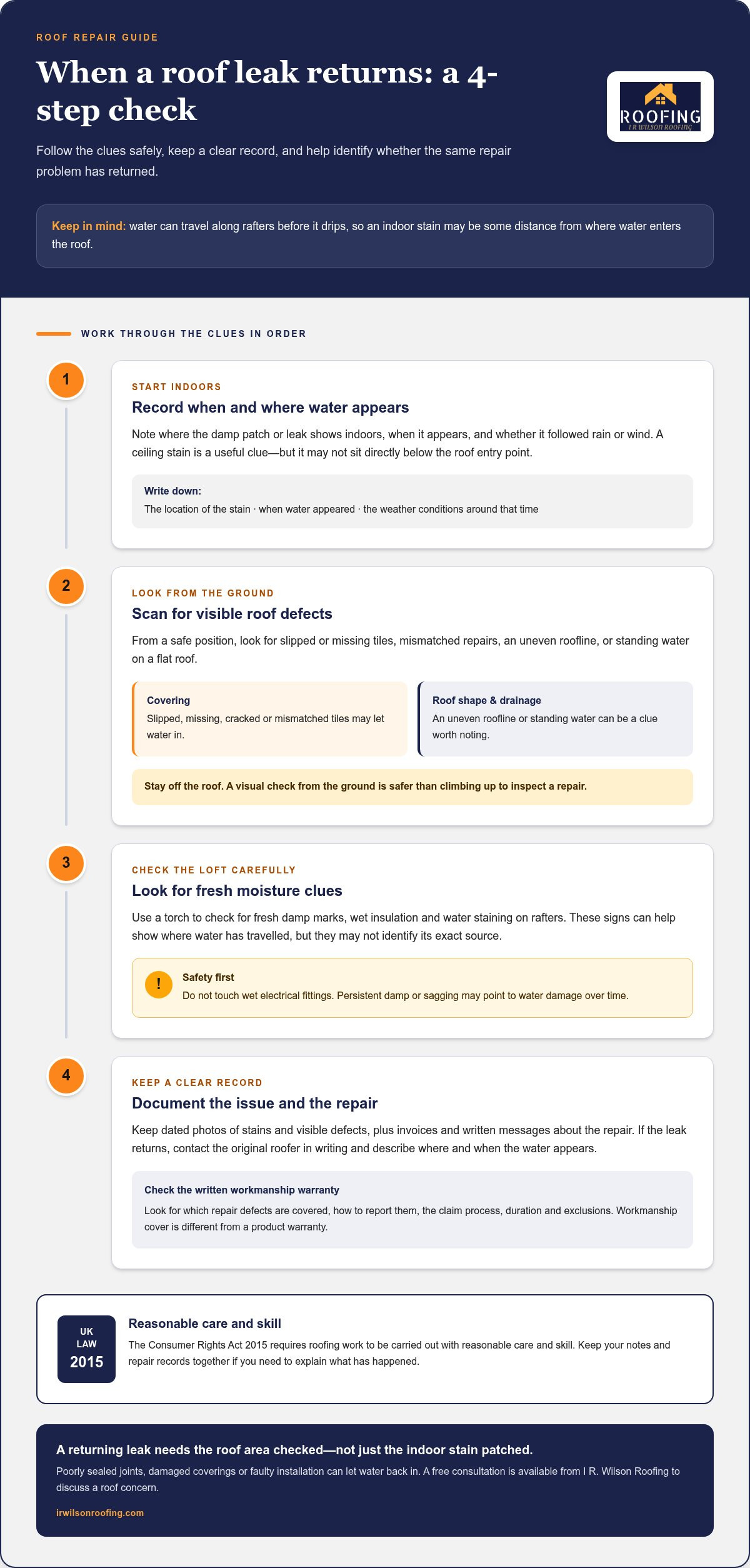
A leak that returns after a repair needs attention. Record when water appears, where it shows indoors, and whether it followed rain or wind. Water can travel along rafters before dripping, so a ceiling stain may be some distance from the roof entry point. The roof area around the leak should be inspected, not just the visible stain patched. Poorly sealed joints, damaged coverings or faulty installation can all let water back in.
From the ground, look for slipped tiles, mismatched repairs, an uneven roofline or standing water on a flat roof. In the loft, check for fresh damp marks, wet insulation and water staining on rafters. Use a torch and stay clear of wet electrical fittings. These clues can help show whether defects are near the leak, but may not reveal its exact source.
In the UK, the Consumer Rights Act 2015 requires roofing work to be carried out with reasonable care and skill. Roofing contractors should also follow safety regulations for working at height and use repair products that comply with building regulations. A workmanship warranty should clearly explain which repair defects it covers, how to report them, and the claim process. Check its written terms for duration and exclusions, and distinguish workmanship cover from any product warranty.
Keep dated photographs of stains and roof defects, along with invoices and written messages about the repair. If the leak returns, contact the original roofer in writing and describe where the water appears and when. A clear record helps establish whether the same problem has returned or a different area needs attention.
I R. Wilson Roofing: Flat Roof Repairs
I R. Wilson Roofing carries out flat roof repairs when a leak returns, water gathers on the surface or a previous fix hasn’t held. These signs can point to damage in the roof covering or a detail that needs attention. A clear assessment helps identify the repair needed and whether felt roofing is suitable for the roof.
Problems around roof edges can also affect fascias and soffits, while blocked gutters may disrupt drainage. I R. Wilson Roofing provides roofline services alongside flat roof repairs, helping homeowners address related roofing and water-management concerns.
Book a free consultation to discuss your roof and possible next steps, or visit irwilsonroofing.com.
Take the Next Step with Confidence
Knowing how to spot a bad roof repair job gives you a clear starting point. The next step is deciding whether the issue needs a focused repair or a broader assessment. Keep your observations together and describe the problem plainly when arranging help. Clear details make it easier to discuss what your roof needs.
I R. Wilson Roofing provides Flat Roof Repairs and Felt Roofs, as well as Fascias and Soffits when roof-edge components need attention. If you’re unsure where to begin, contact the team to discuss the issue and possible next steps.
A careful, informed next step can help you protect your home with greater confidence.
Frequently Asked Questions
What are the signs of a poor roof repair job?
Signs include work that does not match what was agreed, materials that come loose soon after completion, or the same fault returning. Compare the invoice or written agreement with the work done, and keep dated photographs of any changes. For example, if the quote covered replacing damaged tiles but the same area remains exposed, record the discrepancy and raise it with the roofer in writing.
How to check roof repairs for leaks and water damage in the UK?
After rainfall, check rooms and the loft for new damp smells, bubbling paint or water marks. Note when each sign appears and whether it follows heavy rain or wind, then compare your notes with earlier records. Keep clear photographs, and avoid touching wet fittings or entering unsafe loft spaces. Water can travel through the roof structure, so an indoor mark may not pinpoint where it entered.
What to do if a roofer has carried out a bad repair in the UK?
Contact the original roofer in writing, describe the defect clearly and include photographs, the invoice and relevant messages. Keep copies of every reply and any proposed remedy. If the complaint remains unresolved, Citizens Advice can explain your options and may escalate concerns to Trading Standards. Homeowners in Norwich and across Norfolk can follow the same steps, keeping their records factual and organised.