
A roof survey should look beyond the tiles. In Norwich, it typically checks the roof coverings, chimneys, leadwork, flashings and gutters, as well as accessible roof-space areas where relevant. Photographs and practical recommendations help explain what needs attention and why.
It’s understandable to want clear answers before arranging repairs or making a property decision. This guide explains what an inspection can cover, including commercial and flat roofs, how long different surveys may take, and what to expect from the written report. You’ll also learn how photographs can make hard-to-reach areas easier to assess and how recommendations can help you plan the next steps for your roof.
Key Takeaways
- Choose the inspection approach around the roof’s size, complexity and purpose; a straightforward survey and a Level 3 survey can take very different amounts of time.
- Use photographs to understand visible issues in hard-to-reach areas, including on flat and commercial roofs.
- Check the report timeframe you should expect: a standard roof survey report and a Level 3 report follow different delivery timelines.
- Use the recommendations to prioritise repairs and decide what needs closer investigation, rather than treating every observation as equally urgent.
Written reports, photographs and recommendations
A Norwich roof survey report records visible defects, photographs and recommended next steps. It might identify damaged coverings, deteriorated leadwork, chimney defects, blocked gutters or ponding water. Clear images connect each finding to a particular roof area, helping you understand which repairs may need attention.
Survey options include drone inspections, leak investigations, pre-purchase and post-storm surveys, plus broader Level 3 building surveys. A roof survey focuses on roofing, while an RICS homebuyer or building survey assesses the wider property. A Level 3 inspection is non-destructive and includes accessible roof-space areas.
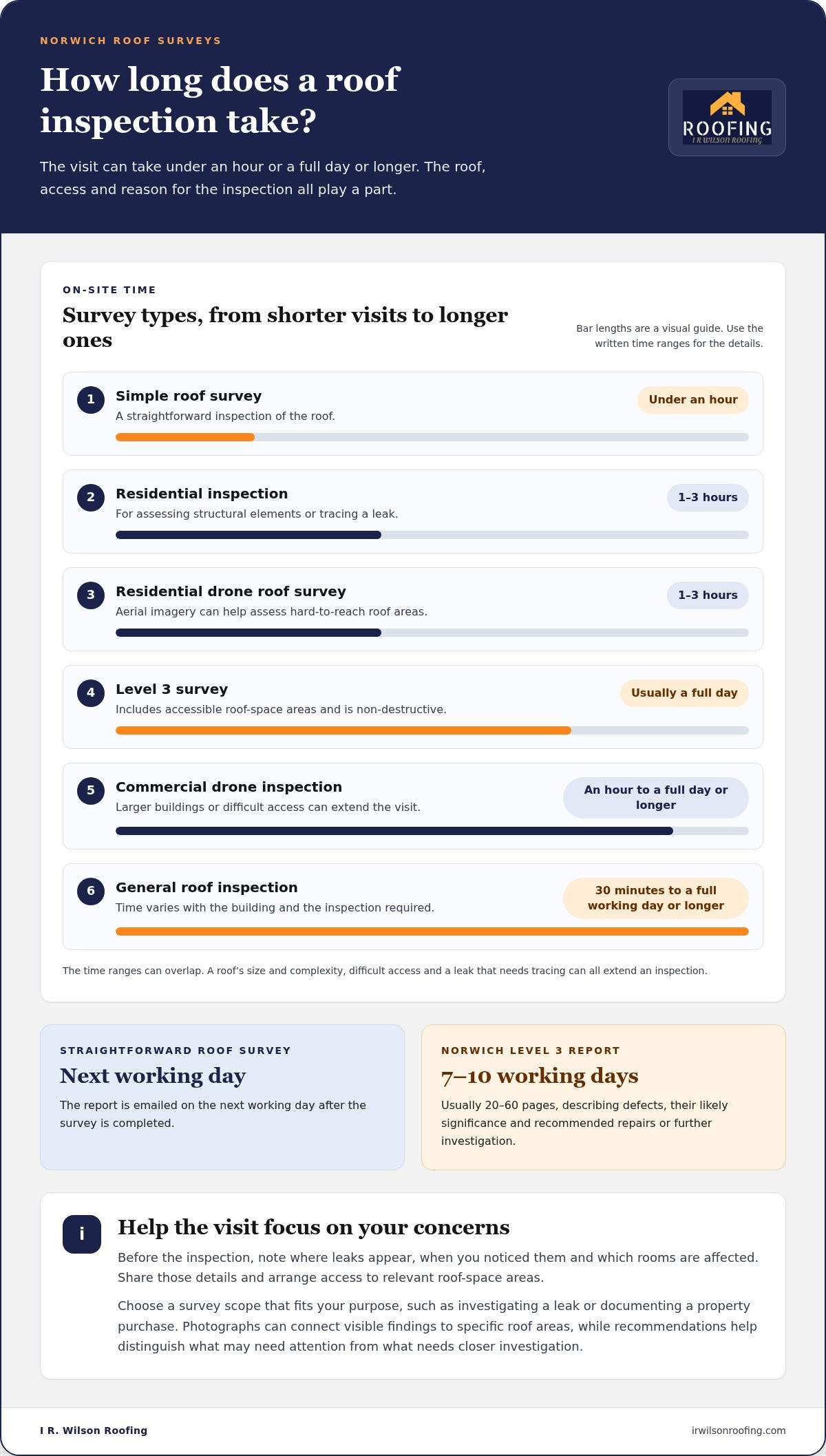
For straightforward roof surveys in Norwich, reports are emailed on the next working day after completion. A Norwich Level 3 survey report is usually 20-60 pages and delivered within 7-10 working days after inspection. It can describe defects, explain their likely significance and set out recommended repairs or further investigation.
For insurance matters, dated photographs and written findings can help document visible roof damage. Keep the report with your claim paperwork and match each image to the relevant repair recommendation. The report records inspection findings; it does not determine an insurer’s decision.
Where roof defects found during a Level 3 survey need closer assessment, a drone survey may be recommended. High-resolution imagery can show hard-to-reach details, and a drone can often avoid scaffolding or other specialist access equipment solely for inspection. Where required, an independent RICS surveyor can review Norwich or Norfolk drone imagery and incorporate it into a professional roof condition report.
Before the visit, note where leaks appear, when you noticed them and which rooms are affected. Share these details and arrange access to relevant roof-space areas. Choose the survey scope to suit your purpose, such as investigating a leak or documenting a property purchase, and make sure the report addresses those concerns.
How long does a roof inspection take?
A simple roof survey in Norwich usually takes under an hour. A residential inspection assessing structural elements or tracing a leak takes between 1 and 3 hours. A Level 3 survey usually takes a full day on site, while a general roof inspection can range from 30 minutes to a full working day or longer.
Roof size and complexity affect the time needed. A residential drone roof survey typically takes 1 to 3 hours; a commercial drone inspection can take an hour to a full day or longer. Larger buildings, difficult access and a leak that needs tracing can extend the inspection. Share the reason for your survey when arranging it, so the visit can focus on your concerns.
Norwich weather and local building styles can shape what the surveyor checks. The wet season runs from June to February, with more than a 25% chance of rainfall on any day during that period; October through March are the windier months. In Hay Hill and Riverside, some buildings date from the 1960s and 1970s, when concrete roof tiles were used.
Visible storm damage may include displaced or damaged coverings, chimney defects, damaged leadwork or blocked gutters. A survey checks accessible visible areas for signs of leaks or structural concerns. For a post-storm assessment, note where water appears indoors and when you first noticed it. This helps focus the inspection.
Once the findings are clear, you can use repair recommendations to request relevant quotes. Keep the inspection focused on the roof and any affected areas, rather than assuming every visible mark needs the same response. If you need practical roofing guidance after storm damage, explore the next steps for your property.
Roof coverings, chimneys, leadwork, flashings and gutters
A detailed roof inspection considers how each visible component sheds water. On a pitched roof, the surveyor checks coverings for missing, slipped or damaged tiles. On a flat roof, aerial imagery can help show surface condition and ponding water. These observations help homeowners understand which areas may need closer attention.
Chimneys and leadwork need careful attention because defects can allow water to enter. A survey can record visible chimney damage, deteriorated leadwork and problems around flashings, where roof details meet walls or other surfaces. Photographs help pinpoint each issue, so recommendations identify a specific part of the building rather than making a general observation.
Gutters form part of the roof’s drainage system. A survey may identify visible blockages or damage that affect how rainwater drains away. A blocked gutter is a different finding from a damaged roof covering, so the report should describe each observation separately and explain its relevance.
In Norwich and Norfolk, drone imagery can capture views of roof coverings, chimneys, leadwork, flashings, gutters, flat roofs and other hard-to-reach areas. This can help assess visible details beyond ground-level views. Weather conditions matter when interpreting signs such as ponding water: an image records what was visible at the time.
Mortar bedding ridge, verge and hip tiles on Norwich roofs has an expected lifespan of 60 to 80 years. That figure is context, not a diagnosis: the survey still needs to record the mortar’s visible condition. Ask for recommendations to identify the location and nature of each concern, helping you plan appropriate follow-up.
I R. Wilson Roofing: Flat Roof Repairs
If a survey identifies roofing problems, I R. Wilson Roofing can help with the necessary work. For ponding water or damage on a flat roof, the company provides Flat Roof Repairs. Worn felt may call for felt roofing. Survey photographs and recommendations help show which area needs attention when discussing the next step.
Other findings may point to related work, such as damaged fascias and soffits or gutters that need cleaning. Share the report’s description of the affected area and any photographs to focus the discussion on your property’s needs. I R. Wilson Roofing provides roofline services and gutter cleaning alongside flat roof repairs.
For help with roof work following your survey, contact I R. Wilson Roofing or visit the I R. Wilson Roofing website.
Make your survey findings your next step
Knowing what a roof survey in Norwich includes is a starting point for making a decision. Keep the report with your property records, note any changes you observe, and use its recommendations to guide your next conversation about the roof. This helps you explain your priorities and focus on the issue that matters most to your home.
If the report recommends repairs, I R. Wilson Roofing can discuss the relevant roofing work and help you consider a practical next step. A free consultation is a straightforward way to talk through your needs and decide how to proceed.
A roof survey can be the first step towards a well-informed plan for your property.
Frequently Asked Questions
Can you inspect commercial and flat roofs?
Commercial and flat roofs can both be inspected. The survey’s focus depends on the building’s layout and the reason for the visit. A large warehouse roof may require a broad visual assessment, while a flat roof inspection may focus on surface condition and drainage. The findings help identify areas that may need further attention.
What Is a Roofing Survey?
A roofing survey is a focused assessment of a roof’s condition, arranged to answer a practical question. You might arrange one after noticing a recurring damp patch or before planning roof maintenance. The survey records relevant observations so you can understand the issue and consider sensible next steps, rather than relying on a quick view from the ground.
What is included, and what is excluded?
The scope depends on the survey type, but it can cover visible roof areas and accessible spaces relevant to the inspection. A Level 3 survey is non-destructive: it doesn’t involve opening floors or walls. Concealed defects may therefore remain unseen. Before the inspection, share your main concern and ask the report to identify any areas the surveyor couldn’t access.
What does a roof survey include in the UK?
For homeowners in Norwich, what a roof survey includes depends on its purpose and scope. A leak investigation, post-storm assessment and pre-purchase inspection each address different concerns. Explain what prompted the visit, such as water entering near a chimney or damage noticed after high winds. This context helps focus the inspection on your needs.
What does a Norwich roof surveyor inspect inside and outside the property?
Outside, the surveyor can assess visible roof areas and roofline details, including gutters and chimney surrounds. For a Level 3 survey, accessible roof-space areas are also checked. Inside, point out any damp patches, staining or rooms where you’ve noticed a leak. These details help connect an indoor symptom with the relevant area of the building.