What if that damp patch on your ceiling doesn't mean you need to spend £5,800 on a brand new roof? You're likely worried that a few blisters or cracks in your felt mean the entire system has reached the end of its life, especially with the unpredictable Norfolk weather testing every seam. It's frustrating to face the prospect of a massive bill when you just want a dry, secure home and a tradesman you can actually trust to show up and do the job right.
At I R. Wilson Roofing, we've seen how the right mineral felt roof repair Norfolk homeowners invest in can add years to a roof's lifespan without the need for a full replacement. We agree that you deserve an honest assessment of your property rather than a high-pressure sales pitch. This guide will teach you how to identify specific damage, understand current 2026 repair costs, and maintain your roof to withstand our unique coastal climate.
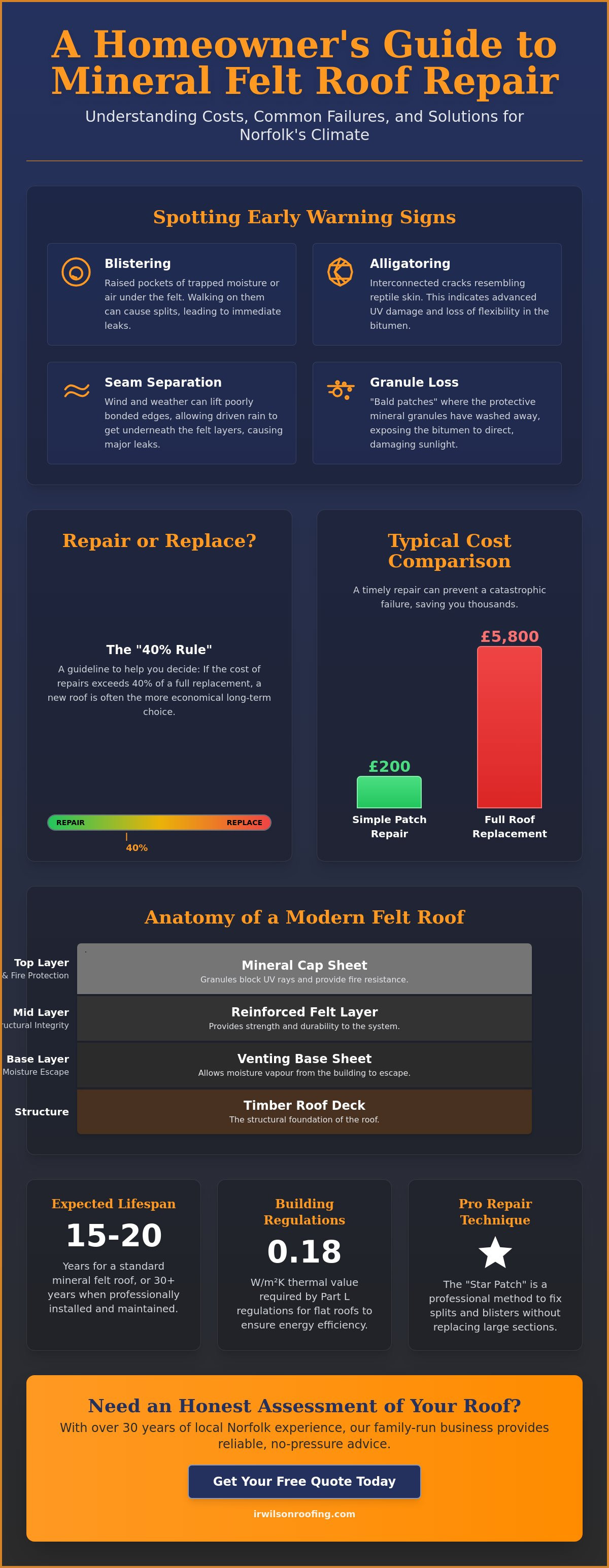
We'll explain the latest Part L building regulations that require a 0.18 W/m²K thermal value for flat roofs and show you how a simple £200 patch repair might be all you need to keep your home leak-free and warm for years to come.
Key Takeaways
- Understand why mineral felt remains the top choice for Norfolk outbuildings and how its multi-layer bitumen system protects against harsh coastal weather.
- Learn to spot early signs of failure, such as blistering and alligatoring, to ensure your mineral felt roof repair Norfolk is timely and cost-effective.
- Apply the "40% Rule" to decide if a repair is a smart investment or if the roof's 15-20 year lifespan makes a full replacement more economical.
- Discover professional restoration techniques like the "Star Patch" that can fix leaks and extend your roof's life without the need for stripping large sections.
- Find out how a family-run business with over 30 years of local experience provides honest, no-pressure advice to keep your home dry and secure.
Understanding Mineral Felt Roofing in the Norfolk Climate
Mineral felt isn't just a single sheet of material. It's a robust, multi-layer bitumen system designed to keep water out while allowing the building to breathe. The top layer features slate or stone granules which act as a shield against the sun. Technically known as Asphalt roll roofing, this system remains the most popular choice for Norfolk extensions and outbuildings. It's affordable, and when installed correctly, it provides a solid 30-year lifespan.
Our local environment is particularly demanding. High humidity levels from the coast and the Broads can keep roofs damp for weeks, while salty air accelerates the wear on older metal fixings. If you notice the surface starting to look dry or brittle, seeking a mineral felt roof repair Norfolk specialist early can save you from a full £5,800 replacement. We've seen many cases where a simple patch prevents a total failure.
To better understand how these repairs are carried out, watch this helpful video:
The Anatomy of a Mineral Felt Roof
A standard system uses three distinct layers. First, a venting base sheet is nailed or bonded to the deck to allow moisture vapor to escape. Next comes a reinforced felt layer for structural integrity. Finally, we apply the mineral cap sheet. The granules on this top layer aren't just for looks; they provide essential fire resistance and block UV rays that would otherwise bake the bitumen until it cracks. While older roofs used the "pour-and-roll" method with hot buckets of bitumen, we now prefer modern torch-on felt for its superior bond and longevity.
Why Norfolk Weather is Tough on Flat Roofs
Flat roofs in rural Norfolk face a brutal "freeze-thaw" cycle. Water gets into tiny gaps in the seams, freezes, and expands, which eventually rips the felt apart. In wooded areas like Thorpe St Andrew, autumn leaves often block drainage. This leads to ponding water that rots the felt and the timber underneath. Coastal winds also play a role, as they can lift poorly bonded edges, allowing rain to drive deep into the roof structure. Regular mineral felt roof repair Norfolk maintenance ensures these vulnerable points stay sealed.
Identifying Common Mineral Felt Failures: When to Call a Professional
Blistering is defined as trapped moisture expanding under the felt surface, usually caused by poor ventilation or dampness trapped during the original installation. These raised pockets might seem harmless at first, but they are a primary reason homeowners seek a mineral felt roof repair Norfolk to prevent the felt from splitting. If you walk on these bubbles, they can pop, creating an immediate entry point for rainwater to reach your timber deck.
Alligatoring is another critical sign that your roof is nearing the end of its life. This pattern of small, interconnected cracks looks like reptile skin and indicates advanced UV damage and bitumen exhaustion. Once the bitumen loses its flexibility, it can no longer expand with the building, leading to deep fractures. According to the National Federation of Roofing Contractors (NFRC), identifying these surface issues early is essential for maintaining the structural integrity of your home.
We often find that seam separation is the most common cause of sudden leaks. High winds in the Norfolk area can catch loose edges, peeling the layers apart. This often leads to ponding, where water sits in a dip on the roof. This stagnant water is heavy. It stresses the underlying timber deck and eventually seeps through even the smallest pinhole. Identifying these early symptoms can save you thousands in structural repairs.
The Red Flags of Granule Loss
The "mineral" part of your roof is actually a layer of crushed slate or stone granules. These granules aren't decorative; they protect the bitumen from the sun's rays. If you see "bald patches" where the dark bitumen is exposed, the roof is vulnerable to rapid degradation and punctures. A quick look in your gutters can reveal the truth. If they are filled with loose mineral grit, your cap sheet is shedding its protection. You can read more about flat roof maintenance to understand how to prevent this grit loss before it leads to a leak.
Interior Signs of a Flat Roof Leak
Inside your home, the signs are often subtle. You might notice a faint, musty smell or a small damp patch in the corner of a ceiling. It's a mistake to assume the leak is directly above the drip. Water often travels along the roof timbers before showing itself. Be aware that a small ceiling stain usually hides a much larger area of saturated insulation. By the time you see a drip, the timber decking underneath the felt may have already begun to rot, requiring more extensive repairs than a simple patch.
The Repair vs. Replace Dilemma: Making the Most Cost-Effective Choice
Deciding whether to patch up a leak or invest in a new system is the biggest challenge for any homeowner. To help our customers find the best value, we use the "40% Rule" as a logical framework. If the estimated cost for your mineral felt roof repair Norfolk exceeds 40% of the price of a total replacement, a new roof is almost always the better investment. Patching an old, failing roof often leads to a "domino effect" where one repair simply shifts the structural stress to the next weakest point.
Age is another deciding factor that we weigh heavily. A standard mineral felt roof typically has a functional lifespan of 15 to 20 years. If your roof is approaching the 18-year mark, the bitumen has likely lost its essential oils and become brittle. At this stage, the vibration and heat from a repair can often cause surrounding areas to crack. We also check the condition of the underlying timber deck. If the wood is solid and dry, a repair is a fantastic way to save money. However, if the deck is soft or "spongy," the foundation of the roof has failed, and a patch will not hold.
When a Professional Repair is the Right Move
A targeted repair is the smartest choice for isolated damage on a relatively young roof. If a storm has lifted a single seam or a falling branch has caused a specific puncture, there is no need for a full replacement. We often use high-performance liquid membranes for these scenarios, which can successfully extend the life of your roof by 5 years or more. At I.R. Wilson Roofing, we always provide an honest assessment of your roof's remaining lifespan to ensure you aren't spending money unnecessarily. Our goal is a leak-free home using the most practical method available.
Signs That a Full Replacement is Unavoidable
You should consider a full replacement if you notice widespread blistering across the entire surface. This indicates that moisture is trapped throughout the system and the bond between layers has failed. Structural decay is another "red flag." If the roof feels unstable underfoot, the timber decking has likely rotted due to long-term seepage. While the upfront cost is higher, a modern high-performance felt system offers a 20-year guarantee and much better thermal efficiency. For an authoritative look at modern design standards, the NFRC's Householder's Guide to Flat Roofing offers a detailed breakdown of what to expect from a professional installation.
Professional Mineral Felt Repair Techniques and Best Practices
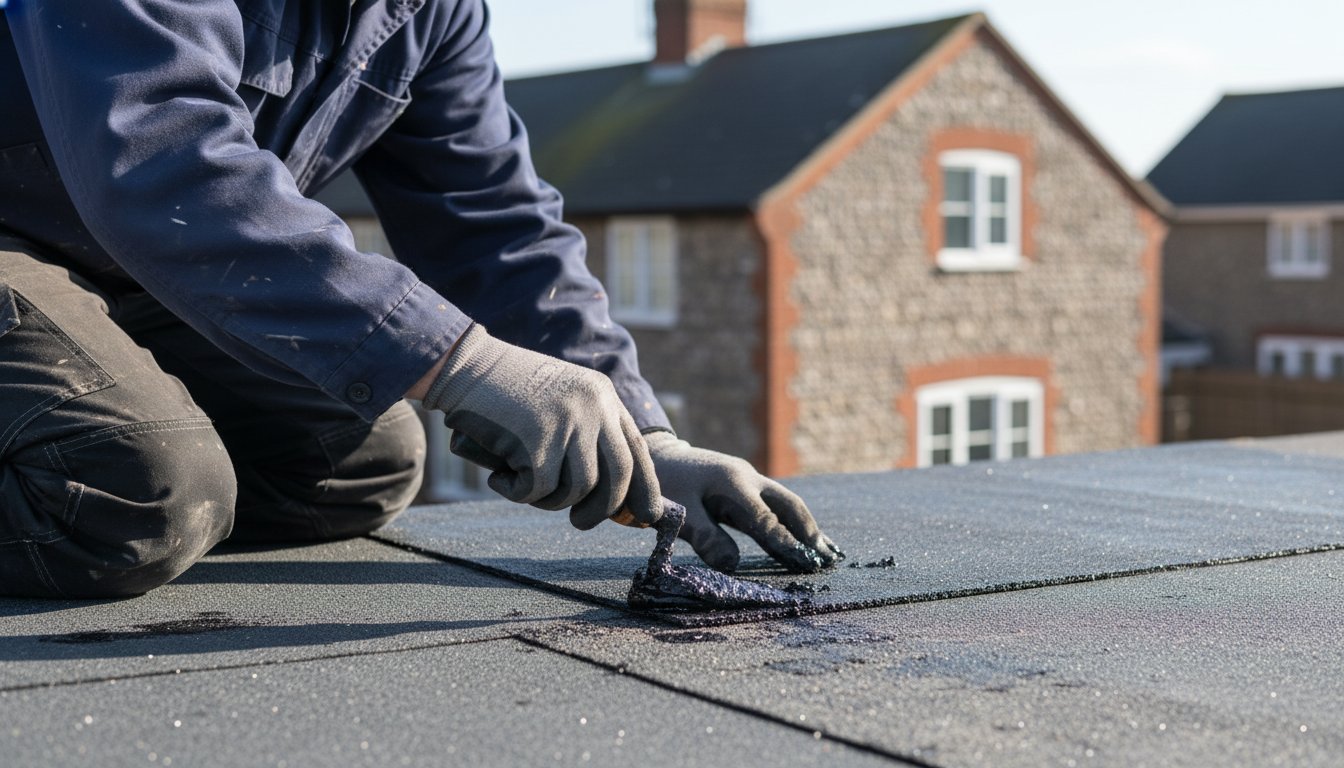
Proper preparation is the foundation of any long-lasting repair. We begin by thoroughly cleaning the area with a stiff brush to remove moss, dirt, and loose granules. The felt must be bone-dry before we apply a high-bond primer. This step ensures that the new patch doesn't just sit on top but actually fuses with the existing roof. When performing a mineral felt roof repair Norfolk families can rely on, we never skip these basic steps because moisture trapped under a new patch will only cause another blister within months.
The "Star Patch" technique is our preferred method for fixing localized blisters. We carefully cut a cross shape into the bubble, peel back the flaps, and allow the underlying deck to dry completely. Once dry, we apply bitumen adhesive and press the flaps back down, followed by a larger top patch that extends at least 100mm beyond the cut. For these small, delicate areas, cold-applied bitumen adhesives are often safer and more precise than using a torch, though we use high-performance torch-on felt for larger structural patches to ensure a seamless bond.
Matching the mineral finish is a detail many overlook. We always ensure the repair is topped with matching stone granules to maintain the roof’s UV protection and fire rating. Without this protective layer, the sun will bake the bitumen, causing the repair to fail prematurely. This attention to detail is what distinguishes a professional fix from a temporary DIY attempt.
Fixing Failed Seams and Joints
Seams are the most vulnerable part of any felt roof. Over time, dirt and grit get blown under lifted edges, preventing them from sticking back down. We clean these joints out completely before re-bonding them with heat or high-strength adhesive. Once the seam is secure, we often apply solar reflective paint to the area. This silver coating reflects heat and protects the new bitumen from the intense summer sun. While you might be tempted to use "emergency" repair tapes from a DIY shop, these rarely survive a harsh Norfolk winter. They lack the flexibility to handle the expansion and contraction that occurs during our frequent temperature shifts.
Addressing Leadwork and Flashing Issues
Many "flat roof" leaks actually start where the felt meets the house wall. If the lead flashing has pulled away or the mortar has perished, water will run straight behind the felt and into your ceiling. We specialise in re-pointing lead back into the brickwork using high-quality roofing mastic or traditional mortar to create a permanent, watertight seal. If your flashing is cracked or missing, our leadwork services can restore these critical junctions. Getting the leadwork right is just as important as the felt itself for maintaining a dry home.
If you're worried about a specific leak, you can request a free, no-obligation estimate today to see which technique is right for your property.
Reliable Flat Roof Restoration with Norfolk’s Family-Run Specialists
Choosing a contractor for your mineral felt roof repair Norfolk shouldn't feel like a gamble. Since 1994, I.R. Wilson Roofing has operated as a family-run business, providing straightforward solutions to homeowners across Norwich and the wider county. We believe that a roof is only as good as the person standing on it. That's why Ian and Ben handle the work personally, ensuring every seam is torched correctly and every lead flashing is secure. This "boots-on-the-ground" mentality ensures that the people you speak with during the estimate are the same people doing the physical work on your home.
We don't use high-pressure sales tactics or faceless call centres. Instead, we offer the kind of honest, neighbourly advice that only comes from decades of local experience. We understand that your home is your biggest investment. Whether we're performing a minor patch or a full restoration, we use high-quality mineral felt materials designed to withstand the salt air and high humidity of the East Anglian coast. Our goal is always to provide a repair that lasts, avoiding the unnecessary expense of a full replacement whenever possible.
Why a Local Family Business Matters
In a close-knit area like Norfolk, our reputation is our most valuable asset. Word-of-mouth recommendations have sustained us for over 30 years, which drives our unwavering commitment to quality. Unlike national contractors who might disappear after the job is done, we are rooted here in the community. We provide peace of mind by being fully insured and offering long-term guarantees on our workmanship. This digital handshake is our promise that your roof will remain watertight. We take pride in our craftsmanship, ensuring that every guttering repair or felt patch meets our high professional standards.
Next Steps for Your Norfolk Roof
Don't wait for a small damp patch to become a major structural problem. As we've discussed, an uninsulated or leaking roof can account for 20% of your home's heat loss, and ignoring a minor fault often leads to internal timber rot. Acting early is the most cost-effective way to protect your property and avoid the £5,280 to £5,800 cost of a full replacement. We make the process simple and transparent from start to finish.
We invite you to Contact I R. Wilson Roofing for a professional assessment today. We provide free, no-obligation estimates and will always give you a clear, honest breakdown of your roof’s remaining lifespan. Let us take the stress out of your home maintenance with a reliable, local service you can trust.
Secure Your Home Against the Norfolk Elements
A leaking flat roof doesn't have to be a source of constant stress or an immediate financial burden. By understanding the 40% rule and identifying common failures like seam separation early, you can protect your property's structural integrity without jumping straight to a full replacement. Whether your roof is battling coastal salt air or the humidity of the Broads, professional maintenance is the most effective way to extend the 20-year lifespan of your bitumen system and avoid the £5,800 cost of a total rebuild.
At I.R. Wilson Roofing, we've been providing expert mineral felt roof repair Norfolk services since 1994. As a family-run business, we take personal pride in every job we do. We are fully insured and all our work is guaranteed, so you can have total confidence in the safety and longevity of your home. You'll always receive an honest, expert assessment from a team that values long-term reliability over a quick sale.
Take the first step toward a leak-free home by speaking with Ian or Ben today. Get a Free, No-Obligation Mineral Felt Repair Quote and let us help you find the most cost-effective solution for your property. We look forward to helping you keep your home dry and secure for many years to come.
Frequently Asked Questions
How much does a mineral felt roof repair cost in Norfolk?
A minor patch repair typically costs around £200 based on 2025 industry averages for a standard residential property. For more extensive damage, the average cost for a professional mineral felt roof repair Norfolk homeowners expect is approximately £265 per square meter. These figures vary depending on access requirements and the condition of the underlying timber. We always provide a clear, written estimate after a site visit so you know the exact investment required.
How long should a mineral felt roof last before it needs replacing?
A high-quality mineral felt roof should last approximately 30 years when it's installed and maintained correctly. Factors such as the quality of the bitumen and the intensity of UV exposure can shorten this timeframe. If your roof was installed before 1996, it has likely reached the end of its functional life. Regular inspections every 24 months help catch small splits before they require a full, costly replacement of the structural timber deck.
Can I walk on my mineral felt flat roof to inspect it?
You should avoid walking on your flat roof unless it was specifically designed as a balcony with reinforced decking. Standard mineral felt is susceptible to punctures from footwear, especially during hot summer days when the bitumen softens. Stepping on a blister can cause it to pop, creating an immediate leak. We use specialized crawling boards to distribute weight evenly and protect the surface during our professional inspections to ensure no further damage occurs.
Is it possible to lay new felt over old felt to save money?
Overlaying new felt is possible but we often discourage it if the original roof is saturated or the timber feels soft. UK Building Regulations Part L, updated in January 2025, often require insulation upgrades if more than 50% of the roof area is renovated. Adding a second layer can also trap moisture between the sheets, which eventually rots the decking. We prefer stripping back to the boards for a solid foundation.
What is the best time of year to repair a flat roof in Norfolk?
The best time for a permanent repair is during the dry months between April and September. Bitumen adhesives and modern torch-on systems require a bone-dry surface to bond correctly. While we perform emergency repairs throughout the winter to keep homes watertight, these are often considered temporary measures. Scheduling work during the spring ensures the materials reach the correct temperature for a seamless, long-lasting seal that withstands the autumn gales.
Does my home insurance cover mineral felt roof repairs after a storm?
Most UK policies cover repairs caused by sudden events like storm damage or falling trees, but they rarely cover general wear and tear. If your roof is over 20 years old, insurers may argue the failure was due to age rather than a single weather event. We provide detailed reports and photos to help with your claim process. Always check your policy's "Key Facts" document for specific exclusions regarding flat roofing materials.
Why are there small stones in my gutters after it rains?
Seeing small stones or grit in your gutters is a sign that the protective mineral cap sheet is shedding its granules. These granules shield the bitumen from UV rays; without them, the felt becomes brittle and cracks within 18 months. This shedding is common on roofs approaching 20 years of age. If your gutters are more than 30% full of grit, it's a clear indicator that your roof's protective layer is failing.
Can I repair a mineral felt roof leak myself using DIY products?
DIY products like bitumen paint or emergency tape are useful for short-term fixes but they rarely provide a permanent solution. These materials often lack the flexibility to handle the thermal expansion and contraction common in the Norfolk climate. Improperly applied patches can also trap moisture, which accelerates timber rot. For a mineral felt roof repair Norfolk that lasts several years, a professional torch-on or liquid membrane repair is a much safer investment.