Last Tuesday, a homeowner in Norfolk woke up to a damp patch on their bedroom ceiling after a night of heavy winds and lashing rain. While the damage looked minor from the garden, a thorough storm damage roof assessment Norfolk revealed that several tiles had shifted, exposing the timber rafters to potential rot. You're likely feeling that same sense of unease right now, wondering if your own roof held up or if there is a hidden leak waiting to cause a costly headache. We agree that the uncertainty following a storm is the hardest part, especially when you are worried about rogue traders taking advantage of the emergency.
This guide provides a dependable 2026 checklist to help you safely assess your property and secure your home’s future. We will explain how to spot failures in your leadwork or guttering from ground level and how to document damage to meet the 60-day insurance proof of loss window. Our methodical approach ensures you have the right information to get your insurer to acknowledge your claim within the required 10 working days. This process is designed to give you total peace of mind that your property remains watertight and your family stays protected.
Key Takeaways
- Learn why you should never climb on your roof after a storm and how the 24-hour rule protects your home's structural integrity.
- Follow our visual checklist for a storm damage roof assessment Norfolk to identify slipped tiles, damaged leadwork, or pooling water on felt roofs.
- Discover the internal signs of a failing roof, from damp attic rafters to subtle brown circles appearing on your upstairs ceilings.
- Master the art of documenting damage for your insurer by creating a 'Storm Log' and capturing the right photographic evidence to support your claim.
- Understand how a professional inspection identifies hairline cracks and freeze-thaw risks that could lead to expensive timber replacements if left ignored.
Immediate Steps: What to Do After a Norfolk Storm
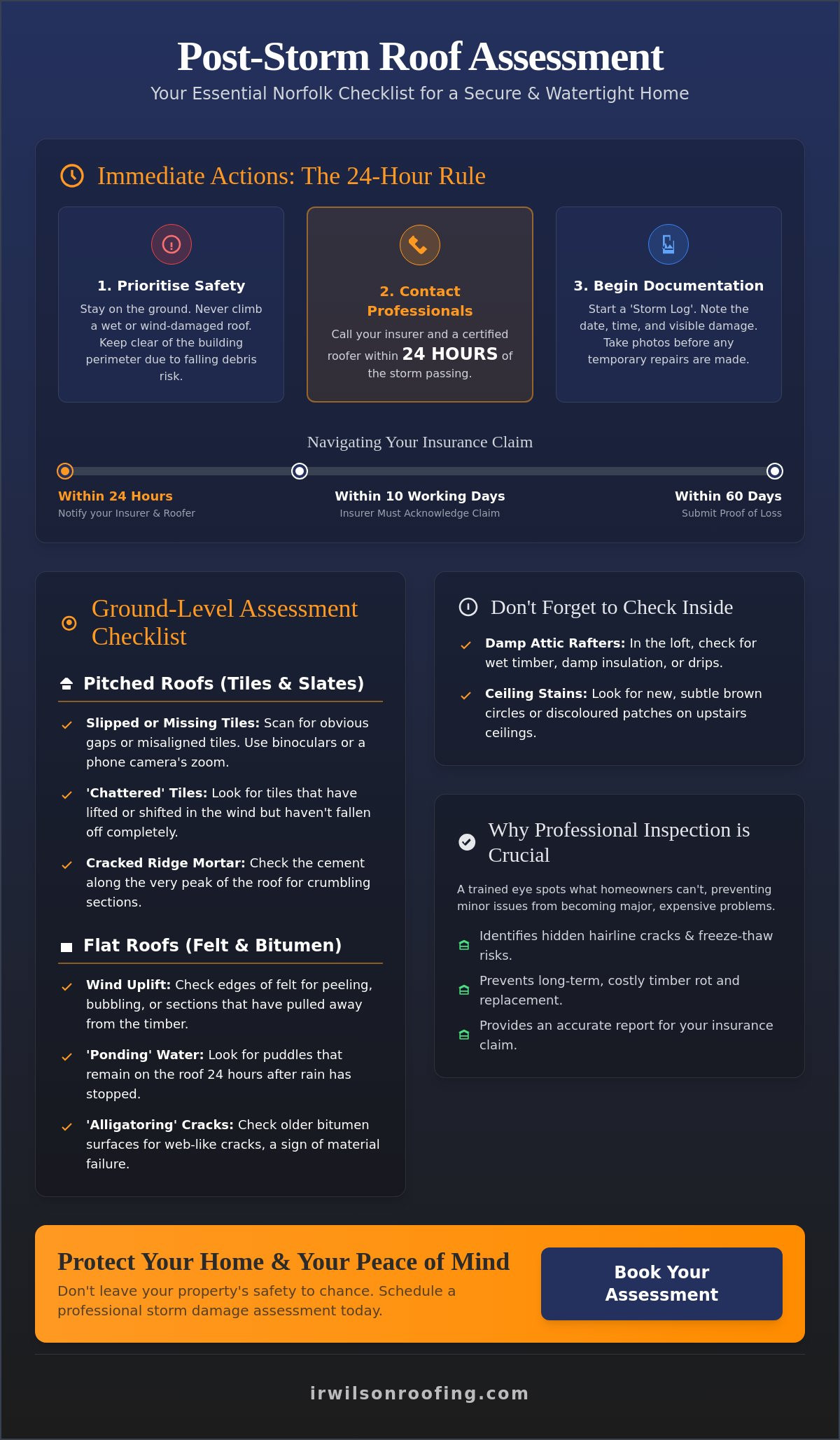
Once the heavy winds subside, your first instinct is to check for damage. This is a critical moment. Norfolk has a moderate natural disaster risk score of 44%, with most incidents related to severe gales and coastal surges. A methodical storm damage roof assessment Norfolk helps identify issues before they turn into internal rot. We recommend following the 24-hour rule. This means you should contact your insurer and a professional roofer within a day of the event. Prompt action ensures your claim is handled quickly. Standard policies often require a proof of loss document within 60 days of the storm. According to reports from March 23, 2026, insurers are required to acknowledge receipt of a claim within 10 working days of notification.
You can start your check safely from the ground. Grab a pair of binoculars or use the zoom on your smartphone camera. Look for shifted slating or sections of leadwork that seem out of place. This visual survey is essentially a basic windstorm mitigation inspection that you can do without leaving the pavement. If you see a hole, you might be tempted to throw a tarpaulin over it. We advise against this. Temporary measures should only be handled by professionals who have the correct safety equipment.
To better understand how to spot these issues safely, watch this helpful video:
Prioritising Safety in Post-Storm Conditions
Safety is our absolute priority. After high winds, the area around your home becomes a danger zone. Loose guttering or heavy clay tiles can fall without warning. Keep children and pets well away from the building perimeter until a professional has confirmed everything is secure. We've seen too many accidents caused by homeowners trying to fix "just one tile" themselves. Climbing a ladder to inspect a wet or wind-damaged roof is a risk that simply isn't worth the danger to your life.
The Norfolk Climate: Why Our Storms Are Unique
Living in Norfolk means our roofs face unique challenges. Coastal winds carry salt air that can accelerate the corrosion of metal components. Minor defects that survived the summer often fail during intense winter events like "The Beast from the East." These conditions make regular checks essential. If you find yourself dealing with an urgent leak after a gale, we are here to help. You can read more about our Emergency roof repairs to see how we secure homes across the county. We take pride in our "boots-on-the-ground" approach, ensuring your home stays watertight regardless of what the North Sea throws at us.
External Storm Damage Roof Assessment Checklist
Once you've established a safe perimeter, it's time to document the specific condition of your roof's surface. A thorough storm damage roof assessment Norfolk requires a keen eye for subtle changes in your property's exterior that might not be obvious at first glance. We suggest starting with the highest points and working your way down to the guttering. Using a structured homeowner's storm damage checklist ensures you don't overlook small defects that could lead to significant leaks during the next heavy downpour. By identifying these issues early, you can provide your insurance company with clear evidence of the storm's impact on your home.
Signs of Damage on Pitched Roofs
Look closely at your slating and tiling. You're looking for more than just missing pieces. Often, tiles become 'chattered'; they've shifted in the wind but haven't fallen yet. These are prime entry points for water. Pay special attention to the ridge tiles along the top. If the mortar has cracked, it creates a direct path for rain. Also, check valley gutters for debris blockages.
Flat Roof Vulnerabilities: Felt and Bitumen
Norfolk extensions and garages face significant wind uplift. High gusts can get under the edges of the felt, pulling it away from the timber. Look for 'alligatoring', which are cracks on older bitumen surfaces. If you see 'ponding' water 24 hours after rain stops, the structure may have dipped. Our guide on Flat roof repairs Norwich covers these local issues in detail.
Your gutters act as a diagnostic tool for the overall health of your roof. Conduct a 'gutter audit' by checking your downpipes and gully traps for sand-like granules or chunks of grey mortar. This debris is a clear sign that your tiles are losing their protective coating or that your chimney flaunching is starting to fail. Finally, inspect the leadwork around your chimney stacks and dormer windows. While lead is a heavy material, severe Norfolk gales can still lift flashing from the brickwork. If the seal is broken, your home is no longer watertight. If you notice any of these red flags, we suggest you request a professional inspection. Taking action now prevents the need for more extensive timber replacement or insulation work later in the year. We have seen many cases where a simple lead repair saved a homeowner from a full ceiling replacement.
Interior Indicators: Spotting Hidden Roof Leaks
While your external check might have shown your tiles are intact, the interior of your home often tells a more accurate story. A comprehensive storm damage roof assessment Norfolk isn't truly complete until you've looked beneath the surface. Water is persistent and finds the path of least resistance, often travelling along rafters or through wall cavities before it ever reaches your ceiling. Identifying these hidden signs early prevents minor damp from turning into a major structural headache involving costly timber replacement.
The Loft Space Investigation
Wait for a bright day and head into your loft with a high-powered torch. We recommend turning off the lights first; if you see any pinpricks of daylight peeking through the felt, you have a clear breach that needs immediate attention. Use your torch to inspect the underside of the roof felt for tears or damp patches that feel cold to the touch. Look specifically for 'tracking' marks, which appear as dark streaks or staining along the timber rafters. These marks show exactly where water has been running. In the context of roof leaks, capillary action is the process where water is drawn into narrow gaps between overlapping tiles or along a timber's grain, allowing moisture to travel upwards or sideways against the pull of gravity.
Wall and Ceiling Warning Signs
Move through your upper rooms and pay close attention to the corners of the ceilings and the areas around chimney breasts. Brown, tea-coloured circles or bubbling paint are classic alerts that water is penetrating the building envelope. Dampness near a chimney often indicates that the leadwork has lifted or the chimney flaunching has cracked during the storm. Norfolk gales are notoriously aggressive, often driving rain horizontally. This storm-driven rain can bypass aged fascias and soffits, entering the eaves and soaking your insulation. If you suspect your drainage is contributing to the problem, our Guttering services Norwich guide explains how to identify and fix these specific vulnerabilities.
We also suggest performing a 'Drip Test' if you find a damp patch. Don't assume the hole in your roof is directly above the stain on your ceiling. Water can enter at the ridge, run down a rafter for several metres, and then drip onto the plasterboard in a completely different area. Finally, feel your insulation. If the mineral wool or glass fibre is sodden, it must be replaced. Wet insulation loses its ability to keep your home warm and quickly becomes a breeding ground for mould, which can impact your family's health. Taking these methodical steps ensures your home stays watertight and gives you the confidence that no hidden issues are lingering after the clouds have cleared.
Documenting Damage for Insurance Claims
Finding a leak is only half the battle. To ensure your home is restored correctly, you must present a clear and undeniable case to your insurance provider. A professional storm damage roof assessment Norfolk provides the technical weight you need, but your own initial documentation is the foundation of a successful claim. Standard policies often require a 'Proof of Loss' document within 60 days of the event. We've seen many claims delayed because the homeowner lacked basic evidence from the day the storm hit. We recommend acting quickly to ensure your insurer acknowledges the claim within the required 10 working days.
Start by creating a 'Storm Log'. Record the exact date and time the weather event occurred, noting the severity of the wind and rain. If a tile has fallen into your garden, don't throw it away. Keep any debris safely in a bucket or a corner of the garden. Showing an insurance assessor the physical evidence of a snapped clay tile or a piece of lifted leadwork helps prove the force of the wind. When you receive a repair quote, ensure it includes a full technical breakdown of materials and labour. A single total figure is rarely enough; insurers want to see exactly what they are paying for, from new slating to timber replacement.
Creating a Comprehensive Photo Record
Your smartphone is your best tool during this process. Take wide shots of the entire property to show the context of the damage. Then, move in for close-up photos of specific issues like lifted flashing or cracked chimney flaunching. If you have an active leak, a short video is often more effective than a photo at showing the volume of water entering the building. We suggest storing all these files in a dedicated 'Storm 2026' folder on your phone or cloud storage. This keeps your evidence organised and ready to send the moment your insurer requests it.
Working with Your Insurance Provider
The main hurdle in any claim is the distinction between 'fair wear and tear' and genuine storm damage. Insurers will look for any sign of pre-existing neglect to avoid a payout. This is where our expertise becomes invaluable. A professional roofer's report can distinguish between a tile that fell because of a 70mph gust and one that slipped due to an old, rusted nail. Having this level of detail prevents your claim from being rejected on a technicality. If you need help proving the extent of the impact on your property, you should contact us for a professional assessment report. We provide the honest, technical documentation that insurance companies respect, helping you get the repairs your home deserves.
Why Professional Assessment is Essential in Norfolk
While a visual check from the ground is a great start, it can't replace the seasoned perspective of a professional. A storm damage roof assessment Norfolk involves more than just looking for missing tiles. We look for hairline cracks in the mortar or slight shifts in the slating that are invisible to the untrained eye. These small defects are the primary cause of winter freeze-thaw damage. When water enters these cracks and freezes, it expands; this turns a minor issue into a major structural failure by the time spring arrives. We've seen many cases where a missed crack in the chimney flaunching led to a full internal ceiling collapse months later.
This need for professional insight is universal. Whether you are dealing with UK gales or the intense weather patterns of the American Midwest, consulting experts like roofintulsa.com ensures that every vulnerability, from hairline cracks to wind-lifted shingles, is professionally addressed.
We take pride in providing honest, cost-effective advice. Sometimes a simple repair to your leadwork or a few replaced tiles is all you need to restore your home's integrity. If your roof is approaching the end of its natural lifespan, we'll explain why a replacement might be more economical than constant patching. Our goal is to ensure your home is watertight for the long haul. We don't believe in temporary fixes that fail during the next gale.
The Value of Local Expertise
Norfolk has a rich architectural heritage that requires specific knowledge. Whether your home features traditional Norfolk pantiles or intricate flint work, we understand how these materials behave during a North Sea gale. Many parts of Norwich are also subject to strict conservation rules. Using Roofers Norwich who understand local planning requirements ensures your repairs are compliant and sympathetic to the building's history. We've been a family-run business since 1994. We've seen how poorly executed repairs from national firms often fail because they don't account for our unique coastal weather patterns.
Preparing for the Next Storm
A post-storm assessment is your best opportunity to identify future weak spots. We often find that simple preventative maintenance, such as professional gutter cleaning or roof cleaning to remove moss, could have prevented the damage in the first place. Moss acts like a sponge. It holds moisture against your tiles and increases the risk of frost damage. By addressing these issues now, you're securing your home against the next weather event. Your roof is your property's first line of defence; keeping it in top condition is an investment in your home's future.
We back our work with specific, long-term guarantees. This is our digital handshake and a promise that our craftsmanship will endure for decades. We don't use high-pressure sales tactics. Instead, we offer a service-first philosophy rooted in our reputation within the community. If you're worried about the state of your property after the recent winds, we invite you to Book your no-obligation storm damage assessment today. Let us provide the peace of mind that comes from knowing your roof is in safe, professional hands.
Securing Your Home Against the Elements
Protecting your property starts with a clear head and a methodical approach. You now have the tools to identify slipped slating, cracked leadwork, and those subtle internal damp patches that signal a breach. By following our 2026 checklist, you can act within critical insurance windows and prevent minor leaks from becoming major structural repairs. A professional storm damage roof assessment Norfolk is the final step in ensuring your home remains watertight and secure for your family.
We have been a family-run business since 1994, bringing deep local knowledge to every street in the county. Our team understands the specific requirements of Norfolk pantiles and flint-walled properties, ensuring all work is fully insured and carries a long-term guarantee. We take pride in our quiet confidence and our commitment to doing the job correctly the first time. Don't let a hidden leak compromise your home's future. Book Your Professional Storm Damage Assessment with I R. Wilson Roofing today for a dependable, no-obligation estimate. We are here to help you move from storm-induced anxiety to the peace of mind that comes with a reliable, expert repair.
Frequently Asked Questions
How much does a storm damage roof assessment cost in Norfolk?
We provide a free, no-obligation estimate for every storm damage roof assessment Norfolk homeowners request from us. This initial visit allows us to check your slating, leadwork, and guttering without any upfront cost to you. If your insurance company requires a formal, written technical report to process a claim, there is sometimes a professional fee for the documentation. We will always discuss this with you beforehand so there are no surprises or hidden charges.
Can I claim for a new roof on insurance after a storm?
You can claim for a full replacement only if the storm damage is so severe that a repair is not technically viable. Insurance companies usually cover wind-driven rain or impact damage from falling trees and debris. They won't pay for a new roof if the failure was caused by long-term neglect or old age. We help by providing a detailed report that distinguishes between sudden storm impact and general wear and tear.
What is considered 'storm-level' wind for a roof claim?
Most UK insurers define a storm as winds reaching at least 55mph, which is Force 10 on the Beaufort Scale. They also consider the intensity of the event, such as heavy lashing rain or hail that occurs at the same time. We use local weather data from the specific date of the event to support your claim. Providing this evidence helps prove that the weather was severe enough to cause the damage found during our inspection.
How long do I have to report storm damage to my insurance?
You should report the damage immediately, as most policies require a formal 'Proof of Loss' document within 60 days of the event. Delaying your report can lead to the claim being rejected, especially if the leak causes secondary damage like rot or mould. Insurers are legally required to acknowledge your notification within 10 working days. Acting quickly ensures you stay within these strict deadlines and protects your home's structural integrity.
Is a leaking roof always considered an emergency?
A leaking roof is an emergency if water is entering your living space or affecting your electrical systems. Even a small drip can quickly soak through insulation and cause ceiling plaster to collapse. We prioritise these urgent calls to secure your home with temporary measures until a permanent repair can be made. If you see water near light fittings or fuse boxes, turn off the power and call a professional immediately.
What happens if I ignore minor storm damage?
Ignoring a single slipped tile or cracked lead flashing often leads to expensive timber replacement later on. Small breaches allow moisture to seep into your roof space, which triggers wet rot and ruins your insulation. What starts as a simple tile fix can escalate into a multi-thousand pound structural repair within just one winter season. We recommend addressing minor issues now to avoid much larger bills and the stress of a failing roof.
Do I need to be home for a roof assessment?
You don't need to be home if we are only conducting an external visual check of your tiling and guttering. However, we strongly recommend you are present so we can inspect your loft space for hidden leaks or damp rafters. This allows us to give you a complete picture of your roof's health. We can then explain our findings face-to-face and answer any questions you have about the repair process and guarantees.
How do I know if my flat roof was damaged by wind or just old age?
Wind damage on a flat roof usually appears as lifted edges, tears in the felt, or punctures from flying debris. In contrast, old age shows as 'alligatoring', which are small cracks across the surface, or significant 'ponding' where the structure has sagged over time. During a storm damage roof assessment Norfolk homeowners often learn that a storm simply accelerated an existing problem. We provide the expert eye needed to tell the difference for your insurance provider.