
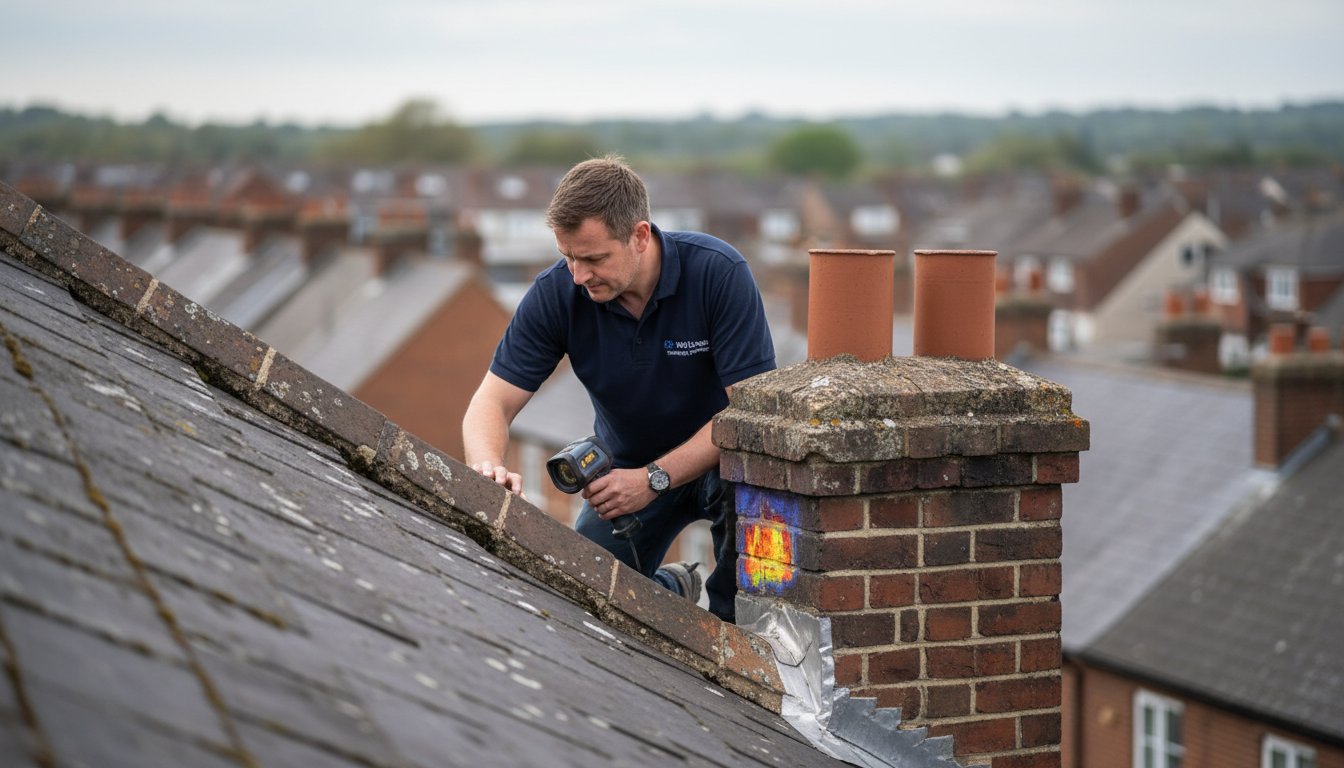
If you have spotted a damp patch on your bedroom ceiling, your first instinct is likely to look directly above it for the culprit. However, water rarely travels in a straight line; it follows the path of least resistance, often entering at a slipped slate or a worn chimney lead and surfacing meters away. We understand the anxiety that comes with an elusive drip, especially when you are worried about mould growth or the potential for a massive repair bill. It's frustrating to feel like you're guessing where the problem lies while your most valuable asset takes on damage.
This 2026 guide to pitched roof leak detection Norwich will show you exactly how we use modern technology to find the true source of ingress, saving you from unnecessary work and protecting your home's structural integrity. With 11,000 properties in our city currently at risk from surface water flooding, keeping your roof watertight is a vital priority. We will walk through the latest non-invasive methods, including high-definition drone surveys and thermal imaging, to provide you with a dry home and a transparent repair plan. You'll gain the confidence to make the right decision for your property without the fear of hidden costs or secondary damage.
Key Takeaways
- Learn the professional process of tracing water from its internal entry point back to the external defect to ensure you aren't just treating the symptom.
- Identify the common local culprits of water ingress, including slipped tiles from seasonal temperature shifts and degraded lead flashing around chimneys.
- Master a safe "attic-first" approach to pitched roof leak detection Norwich by using a torch to spot damp rafters before they cause structural decay.
- Discover how routine maintenance and professional gutter cleaning can stop "eaves rot" and protect your home’s timber from expensive damage.
- Understand why local knowledge of Norwich’s unique housing stock is the key to finding and fixing leaks faster and more accurately.
Why Pitched Roof Leaks Are Tricky to Track Down
Professional pitched roof leak detection Norwich is more than just a quick glance at your ceiling. It is the methodical process of tracing water from where it finally drips inside your home back to the specific defect on the exterior. Many homeowners assume the hole in the roof is directly above the damp spot, but this "straight line" theory is rarely true in practice. Water is opportunistic; it will travel along rafters and joists for several meters before gravity finally pulls it down onto your plasterboard. This creates a confusing map for the untrained eye, but a predictable pattern for a seasoned roofer.
Understanding the Common Causes of Pitched Roof Leaks involves looking at how water behaves on a slope. Capillary action can actually pull moisture upwards or sideways under tiles that appear perfectly intact. Once water gets past the outer layer, the pitch of your roof dictates how fast it moves. A steep Norfolk gable might shed water quickly, but it also sends internal leaks racing toward the eaves at high speeds. Our approach to pitched roof leak detection Norwich focuses on finding the "why" as much as the "where," ensuring the root cause is addressed.
To better understand how water finds its way through these penetrations, watch this helpful video:
The Anatomy of a Pitched Roof Leak
When water breaches your tiles or slates, it often lands on the roofing felt or breathable membrane. From there, it hitches a ride on the timber battens or runs down the side of a rafter. This path of intrusion is why we often find the source of a leak near a chimney stack while the evidence is appearing over a bedroom window. Thick loft insulation often acts like a sponge, soaking up significant amounts of water before a single drop ever touches your ceiling. This delay means a leak could have been damaging your structural timbers for months before you notice a damp patch. The speed of this travel is directly influenced by the roof's steepness; shallow pitches often suffer from slower, pooling leaks that cause more rot over time.
Signs You Have a Leak (Beyond the Drip)
You don't always need to see a puddle to know there's a problem. Our team at I R. Wilson often identifies issues through subtle environmental changes in the home. Keep an eye out for these indicators:
- Mould or mildew: Look for growth in the upper corners of your rooms, which suggests consistent moisture trapped behind the wall.
- Musty odours: A heavy, damp smell in the loft space that doesn't go away with ventilation is a clear red flag.
- Wallpaper changes: Watch for wallpaper that starts to curl at the seams or shows yellowed "tea-stain" rings near the ceiling line.
Catching these signs early is the best way to prevent the need for expensive timber replacement or major structural work later on.
Common Causes of Pitched Roof Leaks in Norwich Homes
Norwich is a city of beautiful, diverse architecture, but our local weather patterns put immense pressure on traditional roofing materials. The East Anglian flatlands mean our homes are frequently battered by wind-driven rain. This isn't just a heavy downpour; it is water being pushed horizontally with enough force to find its way under tiles or through tiny gaps in your mortar. When we carry out pitched roof leak detection Norwich, we often see how these specific local conditions expose weaknesses that might have stayed hidden in more sheltered regions.
Norfolk’s seasonal temperature swings also play a major role. The constant cycle of freezing and thawing causes roofing materials to expand and contract. Over time, this movement makes clay or concrete tiles brittle, leading to hairline cracks or causing them to slip out of place entirely. While a single slipped tile might look minor from the ground, it creates an open invitation for water to bypass your primary defence and begin soaking into the timber structure beneath.
Leadwork and Flashing Failures
Lead is the unsung hero of a roof, designed to seal the awkward joins where the roof meets a wall or a chimney. In many of the traditional properties across Norwich, this leadwork is the most vulnerable point for leaks. Over decades, lead can thin, develop "fatigue" cracks, or the mortar pointing that holds it in place can fail. If you notice damp patches appearing on a chimney breast or in the "valley" where two roof slopes meet, it is almost certainly a failure in the Traditional Leadwork for Norwich Roofs. We take great pride in our leadwork, as it requires a specific level of craftsmanship to ensure a watertight seal that lasts another fifty years.
Ridge Tile and Mortar Deterioration
The ridge tiles sitting at the very peak of your roof take the brunt of the Norfolk wind and rain. Traditionally, these are bedded in mortar, but frost damage eventually causes this mortar to crumble and fall away. Once the bond is broken, the ridge tiles become loose. This is a significant safety hazard during high winds and a primary entry point for water. Many homeowners now opt for "dry ridge" systems. These modern alternatives use mechanical fixings and waterproof unions instead of mortar, providing a more durable, maintenance-free solution that stands up better to our local climate.
Clogged gutters are another frequent, yet avoidable, cause of water ingress. When autumn leaves and moss build up, rainwater cannot flow away. It pools in the gutter and eventually backs up under the bottom row of tiles. This often leads to "eaves rot," where the ends of your rafters and your fascia boards begin to decay. If you are concerned about the state of your roof after a particularly heavy season, you can find more advice on our roofing maintenance blog. Keeping your drainage clear is one of the simplest ways to prevent a small issue from becoming a major structural repair.
How to Safely Detect a Roof Leak Yourself
Safety is our top priority. We never recommend climbing onto your roof without professional safety harnesses and secure ladder systems. The risk of a fall is high, and you can easily cause more damage by stepping on fragile tiles or slates. Instead, effective pitched roof leak detection Norwich starts from the safety of your attic or the ground. You can gather a significant amount of information without ever leaving the floor, which helps us provide a more accurate assessment when we arrive.
Mapping the leak is a critical step. When you find a damp patch on your ceiling, don't just look directly above it. Measure the distance from that spot to a fixed point, such as a chimney stack, a window, or an external wall. You can then go outside and use those same reference points to estimate where the defect might be on the exterior. This simple mapping technique helps narrow down the search area before any physical work begins.
The "Garden Hose Test" is a classic method, but it requires patience and two people. One person stays in the loft with a torch while the other stands on the ground with a hose. Start low on the roof, near the gutters, and spray a small area for several minutes. Work your way up the slope slowly. If you spray the whole roof at once, you won't know exactly which tile or piece of flashing is letting water in. It is a slow process, but it is one of the most reliable ways to simulate the wind-driven rain we often experience in Norfolk.
Loft Inspection Checklist
If you have safe access to your attic, a quick inspection with a powerful torch can reveal the source of the trouble. Look for these specific signs:
- "Shiners": These are nails that missed the rafter during construction. In cold weather, they collect condensation which freezes and then melts, often mimicking a genuine roof leak.
- Daylight: If you can see the sky through your tiles, you have a clear entry point for rain and pests.
- Water marks: Follow the stains on the underside of the roofing felt. These tracks often lead you directly to the source of the ingress.
External Visual Check from the Ground
A pair of binoculars is your best tool for an external check. Scan the roof for missing tiles, cracked slates, or a sagging roofline that suggests timber rot. Pay close attention to the roof valleys; if they are filled with leaves or debris, water will be diverted under the tiles instead of flowing into the gutters. You should also look for heavy moss growth in specific areas. This often indicates that part of the roof stays damp for long periods, which can eventually degrade the mortar and tiles. For more tips on maintaining your property, you can visit our roofing advice blog. Taking these steps yourself can save time and help us pinpoint the issue during a professional pitched roof leak detection Norwich survey.

Preventing Future Leaks: Maintenance for Norfolk Properties
Proactive maintenance is the most effective way to avoid the stress and expense of an emergency repair. We recommend a thorough inspection every spring, once the harsh Norfolk winter storms have passed. These checks allow us to catch minor issues like hairline mortar cracks or slightly displaced tiles before they escalate. While we are experts in pitched roof leak detection Norwich, our primary goal is to help you maintain a watertight home so you don't need our emergency services in the first place.
Moss removal is particularly important in our damp East Anglian climate. Moss acts like a heavy, wet sponge, holding moisture against the surface of your tiles for weeks on end. This constant dampness increases the risk of frost damage, where the water inside the tile freezes and expands, causing the surface to "spall" or crack. For a deeper look at protecting your roof's longevity, see our Professional Roof Cleaning in Norwich guide. Clearing this growth ensures water can flow freely into your drainage system as intended.
Gutter and Roofline Health
Your gutters are your first line of defence against water ingress. When they become blocked with silt, leaves, or moss, rainwater has nowhere to go. It pools in the channel and eventually spills over, saturating your masonry or backing up under the bottom row of tiles. We frequently see "eaves rot" in Norwich homes, where the ends of structural rafters have decayed because the gutters weren't cleared. You can learn more about how we protect these vulnerable areas in our guide to Guttering Services in Norwich. Regularly check your fascias and soffits for dark staining or soft spots, as these are clear indicators that water is escaping your drainage system.
The Role of Proper Ventilation
It is common for homeowners to mistake attic condensation for a genuine roof leak. Modern homes with thick insulation trap a lot of heat, but if that warm air cannot escape the loft, it hits the cold underside of your roof felt and turns into water droplets. This moisture then drips onto your ceiling, mimicking the signs of a breach. We ensure that your roof has adequate airflow through soffit vents or ridge vents to balance the temperature. If you notice dampness that only appears on very cold mornings and disappears when the sun comes out, it is a sign your ventilation needs an upgrade rather than a tile repair.
If you're unsure whether your property is ready for the next rainy season, contact us for a professional roof maintenance assessment to give you total peace of mind.
Professional Pitched Roof Leak Detection and Repair in Norwich
While national firms often rely solely on electronic sensors, a local roofer brings something more valuable: a deep understanding of how Norwich roofs are actually constructed. We have spent over 30 years working on the city's varied housing stock, from Victorian terraces in the Golden Triangle to modern developments on the outskirts. This hands-on experience allows us to conduct pitched roof leak detection Norwich with a level of intuition that a general technician cannot match. We don't just find the water; we understand the specific structural quirks that allowed it to enter your home in the first place.
Our team treats every property with the respect it deserves. We know that a leaking roof is a significant source of anxiety, so we focus on projecting a sense of calm competence from the moment we arrive. We provide fixed-price quotes and transparent repair plans, ensuring you never have to worry about hidden costs or escalating bills. Whether you are dealing with a minor drip or significant storm damage, our goal is to restore your peace of mind and the safety of your home.
Our Proven Leak Detection Process
Our approach is steady and disciplined. We start with a thorough external visual assessment, identifying slipped tiles or failed mortar that others might overlook. This is followed by a careful internal loft investigation. We trace the water's path along rafters and battens, ensuring we have found the true source rather than just the exit point. Once the defect is located, we use high-quality materials specifically chosen to withstand the Norfolk climate. We take the time to perform the task correctly the first time, providing a long-term solution rather than a temporary patch.
Why Choose I R. Wilson Roofing?
Choosing a contractor is about trust and accountability. As a family-oriented enterprise, we view our work as a digital handshake and a commitment to our neighbors. We take great pride in our earned reputation for honesty and craftsmanship. Our team has extensive knowledge of traditional Norfolk materials, including clay pantiles and specialized leadwork, which are common in our historic city.
- Transparent Pricing: We provide clear, written quotations so you know exactly what to expect.
- Honest Advice: If a simple repair will solve the issue, that is what we will recommend. We value our reputation and your safety above high-pressure sales tactics.
- Emergency Response: When severe weather causes immediate water ingress, our team is ready to provide rapid repairs to prevent secondary damage like mould or timber rot.
We believe that a dry home is a safe home. If you are concerned about a potential leak, we invite you to reach out to I R. Wilson Roofing for a complimentary, low-pressure consultation. We are here to protect your property with the same care and attention to detail we would give our own homes.
Protecting Your Norwich Home for the Long Term
A leaking roof doesn't have to mean a total replacement or a mountain of structural repairs. By understanding that water follows complex paths and acting quickly when you spot the first signs of dampness, you can keep your property dry and secure. We have seen how Norfolk’s unique weather patterns demand a proactive approach to maintenance, from clearing gutters to addressing slipped tiles before the next storm arrives. Taking these small steps now preserves the integrity of your roof and your peace of mind.
As highly recommended local roofing specialists, we have been family-run since 1994. Our team possesses expert knowledge of Norwich property styles, ensuring every repair is handled with the right materials and traditional craftsmanship. If you are struggling to find the source of water ingress, our professional pitched roof leak detection Norwich service provides the clarity and long-term solutions you need. We take pride in our honest, dependable service and are always here to help our neighbors.
Contact I R. Wilson Roofing for a professional leak inspection in Norwich today. We look forward to helping you keep your home safe and watertight for years to come.
Frequently Asked Questions
How much does pitched roof leak detection cost in Norwich?
The cost of locating a leak depends on the size of your property and the technology required to find the defect. We provide transparent, fixed-price quotes after an initial conversation to ensure you aren't met with hidden fees. Using professional equipment like drones or thermal imaging can influence the price, but it often saves money by preventing the need for invasive trial-and-error repairs on your home.
Can a small leak in a pitched roof wait until summer?
No, you should never leave a leak to wait for better weather. Even a minor drip can saturate your loft insulation and cause structural timber rot within a few weeks. In our damp Norfolk climate, moisture trapped in the roof space quickly leads to mould growth and degraded plasterboard. Addressing the issue immediately is always the most cost-effective way to protect your property's long-term value.
Does my home insurance cover pitched roof leak repairs?
Many home insurance policies include "Trace and Access" cover, which pays for the cost of finding a hidden leak. However, the actual repair of the roof is often only covered if the damage resulted from a sudden event, such as a storm. If the leak is due to general wear and tear or lack of maintenance, you will likely need to fund the repair yourself. We recommend reviewing your policy documents carefully.
How long does it take to find and fix a roof leak?
We can usually pinpoint the source of a leak within a couple of hours during a professional pitched roof leak detection Norwich survey. Most common repairs, such as replacing slipped tiles or resealing lead flashing, are completed on the same day. More complex issues involving structural timber replacement or valley repairs might take longer, but we always work methodically to restore your home's protection as quickly as possible.
Is it always necessary to replace the whole roof if there is a leak?
It is rarely necessary to replace an entire roof just because of a leak. Most water ingress is caused by localized defects like a cracked ridge tile or a failed chimney seal. We only suggest a full replacement if the roofing materials have reached the end of their natural lifespan or if the structural integrity is compromised. Our goal is always to provide the most sensible and honest repair for your specific situation.
What is the most common cause of roof leaks in Norwich?
Slipped tiles and failed leadwork around chimneys are the most frequent issues we see across Norwich. Our exposure to wind-driven rain from the coast and seasonal frost cycles causes mortar to crumble and tiles to shift. Because many local properties feature traditional clay pantiles or slates, these small movements can create entry points for water that go unnoticed until a damp patch appears on a bedroom ceiling.
Can moss on my roof cause a leak to develop?
Yes, moss is a common contributor to roof leaks in East Anglia. It acts like a sponge, holding water against the tiles and increasing the risk of frost damage. When moss freezes, it expands, which can crack the tiles or push them out of alignment. Furthermore, clumps of moss often roll into gutters, causing blockages that force rainwater to back up under the eaves and into your roof timbers.
How do I know if my leak is actually just condensation?
Condensation typically appears as a fine mist or uniform droplets across the entire underside of your roof felt, while a leak usually produces a concentrated stain or a specific trail of water. If the dampness only shows up during very cold spells and disappears when the temperature rises, it is likely a ventilation problem. We can accurately diagnose this during an inspection to ensure you don't pay for unnecessary repairs.