
A sound porch roof re-felting job starts by removing the old felt and nails, rather than covering worn material with a new layer. This exposes the roof deck for inspection and any necessary repairs before fresh felt is fitted with properly overlapped joins and secure edges.
It’s natural to wonder whether a leak or worn patch means the whole porch roof needs re-felting. The right choice depends on how far the damage has spread and the condition of the surface beneath the felt. This guide explains what the work involves, how the old covering is removed and when a local repair may be enough. You’ll also learn which signs can point to deeper damage, helping you understand the options and make a considered decision for your home.
Key Takeaways
- Removing the old covering lets the roof deck be inspected and avoids trapping moisture beneath new felt.
- Adhesives, sealants and nail-hole tape each have a role in securing edges and protecting vulnerable joins.
- A localised leak may need only a repair; widespread wear or damage to the roof beneath can point to re-felting.
- I R. Wilson Roofing provides flat roof repairs and felt roofing to help address problems with your porch roof.
Removing old roofing felt and nails
Porch roof re-felting starts by stripping back the worn covering so the deck can be inspected before fresh felt goes on. When comparing quotes, check that each clearly describes felt removal, deck repairs and waste disposal.
Planning Portal says re-roofing that does not materially affect a home’s external appearance will usually not require planning permission. Building regulations are a separate consideration, and whether they apply depends on the work involved.
Lifting the Existing Felt
Roofers loosen and lift the old felt in manageable sections, working from an edge rather than tearing across the deck. This exposes the timber and can reveal soft, damp or split areas that a new covering might conceal. Removing the old layer matters because new felt laid directly over it can trap moisture underneath. Once the roof is stripped, the deck can be checked for damage before the replacement covering is fitted.
Clearing the Old Nails
After lifting the felt, roofers remove the nails with a claw hammer or pry bar, taking care not to gouge the timber. They also look for broken nail heads and fasteners left flush with the deck. Clearing them matters because protruding metal can puncture new felt or prevent it sitting flat. The exposed surface is then cleared of loose debris, leaving a sound base for the next stage.
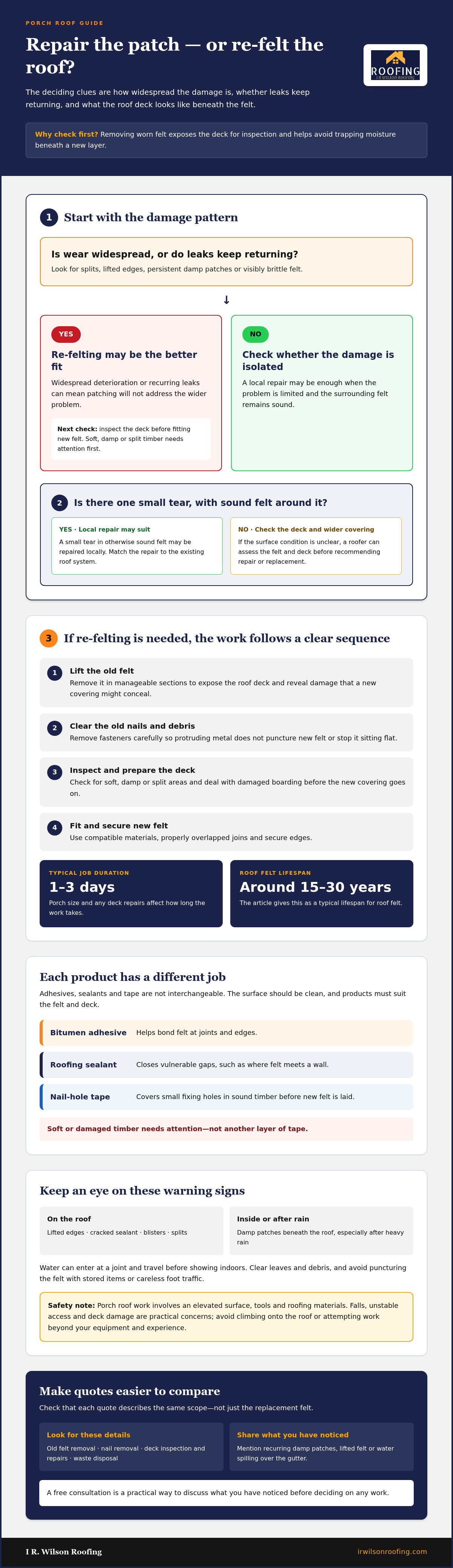
The work generally follows a clear sequence: remove the old felt, pull out the nails, inspect and prepare the deck, then fit and secure new felt. A roof re-felting job typically takes between one and three days; the porch’s size and any deck repairs affect the duration. Roof felt typically lasts around 15-30 years.
When comparing roofing quotes, check that each explains the same stages, including nail removal and how damaged boarding will be handled. A quote that includes a deck inspection, for example, is easier to compare fairly with one that lists replacement felt alone.
Bitumen adhesives, sealants and nail-hole tape
Bitumen adhesive helps bond felt at joints and edges, while roofing sealant closes vulnerable gaps around details such as wall junctions. Nail-hole tape covers small punctures in the deck before the new felt is laid. Each material has a different purpose, so one product should not be treated as a substitute for another.
During porch roof re-felting, the surface is prepared before compatible adhesive or tape is applied where needed. Tape can cover old fixing holes in sound timber, while sealant can help protect the edge where felt meets a wall. Follow the product instructions: adhesive must suit the felt and surface, and the deck must be clean enough for it to bond. Soft or damaged timber needs attention, not another layer of tape.
To maintain a felted porch roof and help prevent leaks, clear leaves and debris, and look for lifted edges, cracked sealant, blisters or splits. After heavy rain, check for damp patches beneath the roof. Water can enter at a joint and travel before appearing indoors. Avoid puncturing the felt with stored items or careless foot traffic.
Adhesive and sealant can address small weaknesses, but recurring leaks may point to a wider problem with the felt or roof deck. A roofer can identify whether a local repair or renewed bitumen covering suits the damage. For practical guidance on bitumen roofing options, consider speaking with a roofing professional before patching over a persistent leak.
Roof repair versus refelting
A repair may suit isolated damage; re-felting is more appropriate when wear affects much of the covering or leaks keep returning. The key distinction is whether the felt has a local defect or the wider surface and underlying deck need attention.
Look for splits, lifted edges, persistent damp patches or visible brittleness. Bituminous roofing felt can be damaged by impact, animals and UV exposure, according to the UK Government. A small tear in otherwise sound felt may need a local repair, while widespread deterioration or recurring leaks can indicate that patching will not address the underlying problem.
There’s no single best material for every porch. Felt, EPDM rubber and fibreglass are different roofing systems; the right choice depends on the roof’s shape, deck condition, drainage and existing covering. If the porch has a bitumen-based roof, matching the repair to that system can help avoid an unsuitable patch. The priority is a sound, compatible covering, not simply choosing a material by name.
Re-felting involves working on an elevated surface and handling tools and roofing materials. Falls, unstable access and damage to the roof deck are practical concerns, so avoid climbing onto a porch roof or attempting work beyond your equipment and experience. A roofer can assess the covering and deck before recommending a repair or replacement.
Choose a repair when damage is limited and the surrounding felt remains sound. Choose re-felting when defects are widespread or keep returning. This distinction helps you discuss the scope clearly and compare quotes describing the same work.
I R. Wilson Roofing: Flat Roof Repairs
I R. Wilson Roofing can help with a porch roof leak, damaged felt or signs that a local patch may not be enough. The company provides flat roof repairs and felt roofing when a covering needs attention or renewal.
If water is collecting near an edge, check whether blocked gutters may be contributing to the issue. I R. Wilson Roofing also offers gutter cleaning to help keep rainwater moving away from the roof. Fascias and soffits may also need attention if the roof edge shows damage.
When discussing the work, describe what you’ve noticed, such as a recurring damp patch, lifted felt or water spilling over the gutter. These details give the roofing team a clear starting point for considering what your porch may need.
Take the next step with confidence
A free consultation is a practical way to discuss what you’ve noticed before deciding on any work. Note where water appears and whether it follows rain, so you can explain the issue clearly.
I R. Wilson Roofing offers Flat Roof Repairs and Felt Roofs for worn or leaking coverings, along with Fascias and Soffits for roof-edge concerns. Arrange a free consultation to discuss your porch roof and consider the right next step.
A clear conversation about the roof’s condition can make maintenance feel more manageable.
Frequently Asked Questions
What Is Included in Flat Roof Refelting?
Flat roof re-felting renews the roof’s weatherproof layer. The agreed work can include removing the existing covering, checking the deck, fitting new felt and finishing edges and junctions. Before accepting a quote, compare its scope: does it explain how damaged boarding or a wall junction will be handled?
What does porch roof re-felting involve?
Porch roof re-felting involves renewing the felt covering and forming secure joins around the porch’s edges and adjoining walls. The roof’s shape affects the details: a porch that meets a house wall needs a neat, watertight junction, while an exposed edge needs secure finishing. Note where water appears indoors, as this can help identify the affected area.
What materials and tools are needed to re-felt a porch roof?
Typical materials include roofing felt and compatible bitumen adhesive or sealant; nail-hole tape may suit small holes in sound decking. Tools can include a tape measure, sharp cutting tool, hammer and pry bar. Safe, stable access and suitable protective equipment matter too. The exact materials depend on the roof deck, edges and existing covering.
How much does porch roof re-felting cost in the UK?
The quotation depends on the porch’s size, felt system, access and any deck or edge repairs. For homes in Norwich, Yarmouth, Beccles, Wymondham, Mulbarton, Wroxham, Norfolk and Suffolk, describe the roof’s condition and any leaks when requesting a competitive quotation. This helps clarify the work involved.
Can you re-felt over existing felt or must it be removed?
Remove existing felt before fitting new felt, because adding another layer can trap moisture beneath the covering. Stripping back the old material also allows the roof deck to be examined. For example, a soft patch near a porch edge may mean the timber needs attention before the new covering goes on.