
You're sitting in your living room during a typical Norfolk gale when you notice a dark, spreading damp patch on the wallpaper near the chimney breast. It's a worrying sight that many of our neighbors face, especially when dealing with the aging masonry common across our city. Whether you're concerned about loose bricks after a storm or wondering if your leadwork has finally perished, understanding the requirements for chimney stack repair in Norwich is the first step toward a safe, dry home.
We understand that property maintenance can feel overwhelming, especially when you're caught between the fear of falling masonry and the confusion of conflicting repair advice. Our goal is to provide the clarity you need to protect your home's structural integrity and its period charm. In this 2026 guide, we'll explain how to identify specific types of damage, compare the necessity of repointing versus a full rebuild, and show you how professional leadwork keeps the rain out. We'll also cover current building regulations to ensure any work is fully compliant. By the end, you'll have a clear plan to ensure your chimney remains a sturdy, watertight feature of your property for decades to come.
Key Takeaways
- Learn how to spot early warning signs of chimney failure, such as crumbling bricks or internal damp patches, before they lead to costly structural damage.
- Understand why selecting the correct mortar—whether traditional lime or modern cement—is essential for maintaining your home's period aesthetic and water-tightness.
- Discover why professional chimney stack repair in Norwich requires specialized scaffolding to ensure the safety of the property and the craftsmen.
- Find out how expert leadwork and flaunching provide a durable seal against the intense wind and rain typical of the Norfolk coast.
- Benefit from the reassurance of working with a local, family-run team that values long-standing reliability and personal accountability.
Identifying Common Chimney Stack Issues in Norwich Homes
Your chimney stack is the most exposed part of your property. It stands high above the roofline, bearing the full force of Norfolk's coastal winds and driving rain. We define chimney stack failure as the point where mortar joints, brickwork, or lead flashing degrade enough to compromise the water-tightness of your home. By understanding the basic anatomy of a chimney, you can see how these separate components must work in harmony to keep your interior dry. Recent 2026 weather patterns in East Anglia have brought more frequent, high-velocity wind events. These conditions accelerate masonry erosion and put immense pressure on aging structures. If you suspect the damage extends beyond the stack, it's wise to look into professional roof repairs to ensure your entire home remains protected.
Signs Your Chimney Needs Urgent Professional Attention
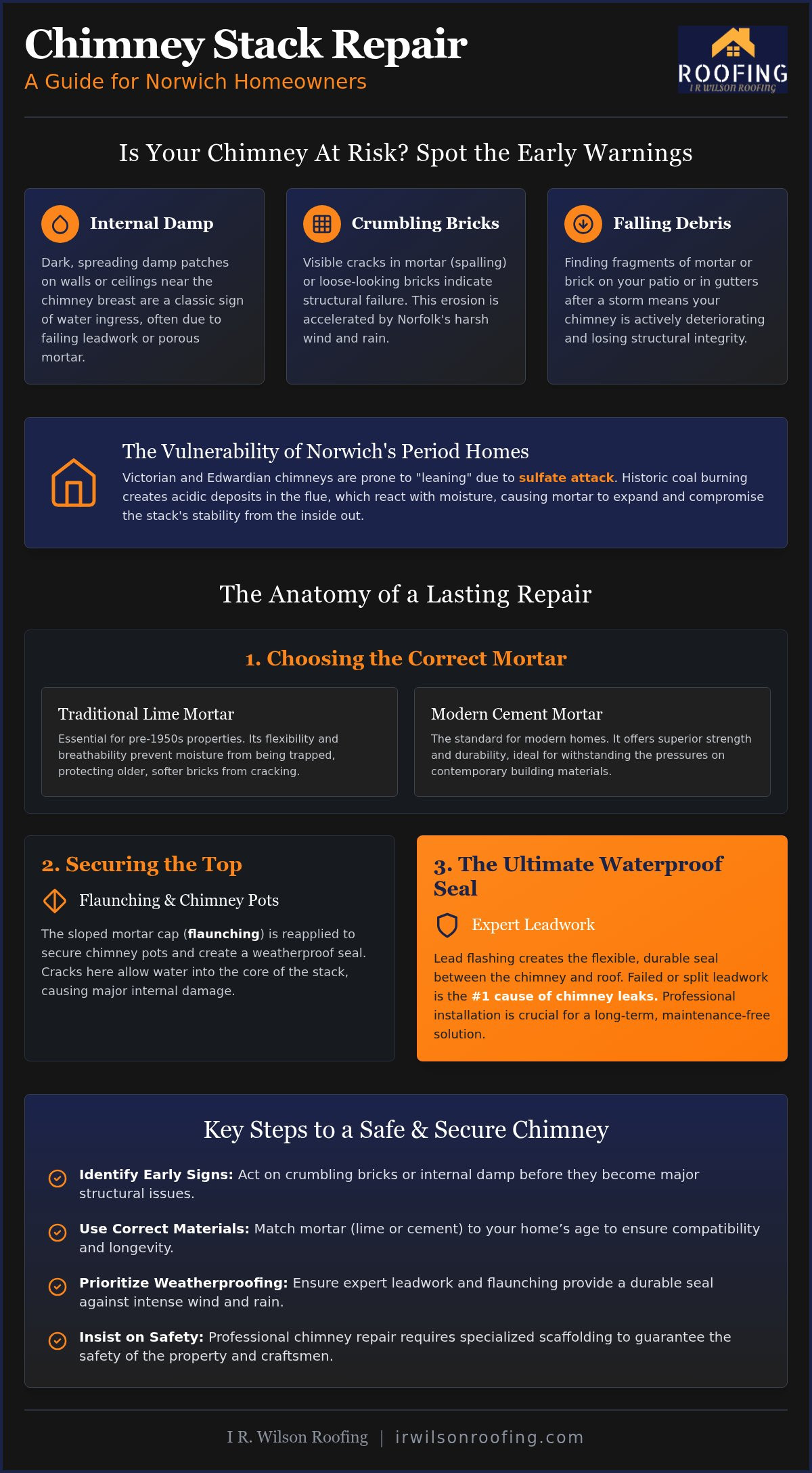
You don't always need to climb a ladder to spot trouble. Visible cracks in the mortar joints, known as spalling, or bricks that look loose from the ground are clear indicators that the structure is failing. Inside your home, keep an eye out for damp patches appearing on the walls or ceilings around the chimney breast. This often means water is bypassing the leadwork or soaking through porous mortar. Another telltale sign is finding debris in your gutters or on your patio. If you see bits of mortar or red brick fragments after a storm, your chimney is literally shedding its strength. Prompt chimney stack repair Norwich services can prevent these minor issues from becoming major structural hazards.
The Vulnerability of Norwich’s Period Architecture
Norwich is famous for its Victorian and Edwardian terraces, particularly in areas like the Golden Triangle. These older chimneys are prone to "leaning" due to a process called sulfate attack. Decades of burning coal created acidic deposits inside the flues. When moisture meets these deposits, it causes the mortar to expand, often pushing the stack to one side. We've seen many chimneys where the internal stability is compromised even if the outside looks relatively intact. Dealing with these heritage properties requires a delicate touch and an understanding of how historical building materials react over time.
The Technical Approach to Lasting Chimney Repairs
We take a methodical approach to every chimney stack repair in Norwich. Ian and Ben Wilson believe that a repair is only as good as the materials used. The process usually begins with professional repointing. If your home was built before the mid-20th century, we'll likely use a traditional lime-based mortar. This allows the masonry to breathe and prevents the bricks from cracking. For more modern builds, a high-quality cement mix is often the better choice. We always match the mortar to your property's specific age and aesthetic to ensure the repair looks natural and lasts for decades.
At the very top of the stack, we focus on the flaunching. This is the sloped mortar cap that secures your chimney pots. If this cap cracks, water seeps into the heart of the stack, causing the internal dampness we discussed in the previous section. While we're working at height, we also take the opportunity to check and clear the flues. Removing old soot or bird nests ensures your fireplace or boiler can vent safely. This thoroughness is part of our commitment to your home's long-term safety.
Why Leadwork is the Secret to a Dry Chimney
While bricks and mortar are vital, the specialist leadwork is what truly keeps the rain out. Lead flashing acts as the flexible, waterproof seal between the vertical chimney stack and your roof tiles. Over time, lead can split or creep away from the masonry due to thermal expansion. If you see water staining on your ceilings, it's often because the leadwork has failed. At I R. Wilson Roofing, we provide expert leadwork to ensure a maintenance-free finish that stands up to the worst Norfolk weather.
Chimney Pot Securing and Flaunching Maintenance
Loose chimney pots are a significant hazard during Norfolk's high-wind events. We ensure every pot is bedded deeply into fresh mortar. We use modern flaunching materials that prevent water from pooling at the base of the pots. This creates a watertight seal that doesn't crack under the pressure of changing temperatures. If you're concerned about the state of your roofline, you can read more about our maintenance tips to keep your property protected year-round.
Planning Your Chimney Repair in Norwich
When you decide to proceed with a chimney stack repair in Norwich, the first logistical step involves the installation of professional scaffolding. We understand that scaffolding can be a temporary inconvenience, but it's essential for the safety of both the craftsmen and your property. It provides a stable platform that allows for a meticulous inspection and prevents loose masonry from damaging your roof tiles or garden during the work. Attempting a repair from ladders is often unsafe and limits the quality of the finish we can provide.
We always advise homeowners to seek a detailed, written quotation rather than a "rough estimate" given from ground level. A professional quote requires a close-up assessment of the mortar, leadwork, and brickwork to be accurate. This transparency ensures you know exactly what is required before any work begins, avoiding unexpected costs later. If you're ready to protect your home from the elements, you can get a competitive quotation from our team for your specific project.
What to Expect During a Professional Chimney Inspection
Our inspection process is thorough, focusing on structural integrity and water-ingress. We examine the stack from every angle, paying particular attention to the "hidden" side that faces away from the street. This rear face often bears the brunt of Norfolk's prevailing winds and is frequently where mortar failure or lead splitting begins. Identifying these issues early prevents water from reaching your interior walls and ruining your decor.
Choosing a Local Roofer vs. a National Firm
Working with a local, family-run business like ours means you benefit from 30 years of heritage in the Norfolk area. Ian and Ben Wilson have been serving the community since 1994, providing a level of personal accountability that national firms often lack. We have deep knowledge of Norwich's specific building regulations and the requirements for properties within local conservation areas. This expertise ensures we use materials that match the local period aesthetic, maintaining the character and value of your home for years to come.
Securing Your Norwich Home Against the Elements
Your chimney is more than just a functional outlet; it's a structural feature that requires specialist care to withstand our local weather. We've seen how early detection of crumbling mortar and failing leadwork can prevent significant interior damp and costly structural repairs. By choosing high-quality materials and professional techniques, you ensure your property remains watertight and safe for years to come. Professional maintenance today prevents the stress of falling masonry or deep structural failure tomorrow.
Relying on a family-run business established in 1994 gives you the benefit of decades of hands-on experience. As highly recommended local experts, we take pride in our specialist leadwork and our ability to handle complex period property repairs with precision. When you invest in a professional chimney stack repair Norwich, you're not just fixing a leak; you're protecting your home's heritage and your family's safety. We're here to provide the expert advice and dependable service your property deserves.
We look forward to helping you maintain a secure, dry, and beautiful home for many years to come.
Frequently Asked Questions
How much does chimney stack repair cost in Norwich?
The total price for a repair depends on the specific needs of your property, such as the height of the stack and the level of masonry degradation. Scaffolding is often a significant factor in the overall cost, as it's required for safe access to the roofline. We provide detailed, competitive quotations after a physical inspection to ensure you receive a fair price for the work required to make your chimney safe and watertight.
Do I need scaffolding for a simple chimney repointing job?
Yes, we use professional scaffolding for all chimney work to comply with safety regulations and ensure a high-quality finish. Most Norwich chimneys are too high to be reached safely or effectively from a ladder. A stable platform allows us to remove old mortar and apply new materials with the precision needed for a lasting repair, while also protecting your roof tiles from accidental damage during the process.
Can a leaking chimney cause damp inside my house?
Internal damp is one of the most frequent signs that you need a chimney stack repair in Norwich. When mortar joints fail or lead flashing splits, water enters the masonry and travels down into your home. This often results in damp patches on the walls or ceilings near the chimney breast. Fixing the external masonry and leadwork is the only permanent solution to stop this moisture from ruining your interior decor.
How long does a typical chimney stack repair take?
Most of our chimney repair projects are completed within two to four working days. This typical duration includes the time needed for scaffolding installation, the masonry work itself, and the final cleanup. The exact schedule can vary depending on the severity of the damage and the weather conditions in Norfolk. We always aim to work efficiently while maintaining the high standards of craftsmanship our family-run business is known for.