
Last Tuesday, a homeowner in Thorpe St Andrew discovered a single slipped slate after a heavy gust, only to find the underlying felt had been compromised for weeks. It is a stressful scenario that many in our community face, where the fear of escalating costs from a hidden leak or the confusion over insurance claims can feel paralyzing. If you are currently dealing with the aftermath of a storm, finding reliable wind damage roof repair Norwich is about more than just fixing a hole; it is about restoring the safety and integrity of your family home.
We believe you deserve a repair process that is transparent and straightforward. In this 2026 guide, you'll learn how to accurately identify storm-related issues before they worsen and discover the professional steps required to protect your property from further damage. We will walk you through the essential checks for different roof types, explain the latest building regulations for 2026, and show you how a methodical, expert repair provides the lasting peace of mind you need.
Key Takeaways
- Learn how to spot subtle signs of distress, from slipped clay pantiles on pitched roofs to membrane tears and edge flashing uplift on flat surfaces.
- Understand the essential technical steps involved in wind damage roof repair Norwich, starting with immediate stabilization to protect your home’s interior.
- Discover how regular gutter cleaning and upgrading to secure fascias and soffits can significantly improve your roof's resistance to high winds.
- Gain professional insights into the assessment of timber structures and underlay integrity to ensure your repair is durable and structurally sound.
- Stay informed on 2026 building regulations, including when a significant repair might require you to upgrade your roof's thermal insulation.
Identifying Wind Damage on Your Norwich Roof
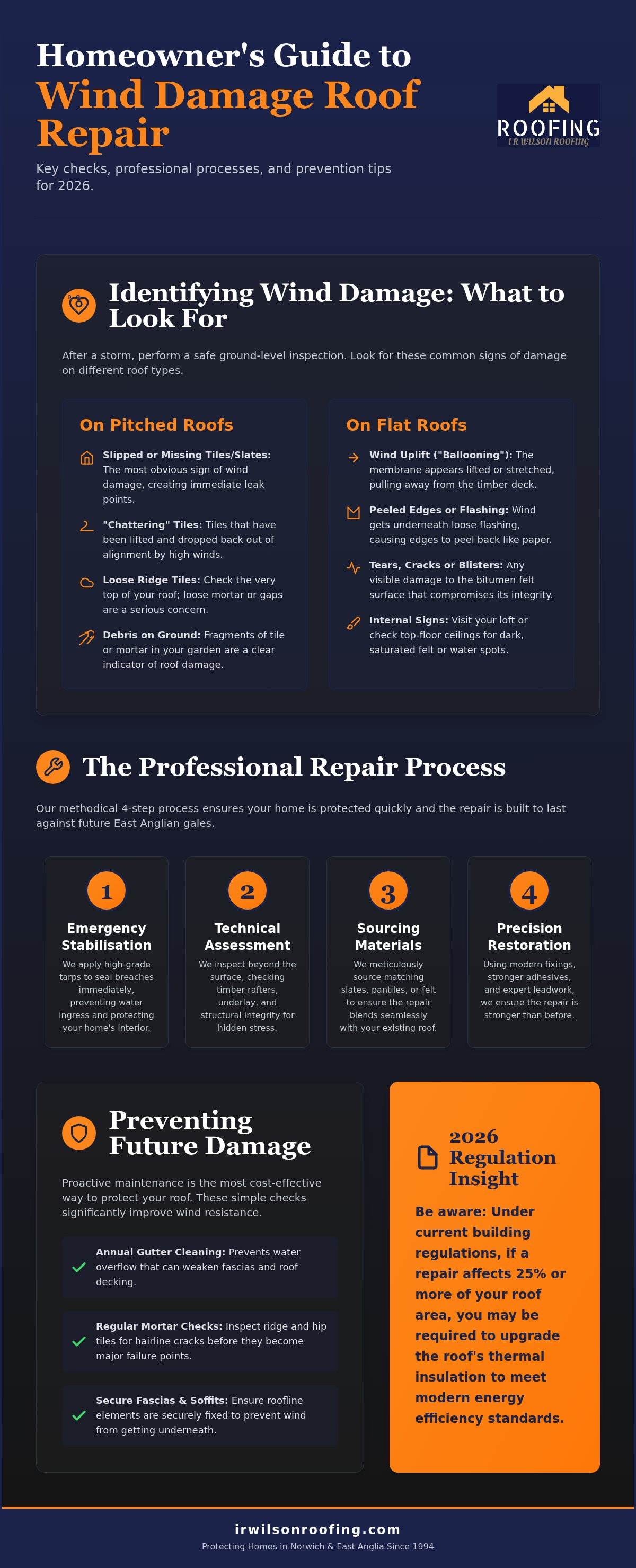
After a gale, your first instinct might be to grab a ladder. We always advise staying on the ground for safety. You can spot most significant issues simply by walking around your property and looking up. Keep an eye out for "chattering" tiles; these are tiles that have lifted and dropped, often leaving them slightly out of alignment. If you see missing slates or slipped clay pantiles, it's a clear sign you need a professional assessment for wind damage roof repair Norwich to prevent long-term structural issues. Check your garden and driveway for fragments of mortar or broken tile corners. These often indicate that ridge tiles have worked loose and require urgent attention.
Inside your home, the signs of distress are often more subtle but equally important. Visit your loft space with a torch during or immediately after a storm. Look for damp rafters or felt that appears dark and saturated. Even if you don't see a puddle, small water spots on upstairs ceilings suggest that wind has driven rain under the primary covering. Understanding UK roof construction standards helps in recognizing that even a small gap in the external layer can compromise the entire protective system of your home.
Norfolk Pantiles and Coastal Winds
Traditional Norfolk clay pantiles are iconic, but their distinctive S-shape makes them vulnerable to the high-pressure suction created by East Anglian winds. When wind blows over the roof ridge, it creates a vacuum that can "suck" unclipped tiles out of place. It's vital to check the mortar bedding on your ridge tiles after any yellow weather warning. Hairline cracks can quickly turn into major points of failure during the next storm, leading to costly leaks if left unaddressed.
Flat Roof Wind Uplift and Peeling
Flat roofs on garages and extensions face a unique threat called "wind uplift." If the edge flashing is loose, wind gets underneath the bitumen felt. This creates a "ballooning" effect where the membrane stretches and pulls away from the timber deck. You might notice the edges of your flat roof looking slightly raised or "peeled" back. Catching this early is crucial. Our team often finds that securing the perimeter can prevent a total failure of the felt roofing, saving you the stress of an emergency replacement later.
The Professional Process for Wind Damage Roof Repair
When a storm hits, the priority is immediate protection. We follow a methodical four-step process to ensure your home stays dry and secure. First, our team focuses on emergency stabilisation. This prevents water ingress from damaging your ceilings and electrical systems. Once the area is safe, we perform a technical assessment. We don't just look at the surface; we check the timber rafters and the underlay for hidden stress. This NBS guide to wind damage risks highlights why checking the structural "skeleton" is vital for long-term safety.
The next stage involves sourcing matching materials. Whether your property features traditional Norfolk slates or modern bitumen felt, we ensure the repair blends perfectly. Finally, we use precision installation techniques. We utilise modern fixing methods, such as enhanced tile clips and stronger adhesives, to prevent future uplift during the next East Anglian gale. This disciplined approach to wind damage roof repair Norwich ensures that once we fix a problem, it stays fixed.
Emergency Temporary Repairs
Sometimes, the weather is too severe for an immediate permanent fix. In these cases, we use high-grade tarps or heavy-duty patches to seal the breach. It's a vital step to stop a leak before it ruins your interior. At I R. Wilson Roofing, we prioritise these urgent call-outs during the busy Norwich storm season. We aim to provide that immediate sense of relief when you know your home is finally watertight again.
Permanent Restoration and Leadwork
Once the winds die down, we move to permanent restoration. This often involves leadwork, particularly around chimneys. High winds frequently catch old, brittle lead flashings, causing them to peel back. We specialise in replacing these with precision-cut lead that stands up to the elements. We take great pride in our craftsmanship, ensuring every tile and flashing matches your existing roof. If you're concerned about maintaining your property's character, you can read more about our restoration projects to see our commitment to quality.
Preventing Future Storm Damage in East Anglia
The most cost-effective way to handle wind damage roof repair Norwich is to prevent the need for it in the first place. We've seen hundreds of storms since we started in 1994, and the houses that fare best are those with a consistent maintenance record. Small tasks like annual gutter cleaning and checking for loose mortar bedding make a significant difference. When your gutters are clear, water doesn't back up and rot the timber rafters, which are essential for holding your tiles in place during a gale. A proactive inspection is always less stressful and more affordable than a frantic emergency call-out in the middle of a November storm.
Securing Your Roofline
Your fascias and soffits aren't just decorative; they protect the "leading edge" where the wind is most likely to catch and lift your roof covering. If these timber or uPVC boards are rotten or loose, they provide an entry point for high-pressure air to get under your tiles or felt. Ensuring these are securely sealed protects the structural integrity of your home's perimeter. For a deeper look at how proper drainage keeps your roofline healthy, you can explore our Guttering Services in Norwich guide.
Why Local Expertise Matters
Norwich has a unique blend of Victorian terraces, post-war semis, and modern estates. Each requires a different approach to storm resistance. As a family-run business, we understand how our local building stock reacts to the specific wind patterns of the Broads and the coast. Choosing a local team means you're building a long-term partnership with people who value their reputation in the community. If you need help choosing the right contractor, our guide on Expert Roofers in Norwich offers practical vetting tips to ensure you get the quality your home deserves.
Securing Your Home Against the Next Storm
Protecting your property starts with a keen eye for subtle changes after high winds. Whether it's a slipped pantile or a ballooning flat roof membrane, addressing these issues early prevents minor leaks from becoming major structural failures. We've been providing wind damage roof repair Norwich since 1994, bringing personal accountability and technical expertise to every restoration project. Our family-run team specialises in both traditional pitched tiling and modern bitumen felt, ensuring your repair is durable and visually seamless. We take pride in offering transparent, fixed-price quotes that reflect our commitment to honest craftsmanship and local heritage. Professional maintenance is your best defence against the unpredictable East Anglian weather.
You don't have to face the stress of emergency repairs alone. We're here to provide the dependable advice and professional craftsmanship your Norwich home needs to stay safe and dry for years to come.
Frequently Asked Questions
How do I know if my roof has wind damage after a storm?
You can often spot wind damage by checking your garden and driveway for debris like mortar chunks or tile fragments. From a safe distance on the ground, look for uneven lines in your tiling or slates that appear to be "sitting up" higher than others. If you notice any of these signs, it's best to call for a professional assessment to ensure your home's secondary waterproofing layer hasn't been breached.
Will my home insurance cover wind damage roof repair in Norwich?
Most standard home insurance policies cover wind damage roof repair Norwich if the damage resulted from a single, identifiable storm event. However, insurers often check if the roof was in good repair before the gale. We recommend taking clear photographs of the damage immediately and contacting your provider promptly, as many policies have strict windows for filing a claim.
Can a wind-damaged flat roof be repaired, or does it need replacing?
A wind-damaged flat roof can often be repaired if the issue is limited to lifted edge flashing or minor membrane tears. We can typically secure the existing felt and seal the edges without a full replacement. If the wind has caused significant "uplift" that has pulled the timber deck away from the joists, a more extensive restoration might be necessary to ensure the structure remains safe.
What should I do if my roof is leaking right now after a storm?
If your roof is actively leaking, your first priority is protecting your interior by using buckets to catch water and moving furniture away from the area. Don't attempt to climb onto the roof yourself during or after a storm, as surfaces are often slick and structurally unstable. Contact us for emergency stabilisation; we can often install a temporary waterproof cover to stop the ingress until a permanent repair is possible.