

Can moss be left on your roof if it isn’t causing obvious problems? For spring roof maintenance in Norwich, the sensible answer is to keep an eye on it: moss and algae can hold moisture and damage roofing materials over time, but that doesn’t mean every roof needs an aggressive clean. Most Norwich roofs benefit from a full clean every 12 to 24 months, with the right timing and approach depending on the roof’s condition and position.
It’s easy to overlook a small patch of moss or assume every roof needs the same treatment. This guide explains when moss needs attention, when to schedule cleaning, and what to check on tiled, slate and flat roofs. You’ll also find practical signs to look for, from blocked gutters to damage around roof edges, so you can plan spring roof maintenance in Norwich and address problems before they worsen.
Key Takeaways
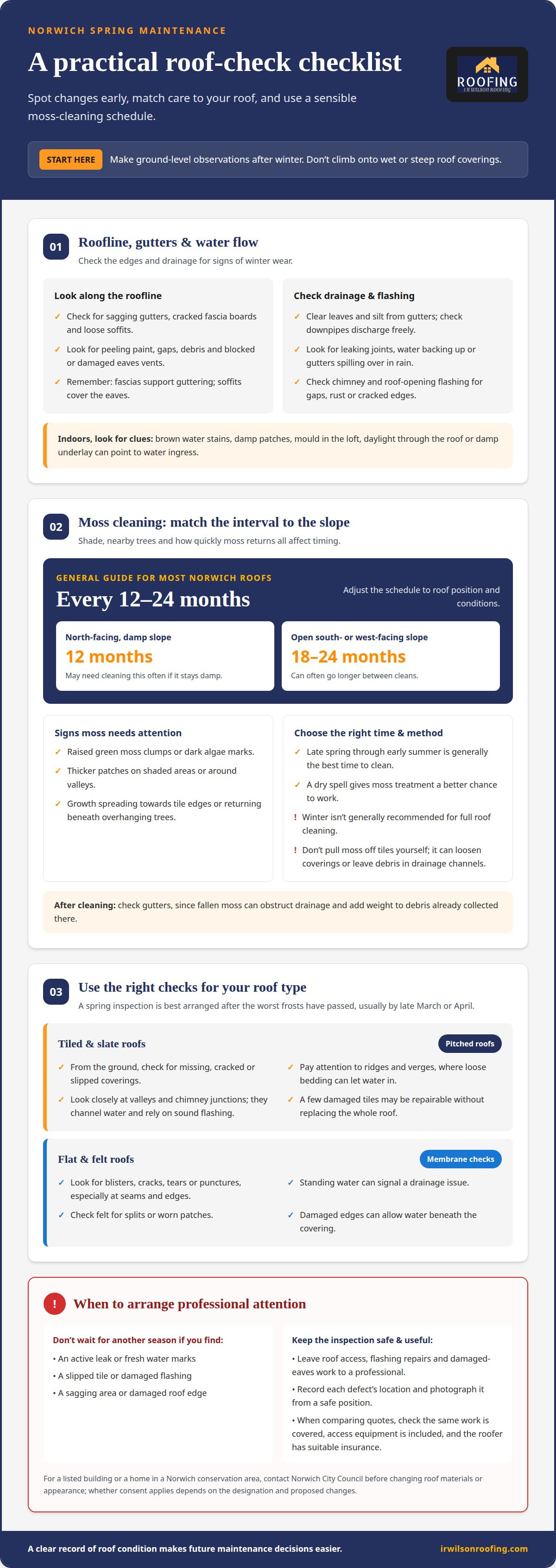
- Include fascia, soffit and eaves in roofline checks, and look for signs that gutters or ventilation may need attention.
- Adjust cleaning intervals to roof position and conditions; shaded slopes may need more frequent care than open, sunlit ones.
- Use roof-appropriate checks: look for loose or damaged coverings on pitched roofs and membrane defects or standing water on flat roofs.
- Arrange a professional inspection if you spot a leak, slipped tile, damaged flashing or other signs of deterioration.
1. Fascia, soffit and eaves ventilation checks
Start at the roofline after winter: look for sagging gutters, cracked fascia boards and loose soffits. Fascias support the guttering, while soffits cover the eaves; blocked or damaged eaves vents can restrict airflow beneath the roof. From the ground, check for peeling paint, gaps or debris lodged along the edges. Avoid climbing onto the roof to inspect them.
In spring, clear leaves and silt from gutters, then check that downpipes discharge freely and joints aren’t leaking. If water backs up or spills over during rain, a blockage or damaged connection may need attention. I R. Wilson Roofing provides gutter cleaning and repairs to help restore drainage when clearing debris alone won’t solve the problem.
Check flashing around the chimney, vents and other roof openings for gaps, rust or cracked edges. Indoors, look for brown water stains, damp patches or mould in the loft; these can point to water ingress. If you find a slipped tile, sagging area or active leak, arrange professional repairs promptly rather than waiting for another season.
Leave roof access, flashing repairs and work on damaged eaves to a professional. You can make ground-level observations, but don’t climb onto wet or steep coverings. For a listed building or a home in a Norwich conservation area, rules depend on the designation and proposed changes. Contact Norwich City Council before altering roof materials or appearance to establish whether consent applies.
When comparing quotes, check that each covers the same work and ask whether access equipment is included. Confirm the roofer has suitable insurance. A spring inspection can identify winter damage; deal with urgent leaks and loose roof parts before further rain or wind worsens the problem.
2. How often should a roof in Norwich actually be cleaned?
For most Norwich roofs, a full clean every 12 to 24 months is a useful guide. A spring roof maintenance plan in Norwich should account for shade, nearby trees and how quickly moss returns. A north-facing slope that stays damp may need cleaning every 12 months, while an open south- or west-facing slope can often go 18 to 24 months between cleans.
Look for raised green moss clumps and dark algae marks, especially on shaded areas and around valleys. Moss can hold moisture against roofing materials, and growth may spread if a small patch is left untreated through another 18 months. From the ground, note patches that appear thicker or extend towards tile edges. Don’t pull moss off tiles yourself, as this can loosen coverings or leave debris in drainage channels.
Late spring through early summer is generally the best time for roof cleaning in Norwich. Spring and summer also give moss treatment a better chance to work through a dry spell. Winter isn’t generally recommended for full roof cleaning. A professional can assess whether careful manual moss removal or treatment suits the roof, rather than using an unsuitable cleaning method.
As part of spring roof maintenance in Norwich, check gutters after cleaning, since fallen moss can obstruct drainage and add weight to debris already collected there. If growth repeatedly returns beneath overhanging trees, plan checks more often and include the fascia and gutter line. For a roof with visible moss or algae, explore professional roof cleaning to find an approach suited to its condition.
3. Maintenance for tiled, slate and flat roofs
Arrange a professional roof inspection in Norwich in spring, after the worst frosts have passed, usually by late March or April. For tiled and slate roofs, check from the ground for missing, cracked or slipped coverings. Pay particular attention to ridges and verges, where loose bedding can leave openings for water ingress. A few damaged tiles may be repairable without replacing the whole roof.
Valleys and chimney junctions need a thorough look because they channel water and rely on sound flashing. In the loft, daylight through the roof, damp underlay or fresh water marks can point to a leak. Note where stains appear, since the entry point may be uphill from the visible mark. Prompt repairs to damaged coverings help limit further water damage.
Flat roofs need different checks. Look for blisters, cracks, tears or punctures in the membrane, especially along seams and edges. Standing water can signal a drainage issue, while damaged edges may allow water beneath the covering. Felt roofs need inspection for splits or worn patches; a suitable repair depends on the roof’s construction and condition.
In Norfolk, spring checks give you time to address defects before winter weather returns. Roofs with previous leaks, visible wear or several vulnerable details may need closer attention. Keep the inspection practical: record each defect’s location, photograph it from a safe position, and arrange a professional assessment for repairs involving roof access or coverings.
I R. Wilson Roofing: Felt Roofs
I R. Wilson Roofing can help when a spring inspection finds damage to a felt roof or another flat-roof problem. If you notice a split, puncture or persistent ponding, the team carries out flat roof repairs to address the issue before water ingress affects the roof structure. For worn or damaged felt, the right repair depends on the roof’s condition and the work required.
Roofline issues matter too. Damaged fascias and soffits, or gutters that remain blocked after debris is cleared, can affect drainage around the eaves. I R. Wilson Roofing provides fascia and soffit work, gutter cleaning and gutter repairs to address these practical maintenance needs.
For a clear next step, describe what you’ve noticed and where it appears. Contact I R. Wilson Roofing for a free consultation about your roof maintenance needs.
Make your next roof check count
Use spring roof maintenance in Norwich as a chance to make a simple record of your roof’s condition. Note any areas that need attention and keep dated photographs, so you can track changes over time and explain your concerns clearly when arranging work. This small habit can make future maintenance decisions more straightforward.
If you’ve spotted damage or want help deciding what to address, I R. Wilson Roofing can discuss roofing work, including felt roofing and repairs to flat roofs, fascias and soffits. A free consultation gives you a chance to talk through the next step for your property.
A calm, timely plan can help you care for your roof with confidence.
Frequently Asked Questions
Can moss be left on a roof if it is not causing obvious problems?
It’s better to monitor moss than ignore it: it can retain moisture and affect roofing materials over time. A small patch may not need immediate removal, but watch whether it thickens or spreads, particularly on a shaded slope. If moss starts lifting tile edges or collecting in roof channels, arrange an assessment before it interferes with drainage.
How often should a roof in Norwich actually be cleaned?
Most Norwich roofs benefit from a full clean every 12 to 24 months, with the interval shaped by shade, tree cover and moss growth. For example, a roof beneath overhanging branches may collect debris sooner than one in an open position. If growth is returning quickly, a roof cleaning assessment can help identify a suitable approach.
What spring roof maintenance tasks should homeowners do in Norwich?
Make a ground-level check after winter and note visible changes, such as debris in a valley or damage near a roof opening. Look indoors for new damp smells or marks below the roof, then record where they appear. These observations help a roofer focus an inspection and distinguish a recent concern from older staining.
How can I inspect a roof for winter damage safely?
Stay on the ground and use binoculars or a clear view from a window; don’t walk on roof coverings. Check after wind or heavy rain for displaced tiles, hanging gutter sections or debris on the roofline. Inside, look for fresh damp patches in the loft. Leave ladder work and close inspection of coverings to a professional.
What are the signs of loose, cracked or missing roof tiles?
From the ground, look for uneven rows, gaps in the tile pattern, exposed underlay or a tile sitting at an unusual angle. After windy weather, check for fragments on the ground or in gutters. Inside, a new damp mark beneath a roof slope may signal a damaged covering. Arrange repairs promptly if you spot these signs.