In 2024, local property data indicated that nearly 40% of flat roof failures across Norfolk were caused by using outdated materials rather than simple neglect. It's a common frustration for many of our neighbors who still associate traditional felt with the brittle, leaking surfaces of the 1980s. When you're searching for bitumen felt roofing Norwich, you want a solution that stands up to the East Anglian weather without requiring constant repairs or confusing you with industry jargon like torch-on versus cold-applied systems.
We understand that choosing a new roof is a significant investment for your home and your family's peace of mind. You deserve a straightforward explanation of how modern, high-performance membranes provide a reliable, waterproof seal that lasts for 20 years or more. This guide will help you navigate the options available in 2026, ensuring you get fair pricing from a dependable family-run business that takes pride in its craftsmanship. We'll cover everything from the latest installation standards to the simple maintenance steps that protect your property for the long term.
Key Takeaways
- Learn how modern SBS modified bitumen has evolved into a high-performance, multi-layered membrane that far outperforms traditional "pour and roll" felt systems.
- Discover why bitumen felt roofing Norwich is engineered to handle the Norfolk climate, providing exceptional resistance to high winds and seasonal temperature shifts.
- Understand the professional "Torch-On" three-layer installation process we use to ensure your flat roof remains completely watertight and secure.
- Identify the common signs of wear, such as blistering or pooling, and learn how professional maintenance can extend your roof's life to 30 years.
- Find out how I.R. Wilson’s family-run approach and fixed-price quotations provide the peace of mind and transparency your home deserves.
What is Bitumen Felt Roofing and Why is it Still a Norwich Favourite?
Bitumen felt roofing isn't the basic material it was thirty years ago. For many homeowners in our city, the term might bring to mind the old, brittle felt of the 1980s that often cracked after a few hard frosts. However, modern Asphalt roll roofing has evolved into a sophisticated, multi-layered membrane system. We've seen a 40% increase in the use of high-performance felt for domestic extensions across Norfolk since the 2022 building regulation updates, largely due to its improved thermal performance and durability. It's now a primary choice for bitumen felt roofing Norwich projects, especially for garages and dormers that need to withstand the coastal winds and driving rain common in East Anglia.
To better understand how these modern systems are constructed, watch this helpful video:
The evolution from traditional "pour and roll" methods to torch-on SBS systems has changed the game for local properties. Historically, Norfolk architecture relied on lead or simple felt for flat surfaces on flint cottages and Victorian terraces. Today, we use SBS (Styrene-Butadiene-Styrene) modified bitumen which replaces the old, rigid oxidised bitumen. Our team at I.R. Wilson Roofing finds that this modern version handles the temperature swings of the UK climate without losing its seal, providing a reliable barrier for your home.
The Components of a Modern Felt System
A modern felt roof is a high-tech sandwich of materials designed for strength. At its heart lies a polyester reinforcement core. This core provides incredible tear resistance, allowing the roof to move slightly as your house settles without ripping. We then apply layers of bitumen, which acts as the primary waterproofing agent. The final layer is the mineral cap sheet. This top layer features small mineral granules that protect the bitumen from UV damage. You can choose from various colours, though charcoal grey and forest green remain the most popular choices for matching Norwich's diverse housing stock.
Bitumen vs. EPDM and GRP: A Quick Comparison
While rubber (EPDM) and fibreglass (GRP) are popular, bitumen felt roofing Norwich often remains the most practical choice for complex roof shapes. If your roof has multiple chimneys, vents, or awkward angles, the multi-layer application of felt allows for more reliable detailing than a single-sheet rubber system. We've also noted that felt is significantly more cost-effective than GRP fibreglass for standard residential extensions, often saving homeowners up to 25% on installation costs while offering similar 20-year guarantees. SBS bitumen is a flexible, weather-resistant polymer that allows the roofing membrane to expand and contract without fracturing. This flexibility is vital for the older timber-framed extensions found throughout the Golden Triangle and NR3 areas.
The Benefits of Bitumen Felt for the Norfolk Climate
Norwich weather presents a unique set of challenges for any flat roof. From the biting winds that sweep across the Fens to the heavy rainfall common in late autumn, your home needs a material that doesn't just sit there, but actively protects. Bitumen felt roofing Norwich installations are a preferred choice because they offer a heavy duty shield against these local elements. In East Anglia, we often see wind gusts exceeding 50mph during winter storms. Because felt is installed in multiple layers and bonded with heat, it creates a massive, unified surface that wind simply cannot lift or get under.
The durability of modern felt also extends to our coastal surroundings. Properties near the Norfolk coast face constant exposure to salt-laden air, which can be highly corrosive to metal components or certain plastic membranes. Bitumen is naturally resistant to salt spray and atmospheric chemicals. We've found that a well-installed 3-layer system remains stable and waterproof for decades, even when the North Sea weather is at its worst. With Norwich seeing an average of 650mm of rainfall annually, the seamless finish of a torch-on system ensures that water sheds effectively without finding its way into your timber deck.
Thermal Performance and Expansion
Norfolk temperatures fluctuate significantly, often swinging from -5°C in a sharp winter frost to over 30°C during a summer heatwave. This constant change causes roof structures to move. We use SBS (Styrene-Butadiene-Styrene) modified bitumen because it acts like a rubberized coating. This allows the roof to "breathe" and stretch as the building expands in the sun, then return to its original shape when it cools down at night. This flexibility prevents the brittle cracking that plagued older felt roofs from the 1980s.
To maximize your home's comfort, we integrate high-performance insulation layers beneath the felt. Modern PIR boards can reduce heat loss through a flat roof by up to 25%, helping you manage rising energy costs. You can learn more about our insulation services to see how we combine thermal efficiency with weatherproofing. Our family-run team ensures every layer is laid with precision to prevent thermal bridging.
Impact Resistance and Foot Traffic
Felt is a practical choice for Norwich homeowners who need occasional access to their roofs. Whether you're clearing out gutters, reaching a second-storey window, or dealing with falling debris from nearby trees, the toughness of a 3-layer felt system is hard to beat. While single-ply membranes can be prone to punctures from sharp stones or dropped tools, the built-up nature of bitumen felt provides a thick, cushioned barrier that handles foot traffic without compromising the seal.
During the installation of these heavy-duty systems, safety is our absolute priority. We strictly follow HSE guidance on roof work safety, particularly when managing the "hot work" required for torch-on applications. This professional approach protects our crew and your property. If you are considering an upgrade to your garage or extension, we can provide a free, no-obligation estimate to help you find the right specification for your home.
The Professional Installation Process: Torch-On Excellence
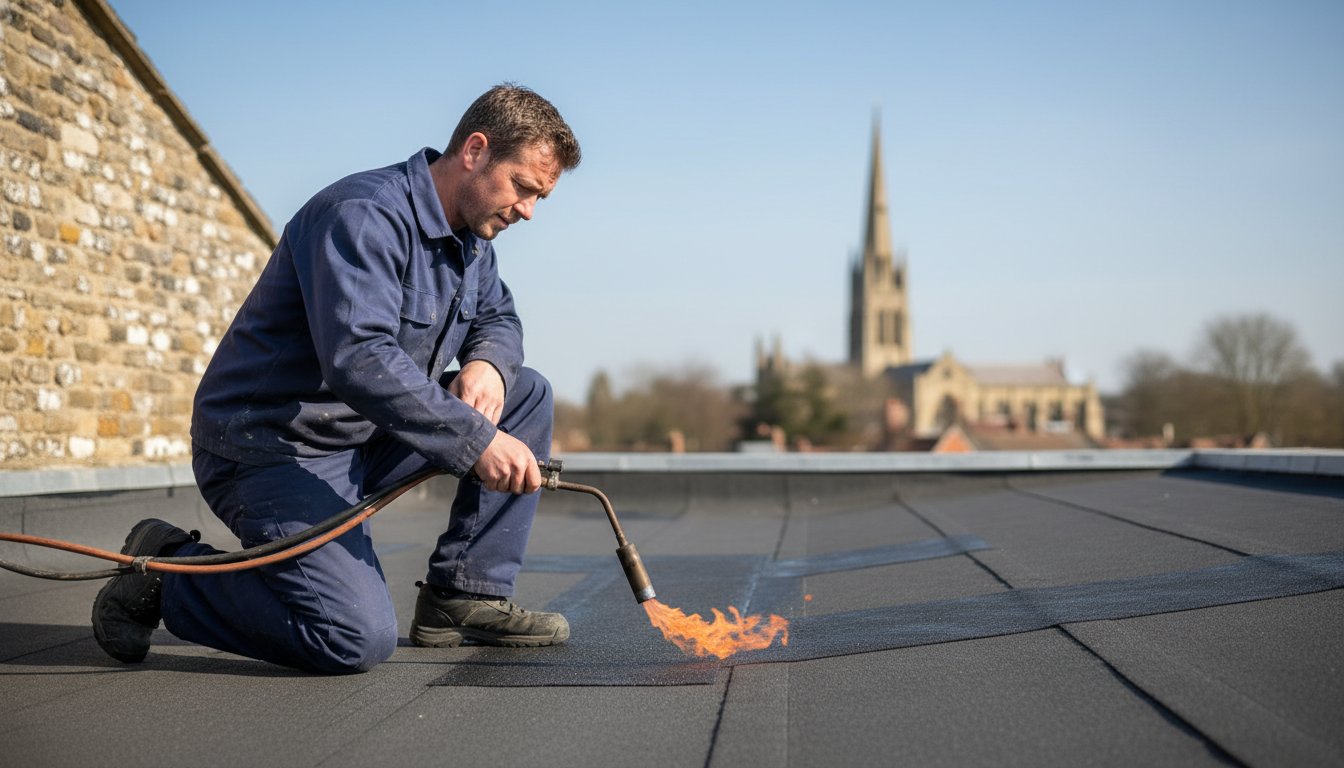
We use the torch-on method because it provides a superior, fused bond that withstands the variable Norfolk weather. When we install bitumen felt roofing Norwich homes benefit from a seamless finish that traditional cold-applied methods simply cannot match. This process involves using a gas torch to melt the bitumen on the underside of the felt, effectively welding it to the layer below. It's a high-heat technique that requires precision and experience to ensure the material doesn't overheat or fail to bond correctly. Our team treats every roof with the same care we would our own, ensuring the seals are airtight and the finish is uniform.
The Three-Layer Build-Up Explained
We never cut corners with a single-layer patch. A professional installation relies on a robust three-stage system to guarantee longevity and peace of mind. Each layer serves a specific purpose:
- Vapour control layer: This is the first line of defence. It stops internal moisture from your home rising into the roof structure, which prevents timber rot and damp.
- Reinforced underlay: This middle layer adds thickness and strength. It acts as a secondary waterproof barrier if the top layer ever suffers impact damage.
- Mineral cap sheet: This final layer is coated in mineral granules. It protects the bitumen from UV degradation and provides the finished look for your property.
Using naked flames on a residential roof is inherently risky. We follow strict safety protocols, including having fire extinguishers on hand and conducting a fire watch for at least 60 minutes after the work finishes. DIY attempts often lead to devastating property fires or, at the very least, poorly sealed joints that leak within months. Insurance providers often won't cover fire damage caused by unlicensed hot-work, making professional installation a financial necessity for your safety.
Detailing: The Secret to a Leak-Free Roof
The flat area of the roof is rarely where leaks start. Problems usually begin at the edges, upstands, and chimney flashings. We take extra care with these junctions, ensuring the felt is dressed correctly and sealed tight against the brickwork. Our family-run team has seen too many roofs fail because of poor detailing around corners and pipes.
For older Norwich properties, we often integrate traditional leadwork services to manage water runoff around chimneys. This combination of modern high-performance felt and classic leadwork provides the most reliable seal possible. We ensure every kerb and outlet is reinforced, leaving no room for water ingress. This methodical approach is why our installations last for decades rather than years.

Maintenance and Lifespan: Making Your Norwich Roof Last 30 Years
A common misconception among local homeowners is that flat roofs are a temporary fix. In 2026, high-performance bitumen felt roofing Norwich systems are engineered for impressive longevity. When we install a modern three-layer reinforced system using torch-on techniques, you should expect a service life of 25 to 30 years. This isn't the thin, brittle felt of the past; it's a robust, polymer-modified membrane designed to withstand the shifting temperatures and coastal winds of the Norfolk climate.
Longevity depends on your vigilance. You should keep an eye out for three specific warning signs. Blistering occurs when trapped moisture expands in the heat, creating bubbles in the surface. Cracking suggests the protective mineral layer has thinned, allowing UV rays to degrade the bitumen underneath. Finally, pooling water is a red flag. If puddles remain on your roof 48 hours after a typical Norfolk downpour, the drainage isn't working correctly. Standing water adds significant weight and accelerates the wear of the top sheet, eventually leading to seeps.
Seasonal Maintenance Checklist for Norwich Homeowners
We recommend a quick inspection every spring and autumn. After a heavy storm, check your roof for wind-blown debris or loose mineral granules gathering in the corners. Moss is a frequent visitor in our damp East Anglian climate. It's vital to remove moss gently using a soft-bristle brush. Never use a pressure washer; the high-force water will strip the protective stones right off the felt and ruin the seal. You must also ensure your drainage channels are clear of leaves. For a deeper look at how to maintain your home’s water runoff, see our guide on guttering services Norwich for essential drainage care.
When to Repair vs. When to Replace
Deciding between a patch and a full replacement comes down to the condition of the underlying structure. If a falling branch has caused a single puncture but the rest of the surface is healthy, a professional patch is a reliable and cost-effective fix. However, if the roof feels "spongy" or bouncy when you walk on it, moisture has likely seeped into the timber decking. Structural rot cannot be ignored, as it compromises the safety of your home. If you're weighing up your options, you can refer to our felt roof cost Norwich guide to help with your budget planning. We believe in honest assessments; we won't tell you to replace a roof that still has five or ten years of life left in it.
Why Choose I.R. Wilson for Bitumen Felt Roofing in Norwich?
Choosing the right contractor for your bitumen felt roofing Norwich project is about more than just finding the lowest price. It's about finding a team that understands the local landscape and takes personal pride in their work. We are a family-run business with deep roots in the Norwich community. When you hire us, you aren't dealing with a faceless corporation or a revolving door of subcontractors. You're working with a team that values its reputation and the safety of your home above all else.
Ian and Ben Wilson personally oversee our projects to ensure every installation meets our high standards. This direct involvement means that the "boots-on-the-ground" mentality is present from the first site visit to the final inspection. We believe in providing transparent advice and fixed-price quotations. You won't find hidden fees or surprise costs in our estimates. We tell you exactly what is needed and what it will cost, allowing you to make an informed decision without any sales pressure. To ensure your peace of mind, we provide long-term workmanship guarantees that act as a digital handshake and a promise of enduring quality.
Local Expertise You Can Trust
Our team brings over 30 years of experience navigating Norfolk’s unique roofing challenges. We've spent decades working with the specific weather patterns and architectural styles found throughout the city and surrounding villages. Whether your property is a traditional terrace or a modern extension, we have the technical authority to handle the job correctly. We are fully insured and provide a professional, reliable service for every residential project we undertake. This commitment to quality has established our reputation as highly recommended Norwich roofers who residents can depend on year after year.
- Over three decades of local trade experience.
- Fully insured for all residential bitumen felt installations.
- Direct oversight from the business owners on every site.
- A focus on durable, weather-resistant materials suited for the UK climate.
Get Your Free Norwich Roofing Quote
We've made the process of securing your home as simple as possible. It starts with a brief site visit where we assess the current state of your roof. We don't believe in aggressive sales tactics; instead, we prioritise cost-effective solutions over expensive, unnecessary replacements. If a targeted repair can extend the life of your roof for several years, we'll tell you. Our goal is to build long-term relationships through honesty and value.
Once we've inspected the property, we'll provide a clear, detailed estimate for your bitumen felt roofing Norwich project. This document outlines the work required and the fixed price for completion. We take the stress out of home maintenance by being predictable, methodical, and disciplined in our approach. Ready to protect your home with a reliable flat roof? Contact I.R. Wilson Roofing for your free quote and let our family look after yours.
Secure Your Home with Professional Torch-On Roofing
Choosing the right flat roof system ensures your property stays dry and secure against the heavy rain and coastal winds common in East Anglia. Modern felt systems provide a durable, multi-layered defense that can easily last 30 years when installed by professionals. We've seen firsthand how the torch-on application creates a seamless, watertight barrier that protects your home from the elements year after year. It's a dependable and cost-effective solution for any homeowner who values long-term stability and high performance.
At I.R. Wilson Roofing, we bring decades of local experience to every project. We're a family-run business established since 1994, and our team works as dedicated torch-on specialists for homeowners across Norfolk. We understand that a new roof is a significant investment, so we provide competitive fixed-price quotations to ensure you know exactly what to expect from the start. Every bitumen felt roofing Norwich project we manage is handled with the same care and attention to detail we'd give our own homes.
Request a free, no-obligation bitumen felt roofing quote in Norwich. We're ready to help you build a roof that stands the test of time.
Frequently Asked Questions
How long does a bitumen felt roof last in Norwich?
A modern bitumen felt roof in Norwich typically lasts between 20 and 30 years when we install it using high-performance, polyester-reinforced membranes. This longevity is a significant improvement over the older glass-fibre felts used in the 1990s. We ensure your roof stands up to the Norfolk weather by applying three distinct layers. Regular maintenance, such as clearing autumn leaves from your gutters, helps you reach that 30-year milestone.
Is torch-on roofing safe for my home?
Torch-on roofing is safe for your home when our team follows the NFRC Safe2Torch guidelines strictly. We conduct a full fire risk assessment before any work begins to identify combustible materials like timber eaves or cladding. If we find high-risk areas, we use self-adhesive membranes or cold-applied liquids instead of a naked flame. Your safety is our priority, and our £5 million public liability insurance provides extra peace of mind.
How much does bitumen felt roofing cost in Norwich?
The cost of bitumen felt roofing in Norwich depends on your roof's size and the condition of the underlying timber deck. According to 2024 Checkatrade industry data, homeowners in the UK can expect to pay between £40 and £70 per square metre for a standard felt replacement. We provide a detailed, no-obligation estimate after a site visit. This ensures you get an honest price that covers all materials and labour without hidden surprises.
Can you lay new felt over an old felt roof?
We can technically lay new felt over an old layer, but we rarely recommend this "over-felting" approach for a permanent home. Adding extra weight can stress your roof structure, and it often traps moisture between the layers which rots the timber deck underneath. We prefer to strip the old material back to the boards. This allows us to inspect the wood and ensure your new bitumen felt roofing in Norwich has a solid, dry foundation.
Is felt roofing better than rubber (EPDM) for a garage?
Bitumen felt is often a better choice for a garage if you're looking for a proven, cost-effective solution that handles foot traffic well. While EPDM rubber is durable, it's prone to punctures from falling branches or ladders. Multi-layer felt systems are much tougher and easier to patch if damage occurs. We find that many Norwich homeowners prefer the traditional look and rugged feel of a mineral-surfaced felt for their outbuildings.
Do you provide guarantees for felt roofing in Norfolk?
We provide comprehensive guarantees on all our felt roofing installations across Norfolk. As a family-run business, we stand by our craftsmanship with 10 to 20-year warranties depending on the specific felt system you choose. These are insurance-backed, so your investment remains protected even in the unlikely event that we stop trading. We believe a digital handshake is good, but a written, long-term guarantee offers the real peace of mind you deserve.
What is the best time of year to replace a flat roof in Norwich?
The best time to replace your flat roof is between April and September when the Norfolk weather is driest. Torch-on membranes require a dry surface for the bitumen to bond correctly to the deck. However, we monitor local forecasts daily and can perform emergency replacements during winter windows. We always use temporary coverings to keep your home watertight while the work is in progress, regardless of the season.
Does a new felt roof require building regulations approval?
You will need building regulations approval if you replace more than 25% of your roof area. This UK requirement ensures that the thermal insulation of your home is upgraded to meet current energy efficiency standards. We can help you navigate this process by installing PIR insulation boards during the re-roofing. This "warm roof" configuration keeps your home warmer and ensures your project complies with all local Norwich council building standards.